Why Kegels alone are not enough for your pelvic floor and what really works
Kegels alone won't fix your pelvic floor, and can make a tight one worse. The 3 real problems (tense, weak, prolapse) and the 6 things that actually help.
A few drops of pee while you sneeze.
The urge to always go to the bathroom.
Pain during intercourse.
Constipation.
I know that you too have had at least one of these symptoms.
And I say “you too” because, well, I have been through it as well.
And I was 28 with no pregnancy behind me.
Diagnosis: pelvic floor hypertonicity.
I did not know what it meant, but I knew I had frequent hemorrhoids, pain in the pelvic floor (in particular in the internal obturator, don’t worry if you don’t know what it is) during squats, and something that was not right “down there.”
I know that pelvic floor problems can be frightening. And do you know why? Because they are talked about too little, far too little. But thousands of women suffer from them every day.
And it is possible to recover, exactly as I did
If you have talked about it with someone (even a doctor or a midwife, sadly), there is a good chance they advised you to “do Kegels”. Maybe they even said “100 a day.”
I hope you did not do them.
Or at least that you did not do them before understanding the situation better.

The three big pelvic floor problems
Before talking about solutions, we need to understand WHICH problems the pelvic floor can have.
Because there is more than one and they are not so easy to tell apart (in fact, to make everything more complex, they often overlap too).
Hypertonicity: the pelvic floor is too tense (my problem)
When it comes to the pelvic floor, most people think “weak = problem, strong = good.” Wrong.
The pelvic floor can be too tense. It is called pelvic floor hypertonicity.
To understand it, let me give you a comparison.
Bring one arm down by your side, then bend it, as if you wanted to train the biceps. You will immediately feel the activation. Imagine the biceps is your pelvic floor. Contracted.
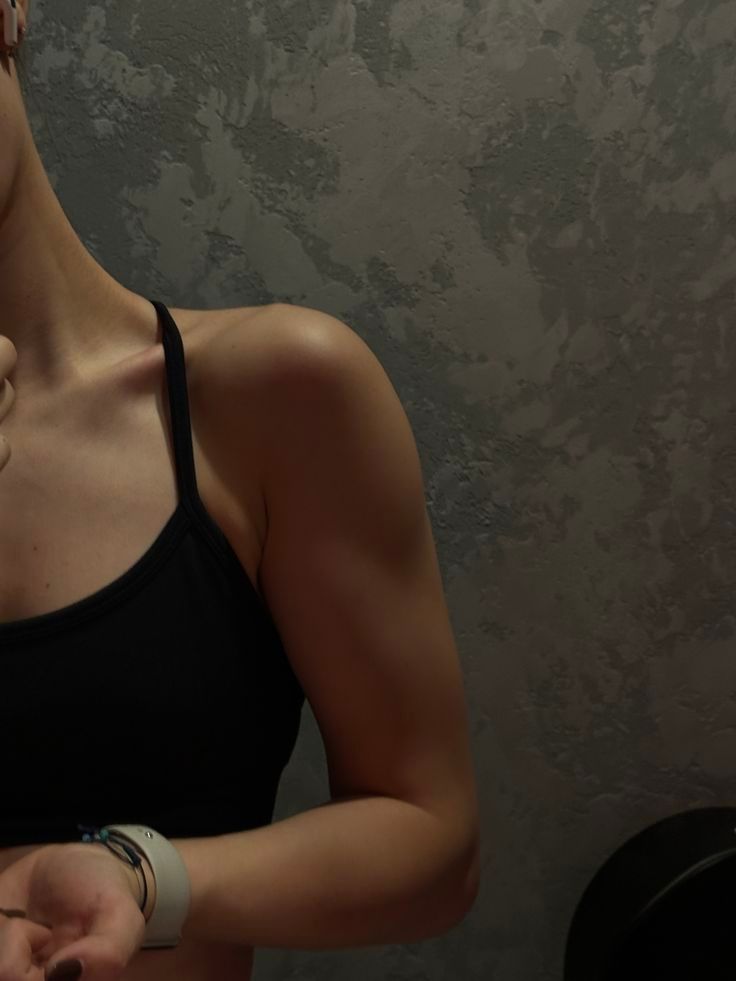
But now think that your pelvic floor is like this, ALWAYS. It cannot relax.
As if you were spending all day and all night with your arm bent and the biceps contracted.
That is what it means to have pelvic floor hypertonicity.
The signs of a hypertonic pelvic floor are:
- Urine leaks when you sneeze, cough, jump, or lift weights
- Difficulty taking a full, deep breath
- Difficulty starting urination (peeing)
- Constipation
- Painful penetration
- Discomfort around the tailbone
- Tension on one side in the area “under” the glute (which makes you feel that you cannot contract well, maybe with a little pain in the sacroiliac joint or deep in the glute)
- The feeling of not being able to contract the pelvic floor (if you have tried to do a Kegel and have hypertonicity, you know what I am talking about)
And now I will reveal a secret to you: a permanently contracted pelvic floor is often also a weak pelvic floor.
Because if you cannot lengthen a muscle, you cannot get a strong subsequent contraction. Tension and weakness often go together.
Let’s go back to the example of the constantly contracted biceps.
Could you contract it more? No, because it is already contracted at low intensity.
To be able to contract it harder, you would first have to extend the arm, relaxing the muscle, then you could contract it again more strongly or by lifting a heavier weight.
But what are the causes of hypertonicity?
Often the main cause is the fact that many women unconsciously keep the pelvic floor contracted all day, as a “protective” strategy.
- Out of fear of holding pee when there is no bathroom nearby.
- Out of stress, anxiety, fear (when we are afraid we unconsciously contract the glutes).
- Out of poor posture and reduced mobility (and sadly this was my problem).
When we have little mobility in some joint, the body compensates.
I talked about it in Have you lost mobility without realizing it? 4 quick tests to find out, and how to get it back with Lymphatic Drainage Pilates

Hypotonicity: the inactive pelvic floor
This is the problem that most people know. The pelvic floor that does not activate well, that is weak, that does not respond when it should.
The symptoms here are more “intuitive”:
- heaviness
- urinary leaks
- feeling of lack of support
And it is generally for hypotonicity that “doing Kegels” is recommended.
But here too we must not jump to hasty conclusions. As we said before, a pelvic floor that seems weak could actually be tense. And Kegels are not the solution (in fact, they would make the situation worse).
A wrong diagnosis leads to a wrong treatment that can worsen the situation, and you enter a vicious and very frustrating circle (which can last years).
Prolapse: the organs that descend
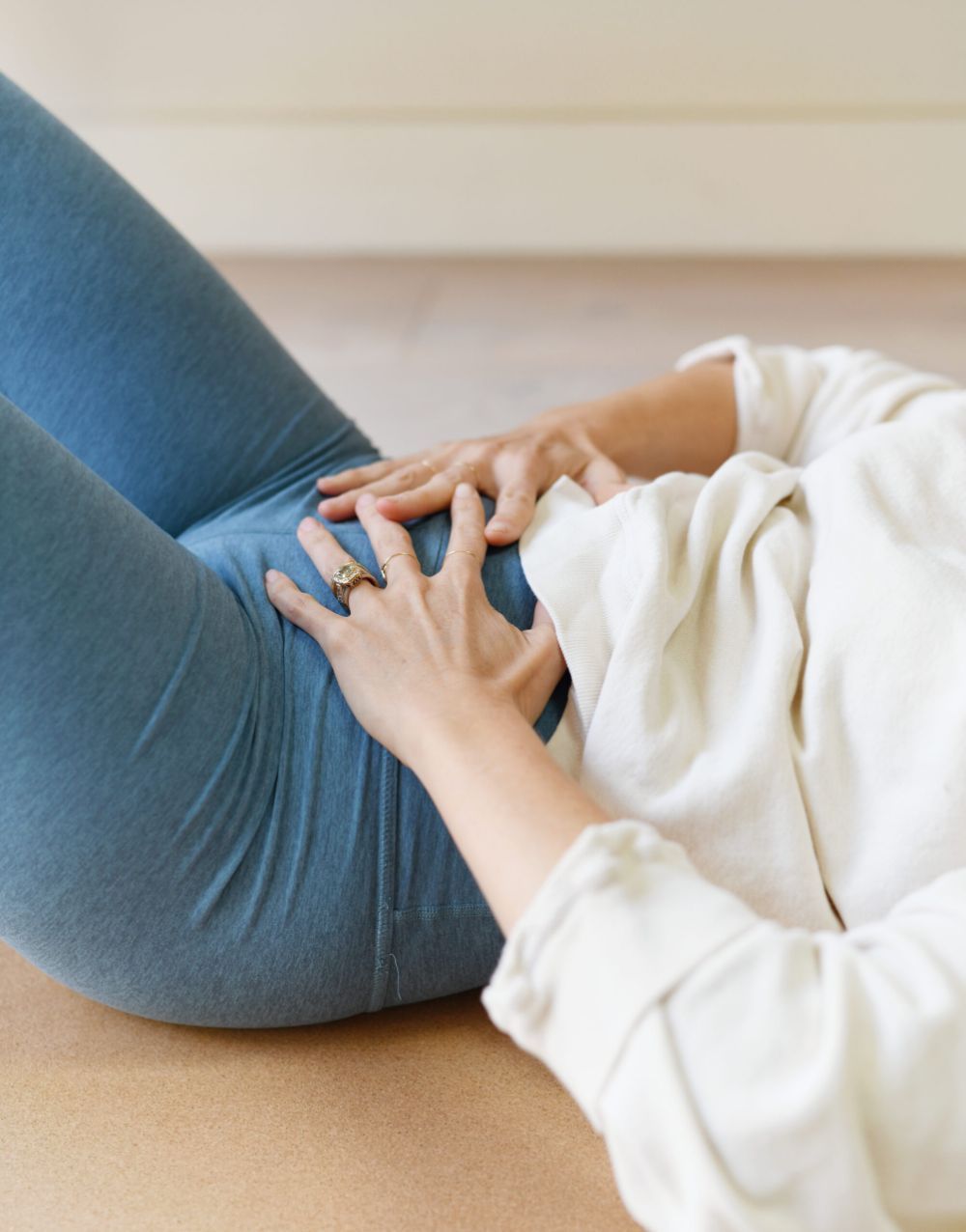
Prolapse is when one or more pelvic organs (bladder, uterus, rectum) descend from their normal position, because the support system has weakened.
The signs of prolapse are:
- Heaviness in the pelvic area: one of the most common symptoms
- The feeling of “something descending” or downward pressure
- The feeling that something is coming out of the vaginal area
- The feeling of a continuous cystitis that never goes away (for some types of prolapse such as urethral prolapse)
Prolapse is classified in grades, from 1 (less serious) to 4 (most serious). But be careful: a woman with grade 2 can have many symptoms and discomforts, while one with grade 3 prolapse can have fewer.
What makes the difference is how you manage intra-abdominal pressure, how strong the pelvic floor muscles are, and your posture.
But why does prolapse happen?
First of all, let me tell you that prolapse is much more frequent than you might think. Do not feel wrong or different if you have it.
Some experts believe that most postpartum women have some level of prolapse after giving birth. But many times it resolves on its own (and consequently many women do not realize they had it).
The causes of prolapse are generally:
- laxity of the ligaments and tissues (very common postpartum because during pregnancy hormones are released that make the ligaments more lax to prepare the body for birth)
- weakness of the pelvic floor muscles
- poor management of intra-abdominal pressure
This is precisely the common denominator among pelvic floor problems, diastasis, and doming.
And poor intra-abdominal pressure is often due to wrong habits. I talked about it in Training in pregnancy: the 4 body signals not to ignore
But let’s get to the heart of the matter now… Why do Kegels alone not work?
Why Kegels alone do not work
But what are Kegels?
They are talked about a lot, but few people really know what they are.
A Kegel is the voluntary contraction of the pelvic floor muscles. The exercise takes its name from Dr Arnold Kegel, the American gynaecologist who made them famous in the 1940s.
Still don’t understand what it means?
Let me give you a practical example that is more effective than a thousand words.
Imagine you are peeing and want to stop the flow.
To do that you have to contract the pelvic floor muscles. What you did is a Kegel.
Now, please do not try this exercise while you are urinating (it is one of the worst things you can do for your pelvic floor), but it is to make you understand what it means.

A Kegel has two parts: the contraction of the muscles and the complete relaxation.
Exactly as when you train the biceps you have to bend the arm and then extend it completely. Not halfway. Completely.
The thing is that fully relaxing the pelvic floor is not as simple as extending the arm, and many women do “half Kegels” in which they contract hard and relax only halfway, without ever bringing the pelvic floor back to its original length. As you can imagine, this in the long term can lead to pelvic floor hypertonicity.
Now that we have seen what Kegels are, let’s try to understand why they do not work.
-
First reason: contracting an already tense muscle does not cure it, it makes it worse
As we have seen, pelvic floor problems are many and opposite.
Kegels could technically help in the case of pelvic floor hypotonicity, but it is not that simple. As we were saying, sometimes the muscle is weak because it is contracted: hypotonicity and hypertonicity coexist. So even in this case Kegels (strengthening exercises) would not work.
Think about it. If you have neck pain because you keep your shoulders raised and contracted all day, what is the solution? Doing exercises to raise the shoulders even more? No. It would be absurd. You would be working on what already works too much.
The same goes for the pelvic floor.
-
Second reason: usually it is not (only) the pelvic floor’s fault
Our body is a network. Nothing ever works in isolation.
A pelvic floor problem is very often the manifestation of a broader problem: maybe your breathing is compromised, or you do not know how to correctly activate and relax the glutes, you have a wrong posture, the deep abs are weak, the hip flexors are shortened, or even the plantar arch has collapsed (very common postpartum, even though nobody talks about it).
Working only on the pelvic floor, ignoring everything else, is like wanting to fix the roof of a house whose foundations are collapsing. It does not work.
-
Third reason: the pelvic floor must function when you are NOT thinking about it
The Kegel is an exercise. This means it works when you are there, performing it, focused. But most pelvic floor problems arrive when you are not thinking about it.
You have to put it in a position to know how to react to the activities of daily life without you having to think about it, to relax and lengthen when you inhale and return to the starting position when you exhale, to know how to contract and relax on its own.
What to really do
Right, now that we have demolished the illusion of Kegels, let’s see what to really do.
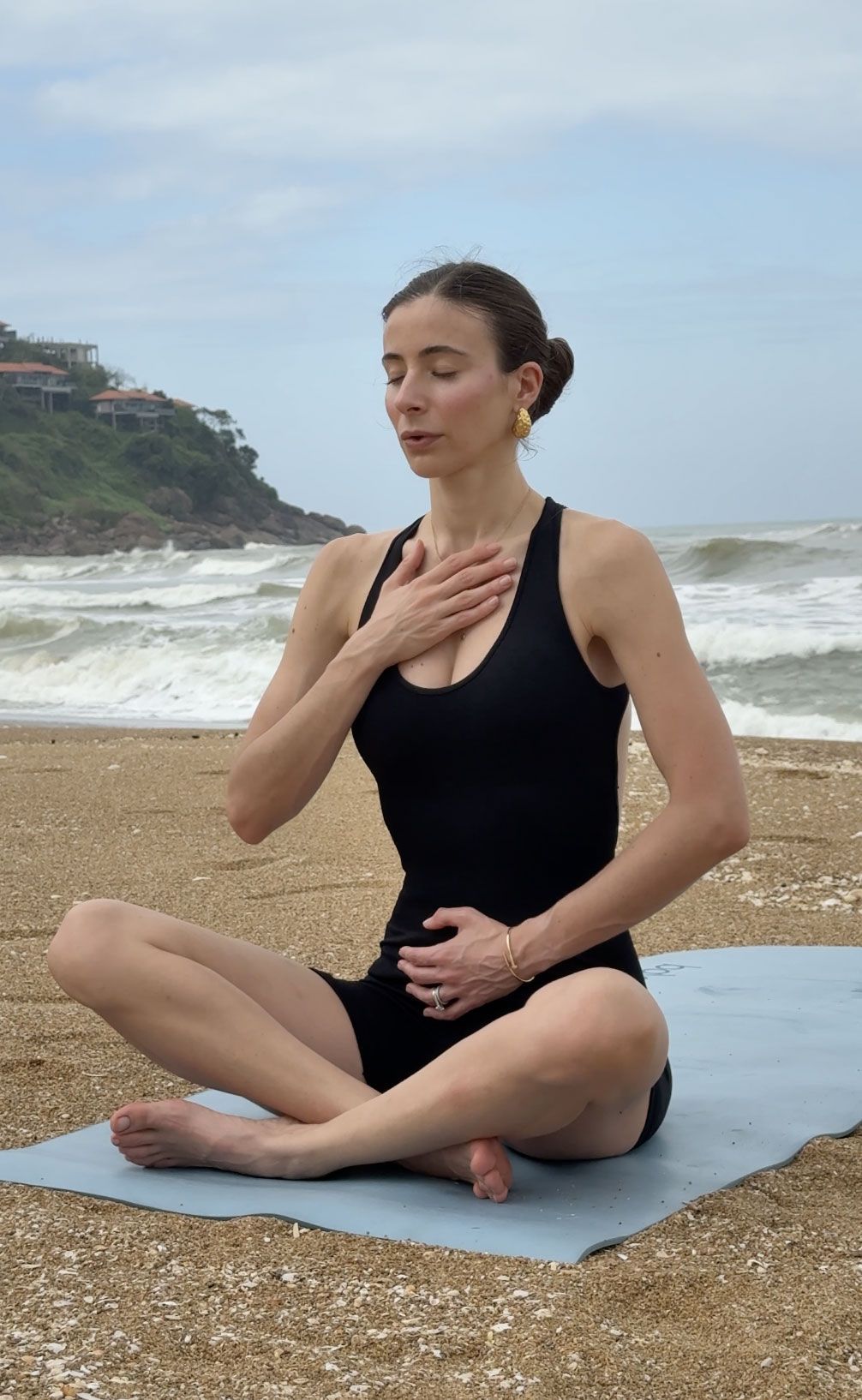
Start with awareness
Most people do not even know they have a pelvic floor. Let alone try to “feel it.” And I have to admit, I was like that too. Until I had to learn to know it at my own expense.
Here is what to observe over the course of the day (I warn you, it is not immediate, it can take days of work and concentration):

- Are you keeping the pelvic floor contracted right now? Often you do it without noticing (remember the example of holding pee; are you in that position now?)
- Do you hold your breath when you lift something heavy? Or when you are anxious or stressed?
- Do you contract your glutes involuntarily when you are standing? The next time you are standing in the kitchen, touch the lower part of the glute with your hands. Are you squeezing it?
- Do you pull your belly back?
- Are you at the computer with your back arched and hunched?
All of these are patterns that put pressure on the pelvic floor all day, every single day.
Bringing attention to these small things and acting on these patterns already makes a difference.
For example, if you notice you are holding your breath, take a deep breath.
If you notice your glutes are contracted, let them go.
After a month they will all be natural things.
Work on your breathing
When it comes to the pelvic floor, diastasis, or doming (a “loaf-shaped” belly), breathing is the foundation. Always. I talked about doming in this reel and in this other one.
Breathing should be 360 degrees, that is, you should fill your lungs in front, on the sides, and behind (in the back). Most people breathe “all in front” (in the belly, in the chest) and this leads to poor management of intra-abdominal pressure.
“Belly breathing” (or breathing with the belly) is one of the most misleading pieces of advice in the fitness world.

In my Pilates Diastasis and Postpartum journey I accompany you step by step in improving your breathing, often compromised during pregnancy. I talked about it in Training in pregnancy: the 4 body signals not to ignore.
If you want to try Pilates Diastasis and Postpartum, you will find it on the app. It is a 6-week journey that you can follow whether you have given birth recently, or gave birth several years ago but still have diastasis or pelvic floor problems. These are exercises that I have done and continue to do almost every day too, even though I have never given birth (but for pelvic floor problems they are perfect!).
Find the Lymphatic Drainage Pilates Journey that's right for you
If instead you think you have a blocked diaphragm (the breathing muscle), try the class Unblock the diaphragm and drain. It is a session that works on releasing the diaphragm using the Pilates ball as support, combined with lymphatic drainage movements. I recommend it if you feel your chest is closed, if you breathe “short,” or if you cannot take a deep 360-degree breath.
Learn to release before you contract
As we have seen, if you do not first learn to relax the pelvic floor, it is impossible to contract it effectively.
That is why I am so fixated on relaxation.
And also because it was exactly my problem. As they say: guilty.
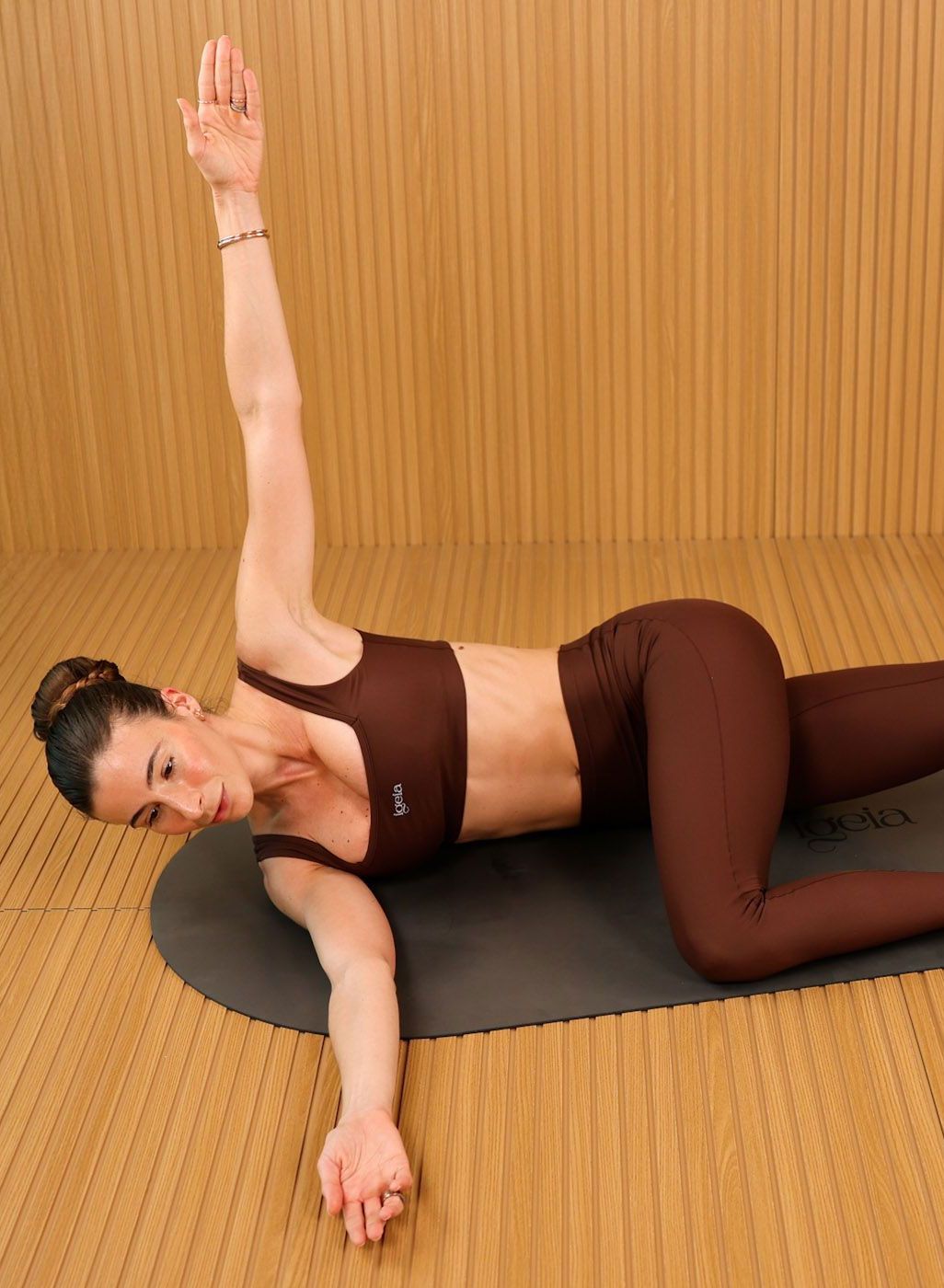
The good news is that, having experienced it on myself, I created classes specifically for this that you can try and that will help you:
- Hypertonicity: release and mobility
- Pelvic hypertonicity: free the hips
- Deep release for hypertonicity
- Hypertonicity flow
If then you have a diagnosis of hypotonicity or prolapse, after releasing the pelvic floor you can actually do strengthening exercises, like those you will find in these two classes:
- Hypotonicity, prolapse, and diastasis
- Hypotonicity: pelvic reactivation.
Improve your posture
Good posture aligns the pelvis so as to support the pelvic floor and the abs in the best way.
Think about it. If the pelvis is “crooked,” how can the pelvic floor be in a neutral position? It makes sense.
Working on hip mobility is essential: internal rotation of the hip and external rotation of the hip must be restored (how much the femur can move inside the hip). I talked about posture in Why your posture isn’t improving (and what it has to do with bloating and cellulite)
Try these classes:
- Free hips flow
- Postural Pilates back and hips
- Happy back and hips
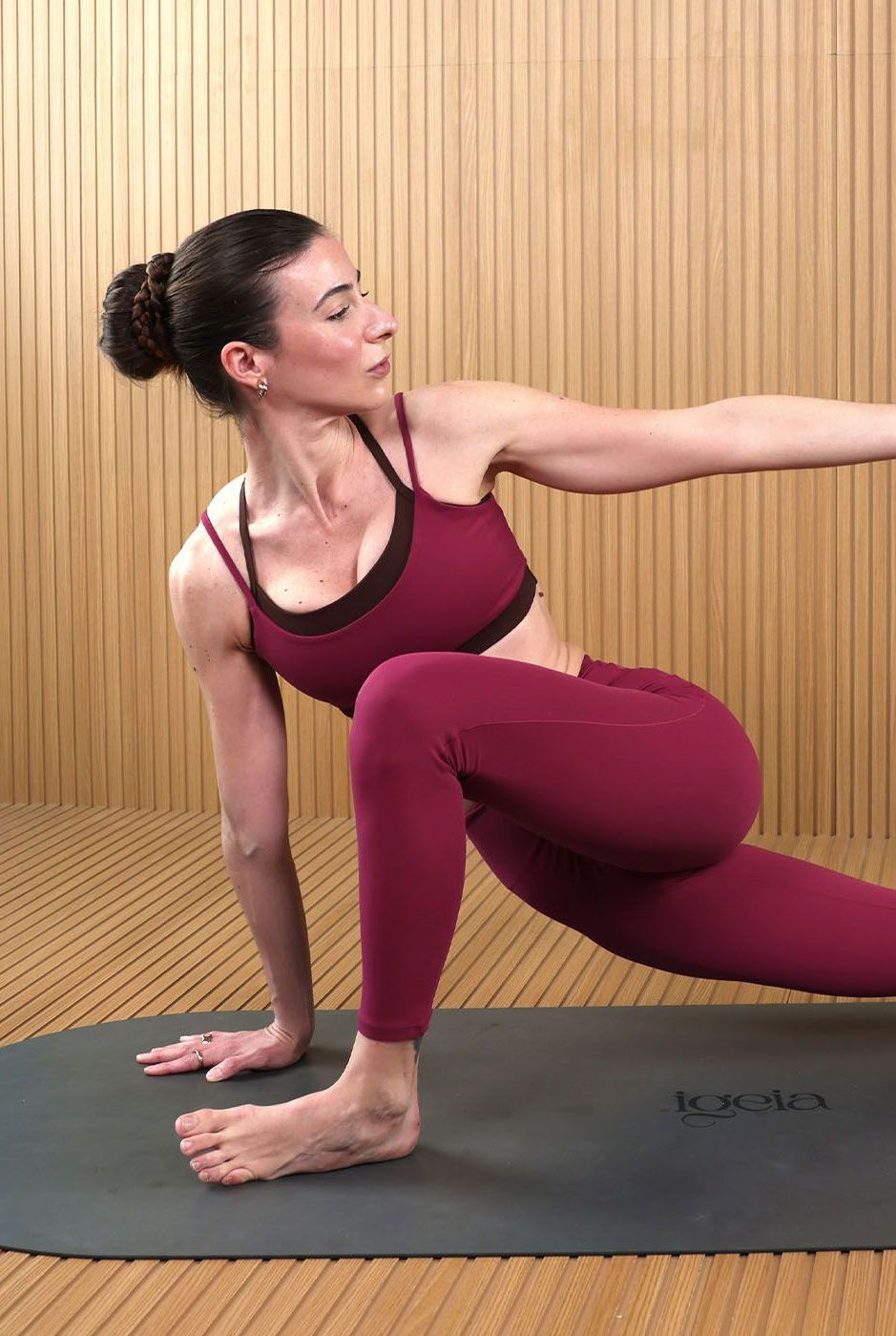
Work on the muscles around the pelvic floor
Remember? The pelvic floor problem is often not the pelvic floor’s.
Work on everything else, in particular:
- Glutes: when the glutes do not work well and do not activate correctly, other muscles (in particular the deep hip rotators such as the piriformis and the obturator) compensate. The Lymphatic Drainage Pilates exercises in which we learn to activate them correctly, such as glute bridges, hip abductions, and sit backs, are perfect for this.
- Deep abs such as the transverse: here too, Lymphatic Drainage Pilates works on it in every single session. Without exception.

Learn to manage intra-abdominal pressure
Two simple things you can do starting today:
- Do not push when you go to the bathroom for number 2. Use a small stool to raise your feet and if you really have to push, do it with your mouth slightly open, making a “Haaaaa” sound as if you wanted to fog up a window.
- Control your breathing during exercises and adapt the breathing to the exercise: if you follow Lymphatic Drainage Pilates you know I am obsessed with it. I tell you exactly when to inhale and when to exhale in each movement. This is the reason. If you train at the gym, exhale during the effort and inhale during the “easy” part of the movement.
In short
- Having pelvic floor problems is not a life sentence.
- If your doctor tells you “urine leaks are normal, you have to accept them,” change doctor. They are common, but that does not make them normal. And they can almost always be resolved.
- Age and pregnancy do not matter: as I told you, I had hypertonicity problems at 28 and without ever having given birth.
- You can resolve the problems (or at least improve) even if you have had them for many years.
- The approach must be multifactorial because the causes are. You cannot expect a single exercise (Kegels in this case) to resolve the situation.
Find the Lymphatic Drainage Pilates Journey that's right for you
Carlotta's insights, straight to your inbox
Just your name and email, unsubscribe anytime.