Have you lost mobility without realizing it? 4 quick tests to find out and how to get it back with Lymphatic Drainage Pilates
4 simple tests to find out where you have lost mobility, the surprising link to bloating, and how Lymphatic Drainage Pilates helps you get it back.
Most people think that mobility is lost with the years.
“I’m getting old, I wake up and I ache all over.”
“The years are starting to make themselves felt; I never used to have back pain.”
Let me reveal a secret to you… Mobility is not lost with the years. It is lost with habits.
The good news is that just as you lost it, you can also get it back.
In this article I tell you:
What joint mobility is (and how it differs from flexibility)
“I can’t touch my toes, I have bad mobility.” How many times have I heard this phrase? Too many. Let’s clarify a few things.
Mobility and flexibility are often confused, but they are two different things.
- Flexibility is the ability of a muscle to stretch passively. When you bend forward and try to touch your toes keeping your legs straight, you are testing your flexibility.
- Mobility is the ability of a joint to move actively through a full range of motion. I know, put like that it sounds a bit scary, but it is easier than you imagine.
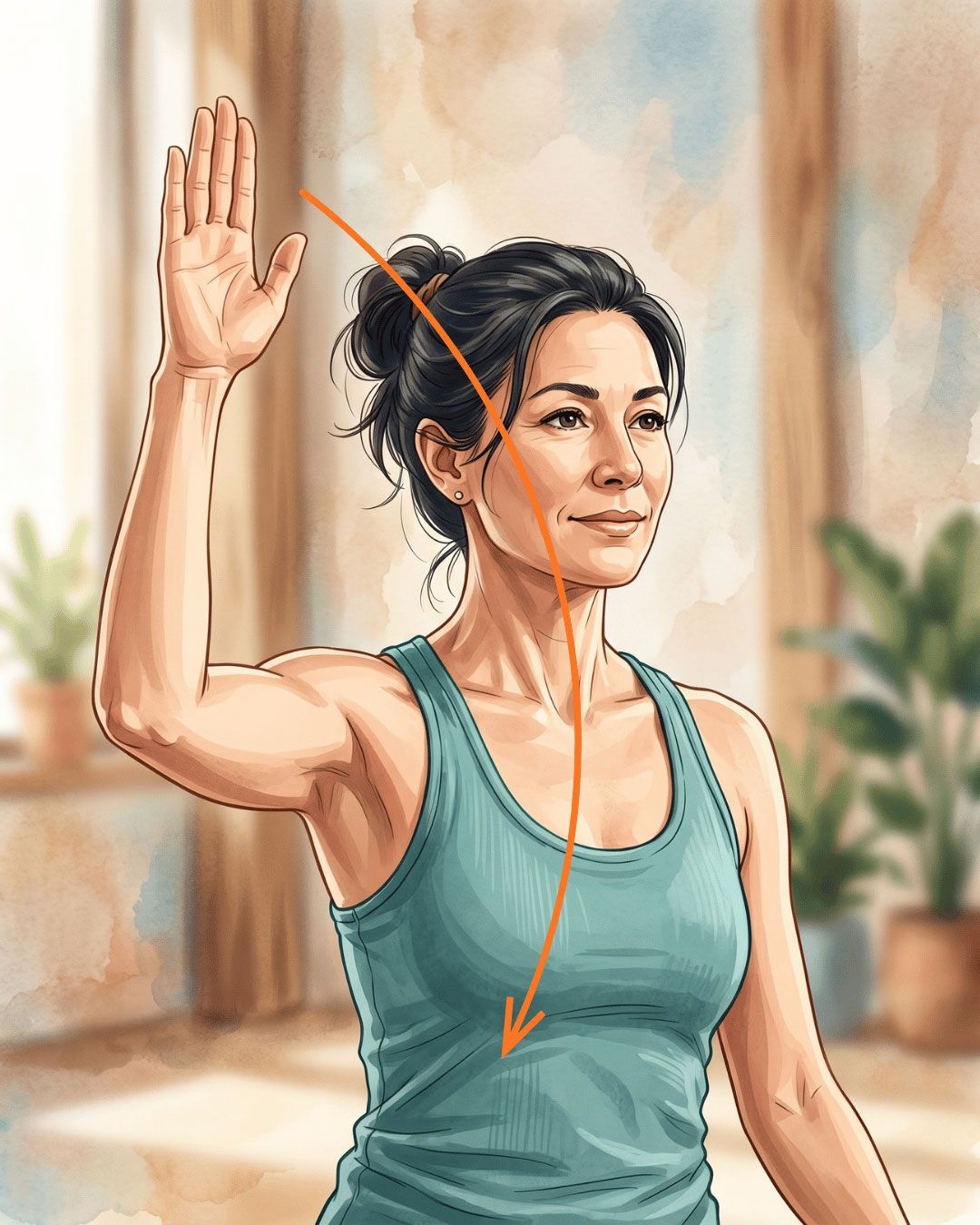
Bend one arm to 90 degrees with the elbow in line with the shoulder and the palm of the hand facing in front of you.
Now, keeping the elbow still, rotate the forearm forward, bringing the hand as far back as possible.
Do you feel the humerus (the bone of the arm) moving inside the shoulder joint? That is mobility. As you notice, it is “active” (you are moving the humerus inside the shoulder), not passive.
Mobility is “how much you can control the movement while the joint moves.” Can you bring your hand very low, or does it stay stuck?
So, in a few words to distinguish them: flexibility is passive, mobility is active.
In everyday life, it is mobility that makes the difference.
You do not need to touch your feet with straight legs. You need to move correctly, to fasten your bra without shoulder pain, to climb stairs without knee pain, to carry the shopping home without back pain.
Why mobility decreases over time
Mobility is not lost because you age. It is lost because you stop moving, or rather, you stop training it.
The life we lead nowadays certainly does not help:
- Hours sitting at a desk, in the car, on the sofa. The hips stay in the same position all day. The flexor muscles shorten. The lower back stiffens.
- The shoulders stay closed forward for hours while you work at the computer or look at your phone. The upper back loses the ability to rotate.
- The neck is stretched forward to stare at screens. The cervical spine becomes inflamed and locks up.
- The ankles lose mobility because we never flex our feet enough.
- And training often makes the situation worse: those who do cardio, do cardio and nothing else; those who train at the gym rarely think about mobility.
The body is intelligent: it adapts to what you do (or do not do) every day.
4 quick tests to understand where you have lost mobility
Before improving mobility, it is good to understand our starting point.
Today, do these 4 simple tests.
Test 1
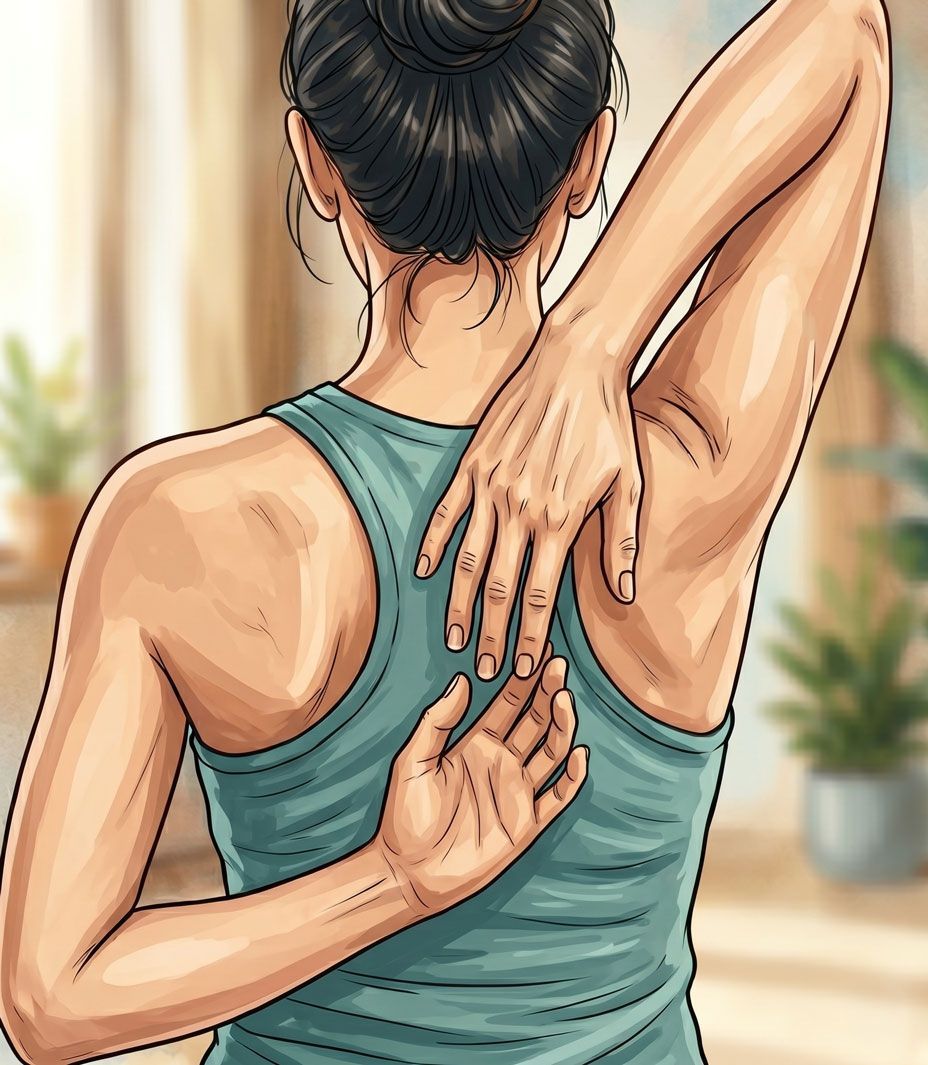
Standing, with one arm extended over your head and one down by your hips. Bend both arms, trying to bring the fingers as close as possible. Ideally they should touch or overlap. Repeat on both sides, reversing the position of the arms.
If you cannot touch your fingers or if it causes you discomfort, it is a sign that mobility is reduced there. You might also have difficulty on one side and not the other.
In this case it is essential to work on the weak side to avoid imbalances and compensations.
Test 2
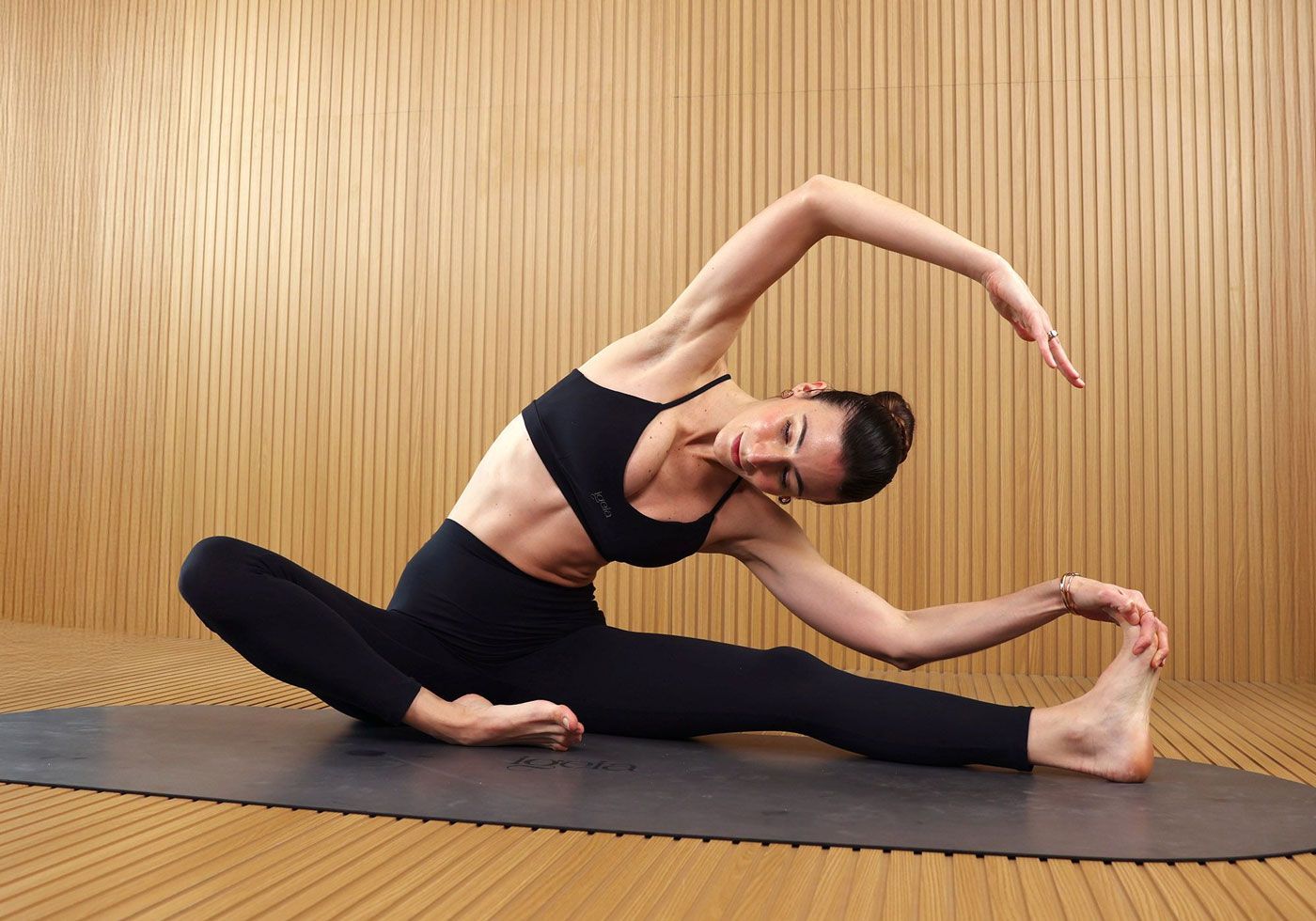
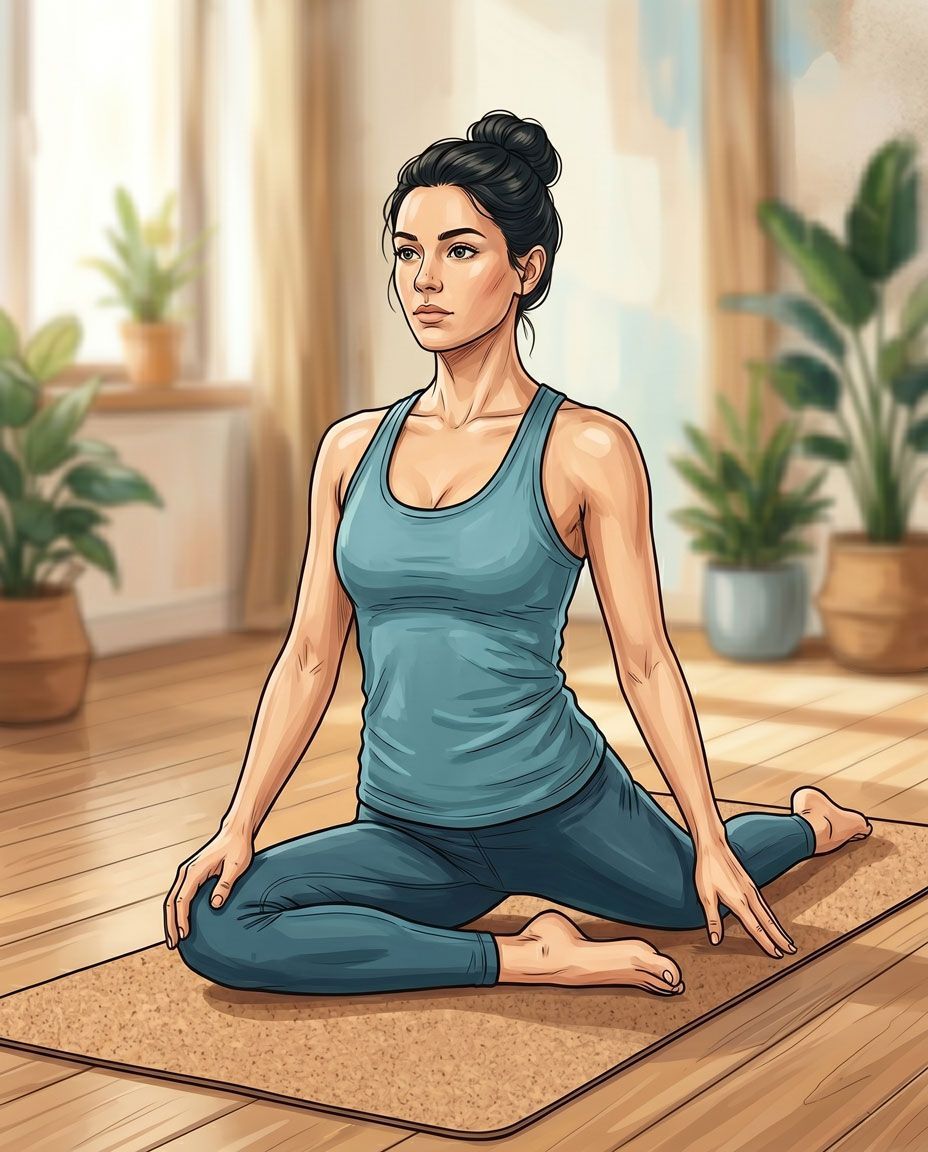
Sit on the floor with the front leg and the back leg forming two 90-degree angles. Stay in this position for at least a minute and try to notice how your body behaves.
If the knee of the front leg cannot stay down, but tends to lift, it means that leg has a restriction in the external rotation of the hip.
If instead you have discomfort sitting and feel like you are “falling” forward, you have a possible internal rotation restriction in the hip of the back leg. Repeat on both sides.
Test 3
Sit on a chair with the shoulders away from the ears and the back straight (imagine a string ties your head to the ceiling), rotate the head slowly to the right, then to the left.
Can you bring your chin over your shoulder without discomfort? If one of the two sides is more “locked,” the cervical spine has lost mobility.

Test 4
Position yourself in front of a wall, with the tip of the left foot about 10 cm away from the wall and the right leg further back. Check that both hip bones point toward the wall in front of you.
Bend the knee of the left leg and try to push the knee as far as possible against the wall, without lifting the heel, moving the foot, or rotating the pelvis.
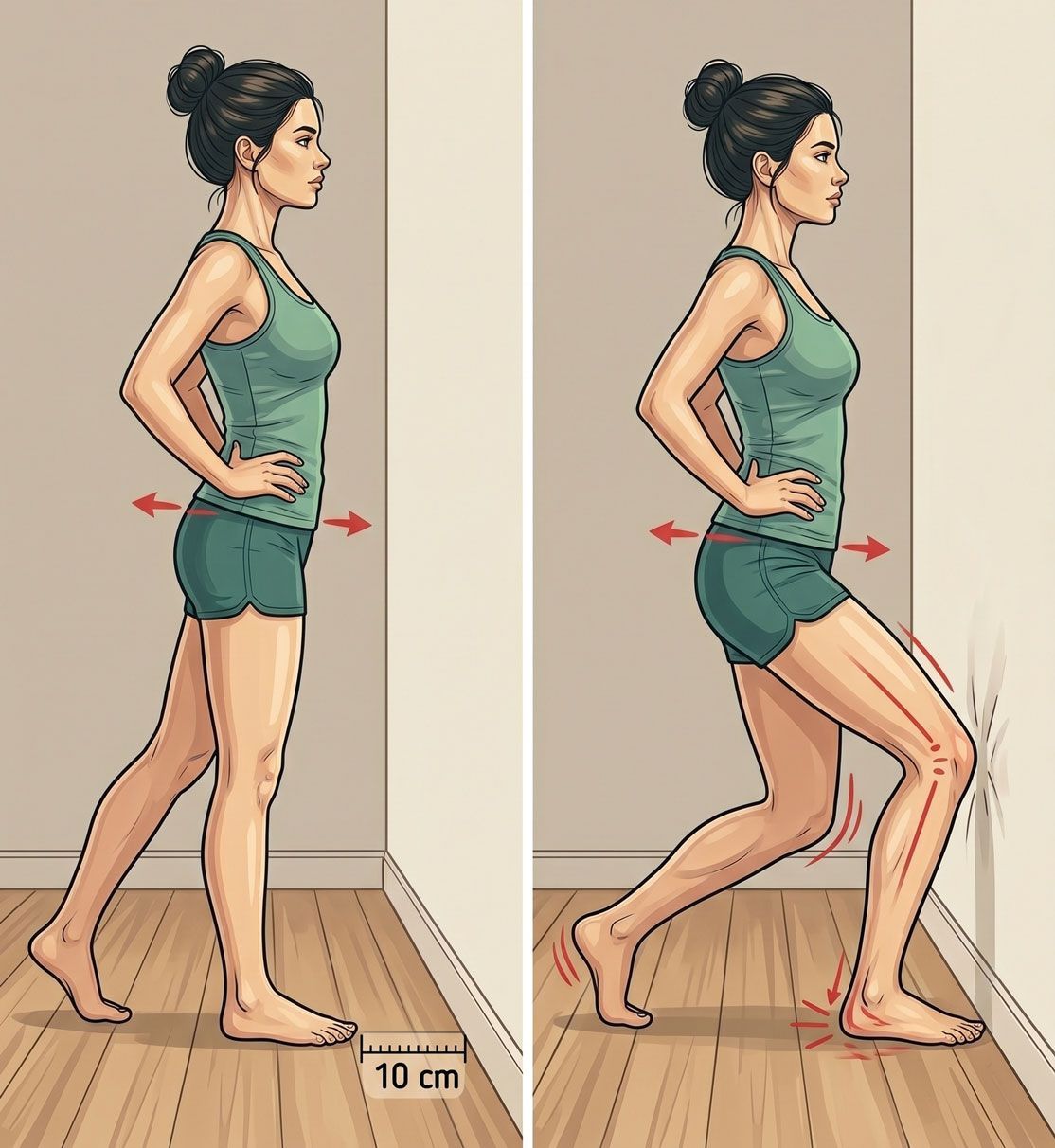
Can you touch the wall with your knee? If you cannot, the mobility of your ankle is limited.
Repeat on both sides.
Have you done the 4 tests? How many did you pass?
Try to work on your weak points, but do not forget to keep working to maintain your mobility too.
Do not take it for granted.
Remember that mobility decreases when you stop using it.
Mobility and the lymphatic system: the connection few people know
The lymphatic system (the one that drains excess fluids, transports waste to the organs that filter and eliminate it, and supports the body's defences) does not have a pump of its own like the heart. It moves only thanks to muscle contraction, breathing, and joint mobility.
But most of the lymphatic stations (the “filtering points” of the lymph, where a group of lymph nodes takes care of cleaning it before it continues to circulate) are found near the joints. Above the collarbone, behind the knees, at the junction of the thigh with the groin, under the armpits.
Do you know what this means?
It means that if your joints are stiff, the lymph struggles even more to move through its transit stations.
The equation is very simple.
Reduced mobility = compromised drainage.
Compromised drainage = chronic bloating, stagnation, inflammation.
It is exactly for this reason that in the Original Lymphatic Drainage Pilates (Pilates Linfodrenante®) mobility and drainage always work together. They are not two separate things. They are two sides of the same coin.
To understand how the lymphatic system works in detail, read “DIY lymphatic drainage: the 6 points to activate every morning in 2 minutes”
How Lymphatic Drainage Pilates improves mobility
In Lymphatic Drainage Pilates we rarely do stretching.
But in every single session, we work on mobility.
And the surprising thing is that we work on it while toning the muscles.
And so it is even more effective.
Let me explain.
If you want to improve, for example, the mobility of the upper back, you have to make sure the pelvis is still. Because if the pelvis moves, it means we are moving with the lower back and not with the upper back.
For this reason, many of the exercises for the upper back we perform when the abs are active.
The active abs stabilize the pelvis and the upper back can move “on its own.” And mobility can improve.
As they say… two birds with one stone!
What NOT to do for mobility
-
Aggressive passive stretching
Stretching every now and then is fine, but you should never strain too much. If for example you want to lengthen the hamstrings and the leg starts to tremble a lot, you are overdoing it. And if you force a muscle into the extreme range, the body defends itself by contracting it even more. The result: you feel stiffer afterward than before.
-
2.Always repeating only the same two exercises
The body learns. And it learns fast. If you always do the same two exercises, after two weeks they stop working. You do not progress and you waste time when you do them. Variety matters. The position from which you perform the movements matters. The body needs new stimuli.
-
3.Remembering mobility only when “Ah! I’ve got back pain.”
Mobility is like brushing your teeth. A daily practice, quick and painless if always done. Doing a mobility session only when you have discomfort would be like brushing your teeth only when you get an abscess. Not very useful.
How to start with Lymphatic Drainage Pilates
On the app you will find several Journeys and specific classes to improve mobility:
- Lymphatic Drainage Pilates: my method that combines toning, lymphatic drainage, and lymph-draining mobility. Intermediate level, without equipment.
- Lymphatic Drainage Pilates Beginners: if you have never done Pilates before or have very reduced mobility and want to start from the basics.
- Postural and Mobility and Joint Wellbeing classes: two sections of classes entirely dedicated to mobility, lasting between 10 and 25 minutes.
Here are my suggestions:
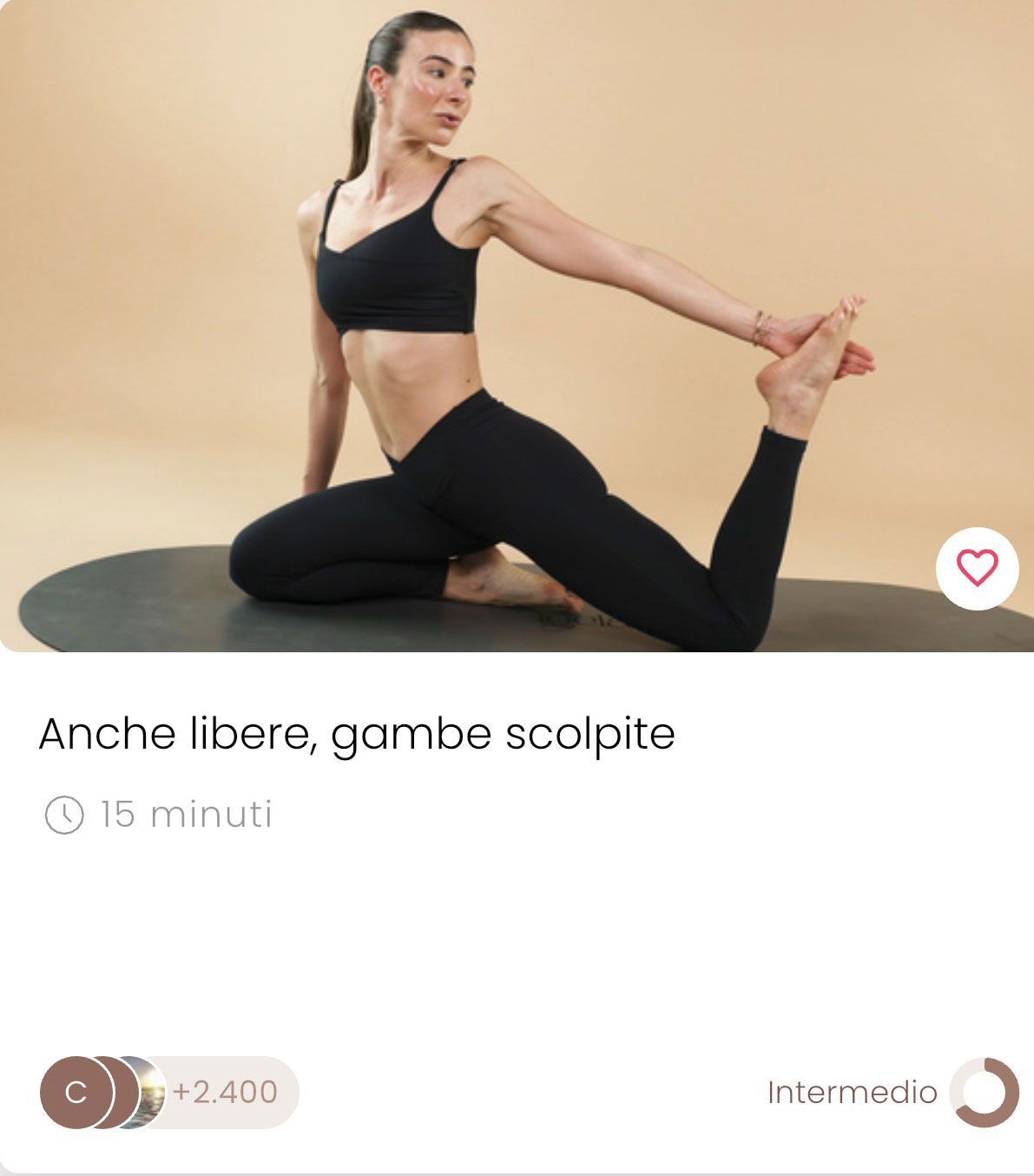
- If you have poor hip mobility, try: Free hips, sculpted legs
- If you have poor back and shoulder mobility, try: Mobility upper body
- If you often have back pain, try: Postural Pilates back and hips
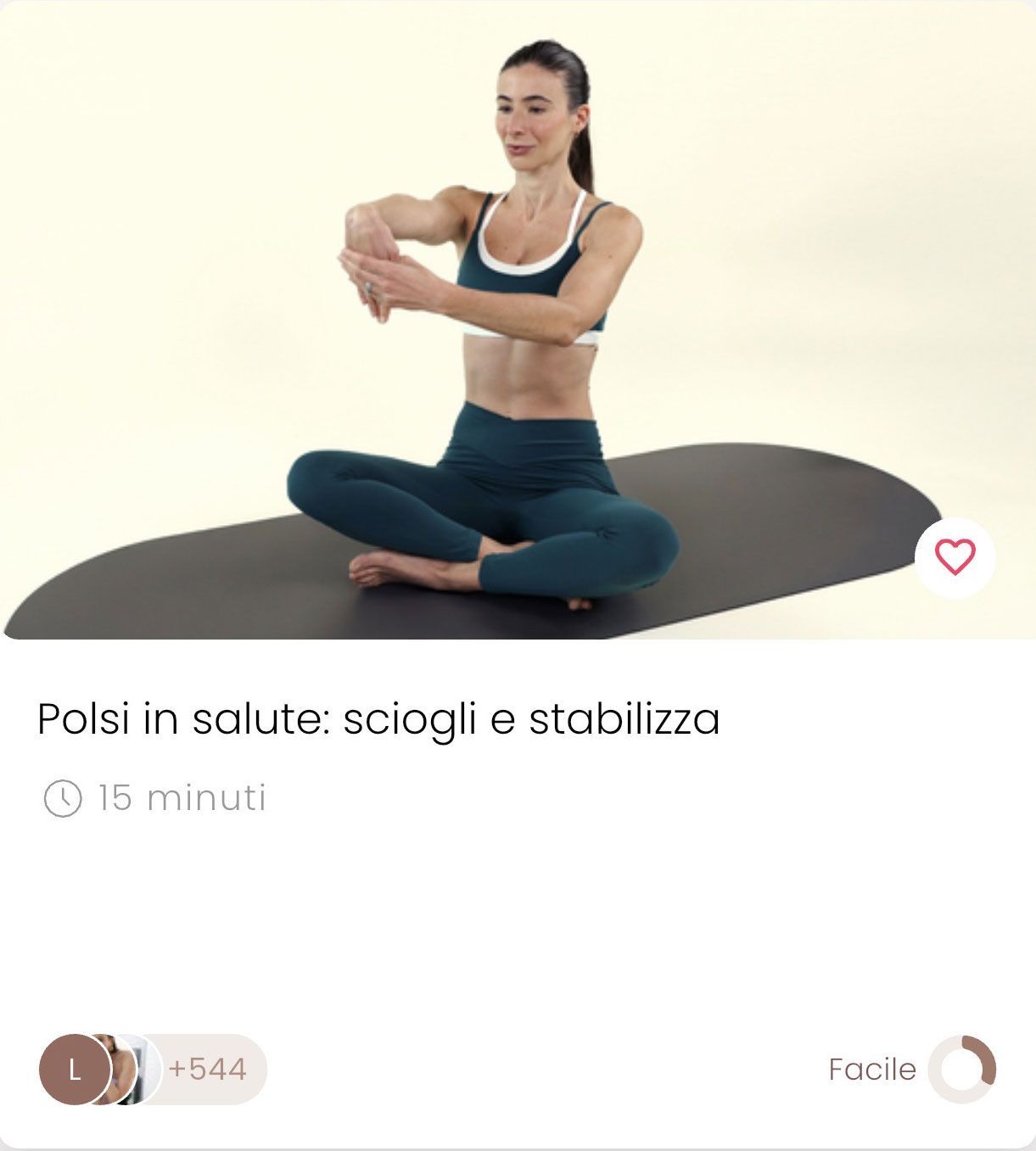
- If you have wrist pain, try: Healthy wrists, release and stabilize
- If you have neck pain, try: Goodbye neck pain
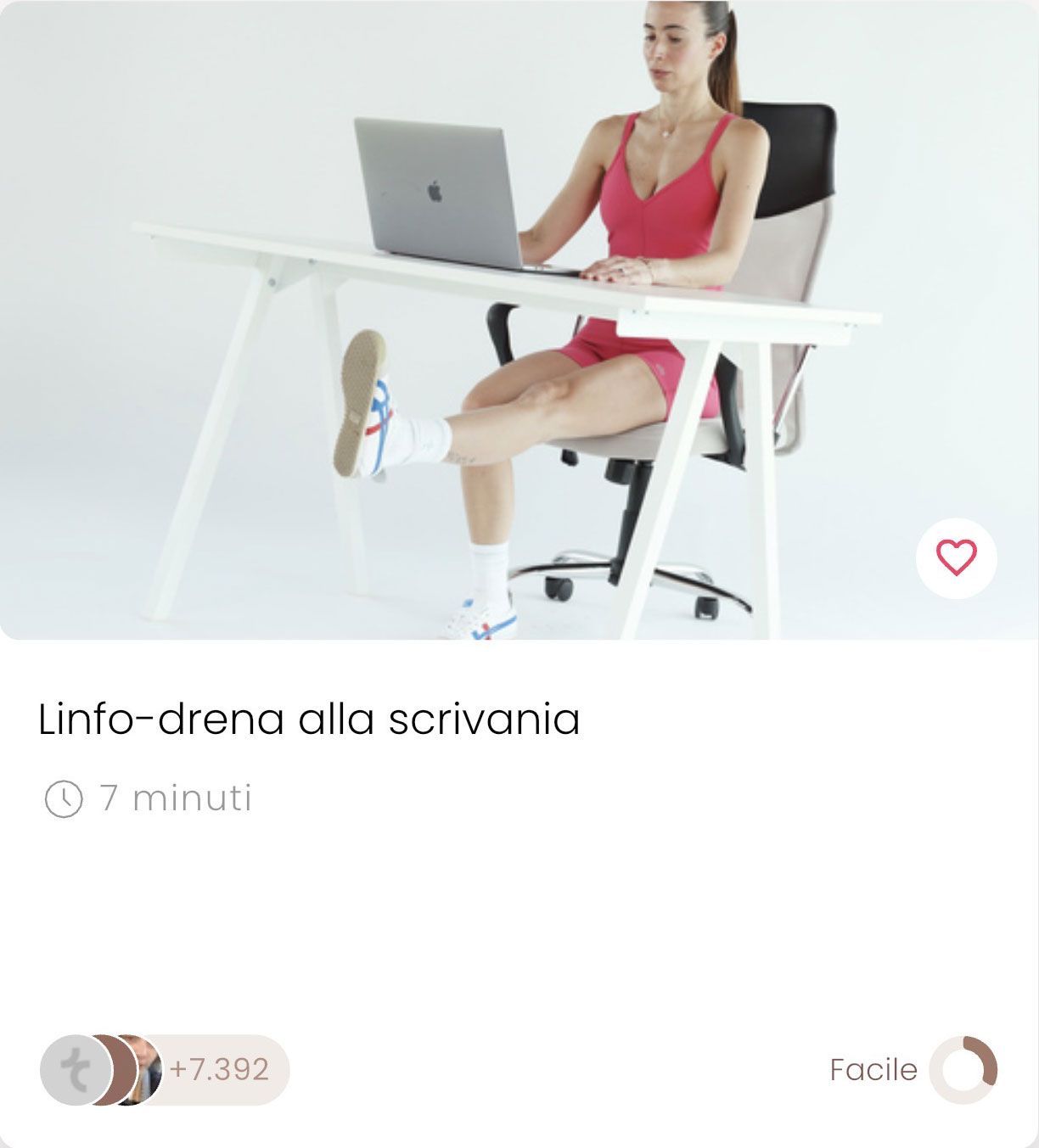
- If you are always at the desk, try: Lymph-drain at the desk
- If you have little time: 10 minutes to reset your posture
Find the Lymphatic Drainage Pilates Journey that's right for you
Frequently asked questions
How long does it take to improve mobility?
The first improvements are often felt after just 1-2 sessions. It seems impossible, but that sense of “freedom” in the joints you feel right after the session. More structural changes (a wider range of motion, less morning stiffness, improved posture) in 4-6 weeks of Lymphatic Drainage Pilates.
Do I have to be flexible to start?
No, in fact: the starting point is exactly where you are now. If you are very stiff you will see incredible improvements from the very first weeks.
Can I work on mobility even if I have joint pain?
Yes, but carefully. Gentle, progressive movement is one of the best cures for aching joints.
Start with Lymphatic Drainage Pilates Beginners and always pay attention to your body’s feedback. If you have pain during an exercise, perform it with a smaller range of motion or move on to the next exercise. If you have a specific condition (arthritis, advanced osteoarthritis, acute inflammation), talk to your doctor first.
Do I have to stretch after Pilates sessions?
In the Lymphatic Drainage Pilates sessions, both some final stretching exercises and many mobility exercises are integrated.
How often do you have to work on mobility to maintain it?
Ideally 2-3 times a week. If you follow the Lymphatic Drainage Pilates sessions you do not have to do anything else.
In short
Joint mobility is not a question of age, of “being born a plank,” or of being genetically unlucky. It is the result of what you do (or do not do) every day.
If you are always sitting, in front of a computer or phone, or on the contrary if you do physically wearing and very repetitive work, you will need a few extra precautions to keep your body at its best.
But getting your mobility back (or improving it) is one of the best things you can do for yourself, to live a long time, well, and to always feel young, regardless of age.
Find the Lymphatic Drainage Pilates Journey that's right for you
Carlotta's insights, straight to your inbox
Just your name and email, unsubscribe anytime.