Why you can't sleep, what your body is really doing, and how movement changes everything
Insomnia, restless nights, broken sleep? What's really happening in your body, the most common causes, and why movement is one of the most underrated solutions.
You open your eyes, you look at the ceiling.
You are awake.
You feel it. You could get up and start the day.
But all around you it is still dark.
You start to realize it.
You look at the time.
2:50.
You knew it, it has happened again.
You woke up in the middle of the night and you already know there will be no way to fall back asleep.
I wish I could say it has never happened to me.
But the reality is that it has happened many, too many times.
Until a few years ago, this is exactly how most of my nights went.
They say sleep gets worse as you get older, but for me it was like this from the age of 18 to 27-28.
It had become unbearable.
So, as always, I started to inform myself, and my sleep has improved drastically over the last few years.
It still happens now, but a couple of times a month at most.
If you are here, it has probably happened to you too.
What insomnia really is
Insomnia is one of the most frustrating things that can happen, and there never seems to be a solution.
You would like to sleep, but you cannot, because you cannot decide to sleep. The more you try, the worse it gets.
Let’s start with an important distinction.
A sleepless night every now and then does not mean you suffer from chronic insomnia.
Sleeping badly one night, waking up, not being able to fall back asleep. It happens to everyone. Stress at work, a move, a trip, your period, a particular anxiety. It is annoying, but physiological, and it normally resolves on its own within a few nights.
Chronic insomnia is different.
We speak of chronic insomnia when you sleep badly for more than three nights a week, for more than three months. When it seems you have tried everything (supplements, herbal teas, meditations…), but nothing seems to work.
If you suffer from chronic insomnia, I recommend trying all these suggestions, but still turning to your doctor or a sleep specialist to understand the causes.
Melatonin and cortisol: the antagonists
You know Cinderella?
There is her, and then there is the stepmother.
She is the main character, the stepmother is the antagonist.
She is melatonin, the stepmother is cortisol.
But let’s see how these hormones work in reality.

First of all, let’s clarify a few things:
- Melatonin is the sleep hormone; theoretically it rises in the evening when the sunlight fades and the body prepares for rest.
- Cortisol is the stress hormone that every morning helps you wake up. It rises in the morning and then should gradually fall over the course of the day, until it is low in the evening.
When these hormones work well, you sleep well, and in the morning you wake up without problems.
When these hormones are dysregulated, the sleep problems begin.
The reasons these hormones can get thrown off are many: chronic stress (when cortisol never manages to come down, I talked about it here), shift work, hours in front of screens (especially in the evening), the clock change, time zones when you travel, the menstrual cycle, seasonal changes…
The reasons really are countless.
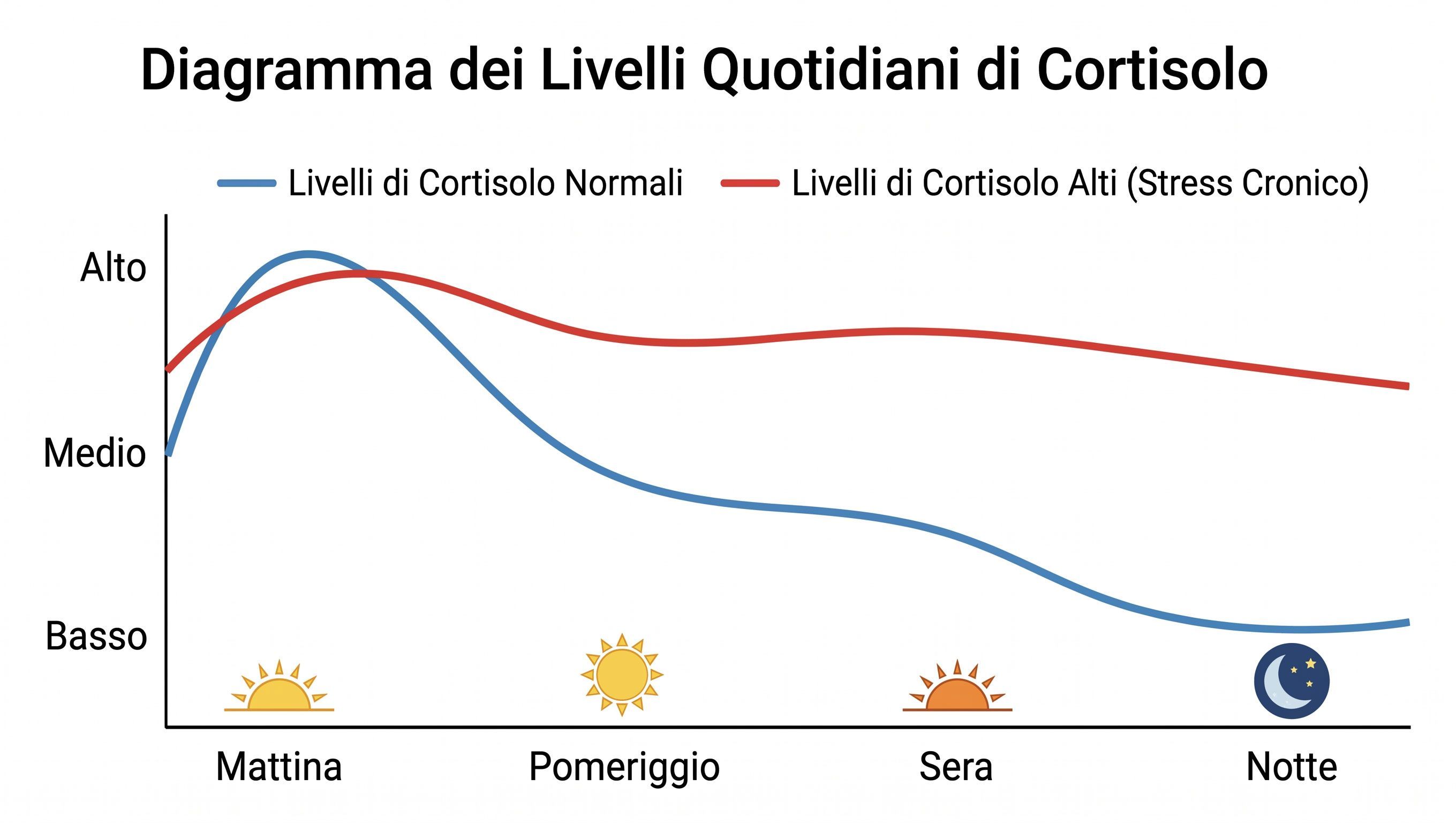
A brief aside on chronic stress: as we have seen, cortisol should be higher in the morning and then fall gradually over the course of the day, being at its minimum when you go to sleep.
Unfortunately in today’s life we live under perpetual stress and often cortisol stays high all day, including in the evening. When this happens, it is hard to fall asleep because melatonin struggles to rise.
And the paradox is that the less you sleep, the more cortisol rises. It is a dog chasing its own tail.
Why movement helps you sleep
Moving our body is one of the most powerful and most underrated tools for regulating sleep.
The reasons are multiple:
It regulates cortisol: training, especially in the morning, helps to “regulate” the cortisol peak at the right time. When you train, cortisol rises slightly (or even a lot, depending on the workout you do), naturally raising cortisol at the moment when it should be high (Hill et al., 2008). Movement regulates the circadian rhythm for the following 24 hours and gives you energy. This is why, after training, you are ready to start the day on the right foot.
It improves the quality of deep sleep. Sleep is divided into deep sleep, REM sleep (the moment when you dream), and light sleep. Deep sleep is the one in which the body truly regenerates and should represent about 20% of the total sleep of each night. Several studies show that those who move regularly spend more time in the deep sleep phase than those who are sedentary (Kredlow et al., 2015).
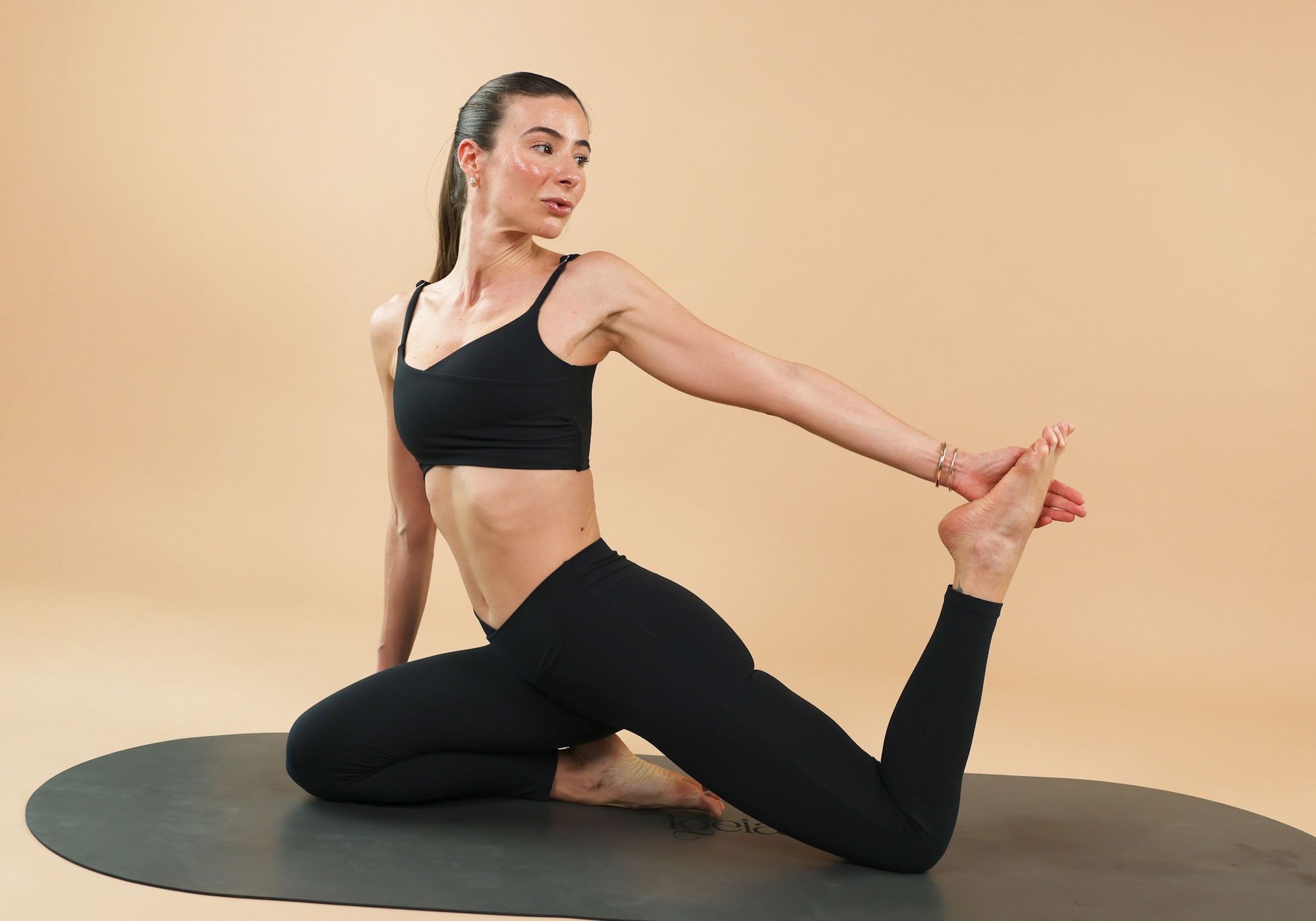
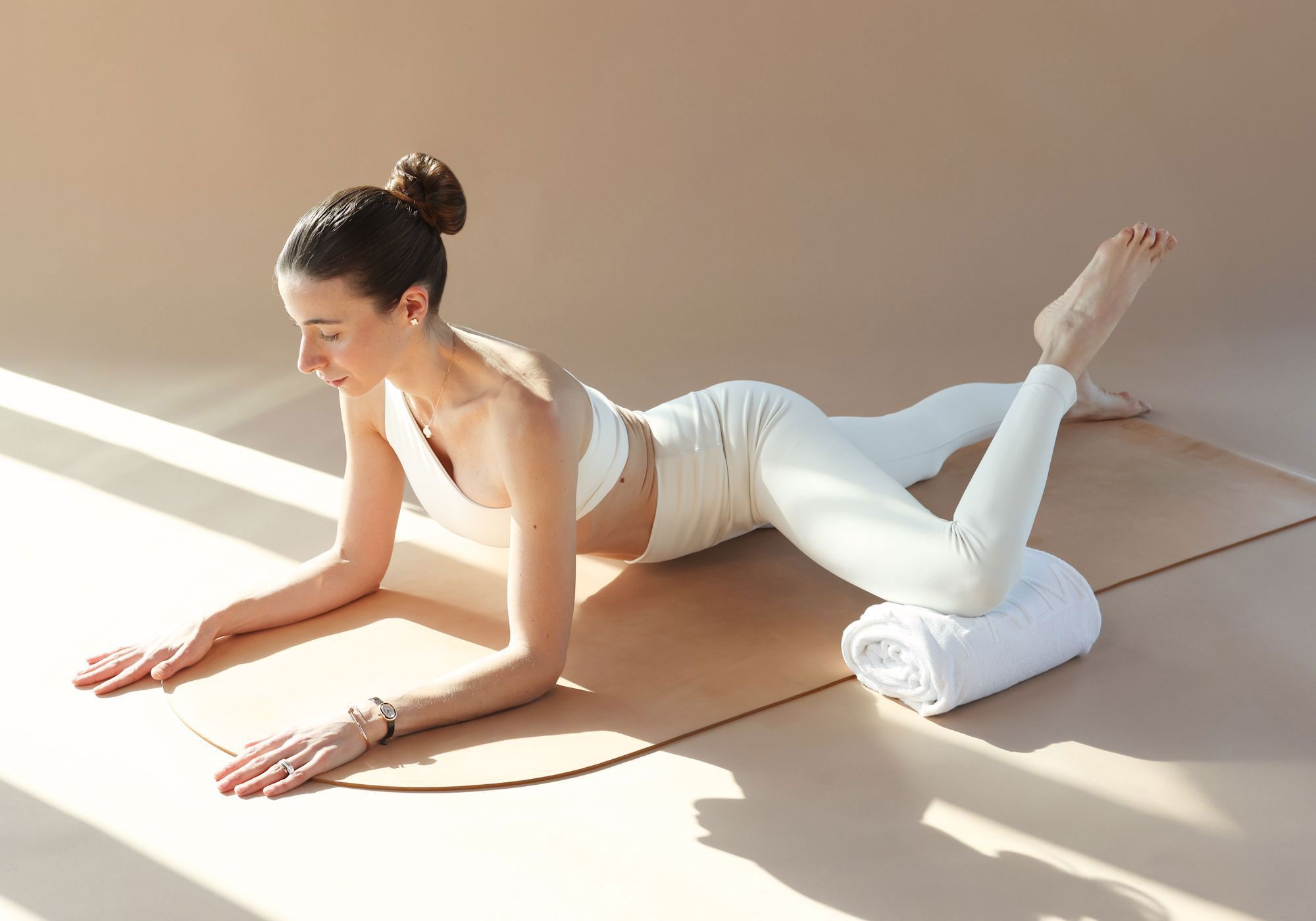
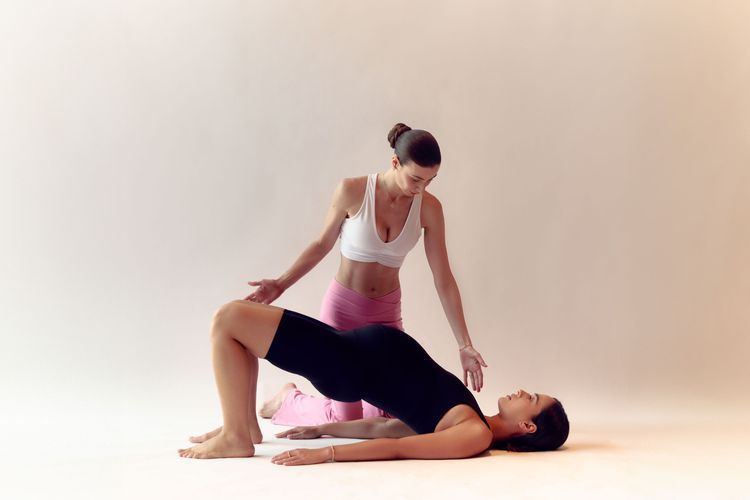
It activates the parasympathetic system, that part of the nervous system that manages rest and digestion. This happens above all when you choose forms of slow, controlled movement coordinated with deep breathing, like my Lymphatic Drainage Pilates.
The only case in which movement could compromise sleep is when you choose very intense workouts (with heavy loads, running, spinning) in the evening. This is because they increase adrenaline, which makes it hard to sleep.
Before sleeping you should instead choose workouts that help you release tension and lower the sympathetic system in favour of the parasympathetic one. Perfect in this case are the mobility classes, the inversion classes in the Light Legs section, and the stretching classes.

What to do in the evening to sleep better
If your goal is to sleep better, there are many small things you can try.
And that personally helped me a lot:
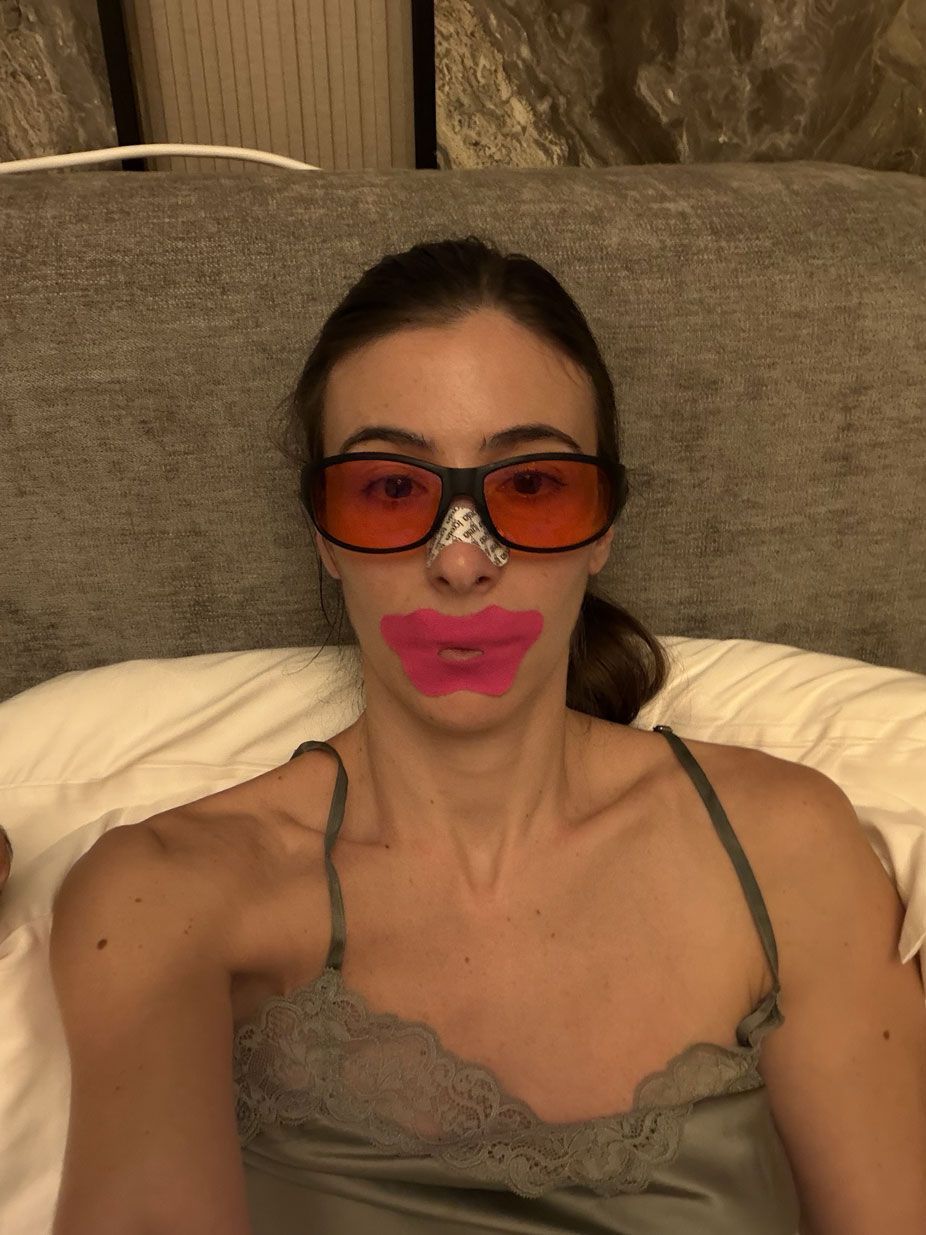
- Avoid blue lights such as phones and computers at least half an hour before sleeping. If you want to watch TV, use glasses with red lenses that block blue light. They cost little and are very useful.
- On your phone and computer, make sure to always have “night shift” mode active: the screen turns pinkish and reduces blue light. Personally I have it active automatically from 6 in the evening until 5 the following morning.
- Try to eat at least 2 hours before going to sleep and have a light dinner: the lighter your dinner and the further from the moment you go to sleep, the better you will sleep. In the end the saying “Breakfast like a king, lunch like a prince, and dinner like a pauper” was not so wrong. When you eat a lot in the evening, not only does your body struggle more to sleep, but you also reduce deep sleep.
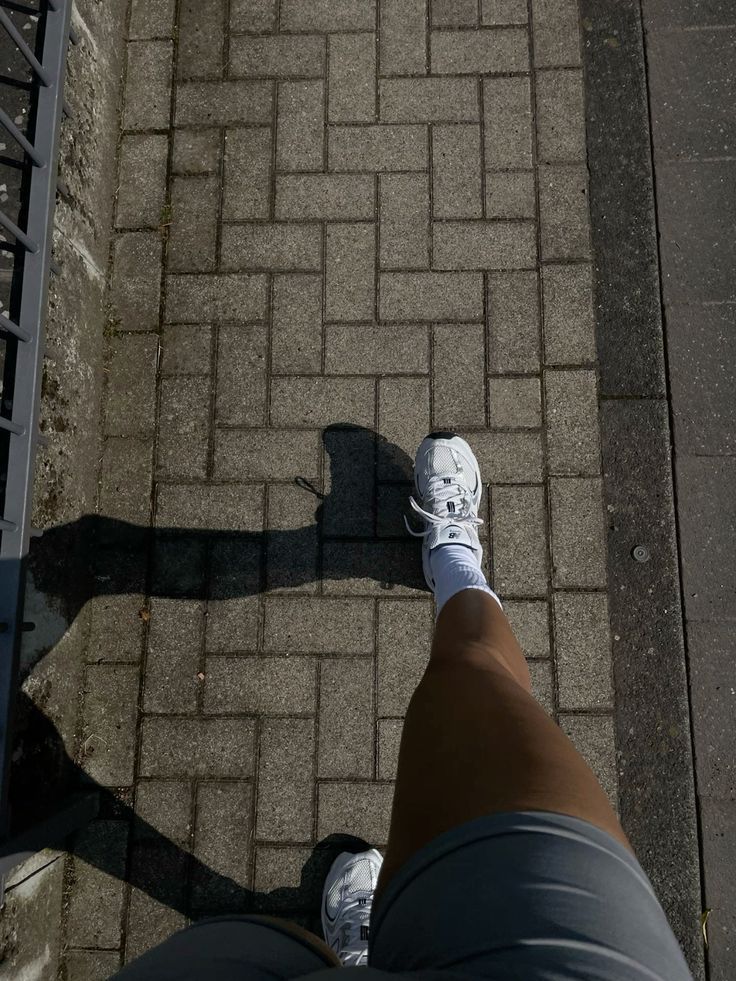
- If possible, take a short walk after dinner (without looking at your phone): it will help you relax, stabilize blood sugar, and improve digestion. And obviously all of this will improve your sleep.
- Take a warm shower before getting into bed.
- Put a few drops of lavender essence on your pillow; it aids relaxation.
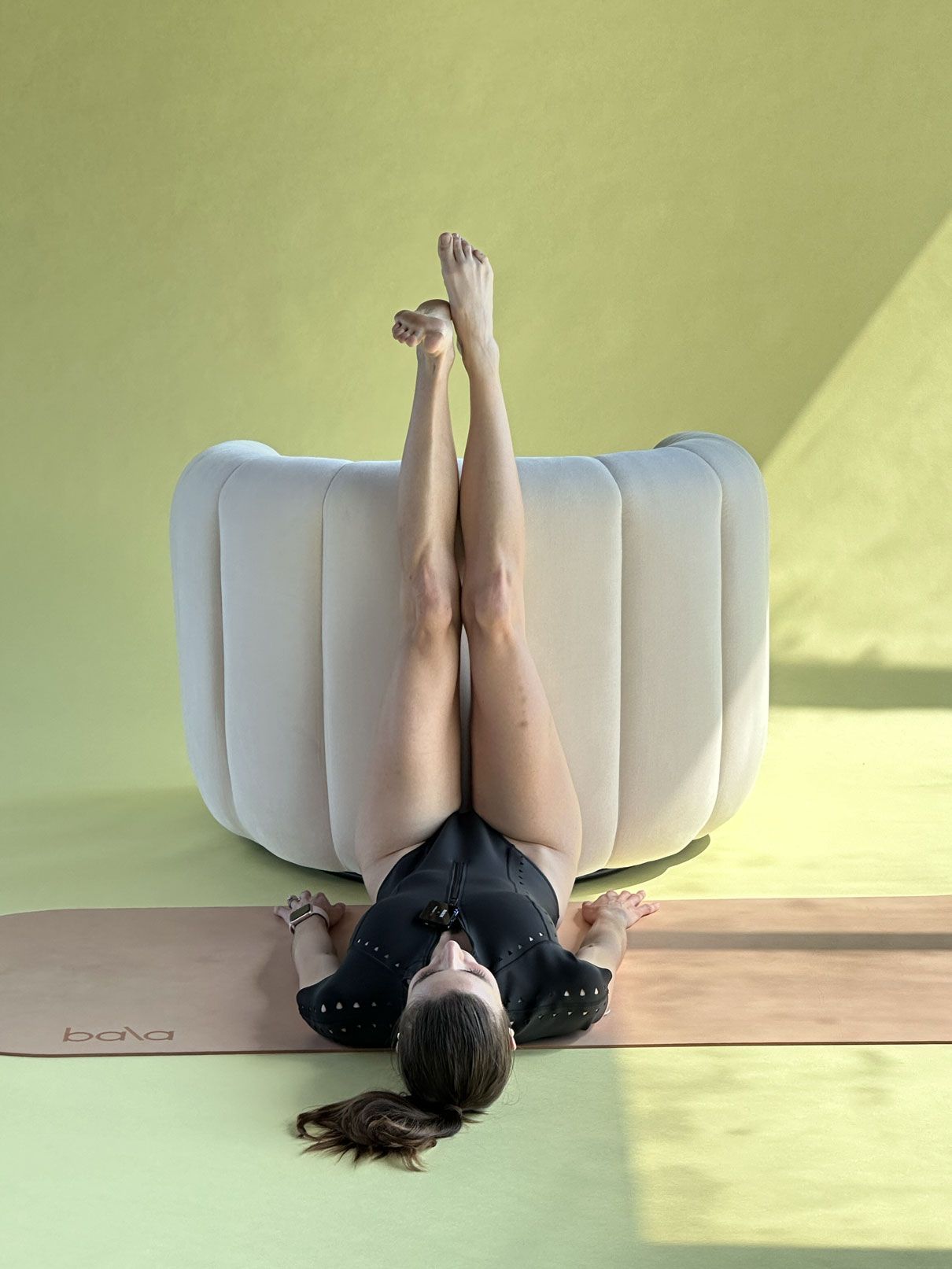
- Raise your legs: when you get into bed, rest your legs against the wall, placing a pillow under your pelvis if possible. Hold the position for 5-10 minutes, or follow the Light Legs in 7 minutes class. It will help you improve venous and lymphatic return (and consequently have less bloated legs the next morning), lower blood pressure, and help you relax, preparing the body for sleep.
- Try to always go to sleep at the same time, weekends included. I know that on weekends it is easier to go to bed late and wake up later, but “catching up on sleep” on Saturday does not really work and is not good for your body. What it does is shift your circadian rhythm forward. And on Monday you pay the bill.
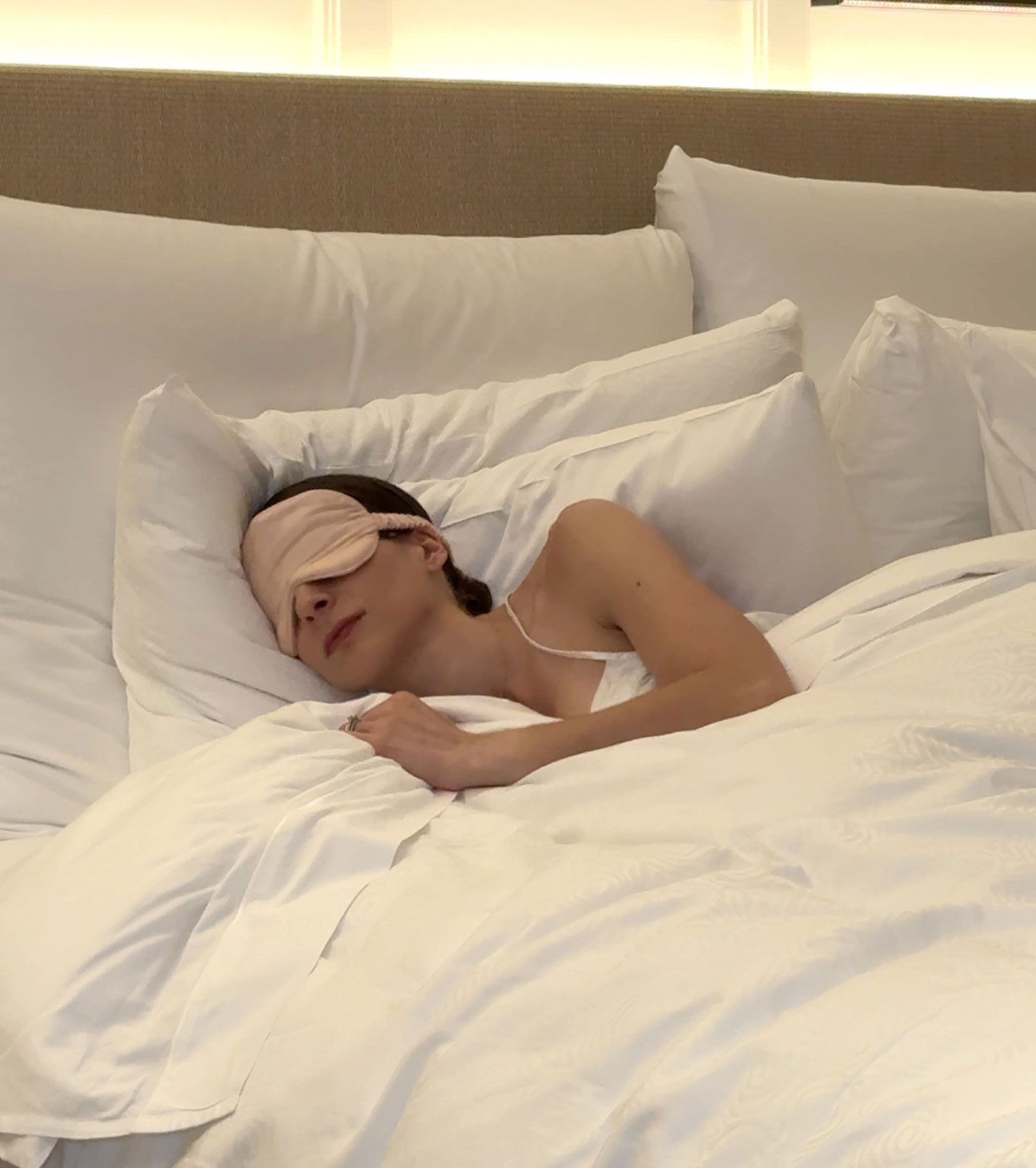
- Make sure the room you sleep in is completely dark and silent. If it is not, you can always use an eye mask (I have used a silk one for years; after the first few days you get used to it and it becomes indispensable) and earplugs. Be careful if you have an electronic alarm clock that continuously displays the time: the red text compromises sleep. For the alarm, better to have your phone in airplane mode and not too close to your head, or an analogue alarm clock without ticking.
- Even if you are not “dropping from sleepiness,” turn off the light and do a short meditation. On the app you will find the Meditation for Sleep, which can help you. Alternatively, focus on your breathing: inhale for 4 seconds, hold your breath for 7, and exhale for 8. Your body will gradually relax.
What to do during the day to sleep better
A good night’s sleep starts the day before. Here is what to do:
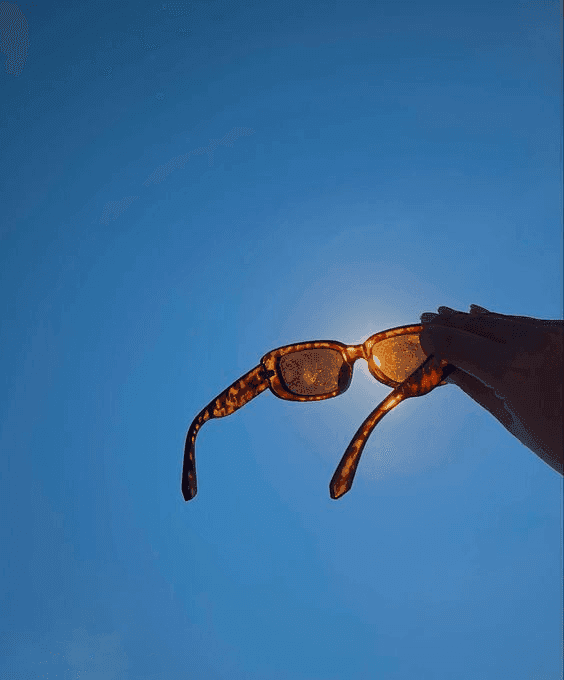
- As soon as you wake up, look at the sunlight. And if you live in a place that is often cloudy, buy a lamp made for this. Look at the light for 5 minutes. It will help you raise cortisol in the morning and wake up (I swear, it works better than a coffee) and regulate your circadian rhythms over the following 24 hours.
- Exercise; as we have seen, movement helps to regulate the circadian rhythms.
- Avoid coffee after noon or, if that is not possible for you, at least after 2 in the afternoon. Do not overdo your total coffees: if you have trouble sleeping, drink at most 1-2 coffees a day. Especially if you suffer from chronic stress, try replacing coffee with matcha: it contains L-theanine, which reduces stress and does not give you “the hit” of energy with consequent tiredness when you drink it (Hidese et al., 2019).
- Avoid alcohol. I know that for many people this is a sore point, but alcohol disturbs the REM phase of sleep, alters cortisol levels, and increases resting heart rate (PLOS Digital Health study). The result: you wake up more tired, even if you slept many hours.
Two good habits:
- Create a “pre-sleep” routine: doing the same things mechanically every day makes your body understand that the time to sleep has come.
- Monitor your sleep with specific tools such as the Oura ring (which I personally use) or Whoop (which Matteo, my husband, uses). It will help you understand what time you go to sleep, whether you are consistent or not, how much you are actually awake at night (sometimes it is hard to tell), and how your sleep changes during the different phases of the menstrual cycle (these devices also measure body temperature and are able to tell you which phase of the cycle you are in).
What to do the morning after a sleepless night
Let’s now come to what to do when, despite all your good intentions, you spend a sleepless night.
It seems counterintuitive, but the best thing you can do the morning after a sleepless night is to move your body.
What works:
- A 20-30 minute walk, ideally in the open air and in natural light. As we said earlier, light is the strongest signal for morning cortisol.
- A short Lymphatic Drainage Pilates session; even the classes in the 15 minutes section are perfect.
- Avoid, on the other hand, high-intensity workouts: with little sleep the body is already under stress (more than usual), and a workout that is too intense risks raising cortisol further.
And postpone what you can: the day after a rough night is not the best time to make important decisions, have difficult conversations, or give your best. Your mind does not work as it should (Lim & Dinges, 2010); be kind and patient with yourself.
Frequently asked questions
How much should you sleep?
About 7 hours a night. In general, for women the hours of sleep change based on the moment of the menstrual cycle: during the luteal phase (the one immediately before your period), you may need to sleep half an hour more.
If you constantly need to sleep at least 8-9 hours to be rested, there might be something wrong. Perhaps you are too stressed and your body is telling you so in this way. As we have seen, though, it is not only quantity that counts, but also and above all quality: try to go to sleep and wake up at the same time, and have a light dinner.
Does an afternoon nap help or make things worse?
If it is short (for example 20 minutes before 3pm) it can be excellent. If it is very long or late, it shifts the circadian rhythm and makes it harder to fall asleep in the evening and sleep well at night.
Does melatonin as a supplement work?
It can work in specific cases, but it is not a magic solution for insomnia. It also depends a lot on the dosage you take, and in the long run it might not be the best solution.
Do herbal teas and natural remedies help?
Chamomile, valerian, and lemon balm have documented relaxing effects, though modest. They can lend a hand, and above all, if you like them, they can be part of your evening routine, but if you have insomnia problems you cannot hope to sleep well simply with a herbal tea.
When should I worry and go to the doctor?
If the difficulty sleeping has lasted more than 3 months and drastically worsens the quality of your life (mood, work, relationships), it is time to talk about it with your doctor or a sleep specialist.
In short
Sleep does not begin the moment you get into bed. It begins the day before.
If you want to sleep better:
- Move every day, even just 15 minutes. If you have little time, try my Lymphatic Drainage Pilates Express, one 15-minute session every day to tone, debloat, and relax, designed specifically for those with a full and stressful life. Try it free for 7 days.
- Try to keep regular timings, going to sleep and waking up at more or less the same time.
- Have a light dinner, as far as possible from the moment you go to bed.
- Avoid coffee after 2pm and alcohol.
- Look at the light in the morning for a couple of minutes and in the evening use the red-lens glasses.
- Create an evening routine that makes you feel good: a walk after dinner, a warm shower, legs up the wall, a herbal tea or a chamomile.
- Be patient: sleep improves over time, not in one night. Personally, it took me several years of study and optimizing my routine, and now I can say I have found what works for me.
When it comes to wellbeing, sleep is always the most forgotten piece, but also one of the most important. If you want to take care of your body in a complete way, start with movement. It will also help you sleep. My Lymphatic Drainage Pilates is designed precisely to tone, debloat, and relax.
Carlotta's insights, straight to your inbox
Just your name and email, unsubscribe anytime.