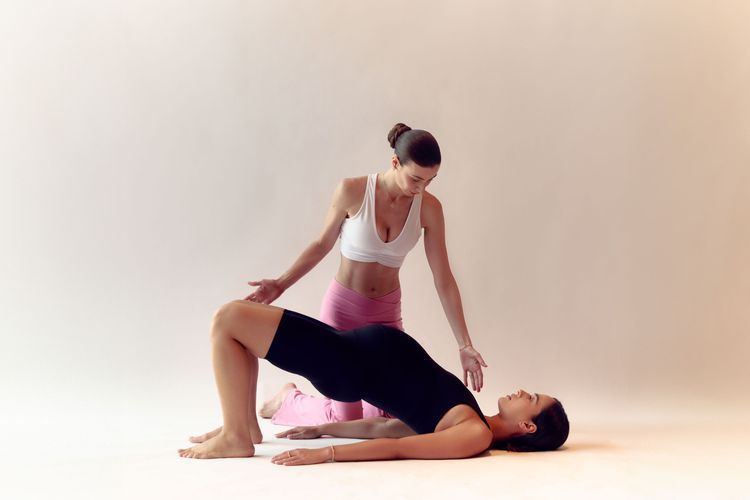
Working out during your menstrual cycle and how to adapt Pilates to every phase without ever stopping
Stopping your workout during your period makes cramps and bloating worse. The right Pilates workout for each phase of your menstrual cycle and what helps with pain.
“Carlotta, can I work out during my cycle (meaning my period)?”
It’s one of the questions I get asked most often.
The world splits between those who say “don’t work out for 7 days” and those who say “carry on as usual, there’s nothing to change.”
To me, the truth sits in the middle, and as always, there’s a short answer and a long one.
The short answer is: yes.
The long answer is: yes, but what to do depends on your body and how you feel.
In this article I want to share everything I’ve learned (about myself, too) about adapting your training to the phases of your cycle.
Three important things before we start:
Every body is different. What works for your friend may not work for you. What works for me (I have PCOS and insulin resistance; I talk about it in this article) may not work for you.
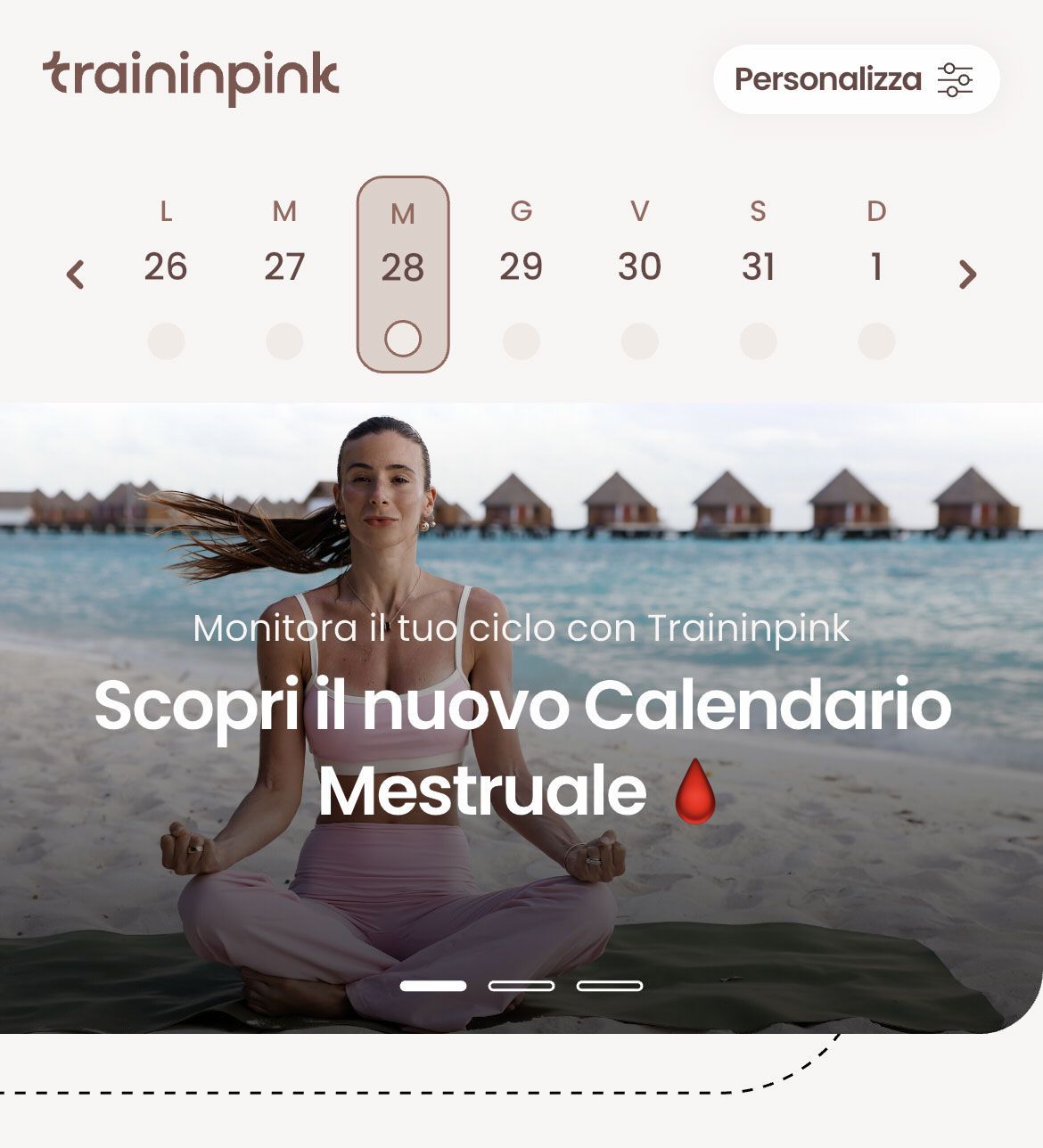
How you feel throughout the month tells you a lot about how your body is working. That’s why we introduced the menstrual calendar in the app. Learning to read your cycle is one of the most powerful things a woman can do for herself (I honestly think it should be taught in school).
There’s no right or wrong. Even something that’s theoretically perfect might not suit you. Try, test, get to know your body.
The 4 phases of the cycle and what happens to your body
Let’s take a step back and look briefly at how the female cycle works.
WAIT! I know you’re about to skip this part, but don’t. I promise I won’t be boring, and I’ll give you interesting information nobody has ever given you.
The cycle divides into 4 phases.
Each one has specific hormonal characteristics that change a great deal about how you feel: your energy level, your mood, and your body.

Menstrual phase (roughly days 1-6)
The cycle begins on the first day of your period. Estrogen and progesterone levels are at their lowest. Body temperature is low. You feel more tired; you may notice cramps or headaches.
Follicular phase (roughly days 7-13)
Estrogen starts rising. The body prepares for ovulation. You feel good; energy builds day by day. You’re debloated and your skin is glowing.
Ovulation (around day 14)
Estrogen reaches its peak. Testosterone has a small peak too. How do you feel? That’s a good question. For some women it’s the moment of the month when they feel their best; for others it’s when they feel most bloated (especially if you have endometriosis, fibroids, or histamine sensitivity, you might feel very unwell in these days). Listening to yourself is essential.
Luteal phase (roughly days 15-28)
Progesterone rises gradually and takes over around day 21. Estrogen has a second, slightly lower peak. After ovulation, body temperature rises and stays elevated until your period begins.
It’s the phase when you’re most bloated (the luteal-phase hormones, estrogen and progesterone, cause water retention), most tired, and most irritable (serotonin, the happiness hormone, drops precisely in these days). Your breasts feel tender. Hunger increases.
Did you know that progesterone raises your basal metabolism by 100-300 kcal? It’s not “YOU”; it’s pure physiology! In the final days of the luteal phase (right before your period), estrogen and progesterone crash rapidly. That’s why those days feel so hard.
Why you should NEVER stop completely
There’s a myth that’s been circulating for years: “During your period you shouldn’t work out; you have to listen to your body.”
And part of that is definitely true: you do have to listen to your body.
But the rest is completely misleading.
Movement during your cycle, if dosed correctly and adjusted to how you feel, brings 3 benefits.
Reduces pain
I’m not joking. Movement increases circulation and releases endorphins and endocannabinoids, which are the main players in reducing menstrual pain.
So many women tell me “when I do your Pilates, my cramps go away.” It’s not suggestion; it’s physiology.
And Lymphatic Drainage Pilates in particular is a little “magical” here (I always tell you it’s not magic; for once, grant me some poetic license).
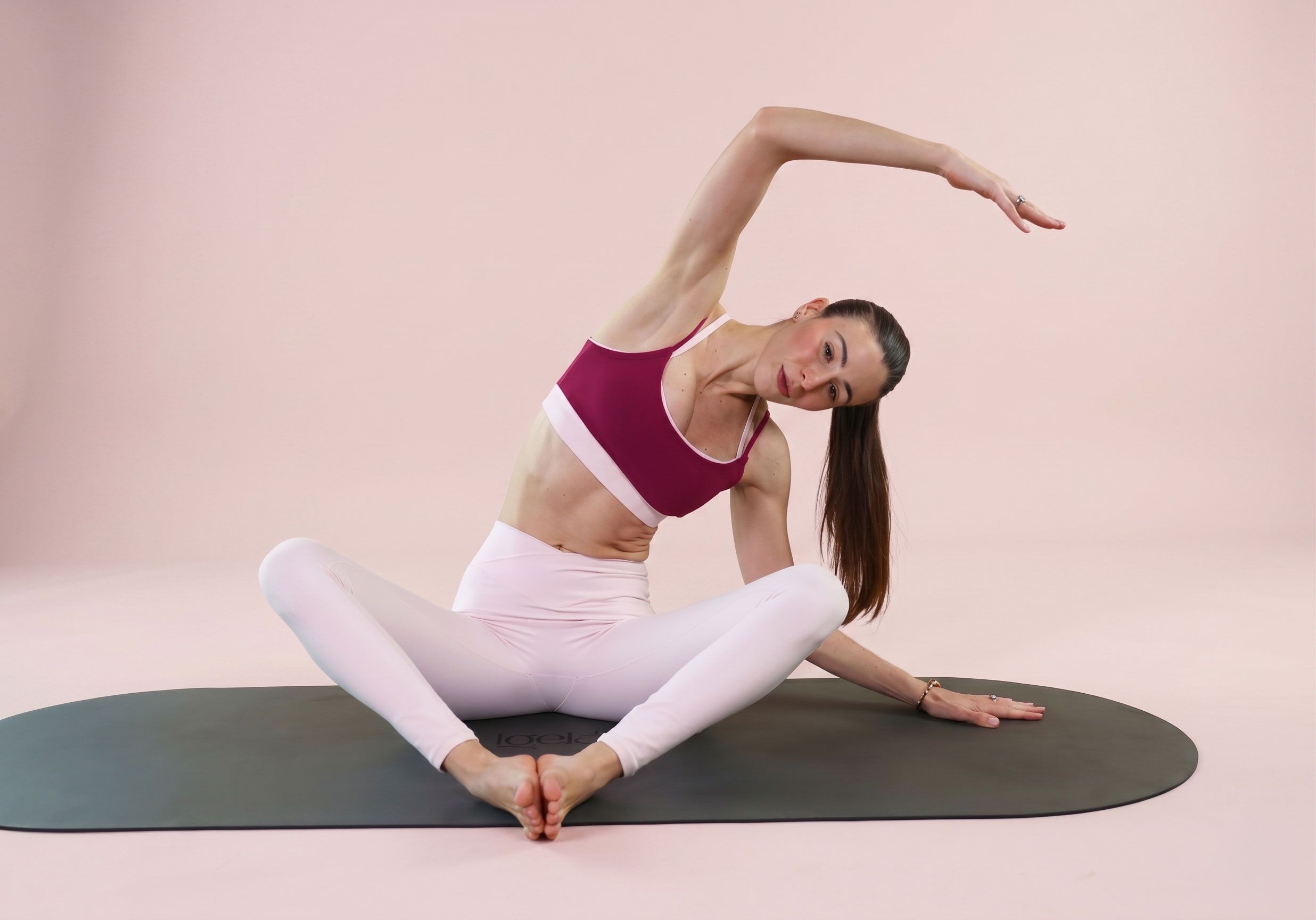
By helping the body drain excess fluid and reduce local inflammation, it acts on exactly the mechanisms that cause menstrual cramps.
The lower-belly bloating you feel during your period is due to:
- pelvic inflammation
- uterine congestion
- pressure on the tissues
- lymphatic stasis.
Gently moving the lymphatic system means taking pressure off precisely that spot. Less pressure = less pain. On top of that, activating the lymphatic system speeds up the elimination of prostaglandins, the molecules that cause pelvic cramps.
Plus, the diaphragmatic breathing we begin every session with helps relax the pelvic floor, one of the muscles under the most stress during menstruation. A less contracted pelvic floor = less pain.
Supports hormonal balance
There’s scientific evidence that regular physical activity reduces pre-menstrual symptoms and helps regulate the cycle. This is especially true in cases of PCOS or hormonal imbalances.
For PCOS in particular (which I have myself), several studies highlight the effectiveness of exercise in managing symptoms, and physical activity is an integral part of treatment.
As for menstrual pain, a 2019 study by St. Mary’s University in collaboration with FitrWoman, involving more than 14,000 women (using data from the Strava app), found that 78% of participants reported a reduction in menstrual pain with exercise. And the best types of training for this are moderate-intensity ones, like Pilates, yoga, and brisk walking.
Helps you stay consistent
Let’s do some quick math together.
Say you stop for 5 days a month for 12 months. That’s 60 days. Two full months of skipped sessions. And at an average of 3 sessions a week, that’s about 27 sessions.
But that’s not even the real point. The point is that every single time, restarting is harder than continuing.
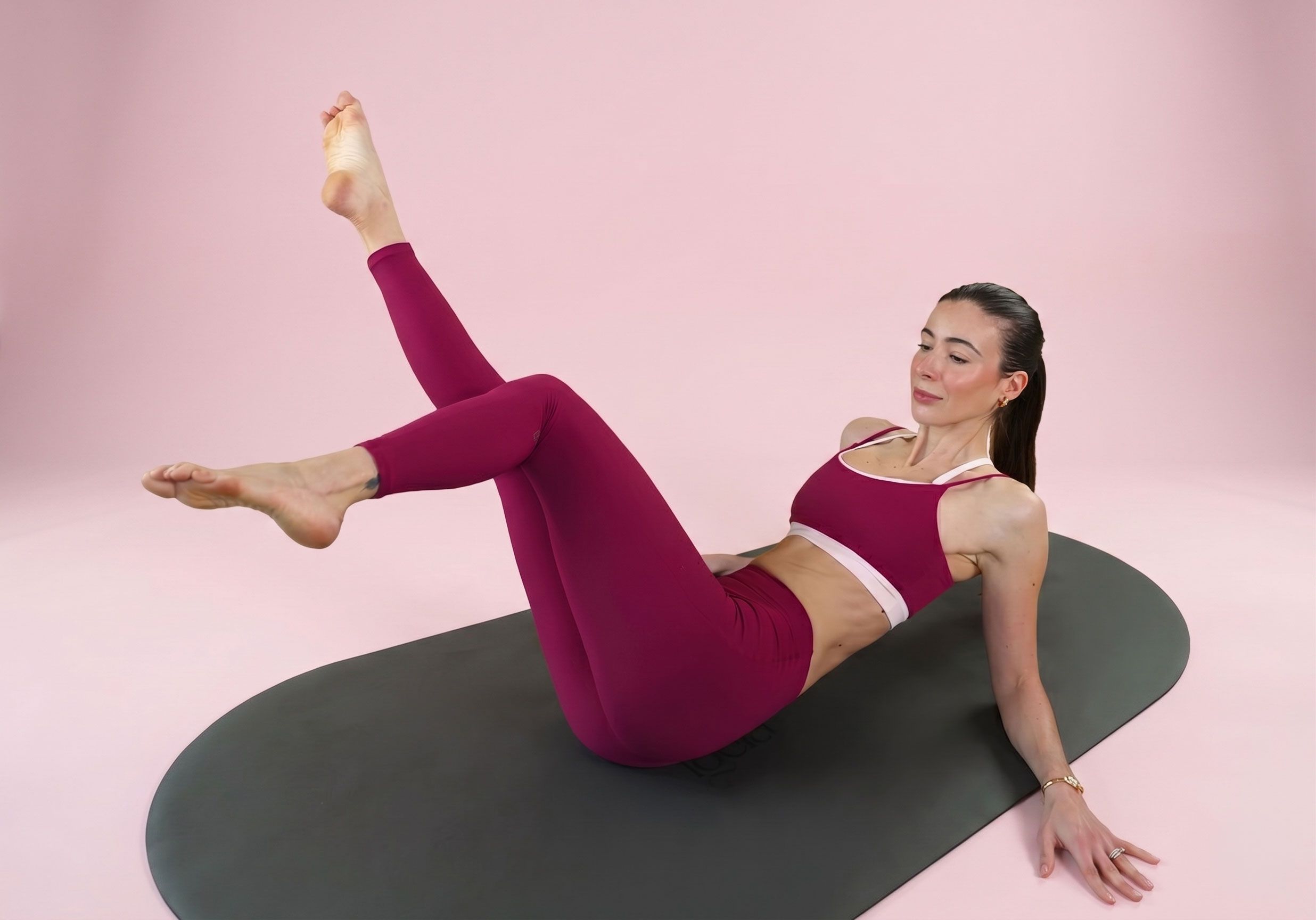
And every time you stop, there’s a risk you won’t restart for much longer than 5 days. Maybe one break becomes a month. Another becomes two. And by the end, you’ve skipped half the year.
What to do during your period
So let’s get to the point… during your period, what’s best to do?
Here’s my take.
If you don’t have any particular pain, just mild discomfort
Continue with your normal Journey. As we've seen, Lymphatic Drainage Pilates is perfect for the menstrual period, and staying on your Journey maximizes results over time.
If you feel very bloated in the evening, I’d suggest adding a few specific sessions to drain your belly or legs. For example, the Classes in the Debloat Your Belly or Leg Relief sections.
Three classes I’d choose based on your energy level:
- If you have plenty of energy: Draining abdominal reset
- If you have decent energy but not your usual: Drain and lighten the abdomen
- If you have low energy: Deep anti-bloating abdominals
If instead you suffer significantly, have strong cramps, and struggle to work out
Choose the classes in the During Your Period section.
It’s a category of specific classes I structured precisely for when you’re not at your best, but you still want to do something, because you know physical activity can help you.
In that case:
•Lymphatic drainage stretching
•Standing lymphatic drainage
•Detox and toning with foam roller
are all excellent options.
Don’t forget the importance of the lymphatic system during the menstrual phase: when you’re short on time (2 minutes), even just opening the Big Six can make a big difference. I talked about it in DIY lymphatic drainage: the 6 points to activate every morning in 2 minutes
If your pain is debilitating
If your period pain forces you into bed, do this:
- Keep a consistent training routine throughout the month (as we’ve seen, in the long run it helps reduce symptoms). Lymphatic Drainage Pilates can help you a great deal.
- In the pre-period days, only if you’re already starting to feel very unwell, swap your Journey for lymphatic-drainage mobility. Try the Postural Lymphatic Drainage Pilates, Pilates for mobility: unlock your hips, and Free hips flow Classes.
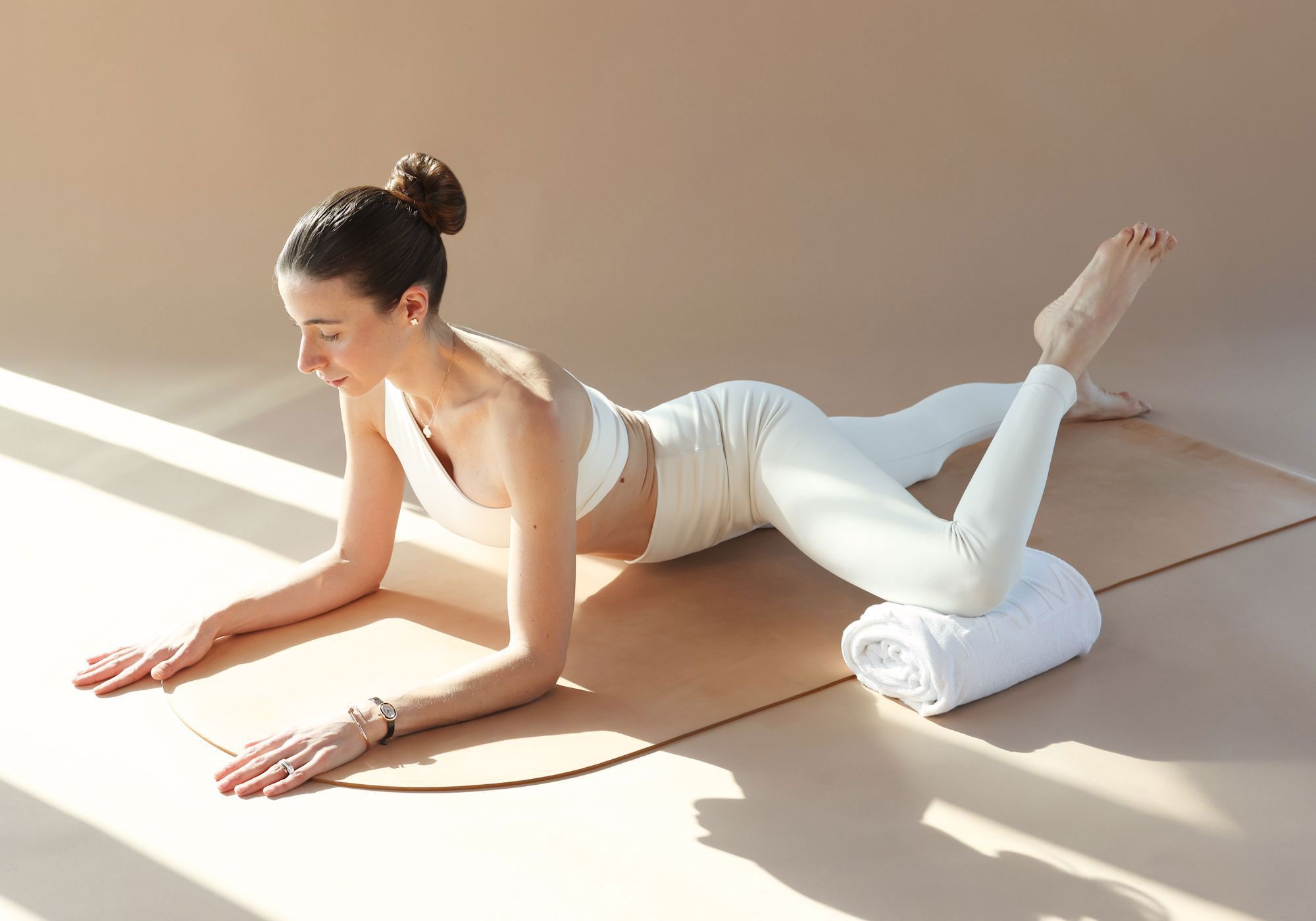
- On the days of your period, choose what’s called “active rest”: walking, plus a few drainage sessions like Light legs in 7 minutes (an inversion session for lighter legs), Hypertonic pelvic floor: release and mobility (it will help you relax your pelvic floor), Unblock your diaphragm and drain (only if lying face down doesn’t bother you), Hypertonic pelvic floor: free your hips.
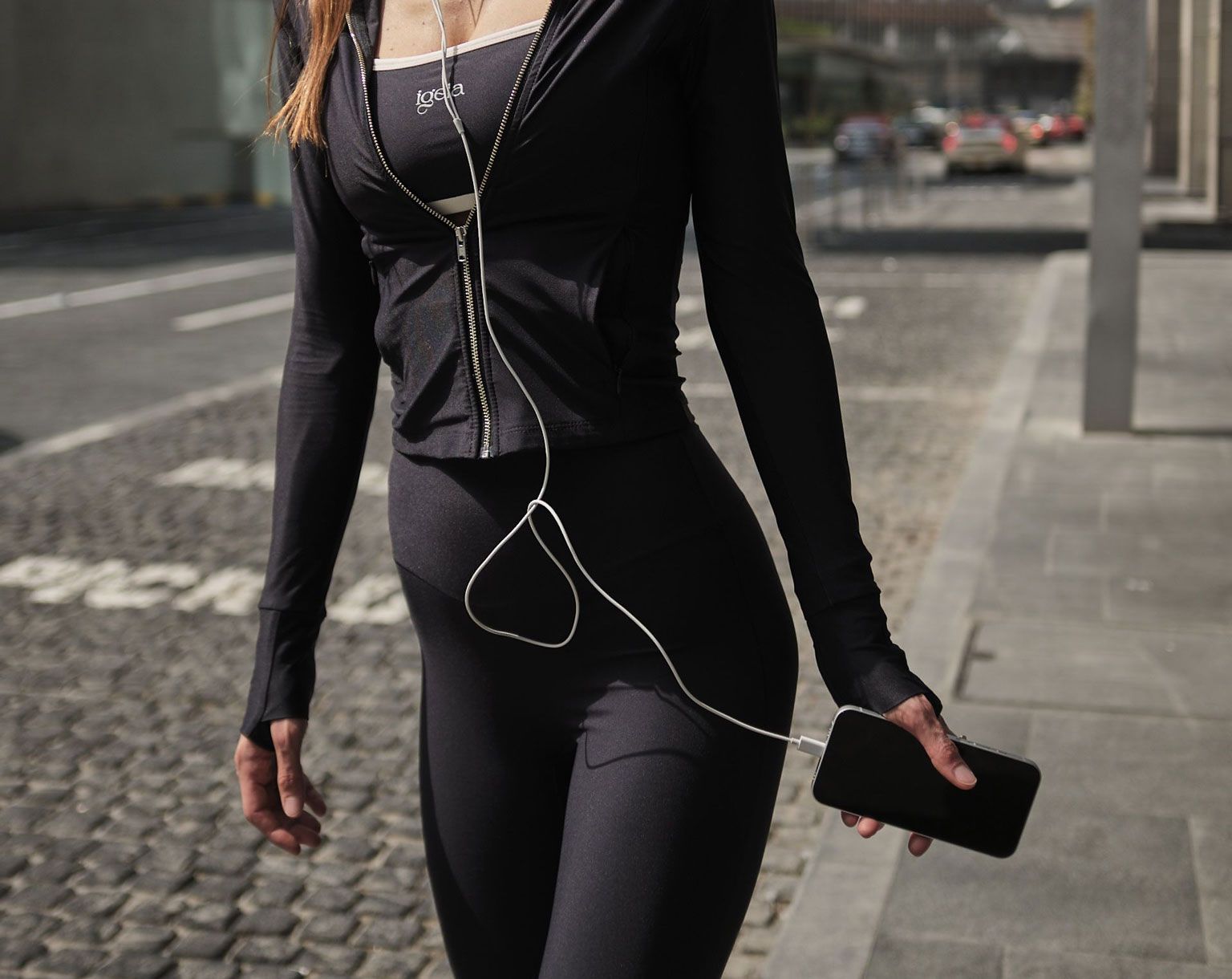
Remember: walking is your best ally even on the hardest days. Twenty or thirty minutes of walking a day completely changes your mood and makes you feel physically better right away, setting your body and your lymphatic and blood circulation back in motion.
When symptoms are a warning sign
I want to be honest on this point, because I think it matters a great deal. I too suffered badly from period pain in the past. And even though you may have heard that it’s normal and should be accepted or managed with painkillers, I want you to know that no, it’s not normal. It’s actually your body sending you signals about conditions that should be diagnosed.
I myself ignored the symptoms of PCOS (polycystic ovary syndrome) for years. Only when I started to feel REALLY unwell did I give in, get tested, and begin to accept that I might have a medical condition.
Don’t make my mistake. It was my lowest point, but it also gave me the strength to be reborn. And now I regret not doing it sooner.
Here’s a list of symptoms not to ignore:
Very irregular cycles, extremely long or short: for example, varying by more than 5-7 days a month (in practice, you never know when your period will arrive), skipping for more than 2-3 months, or, on the contrary, periods arriving twice in one month
Debilitating pain that forces you into bed
Very heavy bleeding
Spotting(bleeding) outside your period
Pain during intercourse that worsens close to your period (possible endometriosis)
Persistent hormonal acne + abnormal hair growth all over the body (including the face) + irregular periods (possible PCOS)
In all of these cases, talk to your gynecologist. Get specific tests (blood work, ultrasounds, insulin resistance tests like HOMA-IR and a glucose tolerance curve).
I’m telling you from experience: a diagnosis changes your life.
Lymphatic Drainage Pilates and your cycle: why they work so well together
I invented Lymphatic Drainage Pilates for myself, to deal with my own problems. I talked about it in You looked better before: the chronic inflammation behind a body that seems healthy
Only later did I decide to make it available to all of you.
That means Lymphatic Drainage Pilates was born from and designed by a woman (me) for a woman (still me 🤣).
It goes without saying that, of all workouts, Lymphatic Drainage Pilates adapts particularly well to the menstrual cycle.
The main reasons are these:
-
Reduces bloating
Lymphatic drainage helps reduce the water retention so many of us experience during ovulation and in the pre-menstrual days. Legs that feel less heavy, a less bloated belly, sock marks on your ankles that are less “carved in”… it’s a difference you notice right away.
-
Reduces baseline inflammation
Many of the painful components of the cycle (cramps, headaches, joint pain) get amplified when the body is chronically inflamed. By lowering your baseline inflammation, you feel better and suffer less all month long, including during your period.
I talked about it in 4 ‘healthy’ habits that are actually inflaming you
But that’s not all: I designed my app myself.
I know women’s problems. I know each woman’s needs.
That’s why I created the During Your Period section and added the menstrual calendar.
So you can have a single app that “gathers” everything you might need to take care of your health.
Frequently asked questions
Can I use a tampon or menstrual cup during Lymphatic Drainage Pilates sessions?
Yes, absolutely. The controlled movement of Pilates doesn’t interfere.
Should I avoid inversions (legs up the wall) during my period?
There’s no scientific evidence that they’re harmful; on the contrary, for many women they help reduce cramps and bloating. Listen to your body.
Will training make me “lose” my period (amenorrhea)?
Moderate, regular training does not in any way cause amenorrhea (loss of your period).
What can lead to amenorrhea is the combination of excessive training + inadequate nutrition. If you train a lot (because, for example, you do other sports besides Lymphatic Drainage Pilates), make sure you eat enough and cover all your micronutrients: protein for your muscles, fats for your cycle, and carbohydrates for energy (and for your cycle, too).
If your period disappears, always talk to your gynecologist to identify the cause.
Can I do Lymphatic Drainage Pilates even on my most painful days?
If the pain is mild to moderate, yes. If the pain is very intense, try a mobility session from the Classes in the During Your Period section.
And if you truly feel unwell or aren’t up for it: rest! One day off doesn’t change your Journey.
In short
Periods shouldn’t be painful or debilitating. If they are, you need to understand why. It’s your body trying to tell you something.
Use the menstrual calendar to track your cycle and try to understand how it works (for example, taking your basal temperature, meaning your temperature right after waking, can tell you a lot about your cycle).
As for training: never stop completely. As we’ve seen, Lymphatic Drainage Pilates even helps with menstrual pain. But if needed, adapt your exercise to your needs: a 15-minute mobility session or a 7-minute Light Legs session beats no session at all.
Find the Lymphatic Drainage Pilates Journey that's right for you
Carlotta's insights, straight to your inbox
Just your name and email, unsubscribe anytime.