Pilates results after 3 months with no diet and no running. Ilaria's transformation
Pilates results after 3 months: Ilaria’s transformation, training before work, with no diet, and after giving up running. Here’s exactly what she did.
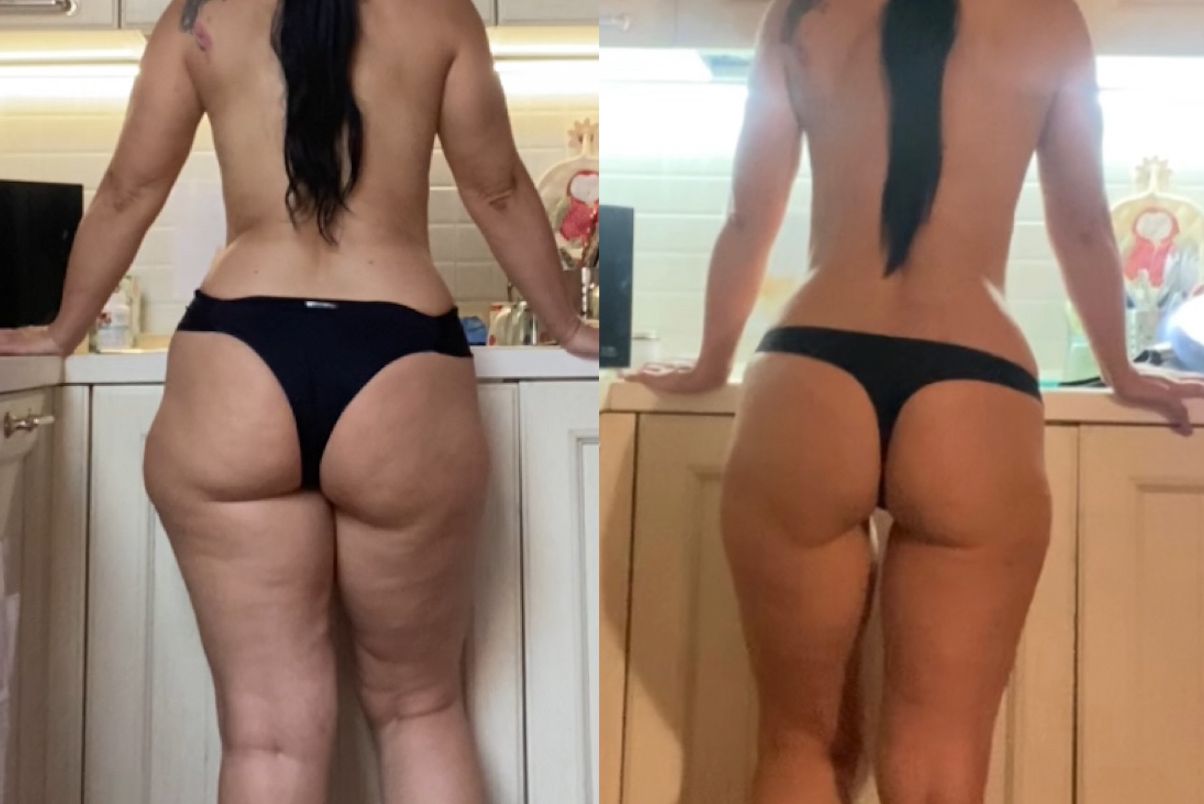
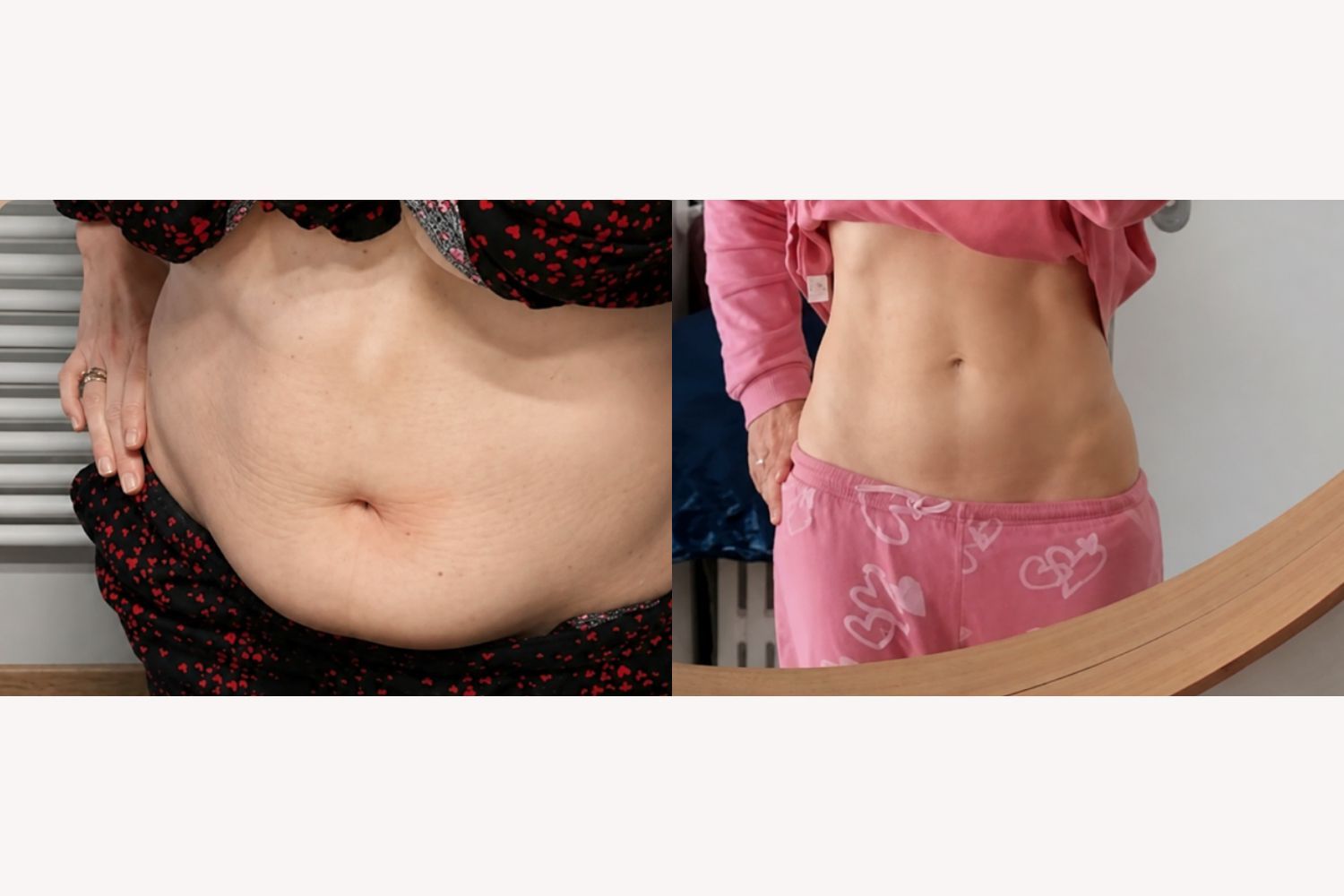
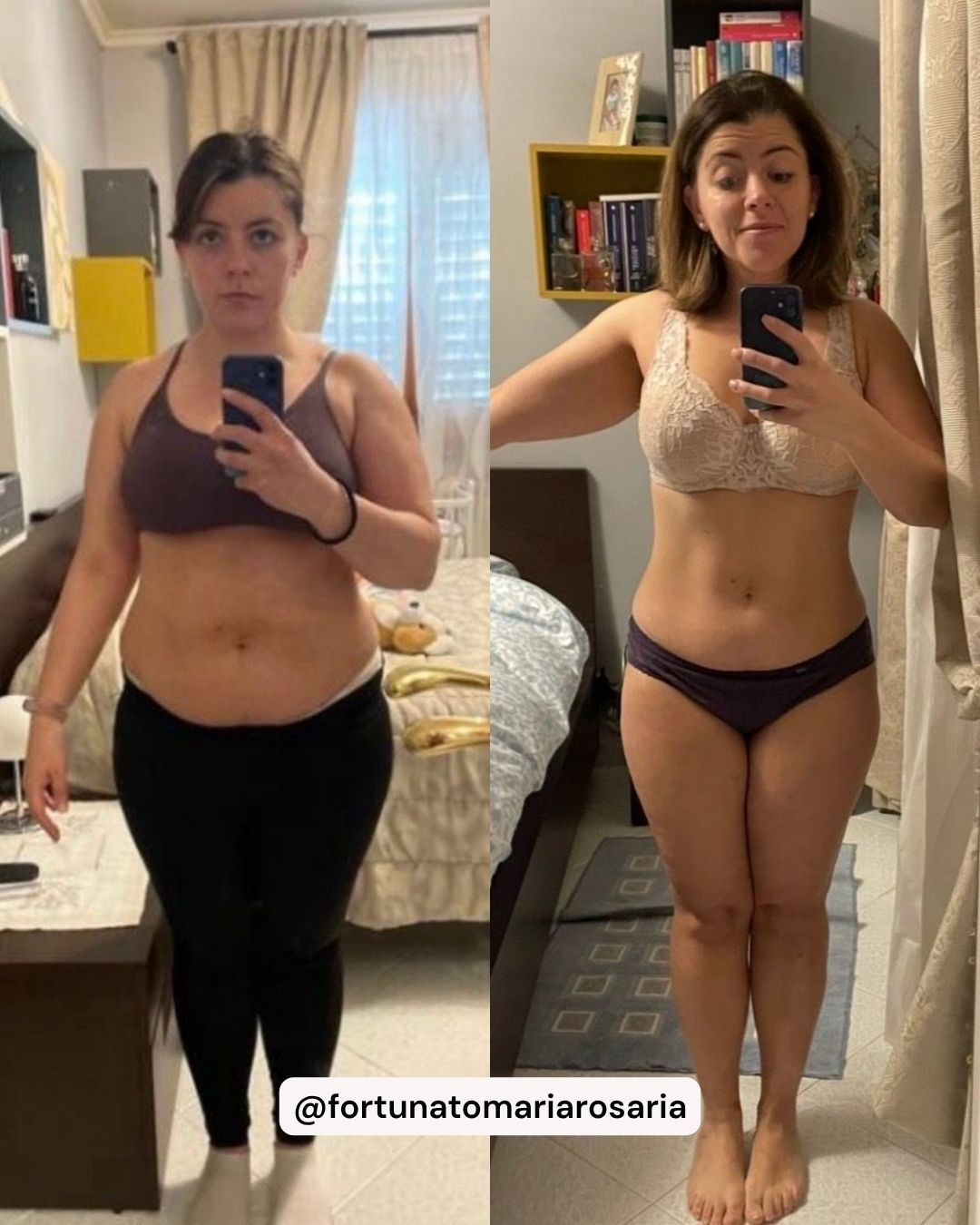
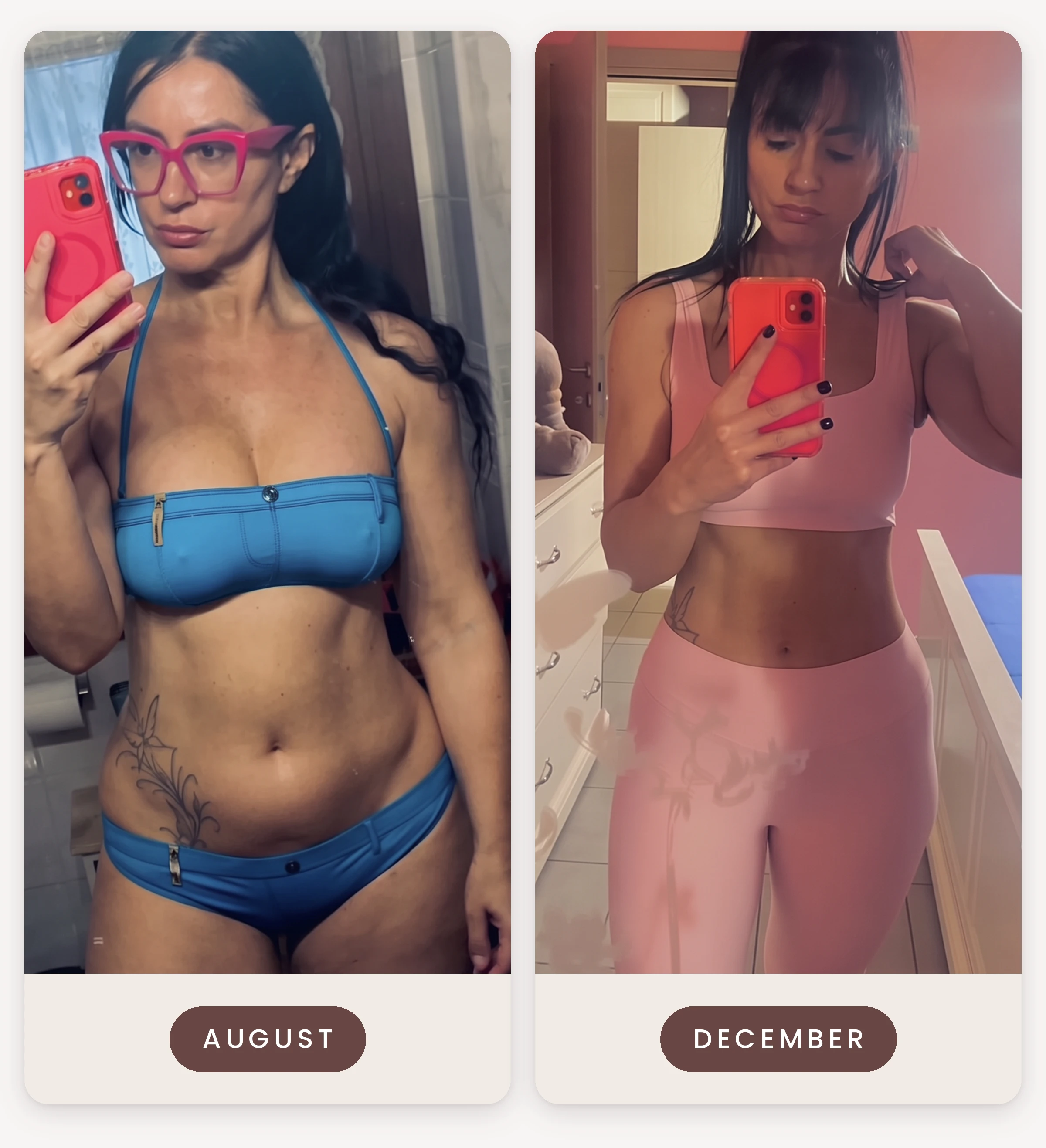
In short: Ilaria started in mid-September and her December photos show a transformed body, from the front and from the back, after around three months of training.
She followed the two months of Lymphatic Drainage Pilates Beginners and then moved on to the intermediate programme, training first thing in the morning before work.
She followed no diet at all: just 14-10 intermittent fasting and better choices at the table. And on my advice she stopped running, replacing it with 5 to 6 km walks once or twice a week.
There is something completely missing from Ilaria’s message.
There is not a single kilo in it.
Not one. She does not tell me what she weighed, she does not tell me what she weighs now, she never once mentions the scale.
She sends me two photos, from the front and from the back, and writes: “the change happened in a few months, the photo on the left is from August, the one on the right from December.”
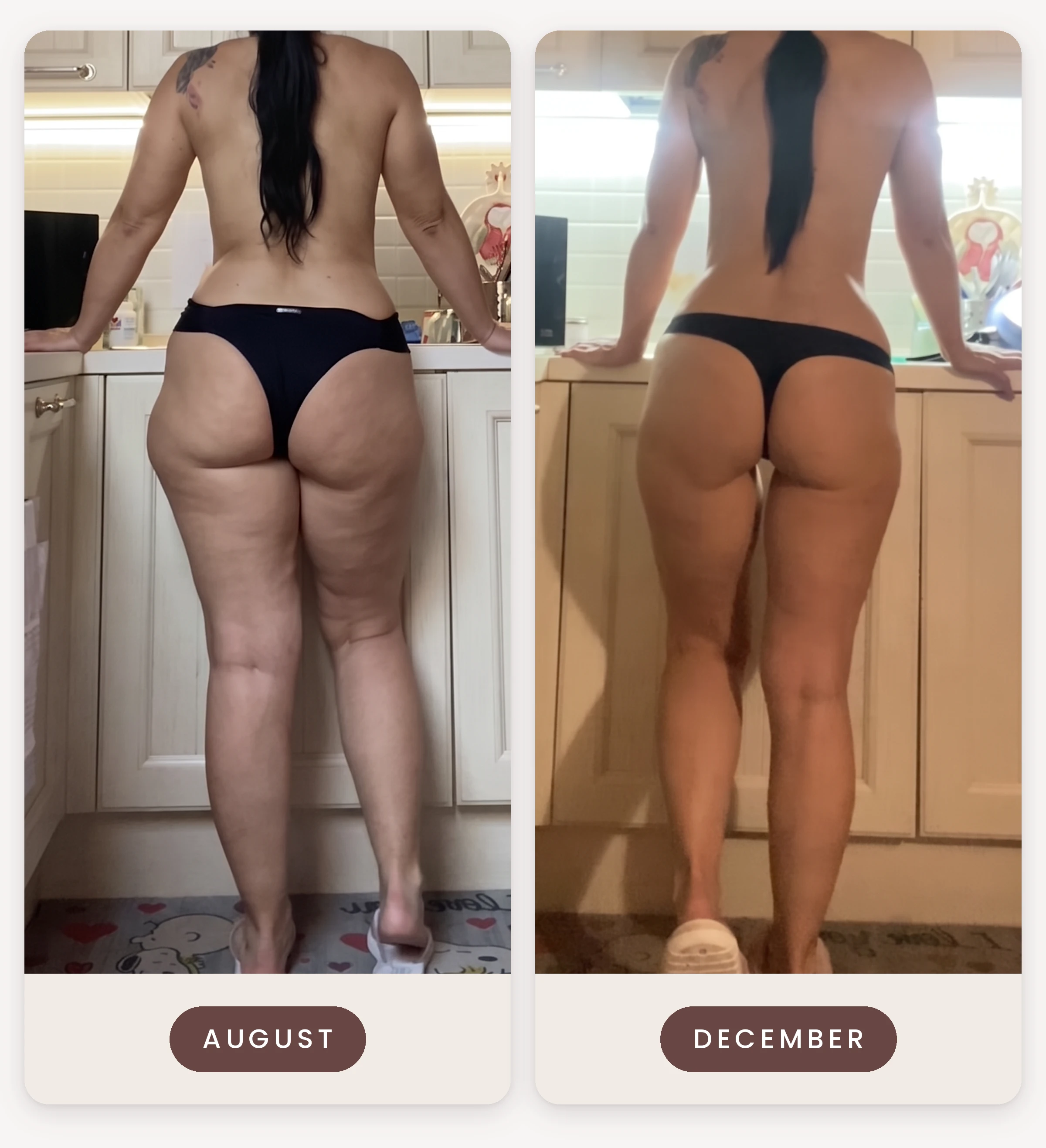
I looked at them for a long time. Because the change is there, it is obvious, and it happened in a timeframe that will seem impossible to a lot of women.
But what I want to tell you about today is how she got there. Because there is a decision inside this story that goes against the grain, one she took on my advice, and that in my view is the main reason the results came so quickly.
She stopped running.
Three months: the exact timeline
Let’s be clear about the timings, because they are what you care about most.
The photo on the left is from August. The one on the right is from December.
But Ilaria only started training in mid-September, after coming across an interview I had given.
That means the change you are looking at happened in roughly three months of actual training.
Not three years. Not nine months. Three months.
And she did it training at home, early in the morning, before going to work.
What she did, in order
Here is her exact path, in her own words.


She started with the two months of Lymphatic Drainage Pilates Beginners.
This is the first reason I think it worked so well. Ilaria did not start with the intermediate programme, she did not skip ahead. She built the foundations.
It is the thing I always recommend and that almost nobody wants to hear, because two months feels like wasted time when you are in a hurry to see results. It is exactly the opposite: those two months are what allows everything else to work.

Then she moved on to the 6-month intermediate programme
which she is following now, breaking it up with the challenges I run from time to time.

She always trains first thing in the morning, before work.
And in the evening, before bed, she does the debloating routines, mobility work, and the foot sequences for circulation. Her words about the app: “there’s nothing missing.”
That second point matters more than it sounds. Ilaria does not simply do a workout and leave it there. She has built two moments into her day: an active one in the morning, and a drainage and recovery one in the evening.
That is exactly how the lymphatic system works best, because it responds to frequency far more than to intensity.
The decision that goes against the grain: she stopped running
And here we get to the point. In her own words:
“following your advice I stopped running, I do 5 to 6 km walks once or twice a week.”
I know what you are thinking. How can stopping running possibly improve things rather than make them worse?
Let me explain the mechanism, because once you understand it you do not forget it.
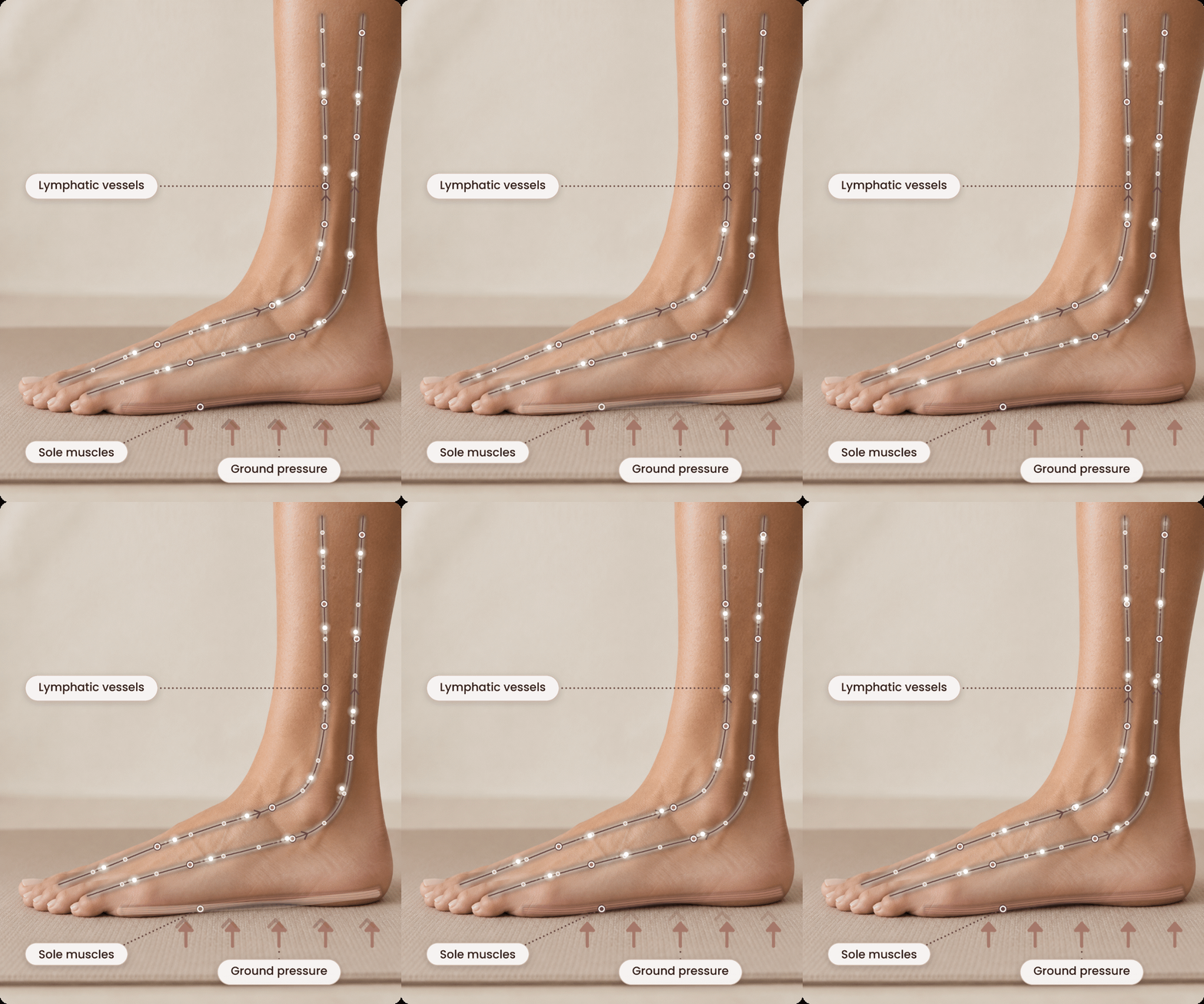
Under your foot there is a set of muscles that work like a sponge. With every step, as your foot lands, those muscles compress and push lymph and blood upwards. It is a genuine pump, and in the human body it is one of the main engines of lymphatic return.
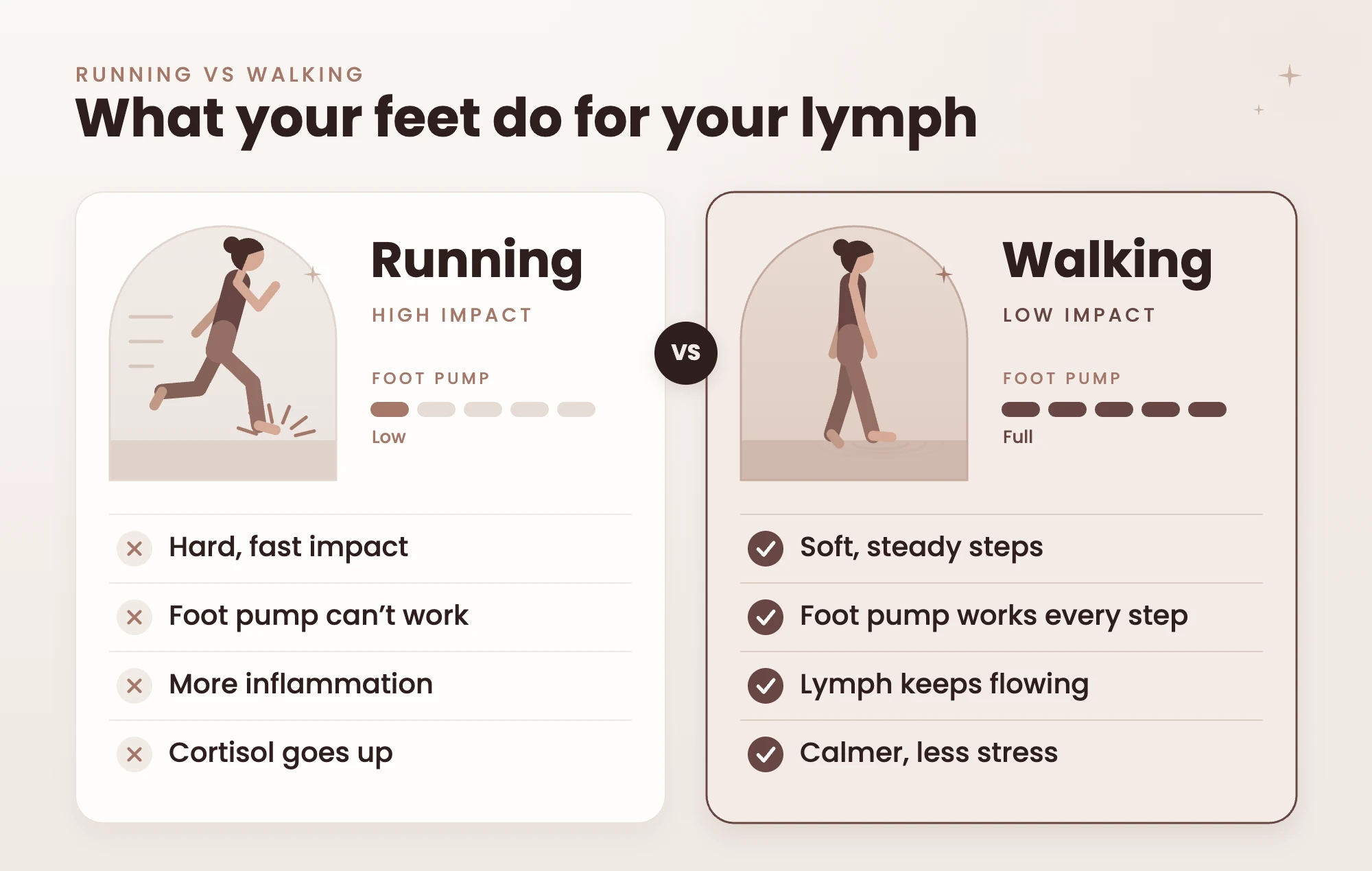
When you walk, that pump works at full capacity: contact, compression, push, release. With every single step.
When you run, that mechanism is lost.
The impact with the ground is too violent and too fast for the sponge in your foot to do its job. The foot does not get the time to compress and release the way it should.
And it does not stop there.
- Running raises body temperature significantly and generates acute inflammation. For a body that is doing well, this is not a problem, quite the opposite. But if your body is already dealing with fluid retention, bloating or underlying inflammation, you are adding load to a system that is already struggling.
- Then there is cortisol. Very intense training raises it. If you train hard, sleep little and live under stress, cortisol stays chronically high. And high cortisol encourages exactly what you are trying to get rid of: fluid retention and fat storage.
This is why so many women write to me saying they run three times a week and see no change in their legs. It is not that they are not trying hard enough. It is that they are feeding the very problem they want to solve.

One important thing though: I am not saying running is bad for everyone.
If you run, you feel good, your legs respond and running makes you feel alive, there is no reason at all to stop. Running is a wonderful sport with serious cardiovascular benefits.
It is a different conversation if your main issue is fluid retention, bloating, heavy legs or cellulite. In that case running works against the goal you have set yourself, and swapping it for walking is one of the most effective levers there is.
That is exactly what Ilaria did.
And you can see the results in her photos.
Nutrition: no diet at all
Here too her words are precise:
“I’ve cut out some of the junk, yes, but no diet, just 14-10 intermittent fasting and trying to eat better.”
No diet.
No calorie counting, no kitchen scales, no rigid plan.
She did two things: she cut back on what she calls the junk, and she adopted intermittent fasting in the 14-10 format, meaning fourteen hours of fasting and a ten hour window in which she has her meals.
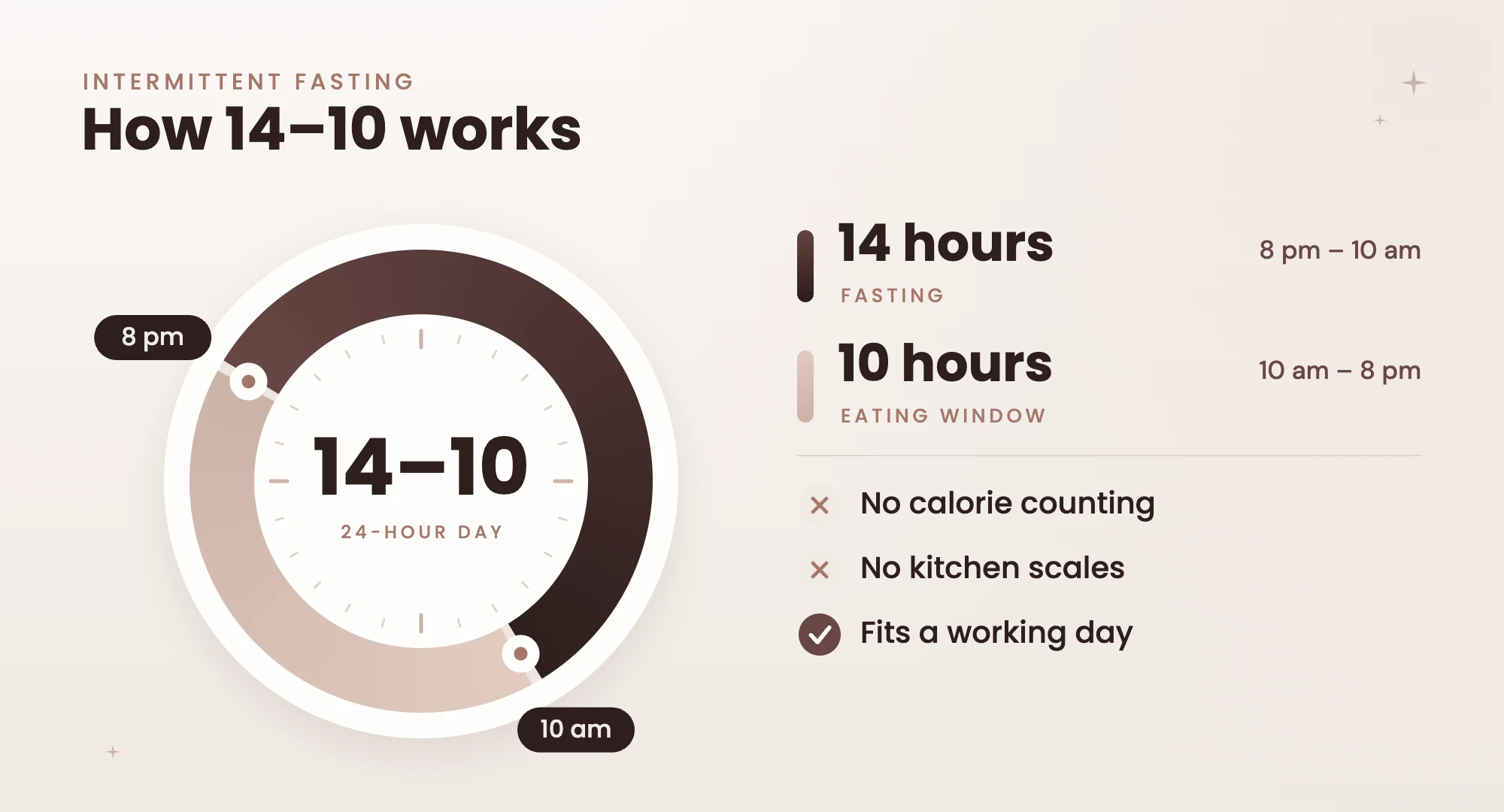
The 14-10 is the intermediate level, and it is the one I most often recommend to women. It is not extreme, it fits around a normal working day, and it helps stabilise blood sugar, which reduces the hunger spikes across the day.
The interesting point is a different one, though.
Ilaria did not turn her life upside down.
She cut back on a few excesses, reorganised the timing of her meals, and added training. Three sustainable things, the kind you can keep up for years.
Why three months is enough (and what happens before that)
“Three months sounds like nothing, Carlotta.”
For some things, it is. For others, it is not remotely.
Here is what happens in the body, week by week, once you start.
In the first two weeks
The lymphatic system reactivates. Less bloating, lighter legs, better posture. You cannot see it in a photo yet, but you feel it.
Between the third and fourth week
Fluid retention drops and the first visible muscle tone appears. This is when clothes start to change, before the scale does.
Between the sixth and eighth week
The skin is smoother, cellulite is reduced, the body is more toned. This is the moment most women take their first photo and notice the change.
From three months onwards
The changes become structural: a stronger core, altered posture, and a body shape that has changed in a way that stays.
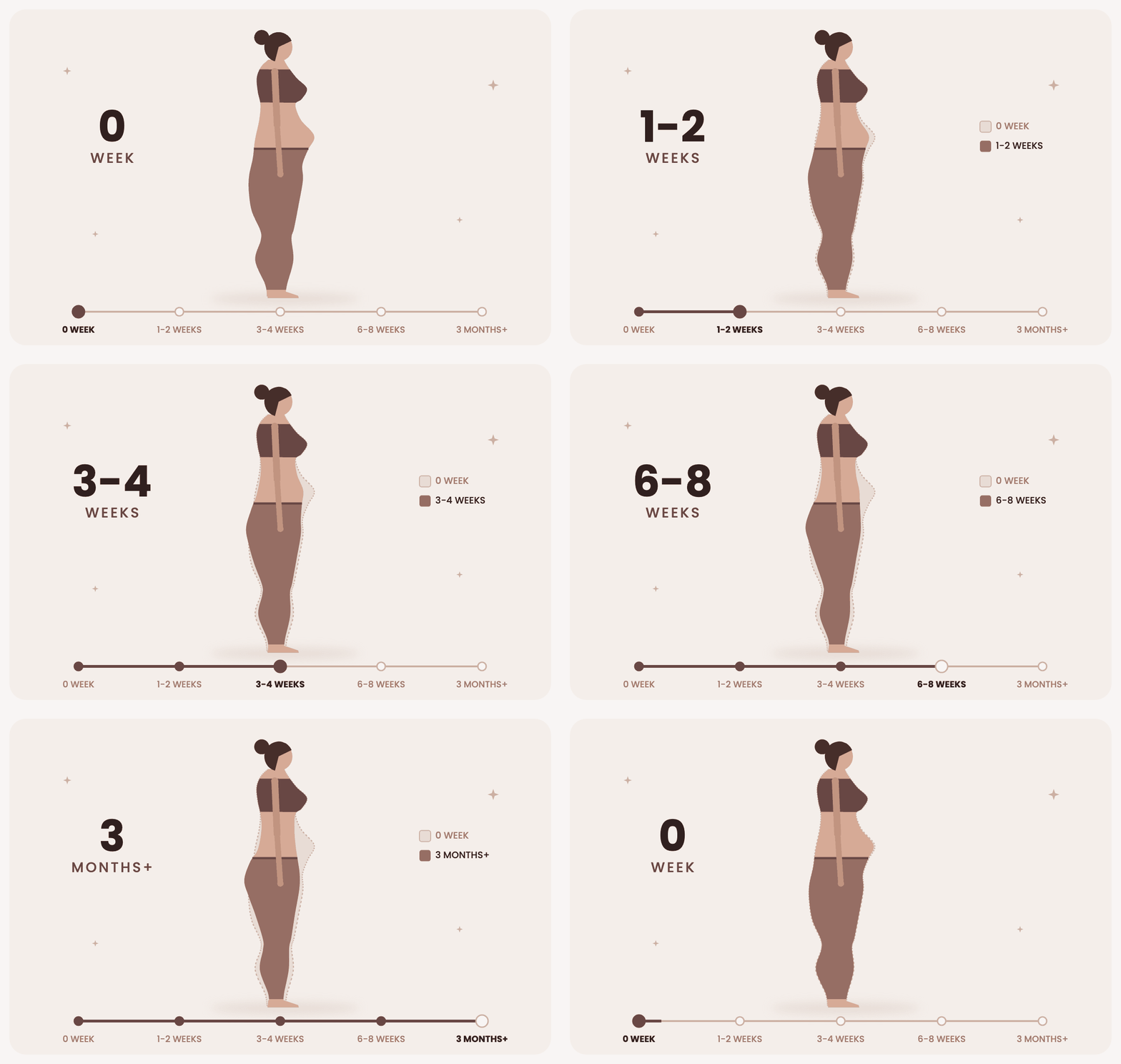
Ilaria arrived exactly here.
In three months she went through all of these phases, training early in the morning before work.
The 4 things to take from Ilaria’s story
-
Starting at the right level speeds results up, it does not slow them down
The two months of Beginners are not lost time: they are the reason the intermediate programme then works.
-
Frequency matters more than intensity
A session in the morning and a drainage routine in the evening are worth more than a brutal workout twice a week. The lymphatic system does not respond to effort, it responds to repetition.
-
If you have fluid retention, running can work against you
Swapping it for 5 to 6 km walks is one of the most effective choices you can make, and it is the one Ilaria made.
-
You do not need a diet
Ilaria did not follow one. She cut back on a few excesses, adopted 14-10 intermittent fasting, and carried on living.
How to train early in the morning without hating it
Ilaria always trains before work. It is the best moment for a great many women, but the first month is what decides whether it becomes a habit or not.
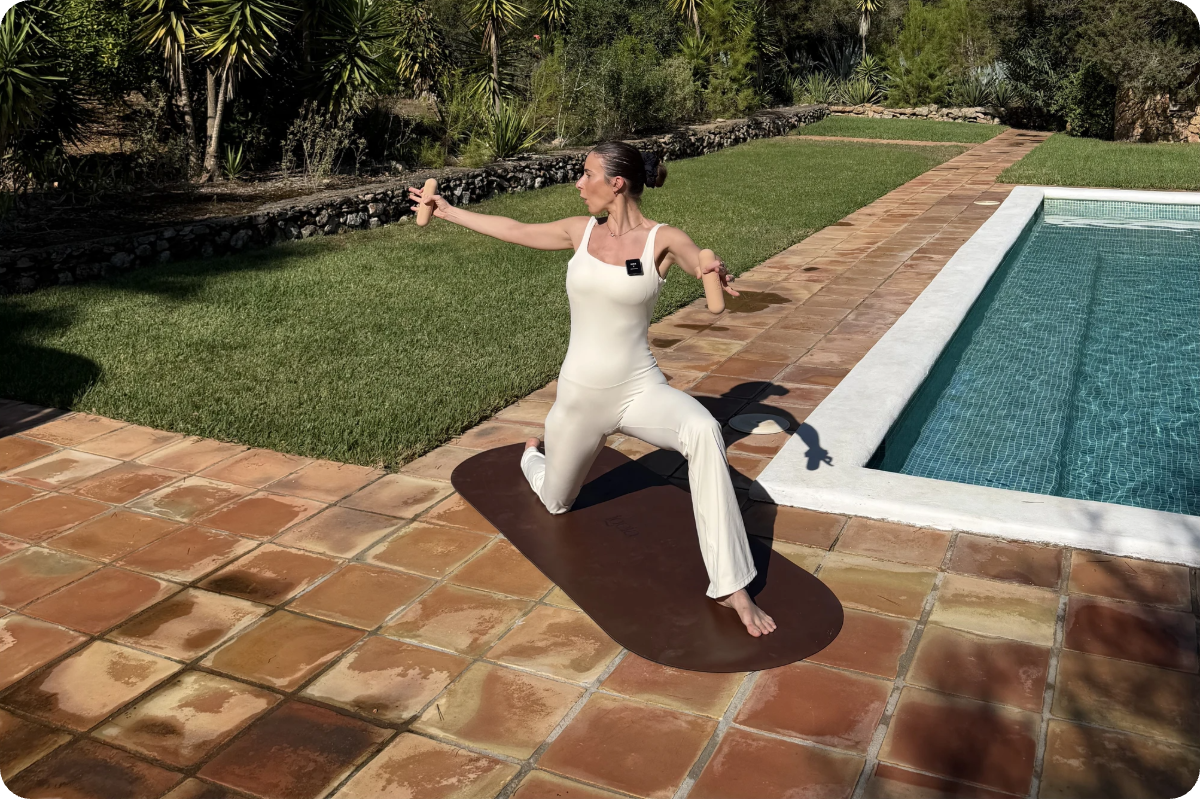
Here is what I recommend.
- Get everything ready the night before. Mat rolled out, clothes laid out, session already chosen in the app. Every decision you remove from the morning is one excuse fewer.
- Do not start with an hour. Begin with 15 minutes. Lymphatic Drainage Pilates Express exists for exactly this.
- Look at daylight as soon as you wake up, even just for five minutes. It raises cortisol at the point in the day when it should be high and regulates your circadian rhythm for the next 24 hours. It works better than coffee.
- Keep the evening for drainage, not for intense training. Debloating routines, mobility and legs up the wall prepare the body for sleep rather than switching it on.
- Accept that the first two weeks will be hard. After that it becomes the part of the day you defend.
Where to start
If you want to do what Ilaria did, this is the exact path.
- If you have never done Pilates, start with Lymphatic Drainage Pilates Beginners: two months to build the foundations.
- Then move on to the full 6-month programme, the intermediate one, to tone, drain and debloat.
- If your mornings are very short, Lymphatic Drainage Pilates Express asks you for 15 minutes a day.
Frequently asked questions
Is 3 months of Pilates enough to see a transformation?
Yes, provided the frequency is consistent and you start at the right level. Three months is enough to go through every phase: lymphatic reactivation, reduced fluid retention, the appearance of muscle tone, and the first structural changes. What you need is not to train more, but to train regularly.
Is walking or running better?
It depends on your goal. Running has important cardiovascular benefits and for anyone in good health it is an excellent activity.
But if your main issue is fluid retention, bloating, heavy legs or cellulite, walking is considerably more effective: the muscles in your foot act as a pump that pushes lymph upwards with every step, and in running that mechanism is lost because the impact with the ground is too fast. Ilaria replaced running with 5 to 6 km walks once or twice a week.
What is 14-10 intermittent fasting?
It is the intermediate level of intermittent fasting: fourteen hours of fasting and a ten hour window in which you have your meals.
For example, dinner by 8pm and breakfast at 10am the following morning. It is the format I most often recommend to women because it is sustainable, it fits around a normal working day, and it helps stabilise blood sugar.
Can you do Lymphatic Drainage Pilates every day?
Yes, and it is in fact how the lymphatic system responds best, because it moves through muscle contraction and breathing and needs frequent stimulus.
Moving a little every day is far better than moving a lot twice a week. If you are short on time, fifteen minutes daily is worth more than an occasional hour.
If you are short on time and it feels like you cannot achieve much, Ilaria’s story says otherwise: three months, early in the morning, before work.
Carlotta's insights, straight to your inbox
Just your name and email, unsubscribe anytime.