Foods that cause water retention and why nutrition is not a separate diet
Sodium, ultra-processed food and blood sugar all drive water retention. Why draining needs two levers, and how Maria Rosaria finally fixed hers.
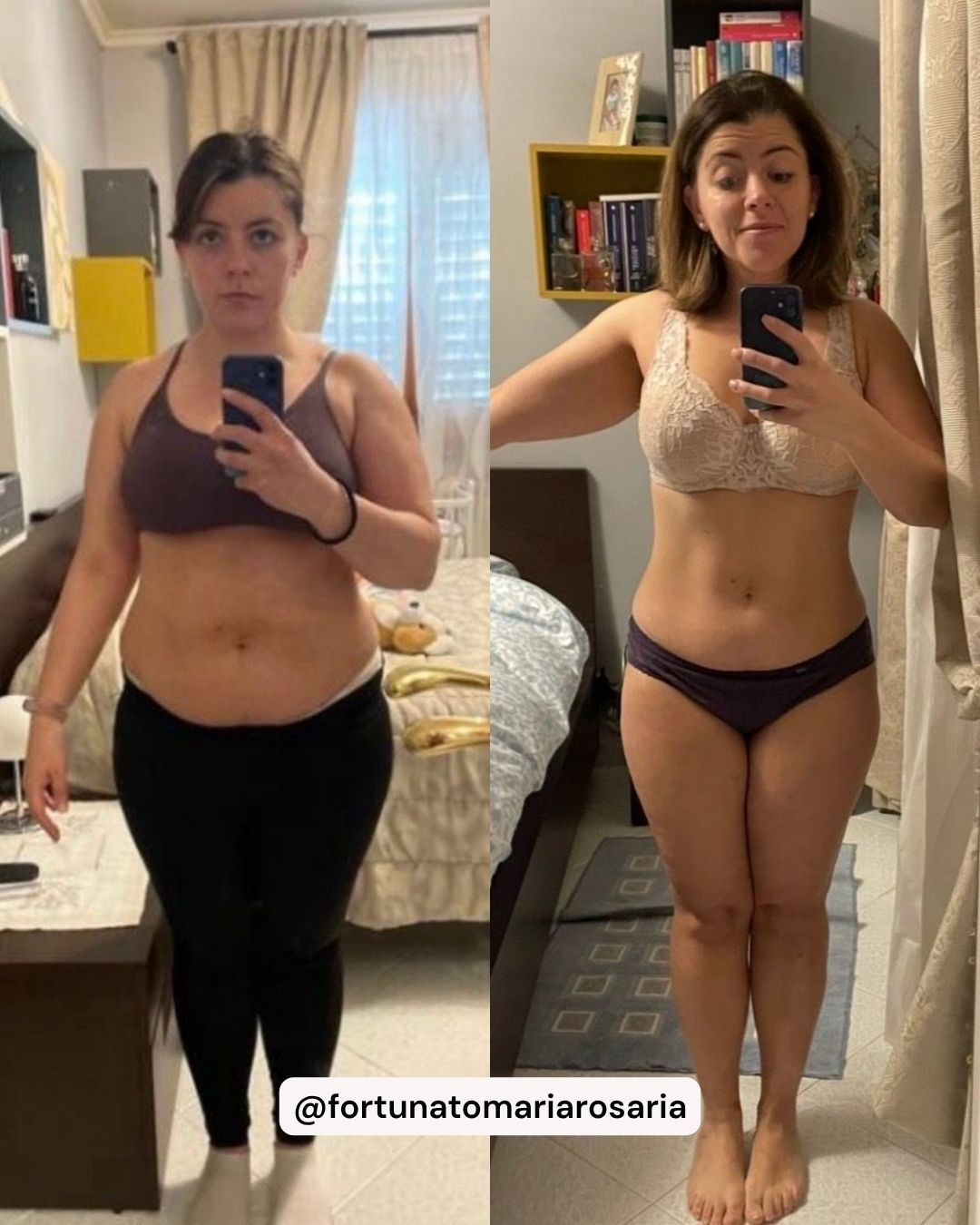
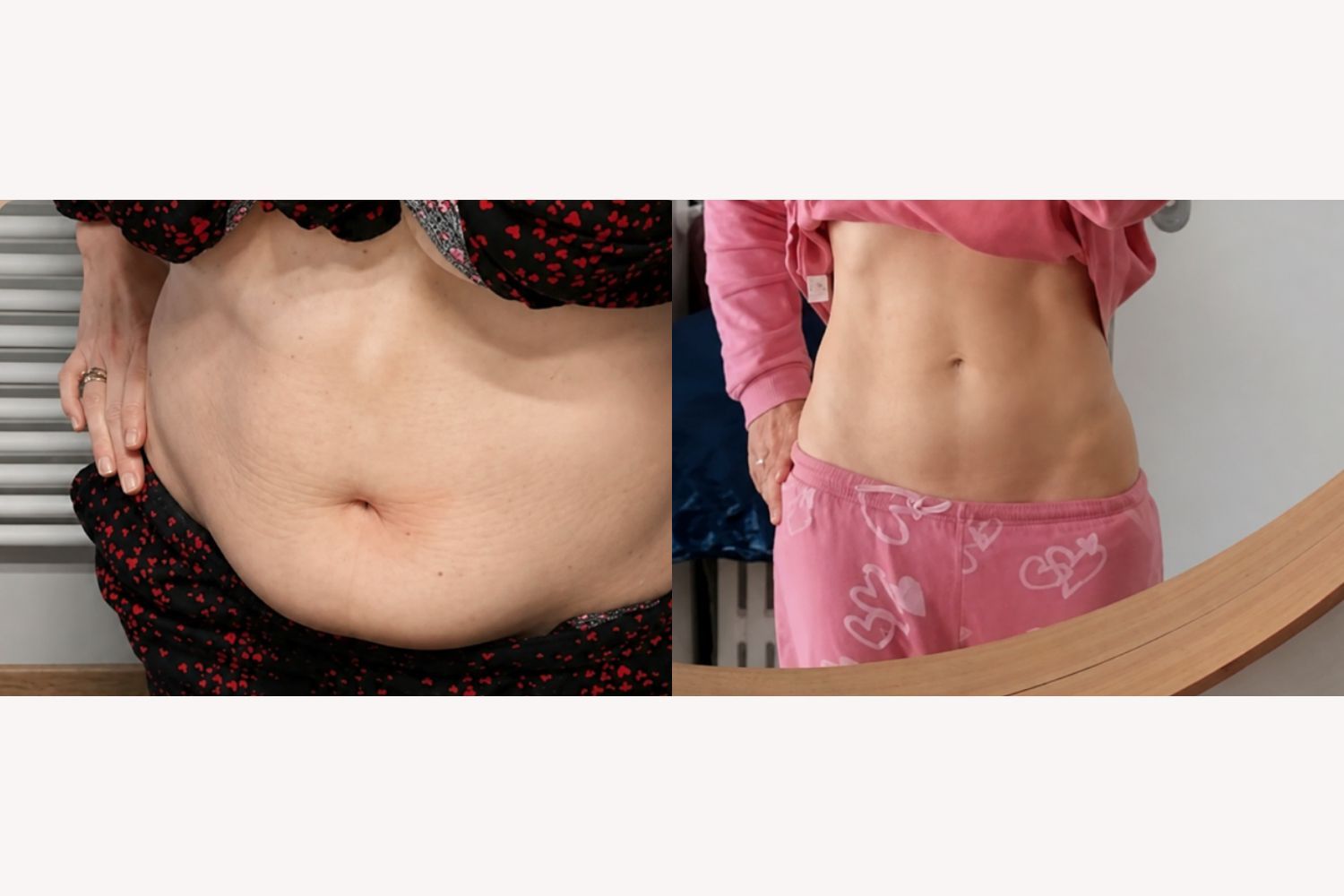
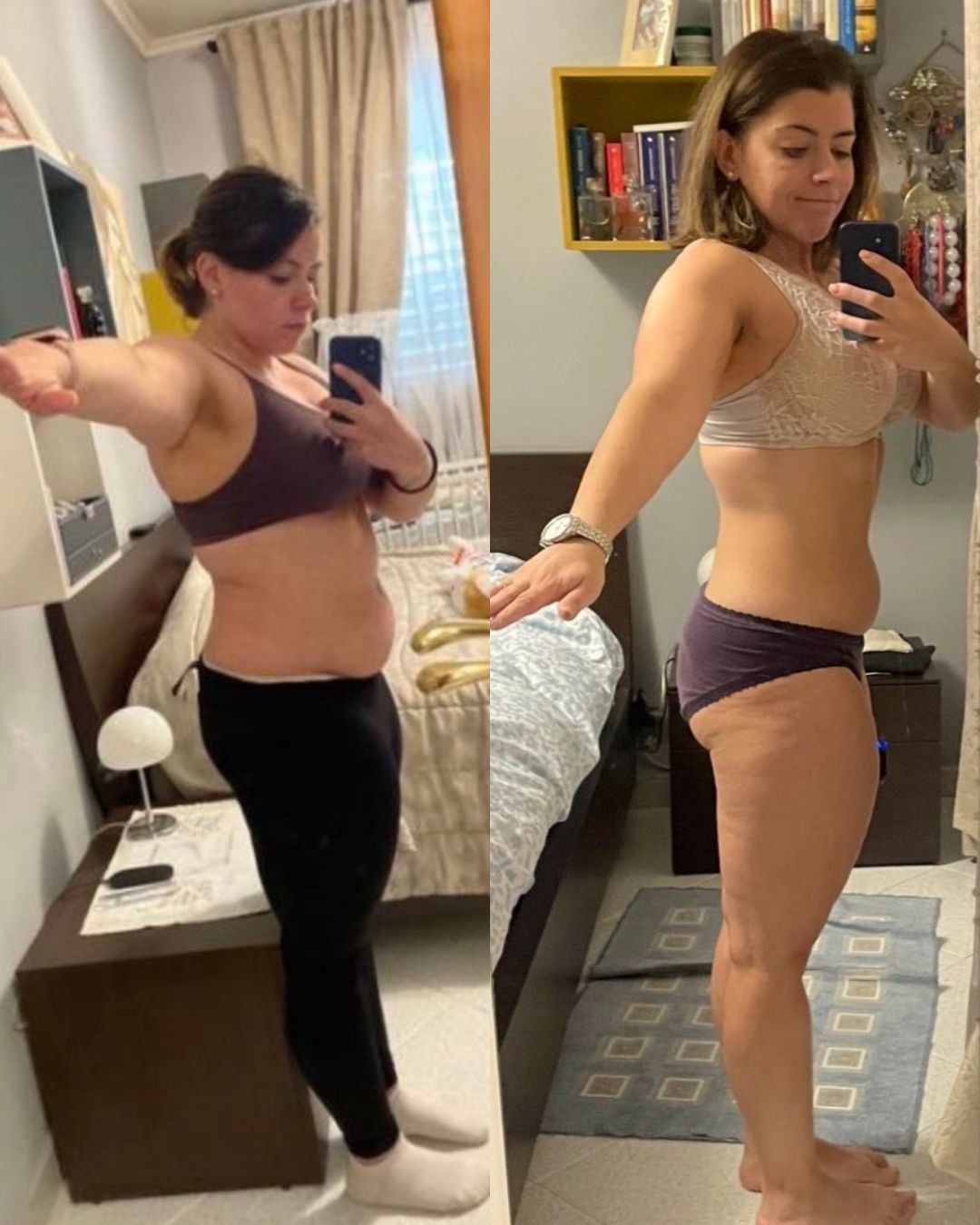
In short: Maria Rosaria lost 12 kg (1st 12lb) in a year with The Original Lymphatic Drainage Pilates (Pilates Linfodrenante®), without ever following a proper diet. In this method nutrition is not an extra sitting alongside the workouts: it is the second lever of the same mechanism, because movement moves the lymph and what you eat determines how much fluid there is to move. She looks at the nutrition programme every day and follows it when she can. Her whole family benefited: her husband lost 11 kg (1st 10lb).
There is a line in Maria Rosaria’s message I wish were printed on the cover of every diet book:
“I’m not consistent with diets.”
Said plainly, with no excuses and no hedging.
And then, straight after, the line that turns it around:
“But I’ve learned a lot from your nutrition plan and I have to say I’ve completely changed the way I eat.”
She lost 12 kg (1st 12lb) in a year without ever following a proper diet.
To understand how that is possible you need one thing I probably do not explain often enough: in Lymphatic Drainage Pilates, nutrition is not a separate section sitting next to the workouts. It is the other half of the same mechanism.
Drainage has two levers, not one
When we talk about bloating and fluid retention, almost everyone assumes there is one job to do: move, so the fluid circulates.
That is half the job.
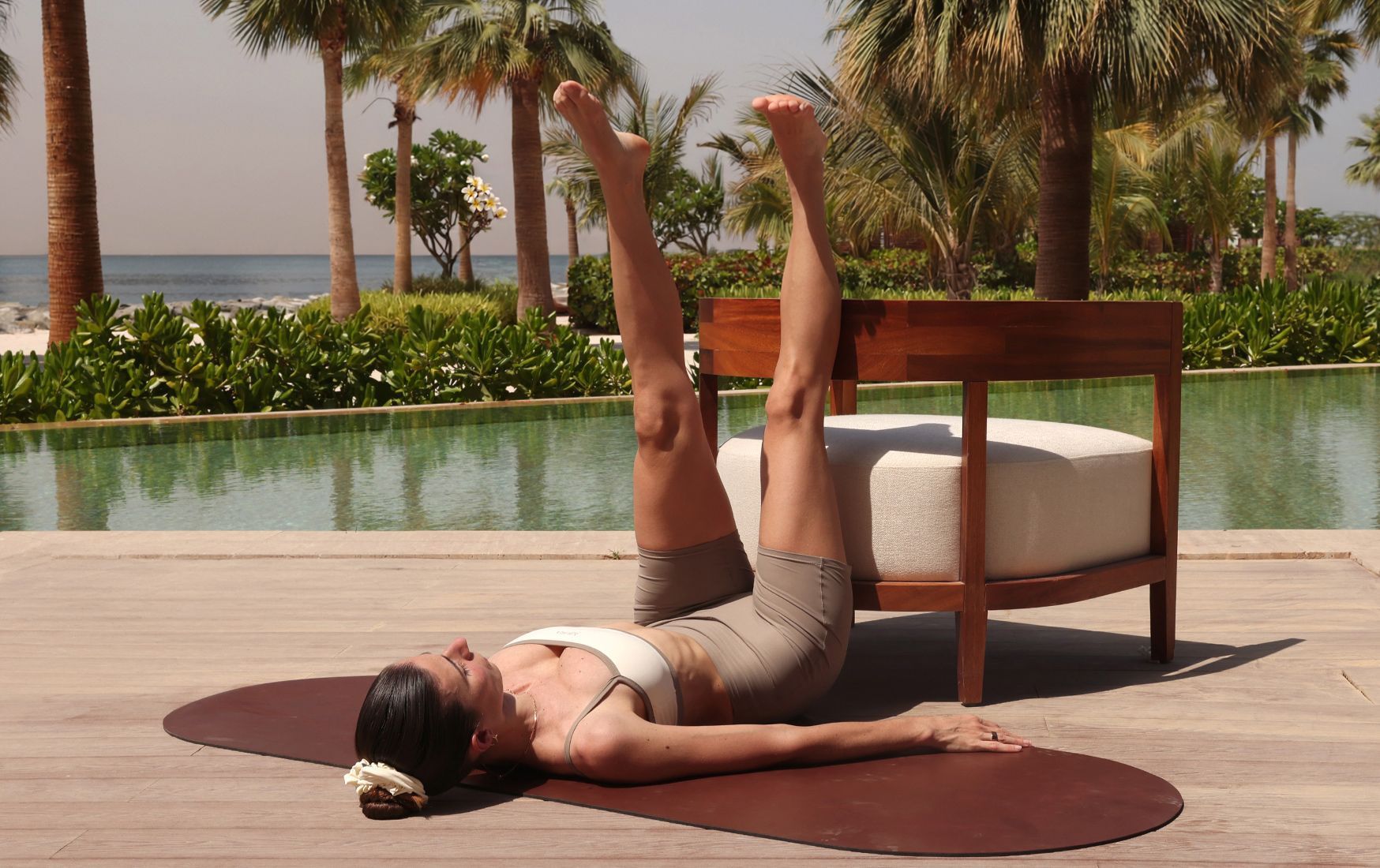
The first lever is movement, and it is the mechanical one. Your lymphatic system has no pump of its own the way your circulatory system has the heart. Lymph moves only through the contraction of the muscles around the lymphatic vessels, the movement of the diaphragm when you breathe deeply, and joint mobility. That is why every Lymphatic Drainage Pilates session opens the lymphatic stations and pairs each movement with specific breathing: it exists to make that pump work.
The second lever is what you eat, and it determines how much there is to pump.
This is where it gets concrete.
- Sodium and processed food. When there is too much sodium in circulation, the body holds on to water to dilute it. More fluid in the tissues simply means more work for a system that is already struggling.
- Low-grade chronic inflammation. Inflamed tissue holds more fluid, and the lymphatic system ends up working uphill. Refined sugars, industrial oils, ultra-processed food and alcohol feed that state every single day.
- Blood sugar spikes. Blood sugar that rises and crashes repeatedly creates inflammation and raises cortisol. And chronically high cortisol encourages exactly what you are trying to get rid of: fluid retention and fat storage.
- Hydration. Lymph is largely water. Drinking too little makes it thicker and slower to move, which is the opposite of what you want.
Put together: you can train perfectly well and keep refilling the system you are trying to empty. It is like draining a bath with the tap running. It is not that it fails, it is that you are working against yourself.
Which is why the nutrition programme is not bonus content in the app. It is the other half of the protocol.
A word about ultra-processed food
Since this conversation is everywhere at the moment, it is worth saying where it fits here, because the usual framing misses the part that matters most for your legs.
Most of the discussion about ultra-processed food is about weight, additives and appetite regulation. Those are real. But there is a more immediate effect that almost nobody mentions.
Ultra-processed food is, almost by definition, high in sodium and high in refined carbohydrate. Both of those directly increase how much fluid your body holds. The sodium because your body retains water to dilute it, the refined carbohydrate because the blood sugar swing raises cortisol, and cortisol tells your kidneys to hold on to sodium and water.
That is why a weekend of takeaways shows up on your legs by Monday, well before anything has happened to your body fat. It is not fat. It is fluid, and it appears and disappears far faster than fat does.
The useful part of that is the good news hidden inside it: the fluid component responds quickly. It is the reason many women feel lighter within a week or two of changing how they eat and moving daily, long before anything structural has changed.
So do you need a diet? No, and Maria Rosaria proves it
Here is the interesting part.
If nutrition is half the mechanism, you would think it demands strict adherence. It does not, for a specific reason: this lever does not run on percentage of perfection, it runs on direction.
It is not like a weight loss diet, where a calorie deficit has to be respected fairly precisely because the sum either works or it does not.
Here the goal is to reduce inflammatory load and fluid retention, and that responds to what you do on most days rather than to what you do on every day.
Cutting refined sugar at breakfast has an effect even if you have cake on Sunday. Drinking more water counts even if some days you drink less. Bringing a proper lunch to the office works even if you eat out once a week.
Which is exactly why Maria Rosaria’s approach worked.
I want to be careful here, because in the UK this sits close to a much louder argument about whether diets work at all. That is not the argument I am making.
This is not about diet culture, it is about mechanism: for reducing fluid retention specifically, consistency of direction does more than intensity of adherence.
What she actually does, every day
Her words are precise:
“I don’t really follow a proper diet. I work in an office and for lunch I try to bring things that are light and practical. But every day I take a look at the nutrition programme in the app and if I can, I follow it. I follow a lot of your advice.”
And then:
“I’m not consistent with diets, but I’ve learned a lot from your nutrition plan.”
Look at what is inside that, because it is a method even if she does not call it one.
Every day she takes a look. She does not execute it to the letter. She looks at it. Every day.
She follows it if she can. Not always, not never. If she can.
And in the meantime she absorbs the principles. Which breakfast keeps you full longer, what to put in an office lunch so the afternoon does not collapse, what is worth having in the house.
After a year of that, the principles are no longer in the plan: they are in her head. Which means they work on the day she does not open it, in a restaurant, on holiday.
That is the difference between doing a diet and changing how you eat. The first ends. The second does not. And for the drainage lever, the second is more effective, because what counts is the average across a year.
The office lunch, where almost everyone comes unstuck
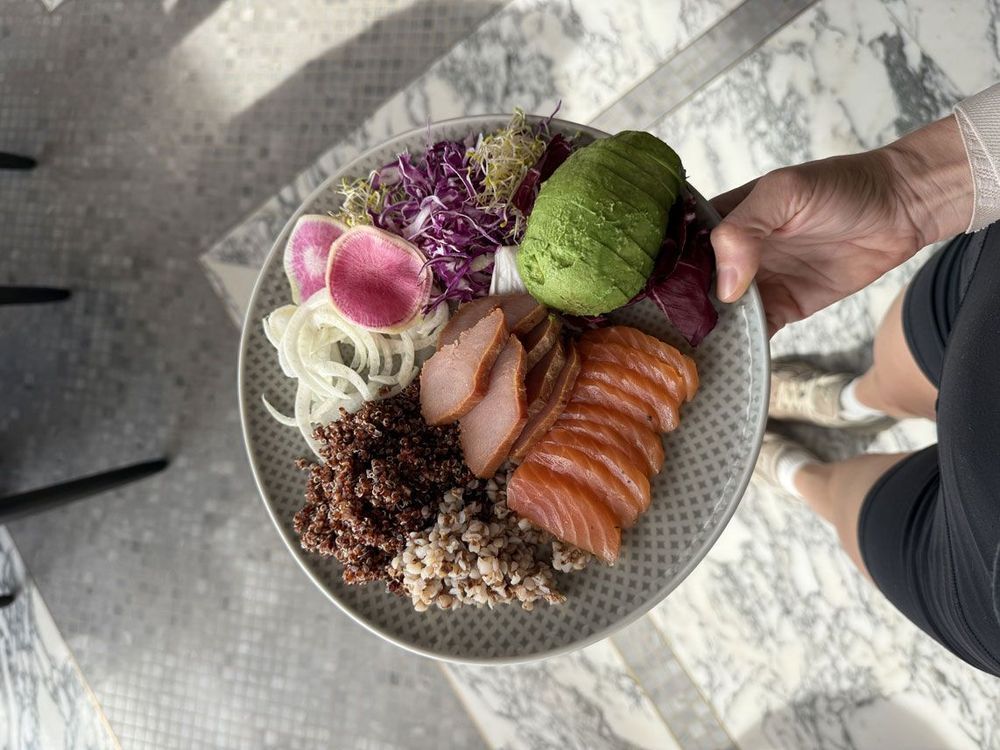
One detail deserves attention: she works in an office and brings “things that are light and practical.”
Lunch away from home is where most nutrition plans break. Not dinner, not the weekend: Tuesday lunch.
Because it is the meal you decide with the least time, the least choice and the most hunger. And because what you eat there decides how your afternoon goes.
If lunch is mostly carbohydrate, blood sugar rises fast and falls just as fast. The three o’clock crash arrives, hunger comes back, and your hand goes towards whatever is nearest.
If lunch contains protein, fibre and fat, that curve stays far steadier and nothing happens at three. And since blood sugar spikes raise cortisol, which encourages fluid retention, that lunch is not only keeping you sharp: it is working on the same lever your training works on.
Her husband lost 11 kg
And here is the part I was not expecting to read:
“The whole family, actually. My husband has lost 11 kg.”
Nobody put her husband on a diet.
He did not get a plan, he counted nothing, and he very likely never decided to lose weight. He ate what was in the house, and what was in the house had changed.
It is worth following that through, because it inverts how this is usually thought about.
In most households, the unit that decides how people eat is not the person. It is the cupboard.
If the bread in the house is wholemeal, everyone eats wholemeal bread. If there are no packaged snacks at breakfast, nobody eats them.
If the fridge has vegetables already washed and ready, the vegetables get eaten. Nobody needs convincing: the thing simply is or is not there.
It is also why trying to eat differently from the rest of your household is so exhausting. You end up cooking twice, resisting what is on the table, explaining why you are not having it. It is a daily battle lost through attrition.
Maria Rosaria did not fight that battle. She changed the shopping. Her husband’s 11 kg (1st 10lb) are the side effect.
Why she went back to the Lymphatic Drainage Pilates programme
Maria Rosaria’s training path is a long one, and it contains a detail that closes the loop on everything else.
In her words: “I started with the Lymphatic Drainage Pilates programme and then moved to Lymphatic Drainage Pilates Reformer, pausing when I was doing the challenges. I did every one of the 2025 challenges.”
And then this:
“Since January I’ve gone back to the Lymphatic Drainage Pilates programme because my legs feel swollen, but I’ll go back to the Reformer soon.”
She went back because her legs felt swollen.
That is not a failure of the Reformer, which does a different job and is excellent at it. It is that drainage is maintained, not accumulated.
It applies to both levers. Lymph moves only while you keep moving it, and the fluid load stays low only while you keep it low. It is not a reserve you build up: it is a state you maintain.
Maria Rosaria worked that out for herself and did the right thing: when her legs started talking, she went back to the tool that drains.
The 4 things to take from Maria Rosaria’s story
-
Nutrition is not a side dish to the method, it is the second lever
Movement moves the lymph, what you eat decides how much there is to move.
-
This lever runs on direction, not perfection.
Unlike a weight loss diet, what counts is the average across a year rather than adherence on any given day
-
Learning from a plan is worth more than following one
A diet ends. A way of eating you have understood keeps working when you stop looking at anything.
-
You change the cupboard, not the people
Her husband lost 11 kg (1st 10lb) without anyone asking him to.
Where to start
If your main problem is bloating and fluid retention, the programme is Lymphatic Drainage Pilates, which works on both levers.
If you have never done Pilates, start with Lymphatic Drainage Pilates Beginners: two months to build the foundations.
If time is your obstacle, Lymphatic Drainage Pilates Express: fifteen minutes a day.
Every programme includes the nutrition programme with recipes, which is what Maria Rosaria looks at daily even when she does not follow it to the letter.
Frequently asked questions
What foods cause water retention?
The main drivers are sodium, which makes the body hold water to dilute it, and refined carbohydrate, which causes blood sugar swings that raise cortisol, and cortisol tells the kidneys to retain sodium and water.
Ultra-processed foods tend to be high in both, which is why a few days of takeaways show up on your legs long before anything has happened to your body fat.
Alcohol and low water intake also contribute, the latter because lymph is largely water and becomes thicker and slower to move when you are underhydrated.
Is nutrition part of Lymphatic Drainage Pilates or a separate thing?
It is part of the method, and not as add-on content. Lymphatic drainage depends on two levers: movement, which physically moves lymph through muscle contraction and breathing, and nutrition, which determines how much fluid there is to drain and how hard it is to drain it.
Training without addressing what you eat means draining a system you keep refilling.
Can I just do the workouts and skip the nutrition side?
Yes, and you will still see results, because the mechanical lever works on its own.
But they will be slower and partial specifically on bloating and fluid retention, which is the part that responds to both levers.
If debloating is your main goal, working one lever makes the job harder than it needs to be.
Do you have to follow the nutrition plan every day?
No, and the people who manage that are a minority. Unlike a weight loss diet, where a calorie deficit has to be respected fairly precisely, the drainage lever responds to direction more than to perfection: what counts is what you do on most days.
Looking at the plan daily and following it when you can produces far more over a year than three weeks of perfect adherence followed by giving up.
How do you change how you eat without going on a diet?
By learning the principles instead of executing a list. Looking at a plan every day, following it when you can, and absorbing the underlying logic in the meantime, which breakfast holds you, how to build a lunch that does not collapse your afternoon, what to keep in the house, produces a change that lasts.
That is exactly what Maria Rosaria describes: she is not consistent with diets, but she changed how she eats.
How do you get a whole family eating well?
By changing what is in the house rather than convincing people. In most households the deciding factor is the cupboard: if certain things are not there, nobody eats them, and if ready alternatives are there, they get eaten.
Eating differently from the rest of your household is exhausting by comparison, because it means cooking twice and resisting every evening. Maria Rosaria’s husband lost 11 kg (1st 10lb) without ever following a diet.
Do drainage results hold if I switch to a different type of training?
Only while you keep producing the stimulus on both levers. Drainage does not accumulate the way muscle does: it depends on the lymphatic pump being activated regularly and on the fluid load staying low.
It is why Maria Rosaria, having moved to the Reformer, went back to the Lymphatic Drainage Pilates programme when her legs started to feel swollen again.
If you are not consistent with diets, the problem is probably not you: it is that you were asked for the wrong thing.
The free trial of Lymphatic Drainage Pilates lasts 7 days and includes the nutrition programme.
Carlotta's insights, straight to your inbox
Just your name and email, unsubscribe anytime.