From 104 kg (229 lb) to 61 kg (134 lb) With No Loose Skin. Valentina's Transformation
From 229 lb to 134 lb with no loose skin. Valentina's transformation and the comparison that surprised her. Same weight, different body.
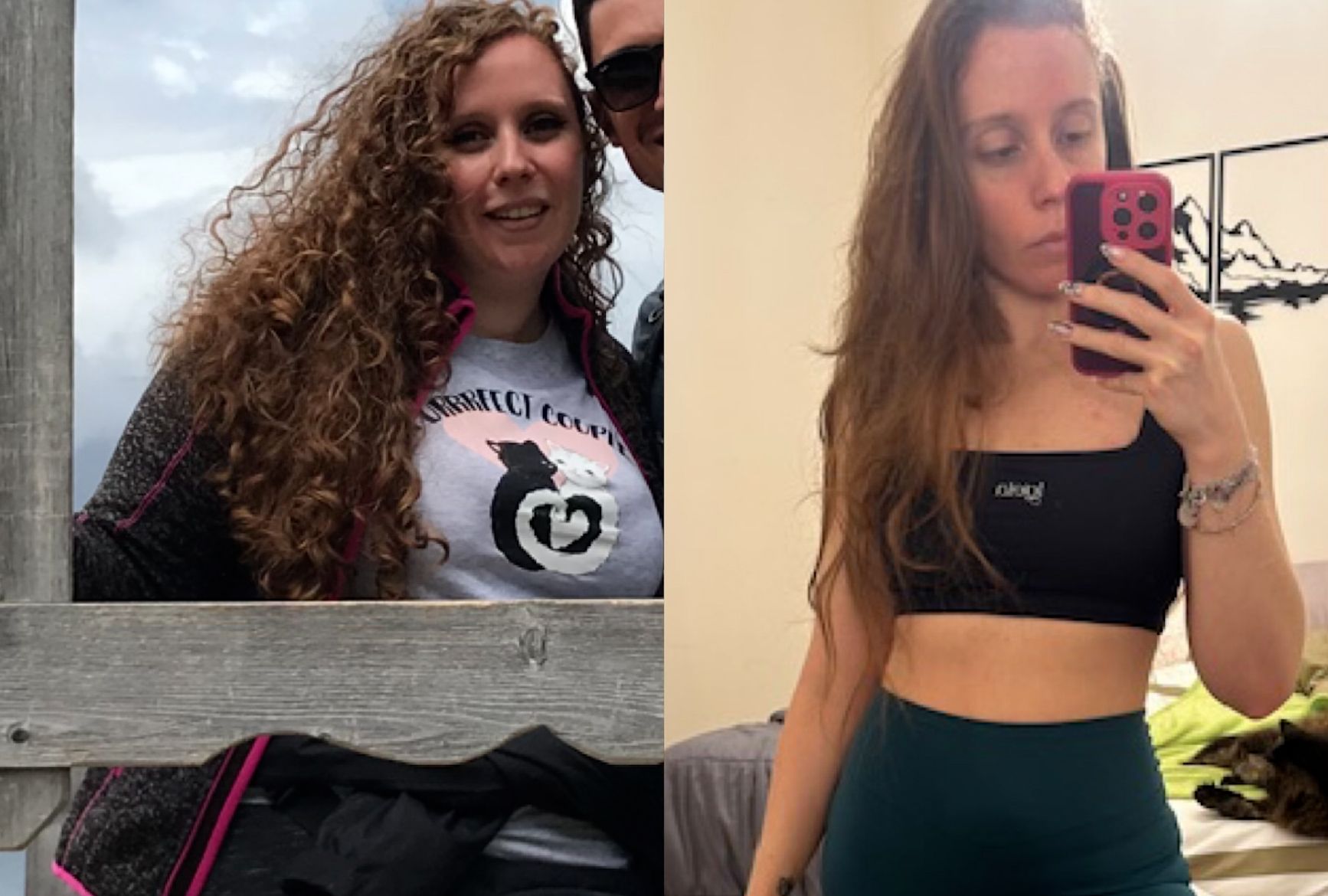
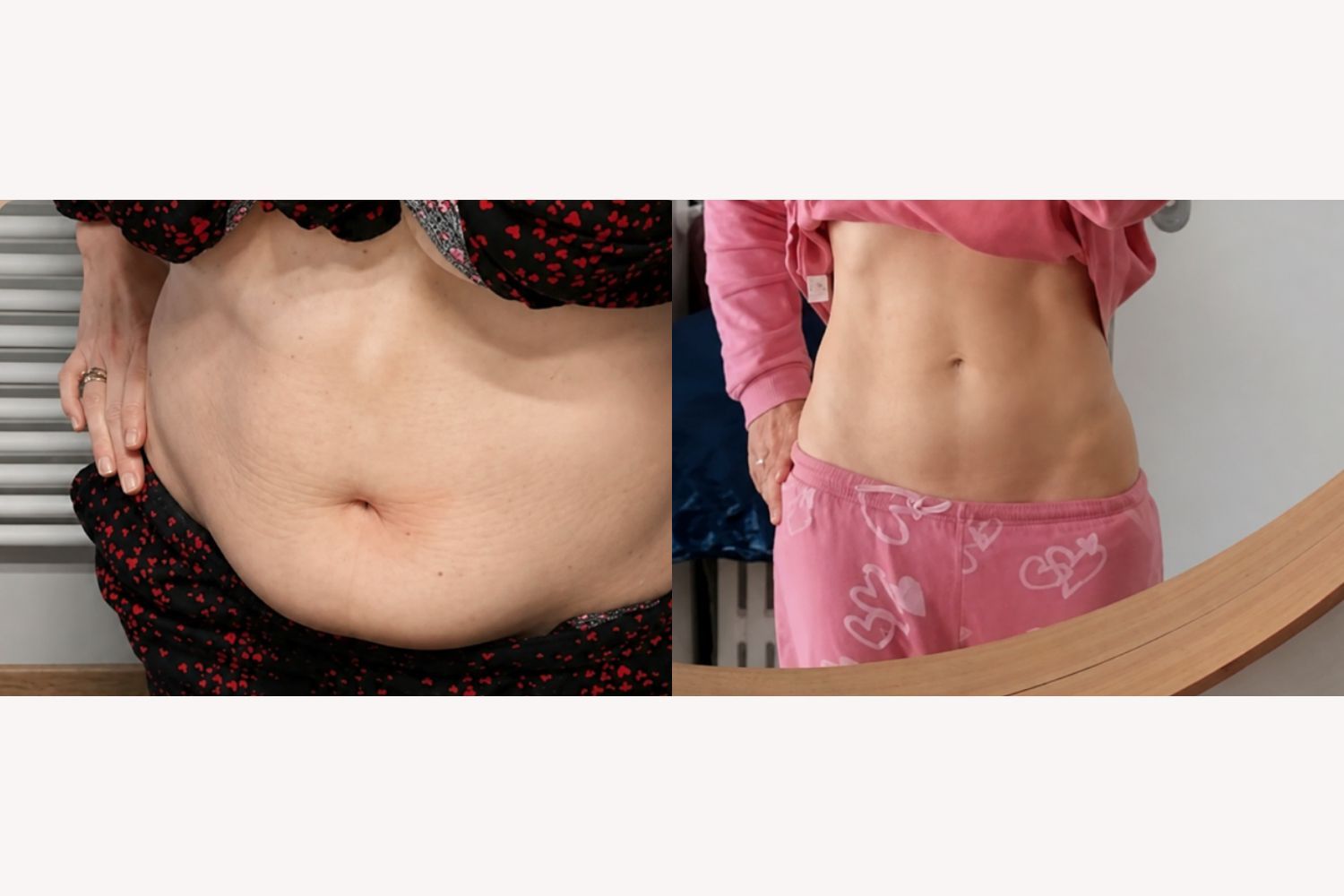
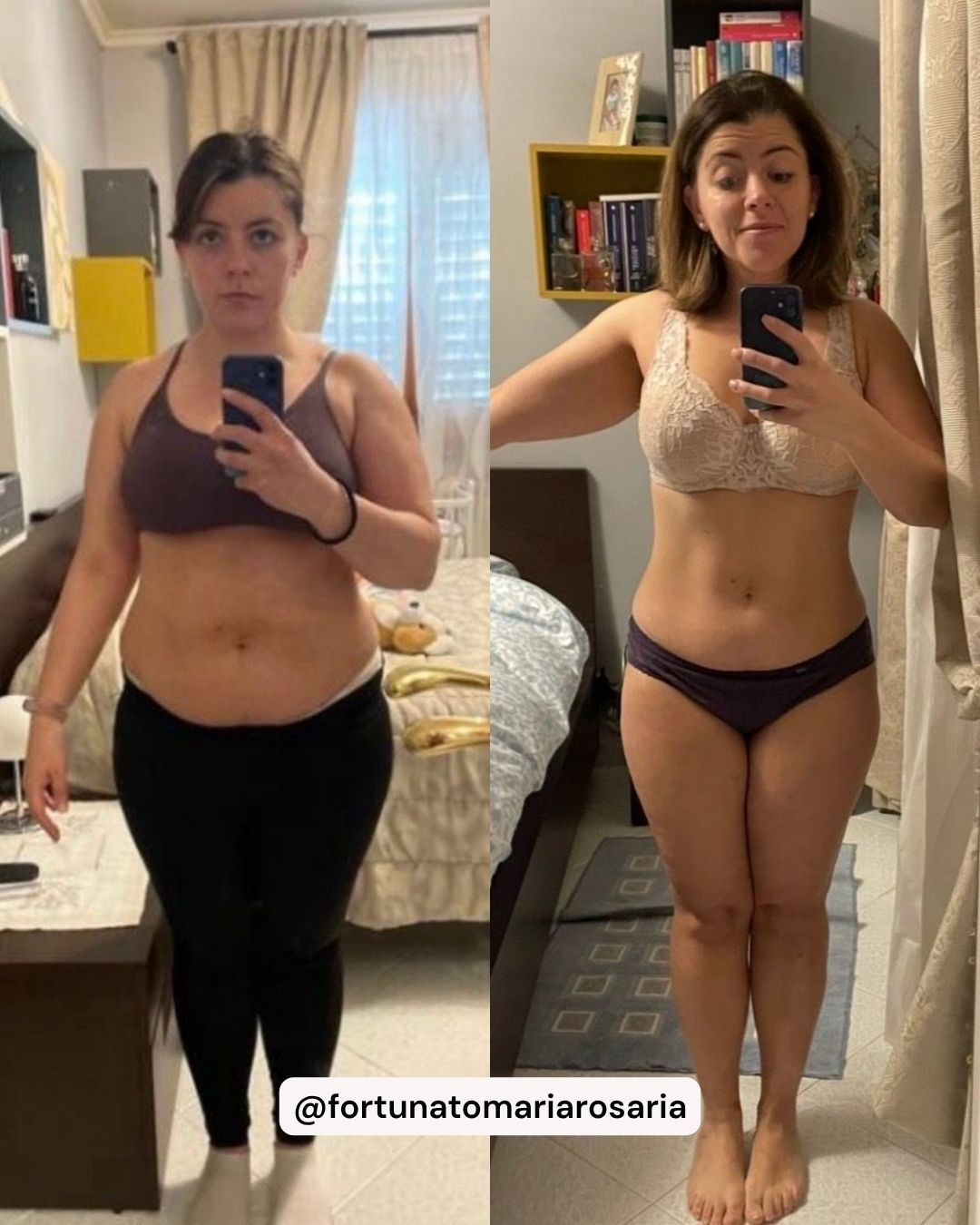
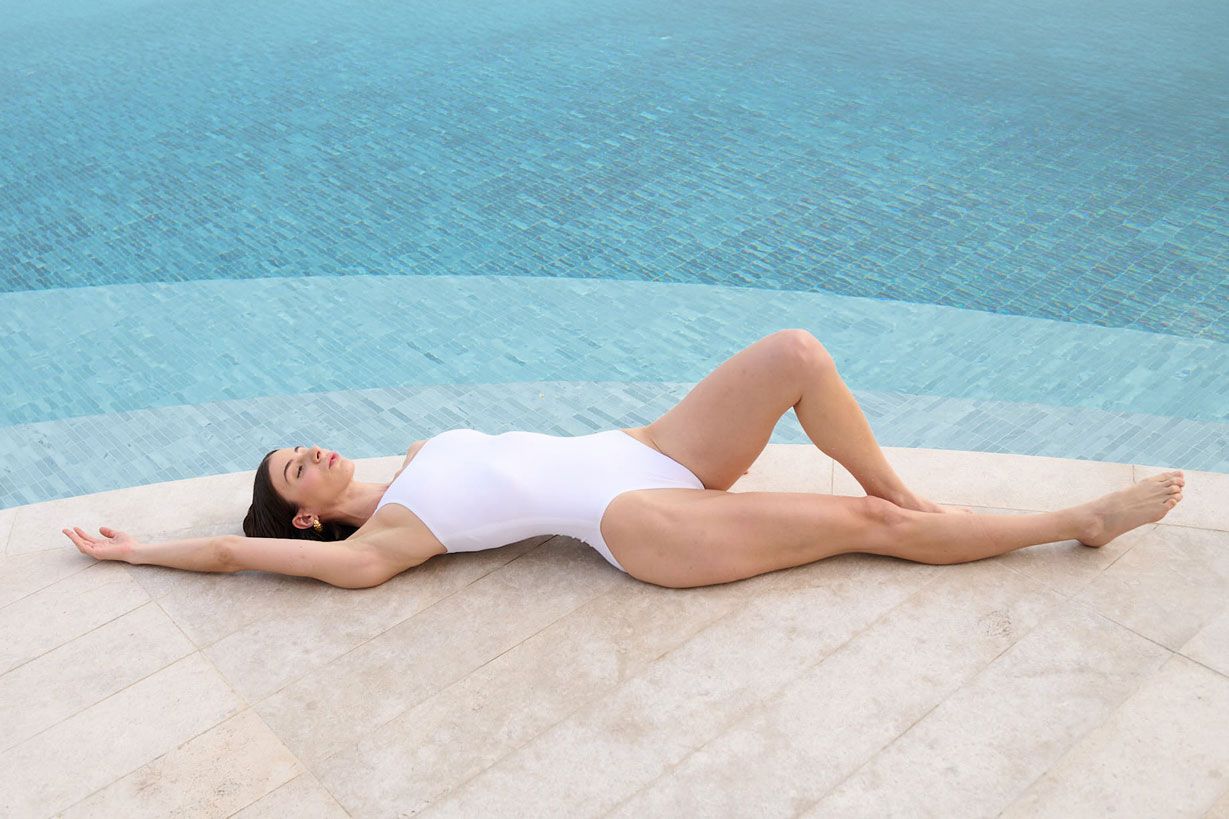
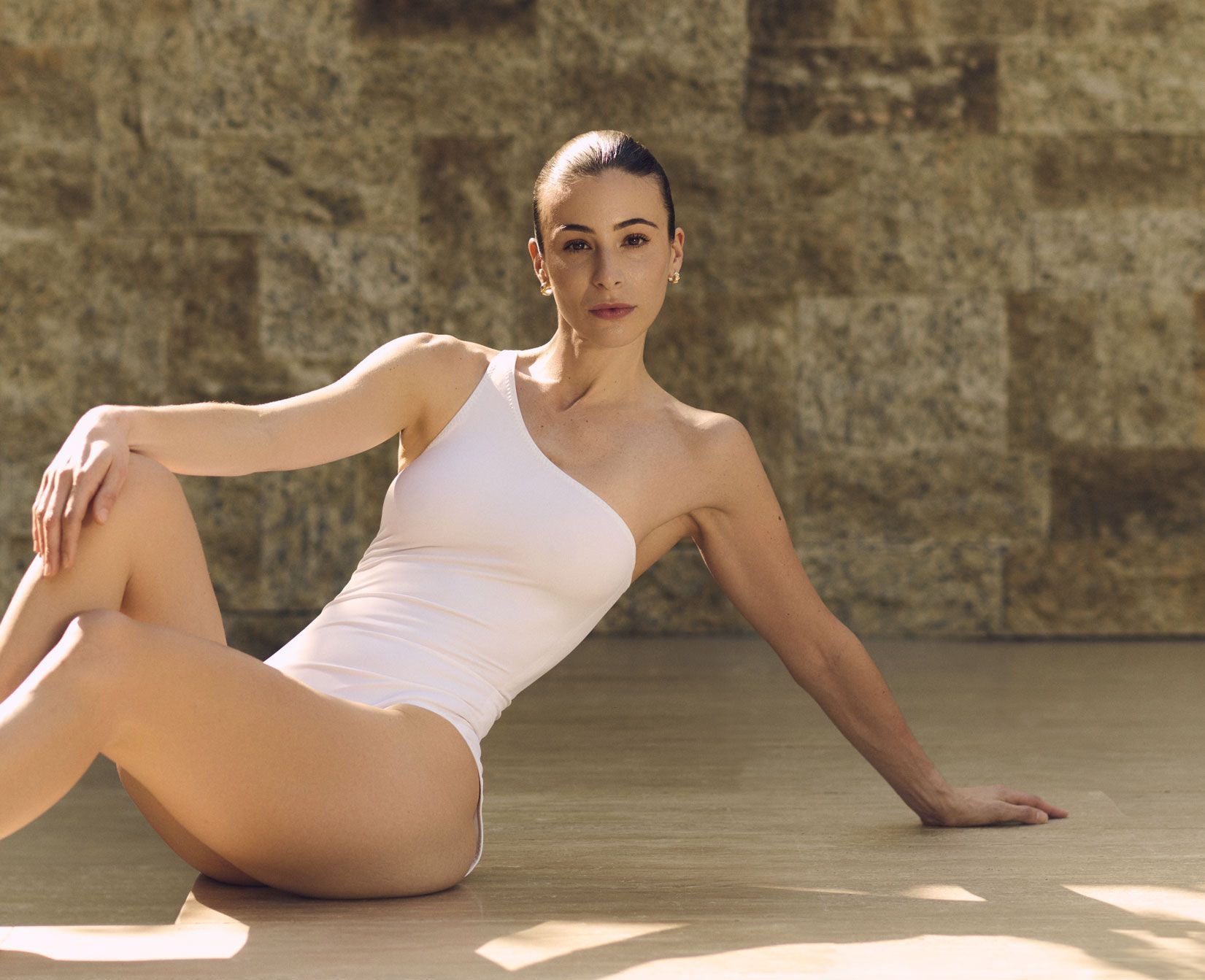
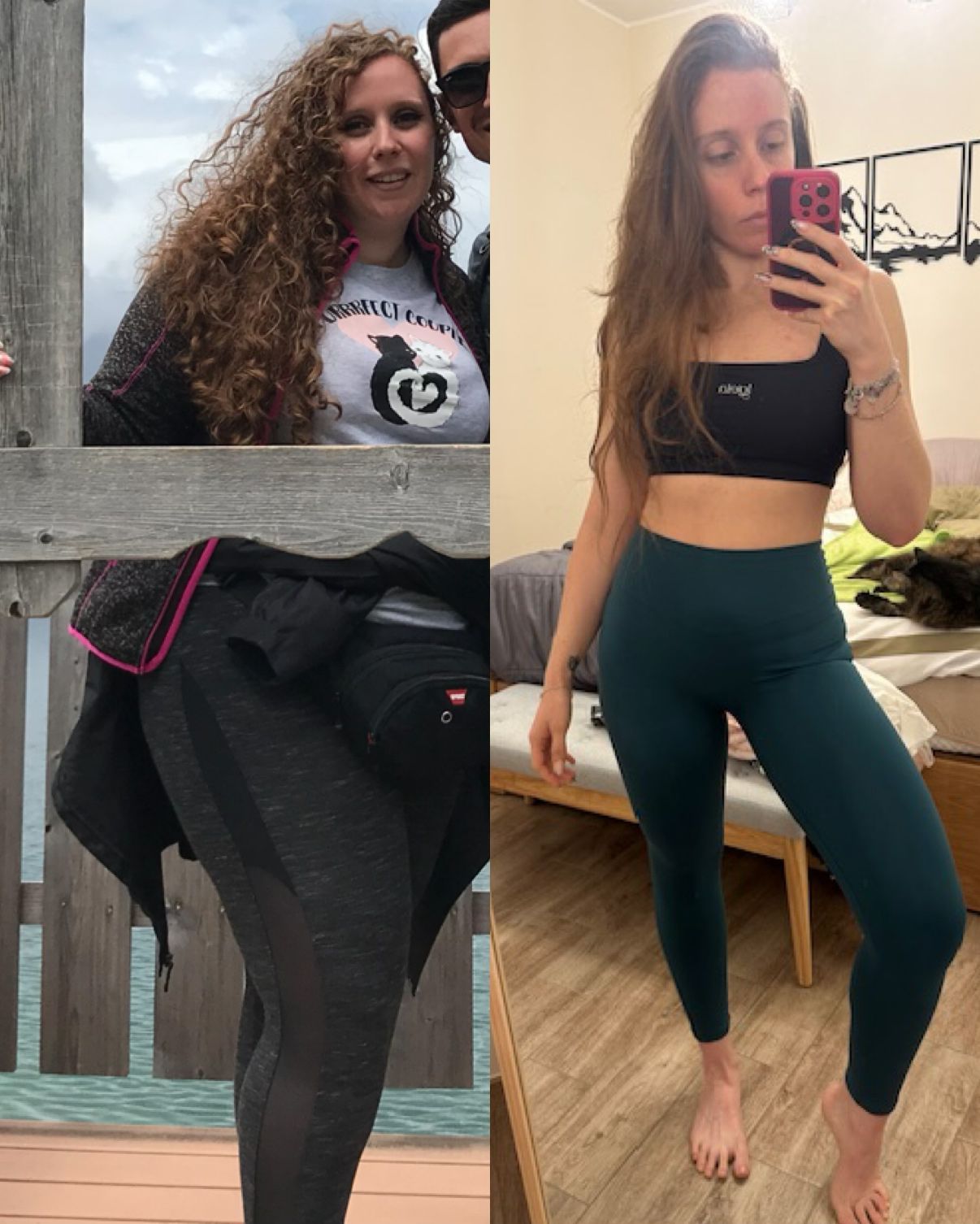
In short: Valentina started at 104 kg (16st 5lb), training with Carlotta and following a balanced way of eating, and reached 61 kg (9st 8lb). Her biggest fear was loose skin, and it did not happen: she puts that down to the training and to losing weight gradually, the two factors that genuinely make the difference. The most interesting comparison, though, is a different one: at almost exactly the same body weight, her body looked completely different when she was only lifting weights compared to how it looks now doing only Pilates. That is body recomposition, and the scale cannot see it.
Valentina’s message opens with an apology.
“The photo is from today, just before my period, so I’m pretty bloated.”
Forty-six kilos down, that is 7st 3lb, and the first thing she feels the need to tell me is that she was bloated that day.
If you recognise yourself in that, welcome: there are a lot of us.
But that is not why I chose to tell her story. I chose it because it contains two things almost nobody explains, and that in my view matter more than those forty-six kilos.
The first is about loose skin.
The second is a photograph in which Valentina weighs almost exactly what she weighs today, and has a completely different body.
Starting from 104 kg (229 lb): what she actually did
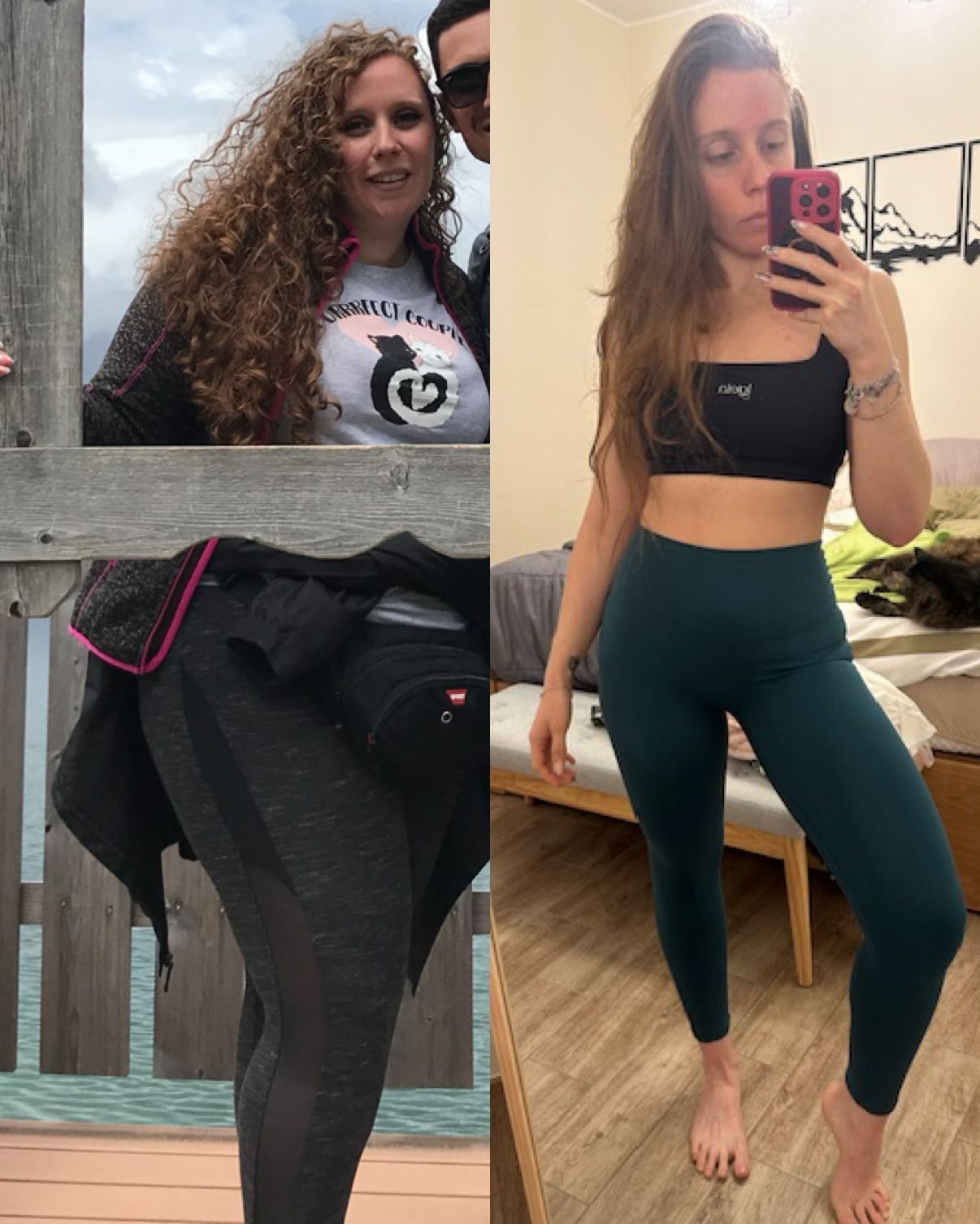
Valentina started at 104 kilos, 16st 5lb.
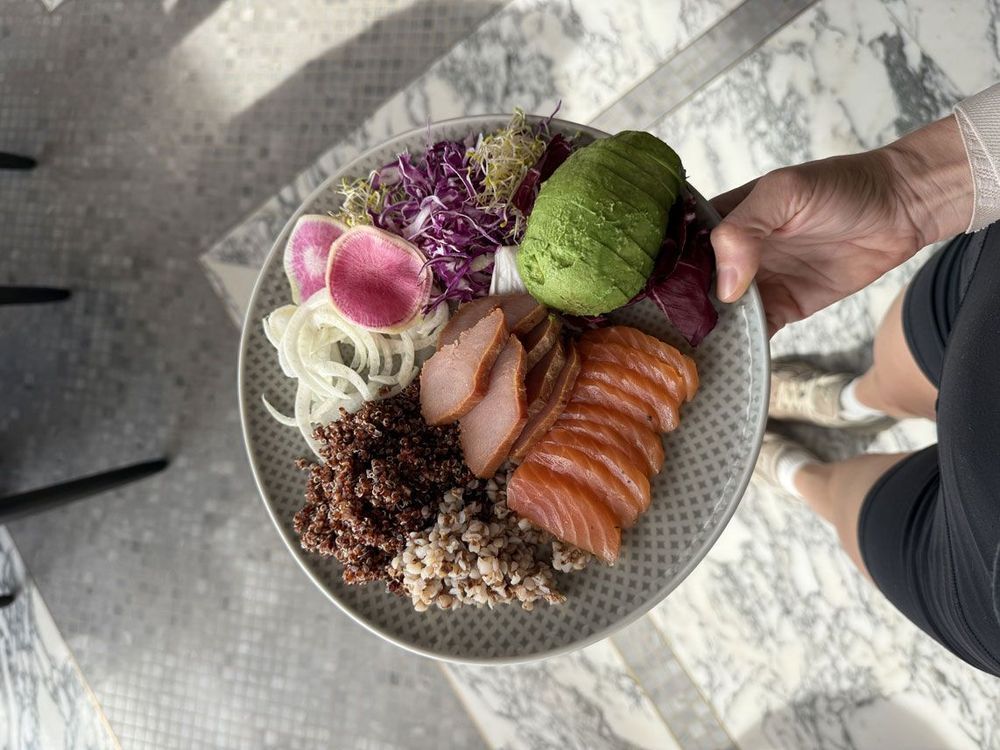
From there she did two things at once: she started training with me and she followed a balanced way of eating. Not a crash diet, not an extreme protocol. A path she kept going over time, consistently.
Then, along the way, she added Pilates. At first once a week. In her own words: “it helped me enormously.”
Today she weighs 61 kilos, 9st 8lb. And today she trains with Pilates only.
The fear of loose skin
This is the part I think will be most useful to you.
In her own words:
“My biggest fear about losing so much weight was having to deal with loose skin, but that didn’t happen, thanks to your workouts and to losing it in a controlled way.”
Anyone facing significant weight loss has exactly this thought. It is the fear that stops many journeys before they start: I lose the weight, and then what?
So let’s look at what actually determines skin elasticity after weight loss, because it is less mysterious than it sounds.
-
How fast you lose it
When you lose weight very quickly, the skin does not get time to adapt. Connective tissue retracts slowly and needs months, not weeks. Losing gradually gives it that time. Valentina’s was a long journey, and that worked in her favour.
-
What sits underneath the skin
Skin rests on whatever is beneath it. If you lose muscle mass while you lose fat, there is less volume underneath and the skin has more empty space to cover. If instead you maintain or build muscle, that volume stays. This is why training during weight loss is not only about burning more: it decides what shape your body will have at the end. Valentina trained throughout the whole journey, and it is the reason she points to herself.
-
Age, genetics, and how long the skin has been stretched
These are factors you cannot act on. They are why two women following the same path can end up with different outcomes.
What you can do is put yourself in the best possible position: lose weight gradually and train the whole way through. That is exactly what Valentina did.
The comparison you would not expect
Now we get to the part that made me stop and reread her message.
Valentina sent me a second photo, from August 2023.
In that photo she weighs two kilos less than she does today, around 4lb.
Two kilos less. Essentially the same number on the scale.
Back then she was only lifting weights, and had just started doing a bit of Pilates.
Today she does only Pilates.
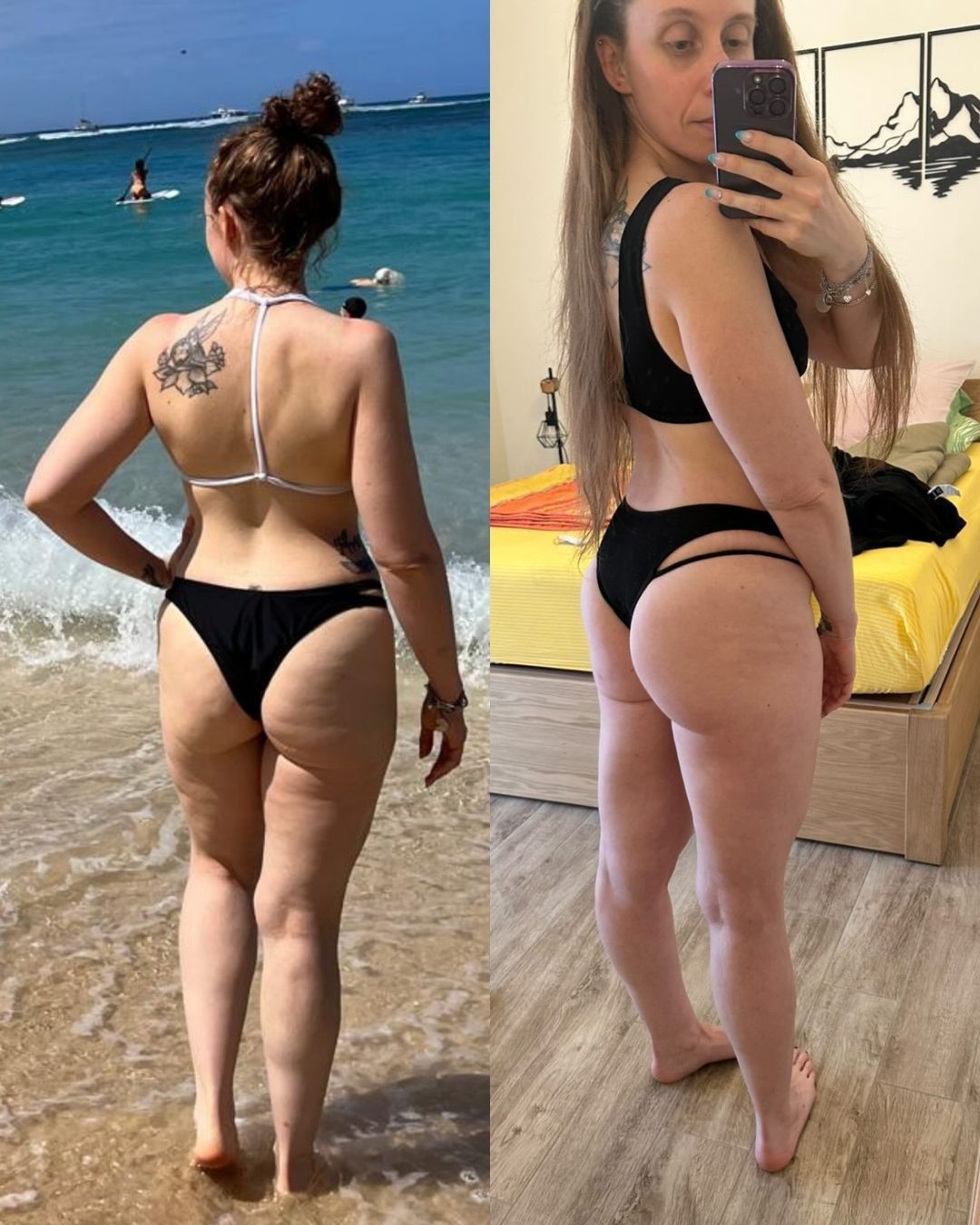
Her words looking at the two images: “I can’t believe my eyes.”
And she adds something that has nothing to do with aesthetics but that I think is the real result: she feels considerably less mentally stressed.
This is the whole point of this article.
Same weight. Completely different body.
If she had been looking only at the scale, nothing would have happened in those two years. Worse, in fact: two kilos up.
This is called body recomposition, and it is the thing the scale cannot measure.
Your weight is the sum of muscle, fat, bone, organs and fluid. If you replace a kilo of fat with a kilo of muscle, the number does not change. But muscle takes up far less space for the same weight, it has a different shape, and it holds the body differently. The result in the mirror is unrecognisable.
Add the lymphatic component: if your body is holding less fluid, the shape changes again, and the scale reads that badly too.
Pilates or weights?
At this point the question asks itself, and I get it constantly.
Valentina’s line is sharp: “so much for the people who say you need to lift monstrous loads to get high, round glutes.”
I want to give you an honest answer though, not the answer of someone with a stake in it.
Weights are not the enemy. Working with loads builds muscle very effectively and it is a serious tool. If you train with weights and you feel good, there is no reason to stop.
The point is different: there is more than one way to build muscle, and not every way has the same effect on the female body.
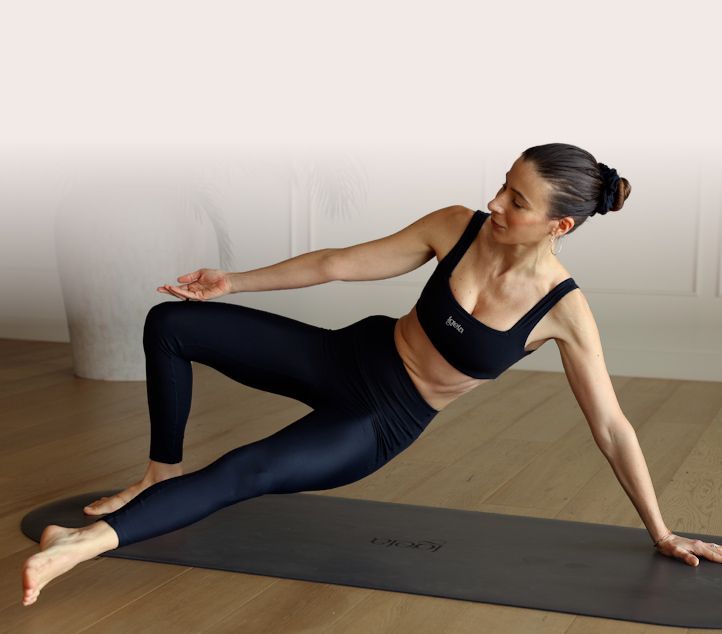
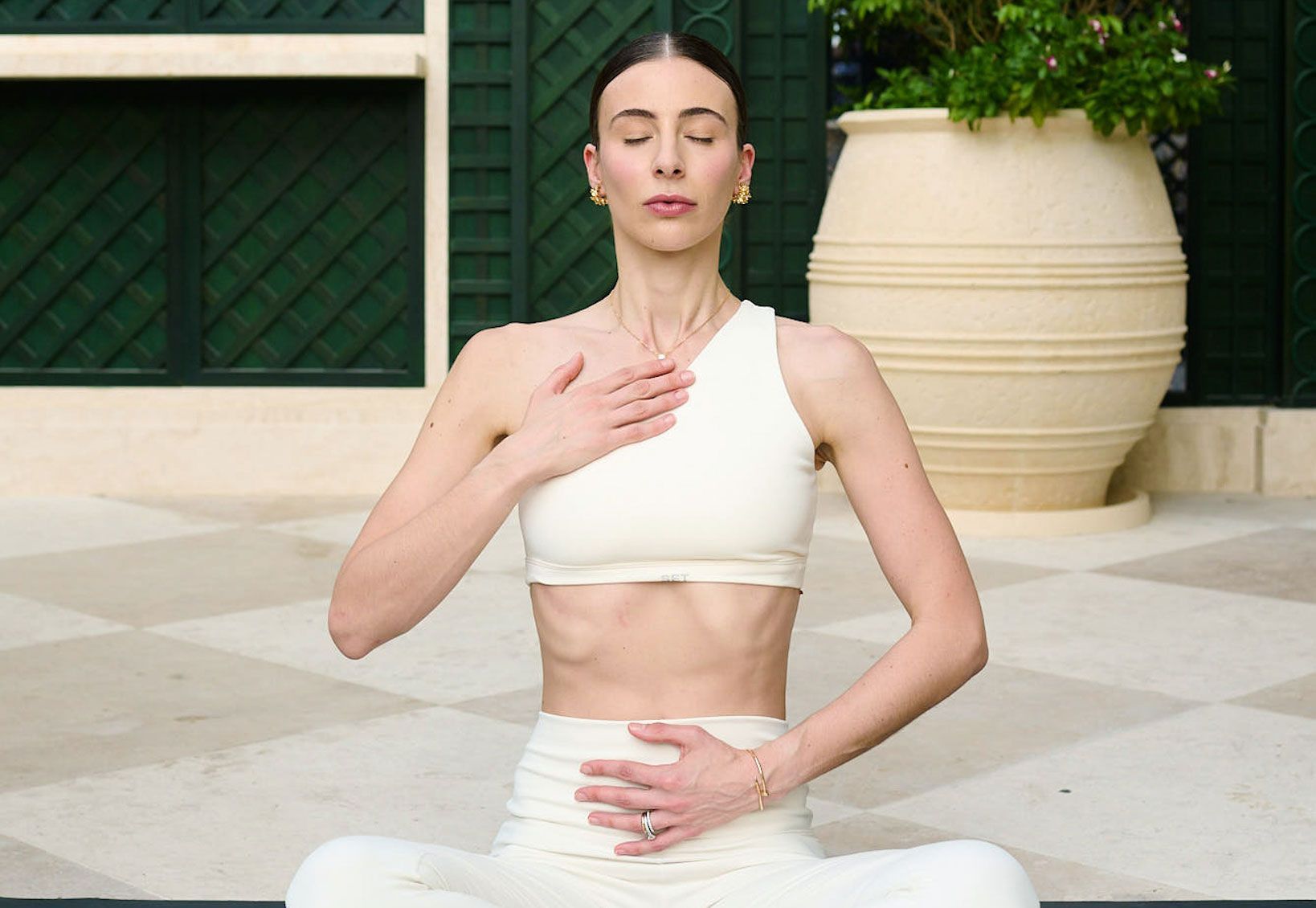
Lymphatic Drainage Pilates builds strength using your own body weight, isometric resistance, and slow controlled contractions. It works heavily on the deep muscles, the ones you do not see in the mirror but that decide your posture: the transverse abdominis, the gluteus medius, the pelvic floor, the scapular stabilisers.
And that produces three effects you do not get in the same way from heavy loads.
-
It changes your posture, so it changes your shape
An aligned pelvis and a rib cage in the right place change the outline of the body before body composition has changed at all. I went into this in depth in the article on posture.
-
It does not inflame
Very heavy loads, high intensity, and a significant rise in body temperature generate acute inflammation. For many women that is completely fine. For anyone dealing with fluid retention, bloating, or underlying chronic inflammation, it is a variable that matters.
-
It lowers cortisol rather than raising it
Deep breathing and controlled movement activate the parasympathetic system. This is not a wellness detail: chronically high cortisol encourages fluid retention and fat storage. And it is no coincidence that the first thing Valentina noticed, once she moved to Pilates only, was feeling less stressed.
The work Valentina is carrying on with
Her body has already, in her own words, had “an incredible glow up”, and it keeps changing: “I’m getting more and more defined.”
And there is one area she is still working on, which she told me about with the same ease:
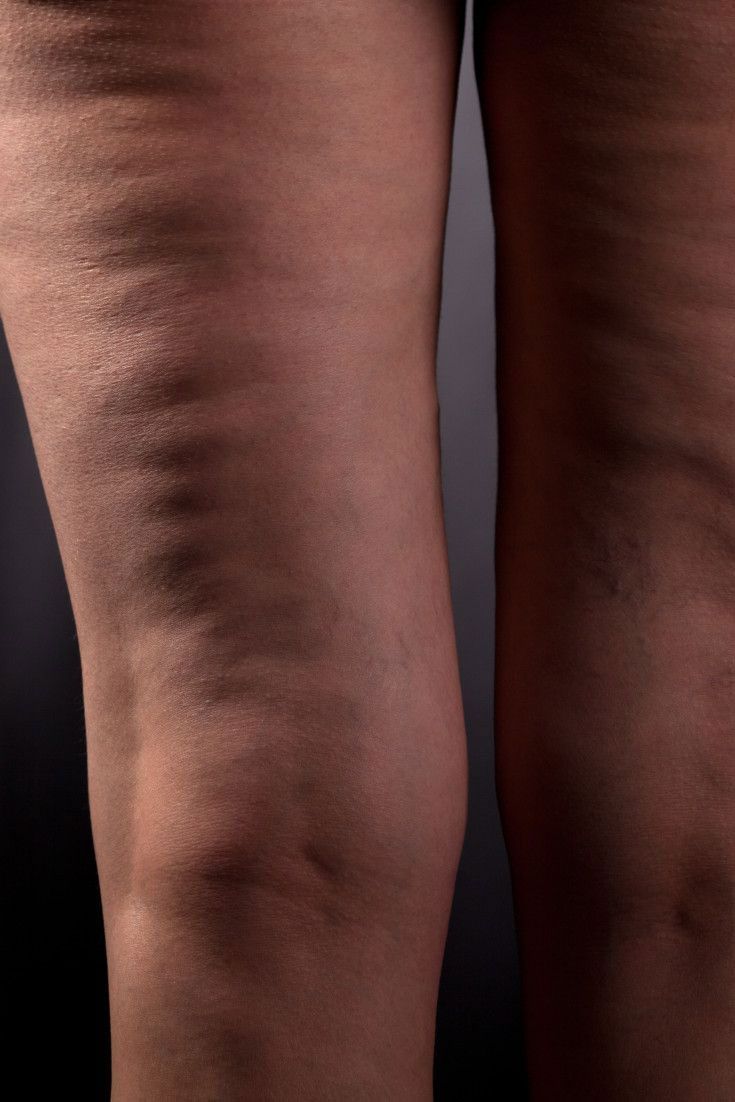
“I still have a lot of work to do to reach my goals, especially with cellulite, which I’ve always struggled with.”
I think this is the most valuable part of her whole message, because it shows how a journey actually works.
Cellulite is the slowest thing to respond, and there is a reason for that. It is not excess fat: it is a condition involving the microcirculation, the lymphatic system and the connective tissue. That is why it is not solved on the scale, and why lymphatic drainage is the lever that works best on it. But it is also work that builds over months, with consistency, exactly like the work Valentina is doing now.
No journey ends when you reach the first goal. What changes is what you are working on.
And the line Valentina closes with is the best part of all: “I’m proud of myself and I know I’ll get there, little by little.”
Little by little. Not by summer.
The 4 things to take from Valentina’s story
-
The scale measures one thing, and it is not the thing you care about
At the same body weight, Valentina’s body changed radically. If the number is your only measuring tool, you are missing exactly the progress you are making.
-
Training during weight loss is not about burning more, it is about deciding the final shape
The muscle you keep while you lose fat is what supports the skin and gives volume where you want it.
-
Losing gradually is worth more than losing fast
Not only for your skin: also for not putting it all back on afterwards.
-
A journey does not end, it evolves
Valentina reached her weight goal and is now working on another front, cellulite, which is the slowest to respond because it involves the microcirculation and the lymphatic system. That is how a journey normally goes: the goal changes, the work does not stop.
How to track progress without losing your mind
If the scale is not enough, what do you use instead? Here is what I always recommend.
- The tape measure, every four weeks. Waist, hips, thigh, arm. Always at the same time, first thing in the morning.
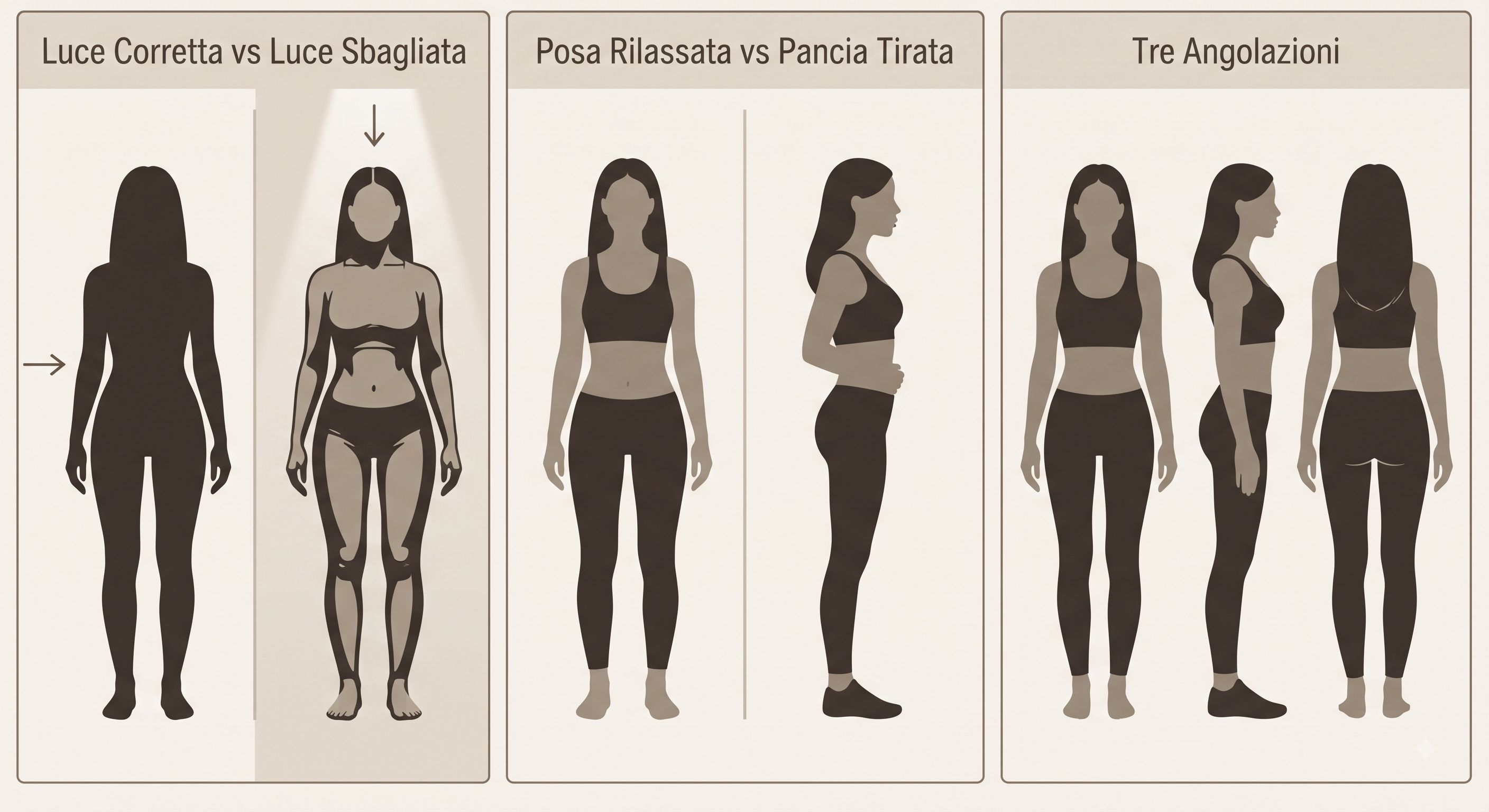
- Photos, every four weeks. Same light, same spot in the house, same close-fitting outfit, body relaxed, three angles. Never with your stomach pulled in.
- Your clothes. They are the most honest measure there is. Trousers that fasten more easily tell you more than any number.
- How you feel. Energy, sleep quality, heaviness in the legs. Write two lines every month: rereading them six months later is the most surprising part.
And if you do want to weigh yourself, always do it at the same point in your cycle. Valentina said it herself: that photo was taken just before her period. In the luteal phase the body physiologically holds more fluid, and comparing a pre-period day with a post-period one tells you nothing.
Where to start
If Valentina’s story sounds like yours, here are the programmes to begin with.
- If you have never done Pilates, Lymphatic Drainage Pilates Beginners: two months to build the foundations without overdoing it.
- If you already have a practice, the full 6-month programme is the one designed to tone, drain and debloat.
- If time is your main obstacle, Lymphatic Drainage Pilates Express asks you for 15 minutes a day.
Frequently asked questions
How do you avoid loose skin when losing weight?
There is no method that guarantees it completely, because factors you cannot control come into play, such as age, genetics, and how long the skin has been stretched.
You can, however, work on the two factors that genuinely make the difference: losing weight gradually, giving the connective tissue time to adapt, and training throughout the whole journey to maintain muscle mass, so that volume remains underneath the skin.
That is exactly the combination Valentina followed.
Can your body change without losing weight?
Yes, and it is called body recomposition. Weight is the sum of muscle, fat, bone and fluid: if you replace fat with muscle, the number on the scale stays similar but the shape of your body changes considerably, because muscle takes up less space for the same weight. In Valentina’s case, two kilos apart, around 4lb, the body looked completely different.
Pilates or weights for toning?
Both build muscle, in different ways. Weights work through progressive overload and are very effective for hypertrophy. Lymphatic Drainage Pilates works with body weight, isometric resistance and controlled contractions, with a particular focus on the deep and postural muscles, and without generating the acute inflammation and rise in body temperature typical of high intensity work. For anyone dealing with fluid retention, bloating or chronic inflammation, the second route tends to produce visible results more quickly.
Does Pilates help you lose weight?
Lymphatic Drainage Pilates works on three fronts that change the body visibly: it builds and maintains muscle mass, it improves lymphatic drainage, and it reduces fluid retention. This is why a great many women see their body shape and their clothes size change, often before the scale moves at all. Combined with balanced eating, as in Valentina’s case, it becomes the thing that decides what shape your body ends up in, not just what it weighs.
Does Lymphatic Drainage Pilates improve cellulite?
Yes, and it is one of the levers that works best. Cellulite involves the microcirculation, the lymphatic system and the connective tissue, so it is not simply excess fat and it is not solved on the scale: that is precisely why working on lymphatic drainage is so effective on its appearance, alongside anti-inflammatory eating and reduced fluid retention. It does take consistency though: this is the kind of improvement that builds over months.
How long does body recomposition take?
The first changes in how you feel, meaning more comfortable clothes and lighter legs, often arrive within the first few weeks and are mostly about fluid retention. Real recomposition, the kind that changes your body shape at the same weight, takes months of consistency: in most cases at least 3 to 4 months before it is obvious in a photo.
If Valentina’s story sounds like yours, the most useful thing you can do is stop judging yourself by a number. If you want to start,
Carlotta's insights, straight to your inbox
Just your name and email, unsubscribe anytime.