When can you start exercising after birth? Carlotta V. story and why clearance comes first
When can you start exercising after birth? Carlotta V. restarted after one week. Why medical clearance comes first and the right order to rebuild safely.
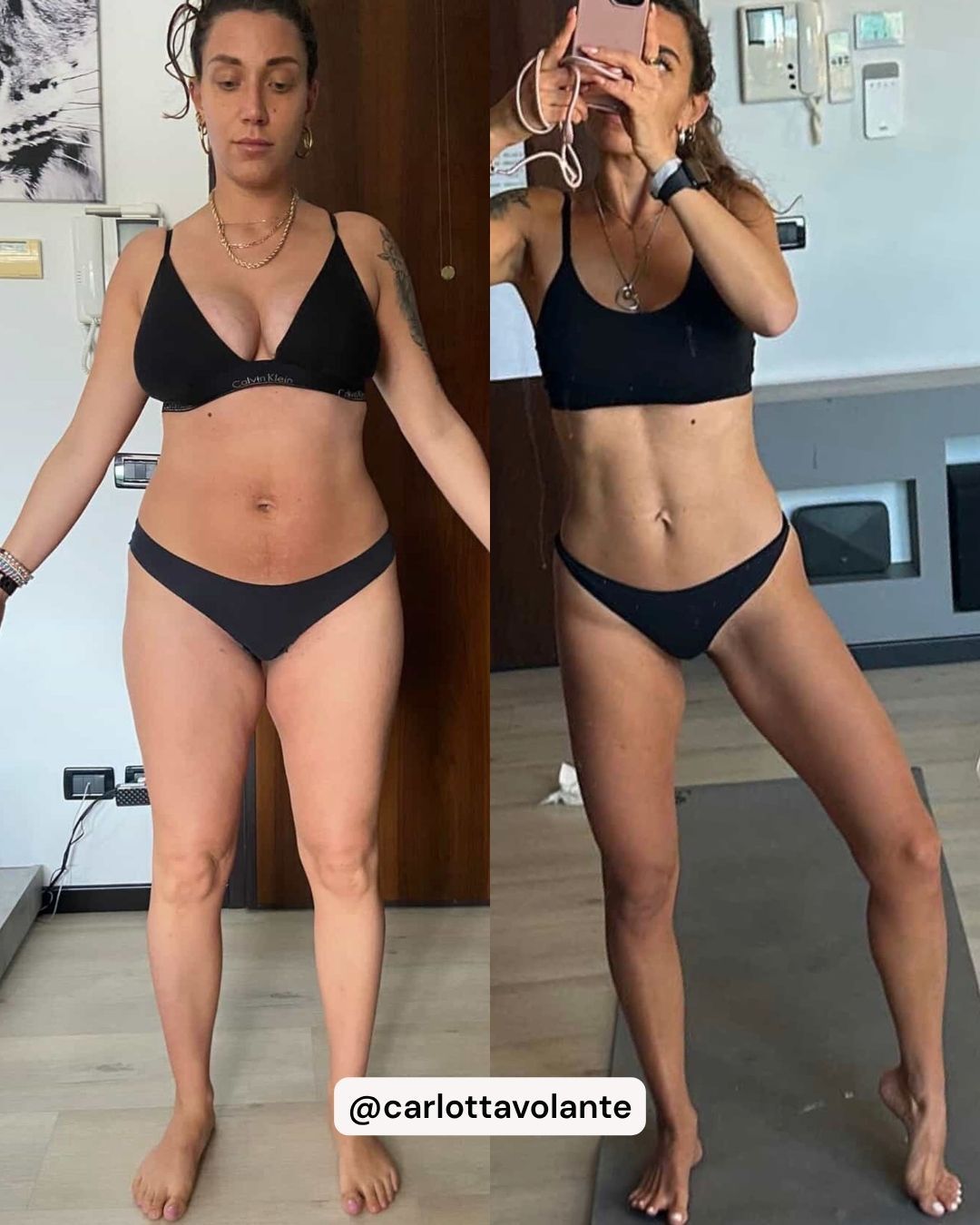
In short: Carlotta V. gained 23 kg (3st 9lb) in both of her pregnancies and lost 20 kg (3st 2lb) in the two months after her second birth. She started training again one week after giving birth, avoiding every abdominal exercise, and combined the Original Lymphatic Drainage Pilates (Pilates Linfodrenante®) with the dedicated diastasis programme. She has two daughters, one of them a newborn she is breastfeeding. Her key line: she never stopped training, not after her first pregnancy and not after her second.
A quick note first, or we will both get confused: the woman in this story is called Carlotta, like me. She is Carlotta V. and I am the one writing.
With that out of the way, hers is one of the most useful stories I have received, and it answers the question I get asked more than any other by women who have just given birth.
When can I start again?
The answer you usually hear is: wait. Wait for your six-week check, wait for the appointment, wait until you feel ready, wait until the baby sleeps, wait until the exhaustion passes.
And meanwhile months go by, the body settles into the wrong compensations, and when you finally do start again you are further back than where you were.
Carlotta V. did something different. She started again one week after giving birth.
But the point is not when she started. It is what she started doing. And that is an entirely different question.
First: why postnatal clearance comes before any return to exercise
I need to say this before anything else, because I know how this story sounds. She started again after one week and I do not want anyone reading that as a green light. Standard guidance is a postnatal check at six to eight weeks before returning to anything beyond gentle walking, and after a caesarean the picture is different again. Carlotta V. had her clearance, she had years of training behind her, and she started with breathing only not with the programme she was doing before. If you have not had your check yet, that is your first step.
The numbers, and why they matter less than you think
Let’s start with the facts.
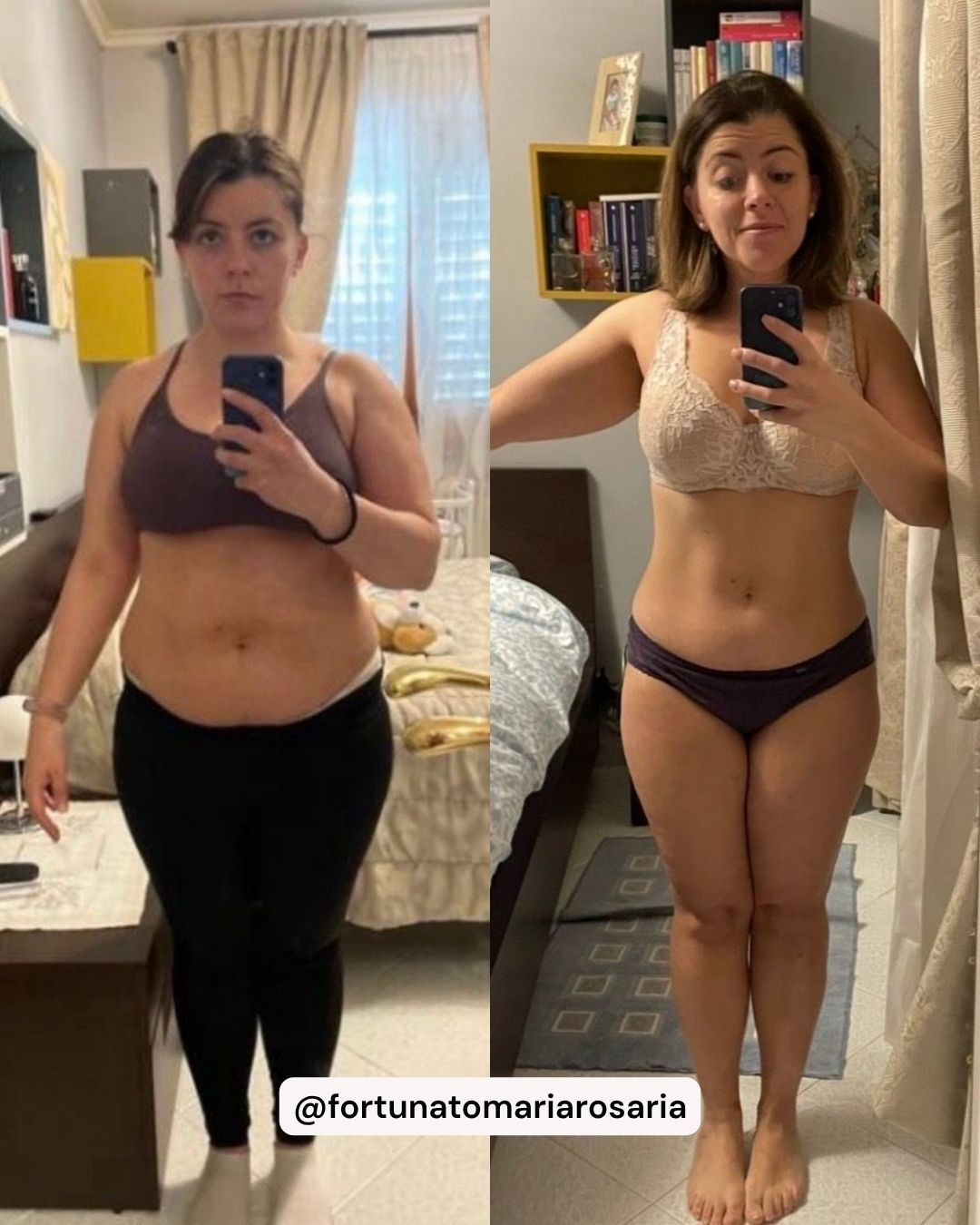
In both pregnancies she gained 23 kilos (3st 9lb). Her words, with a parenthesis I found honest and funny: “my obstetrician told me off, but as far as I’m concerned it was all fluid.”
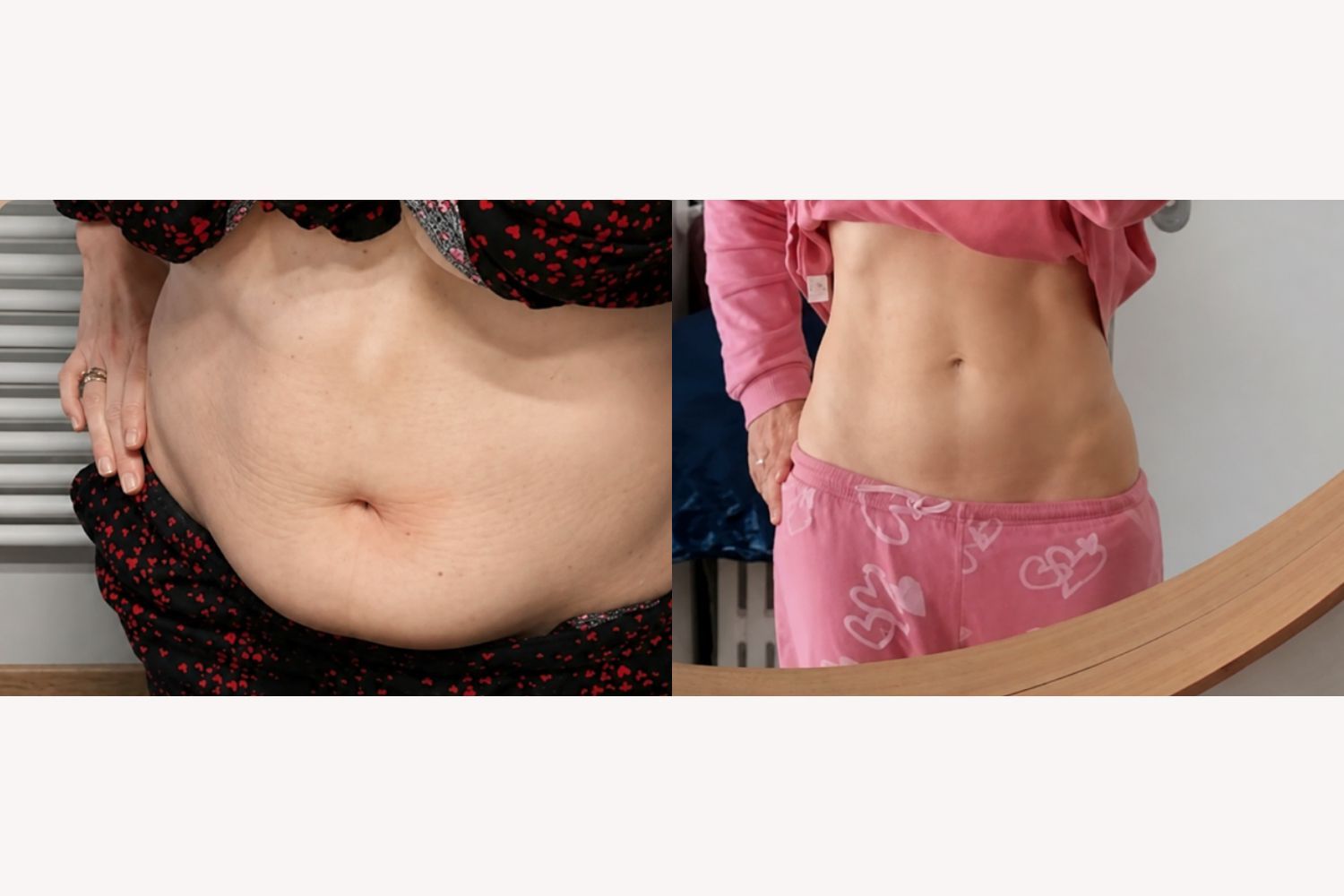
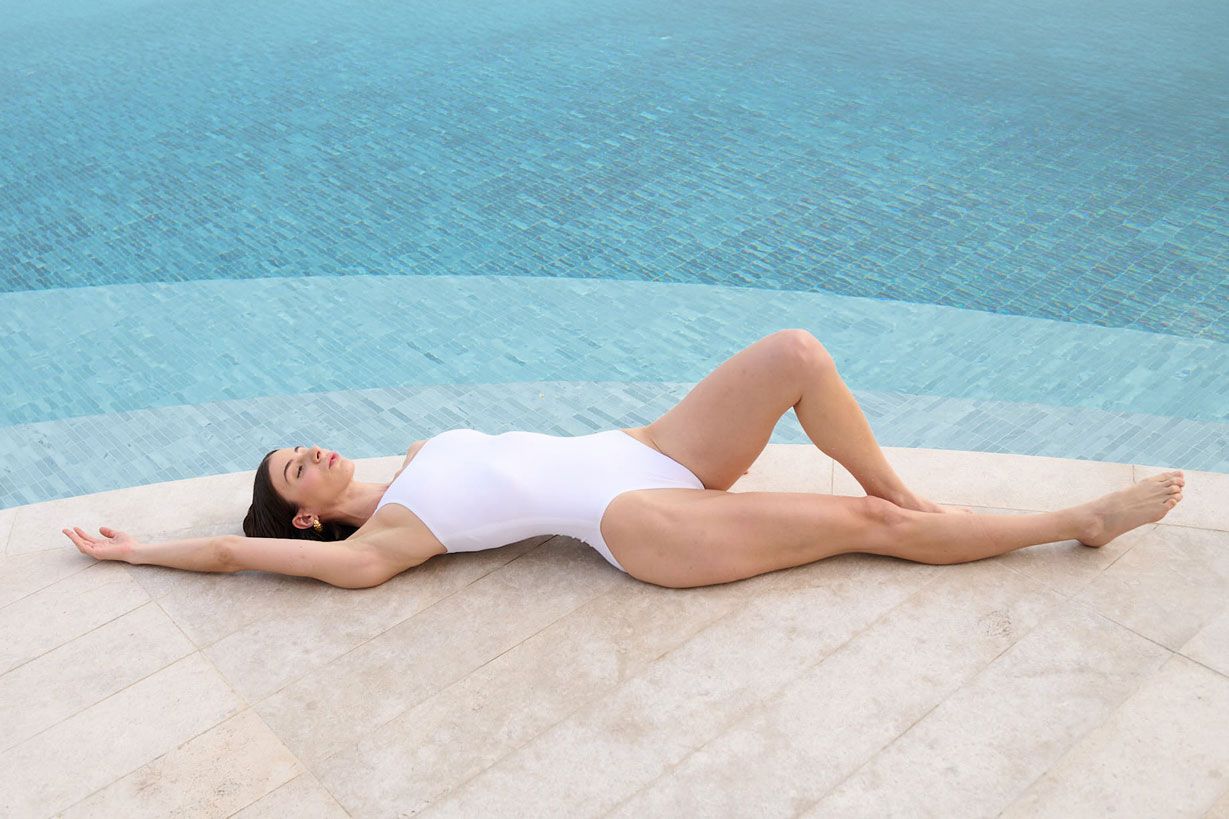
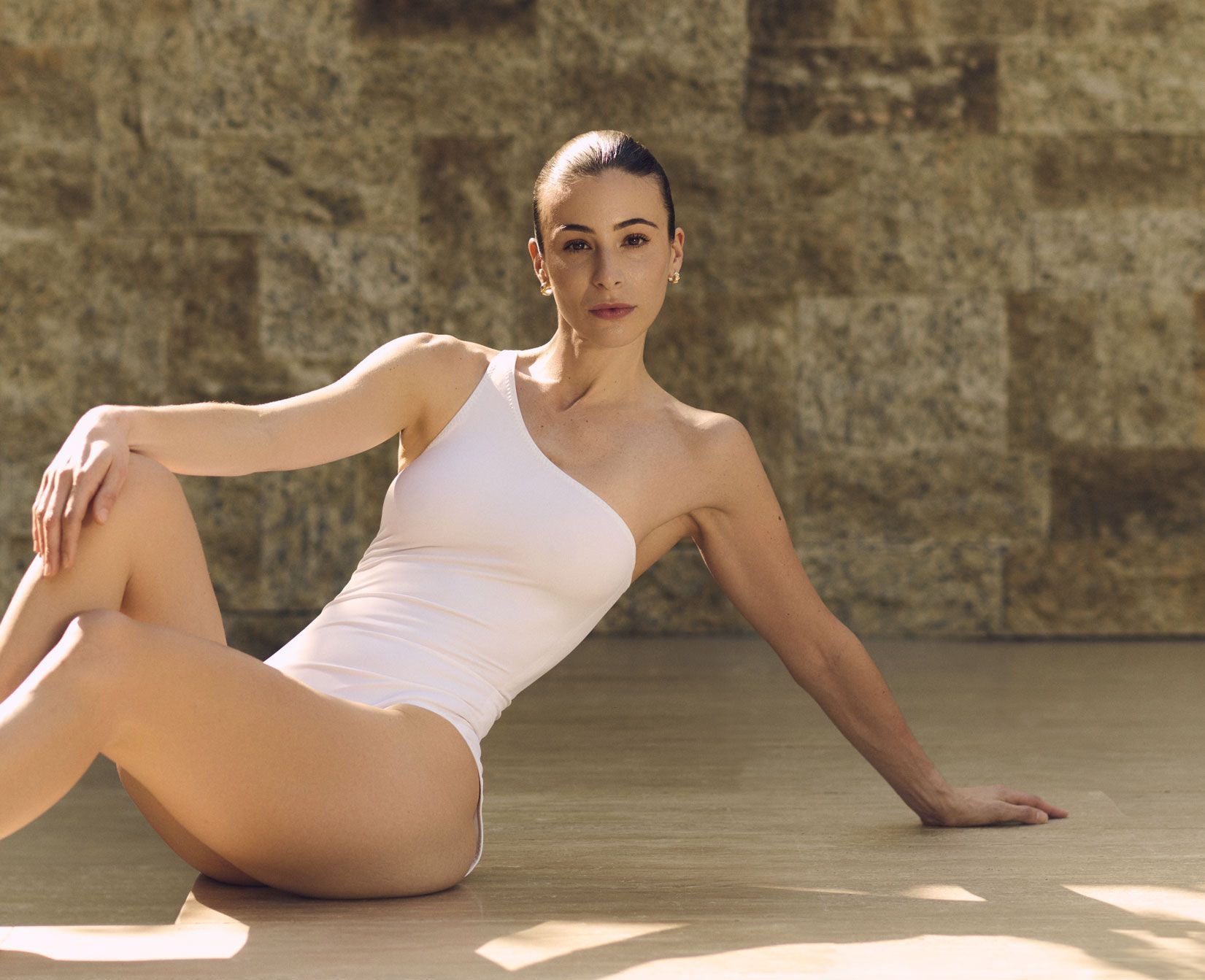
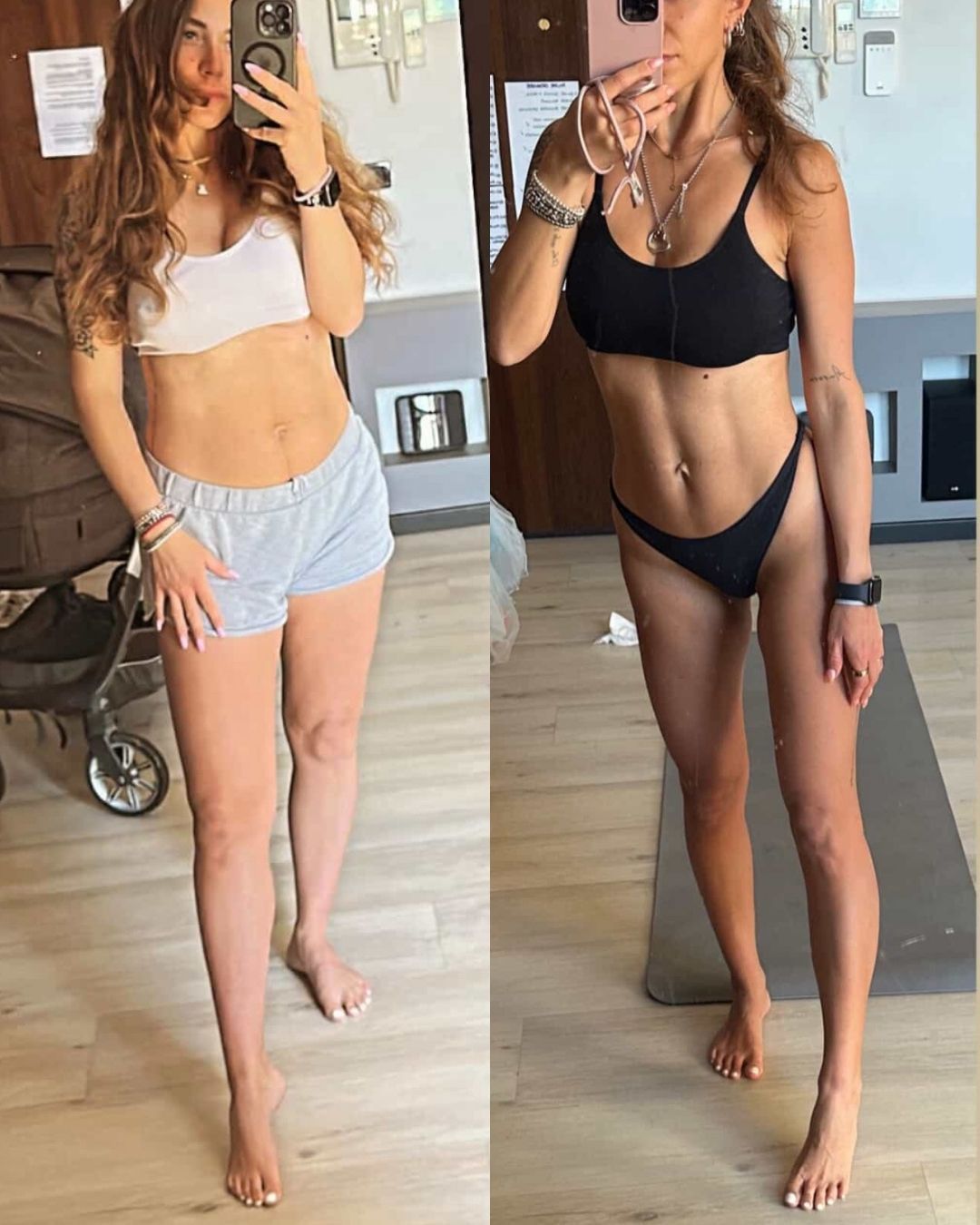
In the photos she is two months postpartum, and she has lost 20 kilos (3st 2lb) in two months.
Now, I know perfectly well that this is the number that brought you here. But the line I think is worth more in her message is the one that comes straight after:
“And even though weight is relative, the energy and the drive that Lymphatic Drainage Pilates and postpartum Pilates give you is incredible”
And then this one, which is what made me want to write the article:
“With two daughters, one of them a two-month-old baby I’m breastfeeding, all of this is possible.”
With a two-month-old. While breastfeeding.
Not with a full-time nanny, not with three free hours a day.
What actually made the difference: she never fully stopped
This is the key to the whole story, and she writes it in her opening line:
“Keep in mind I never stopped training, not after my first pregnancy and not after my second.”
Here is her timeline, exactly.
- 2024: she starts Lymphatic Drainage Pilates when it launches, with her older daughter aged 3.
- During her second pregnancy: she stops, because of severe nausea. Not out of laziness and not by choice: her body asked her to stop and she listened.
- May 2025, one week after giving birth: she starts again. Avoiding every exercise involving the abdomen.
- From there on: Lymphatic Drainage Pilates plus the dedicated diastasis programme.
Look closely at that sequence, because it tells you something that almost nobody says:
Postpartum does not begin after the birth. It begins with the state you arrive at the birth in.
Carlotta V. body came from years of work on breathing, on the pelvic floor and on the deep muscles. When she started again, she was not building from nothing: she was reactivating something that was already there.
If you are pregnant and reading this, that is the message I want to land. The moment to work on your postpartum recovery is now.
One week after birth: what that actually means (and why clearance came first)
Now let’s be very clear, because “she started again after a week” read quickly becomes dangerous advice.
Starting again one week after birth does not mean going back to the programme you were doing before.
It means doing what she did: cutting out abdominal work entirely and starting again somewhere else.
And that somewhere else is always the same, in this order.
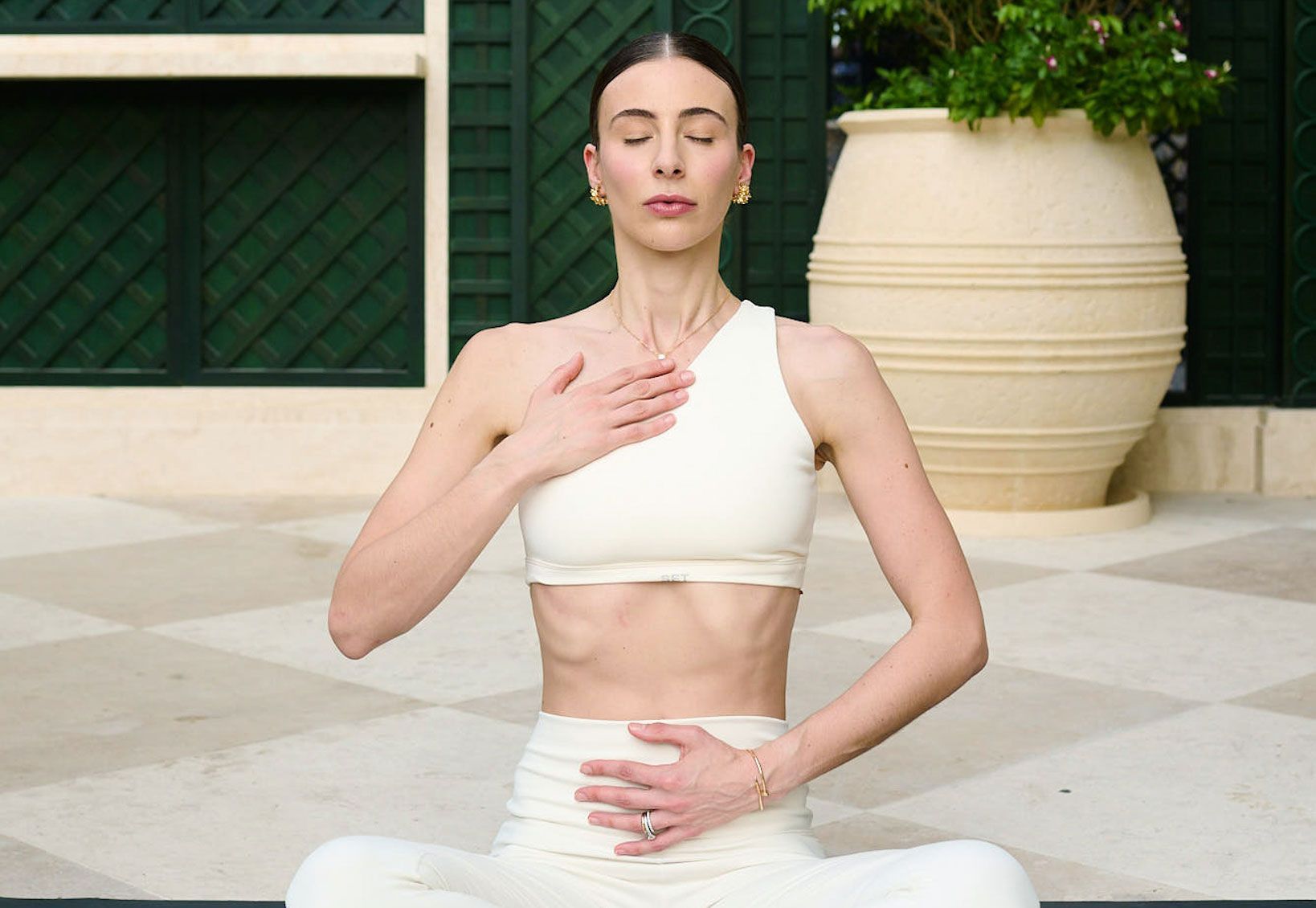
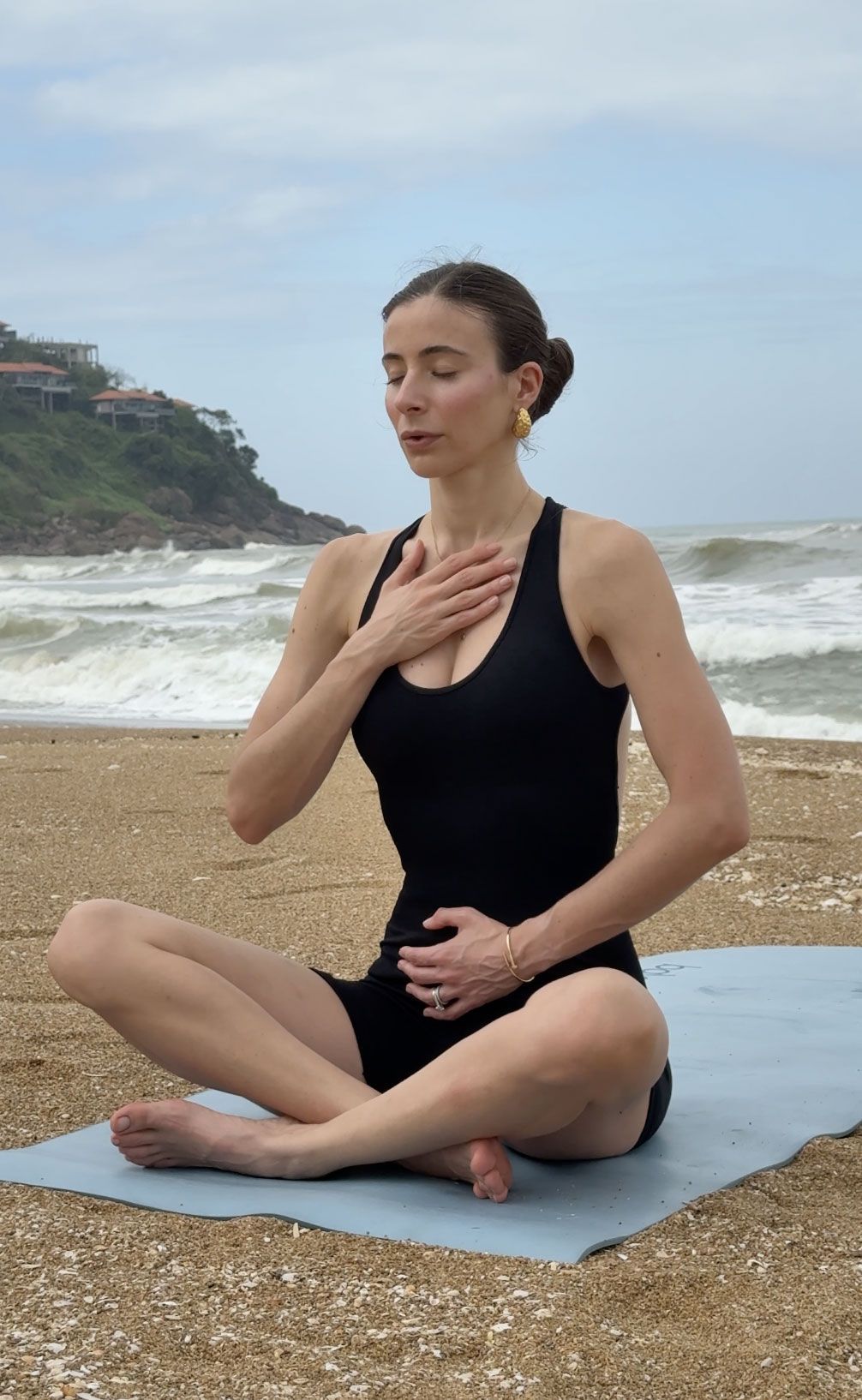
First: breathing.
Not a detail, the foundation of everything.
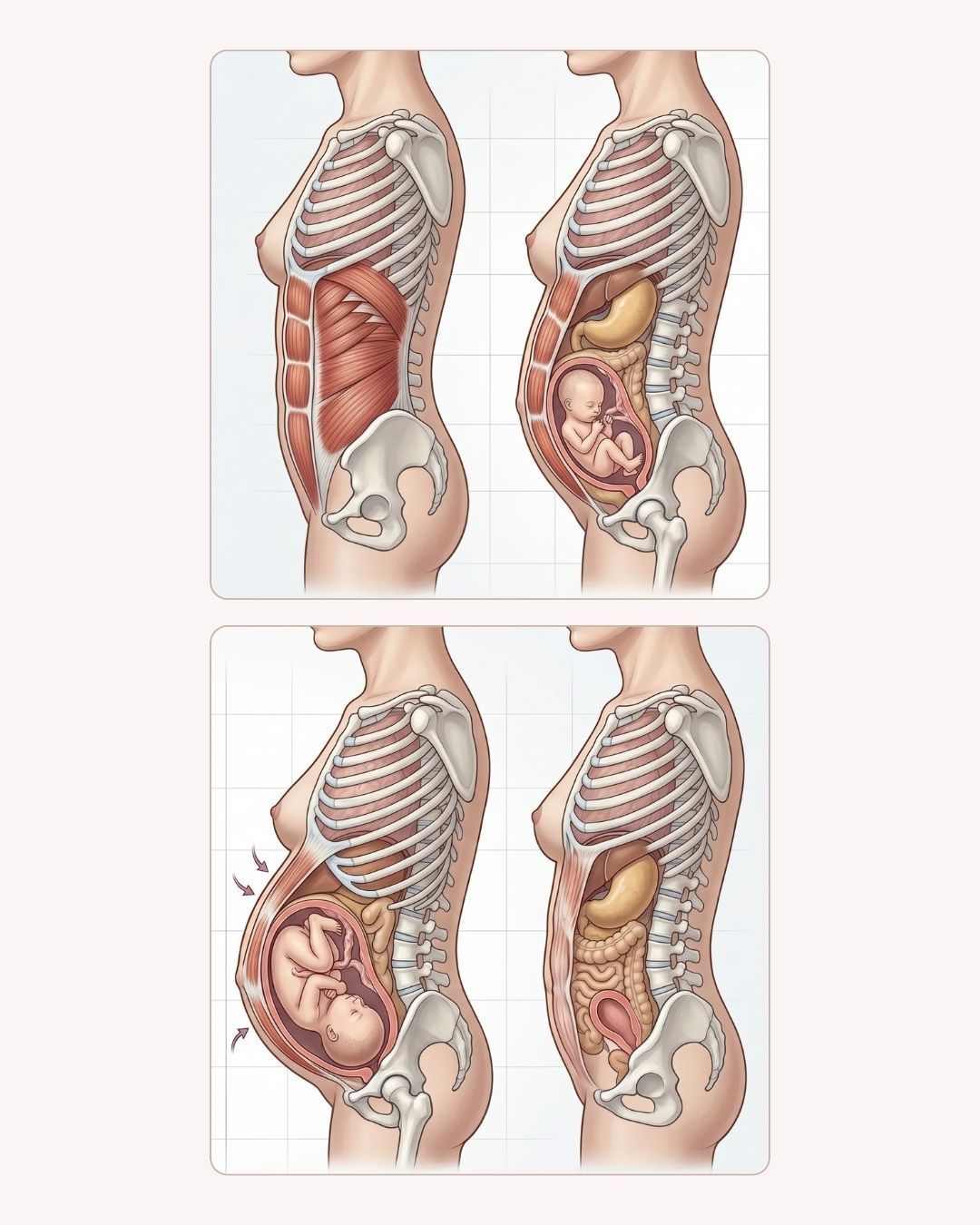
During pregnancy the diaphragm is progressively compressed and your breathing pattern changes.
If you do not rebuild it, everything you put on top of it rests on crooked foundations.
Breathing needs to return to 360 degrees, meaning front, sides and back, not just the belly.
Second: the pelvic floor.
Which after a birth does not need strengthening straight away, but first needs to start coordinating with the breath again.
It lengthens as you inhale, it lifts as you exhale.
First you restore that conversation, then you strengthen.
Third: managing intra-abdominal pressure.
This is the common denominator behind diastasis, prolapse and pelvic floor problems.
If every time you get out of bed, lift the pram or hold the baby you push pressure down and forward, you are working against your own recovery dozens of times a day.
Only after those three steps do you go back to abdominal work. And when you do, you do not go back with crunches.
Why she avoided abdominal exercises
Carlotta V. mentions it in brackets, as though it were obvious. It is not, and it deserves an explanation.
After birth the linea alba, the connective tissue joining the two sides of the rectus abdominis, has been stretched for nine months.
Almost every woman has some degree of diastasis in the days after giving birth: it is physiological, and in most cases it closes on its own.
The problem is what you do in that window.
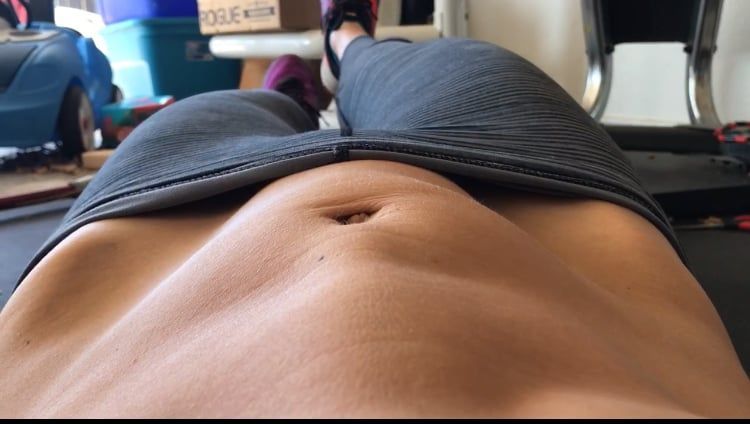
If you do crunches, planks or sit ups while that tissue is still lax, you push pressure against the abdominal wall at exactly its weakest point. The result is visible to the naked eye: the belly rising into a ridge down the middle during effort, which is called doming.
Repeated, that movement does not close a diastasis. It holds it open.
This is why in the Pilates Diastasis & Postpartum programme we work first on breathing and on the deep muscles, particularly the transverse abdominis, which functions as a natural corset, and only afterwards add the rest.
And I say this to women who gave birth five years ago too: if a diastasis did not close then, you can work on it now. There is no expiry date.
The mental load, which nobody counts as work
There is one last part of her message I want to quote, because it names something that gets talked about far too little:
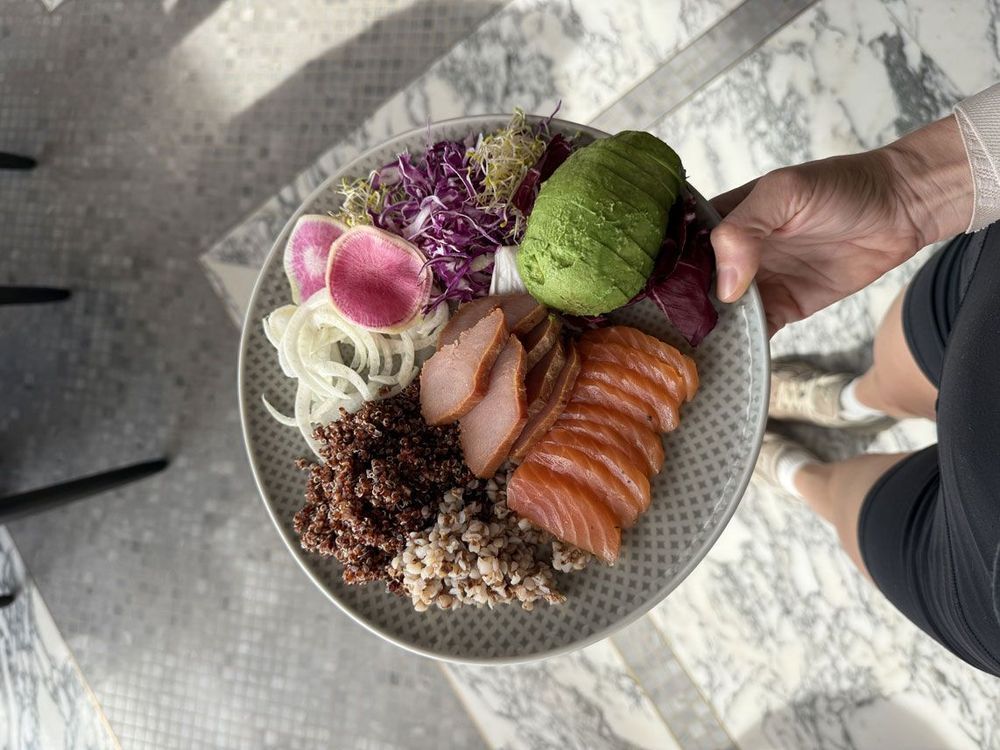
“With food, having the shopping already worked out for me is an enormous help, it lightens the mental load of what to buy and cook every day.”
The mental load.
Not the time to train, not the physical tiredness. The number of decisions a mother has to make every single day.
What do I buy. What do I cook. What do I eat while I am breastfeeding. It is invisible work that drains energy exactly like the visible kind, and in the postpartum period it lands on top of a level of sleep deprivation that no amount of training will ever compensate for.
Removing even one of those decisions, like having the shopping list already done, is not a convenience detail. It is one of the reasons a programme gets carried through rather than abandoned after three weeks.
The 4 things to take from Carlotta V. story
-
Postpartum recovery is prepared during pregnancy.
A woman who arrives at the birth with functional breathing and active deep muscles restarts from a completely different place.
-
Stopping when your body asks you to is not a failure.
She stopped because of the nausea. Then she started again. The consistency of a journey is measured in years, not weeks.
-
Starting early is possible, but only after clearance and by completely changing the content
Breathing, pelvic floor, intra-abdominal pressure. The abdomen comes later, and never with crunches.
-
Reducing the mental load matters as much as the training.
Knowing in advance what to buy and what to cook is what makes a programme sustainable with a newborn in the house.
And one point that applies to everyone: every birth is different and can involve different complications. Before you start again, your obstetrician’s clearance always comes first.
Where to start, depending on where you are
- If you are pregnant: the programme is Lymphatic Drainage Pilates Pregnancy, which adapts week by week to the changes in your body. It is the best way to arrive at the birth prepared.
- If you have recently given birth: Pilates Diastasis & Postpartum, six weeks that start from the breath and rebuild in the right order.
- If you gave birth years ago but still have a diastasis, a belly that protrudes, or pelvic floor problems: the same programme. It is not designed only for recent births.
- When you are ready for the next step: the full Lymphatic Drainage Pilates, to tone, drain and debloat.
Frequently asked questions
When can you start exercising after giving birth?
It depends on the type of birth, on any complications, and on your obstetrician’s clearance, which always comes first. That said, work on breathing, the pelvic floor and intra-abdominal pressure can begin far earlier than most women think, and that is exactly what Carlotta V. did by starting again one week after giving birth. What should not be resumed early is abdominal work, which needs different timing and a specific order.
Which exercises should you avoid after giving birth?
In the immediate postpartum period, avoid crunches, sit ups, planks and any exercise that pushes pressure against the abdominal wall while the linea alba is still lax. The signal to watch for is doming, meaning the belly rising into a ridge down the middle during effort: if you see it, that exercise is not right for you at that moment. Also avoid jumping and running in the early weeks, to protect the pelvic floor.
How do you reduce your belly after pregnancy?
By working on the deep muscles, particularly the transverse abdominis, which acts as a natural corset and is activated through the breath. The correct sequence starts with 360 degree breathing, moves on to coordination between the diaphragm and the pelvic floor, and only then introduces abdominal work proper. Adding lymphatic drainage helps with the fluid retention component, which is often significant after birth.
Can you exercise with diastasis recti?
Yes, and appropriate exercise is in fact the main tool for improving it. What needs avoiding is the wrong kind of exercise: movements that increase pressure against the abdominal wall hold a diastasis open rather than closing it. The Pilates Diastasis & Postpartum programme is built on exactly that distinction, and it works even if you gave birth several years ago.
Can you lose weight while breastfeeding?
Yes, and Carlotta V. lost 20 kg (3st 2lb) in the two months after giving birth while breastfeeding a newborn. Breastfeeding increases your energy requirements, so this is not the moment for significant calorie restriction: you need to eat enough and eat well. Low-impact movement such as Lymphatic Drainage Pilates is ideal in this phase, because it works on drainage and tone without adding stress to a body that is already under strain.
How long does it take to get back in shape after having a baby?
There is no single answer, because it depends on the type of birth, on how much you trained during pregnancy, and on individual recovery. What can be said is that a significant part of what you see in the early weeks is excess fluid, which responds very quickly to movement and drainage. Recovering deep function, on the other hand, takes months and has to be done in the right order, without skipping steps.
If you have just given birth or you are pregnant, the most useful thing you can do is rebuild in the right order. The free trial of Lymphatic Drainage Pilates lasts 7 days and includes the Diastasis & Postpartum programme.
Carlotta's insights, straight to your inbox
Just your name and email, unsubscribe anytime.