Why chronic back pain happens and how Lymphatic Drainage Pilates can help you
Chronic back pain? The real biomechanical causes behind it, the mistakes that make it worse, and how Pilates works on the root, not the symptoms.
How many times have you woken up with that knot between your shoulder blades? How many evenings do you end the day with twinges in your lower back?
If you suffer from recurring back pain, you are in good company. So many women live with it silently, every single day.
I myself used to go to the physiotherapist every week and had very frequent back pain. Hot patches had become my best friends (and in summer you really cannot say they are the best).
Let me be clear from the start:
I want to be clear from the start: The Original Lymphatic Drainage Pilates (Pilates Linfodrenante®) is not a medical treatment for back pain. If you have had acute pain for weeks, difficulty walking, or pain that radiates into a leg, you must first have an evaluation with your doctor or a physiotherapist.
What I tell you here applies to chronic functional back pain, that is, the kind that comes from wrong postures, weakness of the deep abs, limited mobility. The same type of back pain I had, before studying and starting my Lymphatic Drainage Pilates.

In this article I want to tell you:
Why back pain happens (and why it always comes back)
Back pain does not appear “by chance.”
Incorrect postures held for a long time, hours spent at the computer or looking at your phone, a sedentary lifestyle.
All these activities weaken and “atrophy” the deep muscles that support the spine.
The result? The spine is less supported, the lumbar vertebrae accumulate load, and the head and neck stay for hours in unnatural positions.
Your body, born and developed over thousands of years to move, walk, and run in the savannah, responds with tension, pain, and discomfort.
But there is more.
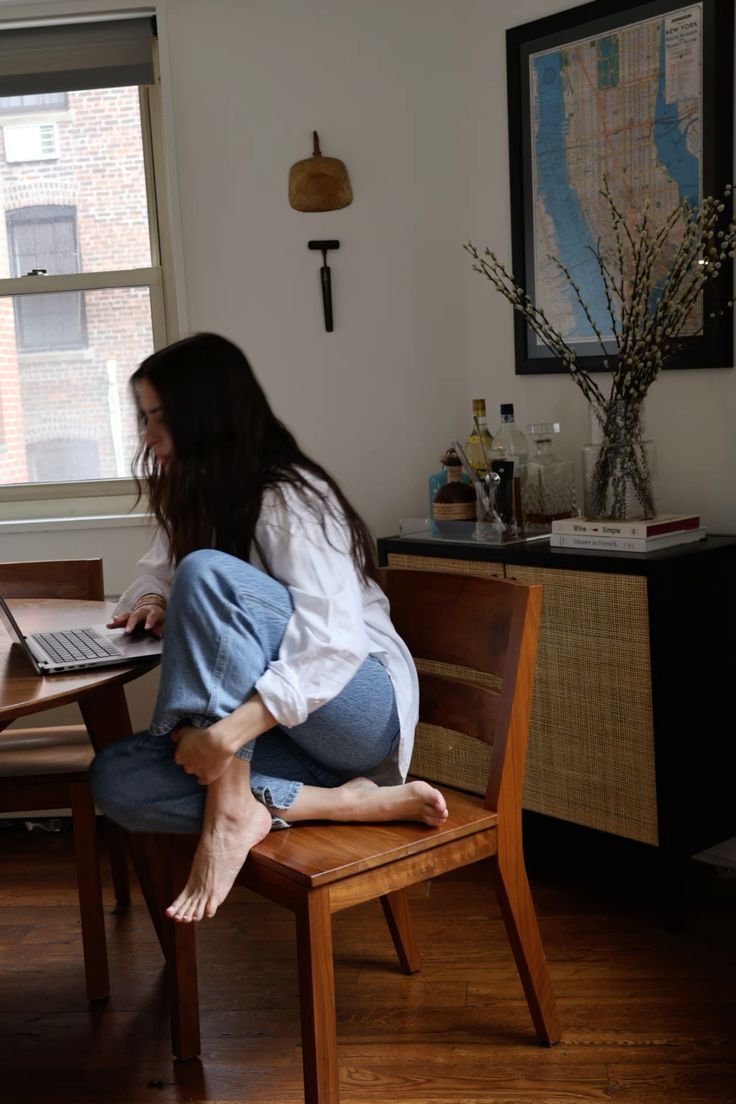

The imbalance between “strong” muscles and “sleeping” muscles
If you have ever trained at the gym or with dumbbells, you know what I mean: there are muscles that always work (and get stronger) and muscles that stay “asleep” even when you train a lot.
- The deep muscles that should stabilize the spine (transverse abdominis, pelvic floor, gluteus medius, multifidus, external shoulder rotators) are the ones that get forgotten. You do not see them in the mirror, they are deep, so it does not seem worth training them. And they are totally forgotten.
- The superficial muscles, on the other hand, the ones you see in the mirror (rectus abdominis/the six-pack, the gluteus maximus, the quadriceps, the pectoral) are trained a lot (and even too much).
The result: the spine is no longer aligned because the muscles that should stabilize it are not working. It is like an orchid without a stake: it produces beautiful flowers, but collapses on itself because it has nothing to support it.
I went deeper into this imbalance because I myself was in this situation and it was worsening my bloating and my legs. I talked about it in the article: Why your posture isn’t improving (and what it has to do with bloating and cellulite)
The reduced mobility of the spine
One thing nobody talks about is that the spine is made to move. And the real problems arise when the spine becomes stiff because it never moves.
A spine with little mobility leads to overloading certain areas (for example the lower back) to compensate for a lack of mobility in the nearby areas (generally the upper back and the hips).
Our body is a system and pain in one point is often the manifestation of a deficiency in a nearby point.
Let me give you an example: if the hips do not move well, the lower back has to compensate at every step, or when you bend to pick something up off the floor, or again when you lean your torso to open a drawer.
It is a continuous and constant overload that in the long run generates pain.
The inflammation factor
There is one last factor that is often ignored when talking about back pain: chronic inflammation.
When the body is in a state of chronic inflammation, all tissues are more sensitive to pain.
If you do not know it, chronic inflammation (unfortunately) afflicts most women. It is a low-intensity but constant inflammation, whose causes are generally stress, sedentariness, inflammatory eating, and poor sleep.
What happens? When you are chronically inflamed, even a small load that in optimal conditions would not have bothered you causes you pain today.
If you want to understand how nutrition affects inflammation, I wrote 4 healthy habits that are actually inflaming you (and what to replace them with)
What NOT to do for back pain
Before showing you what to do, I want to tell you what to avoid.
Because there are things that can worsen the situation and are instead done in an attempt to improve it.
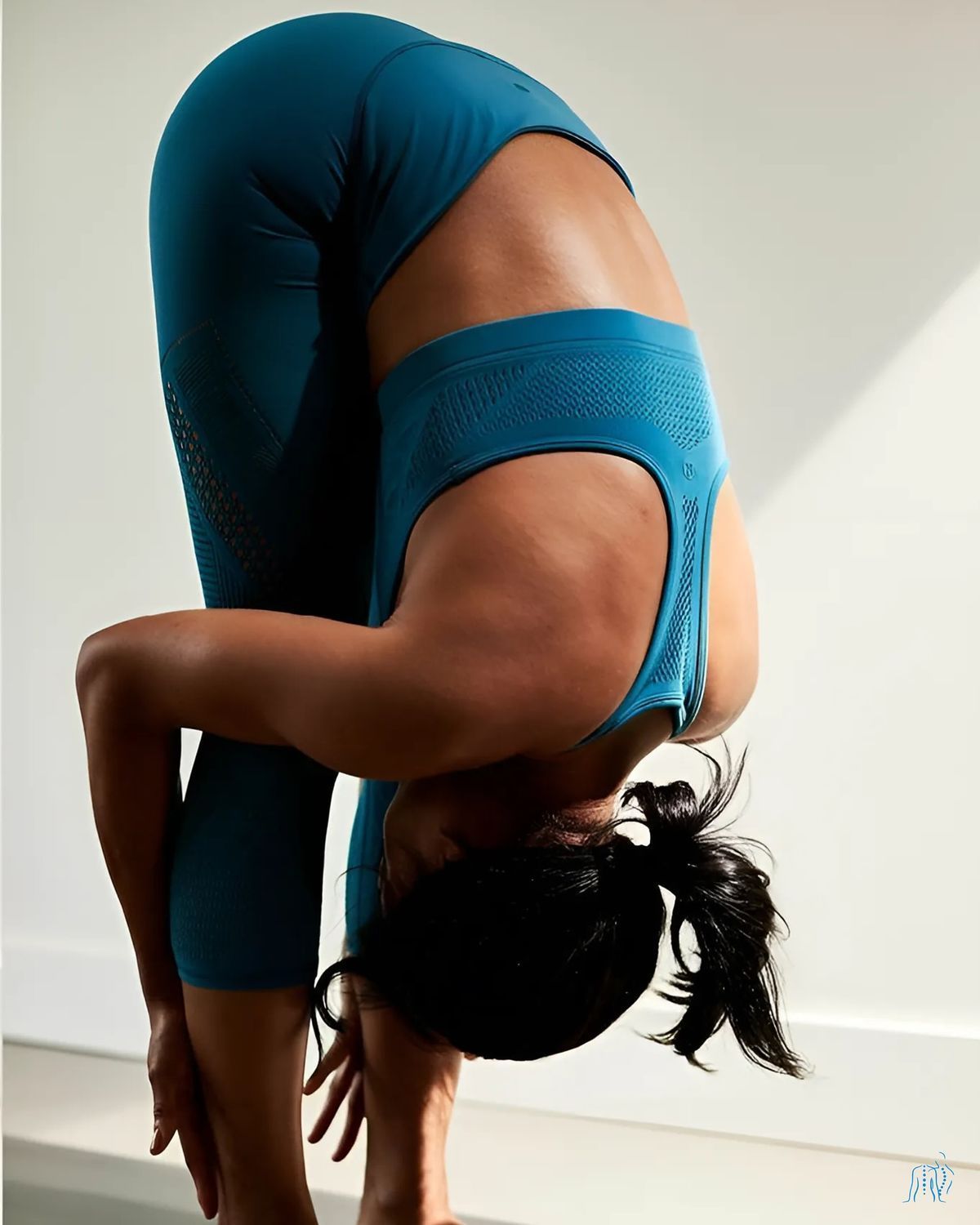
Static stretching
When you have back pain, especially in the lower back, the instinct is always to stretch it.
“A bit of stretching will surely help me.” And instead no. In fact, it can worsen the situation a lot, especially if you are not very elastic and flexible (and never stretch).
Stretching in this case is an excessive effort that your body is not ready for. And often lower back pain is caused by excessive tension in the hips or the hip flexor muscles such as the psoas (a muscle in the front part of the thigh and hip).
Stretching the back without improving hip mobility and without strengthening the muscles is the perfect recipe for worsening the situation.
Total, prolonged rest
“I have back pain, I can’t move.” Sometimes rest is indicated (for example after an accident or an operation), but in general staying in bed or on the sofa “because it hurts” is counterproductive. Especially for more than a couple of days.
Gentle, controlled movement to improve mobility is one of the best natural painkillers and certainly the best way to feel better in a short time.

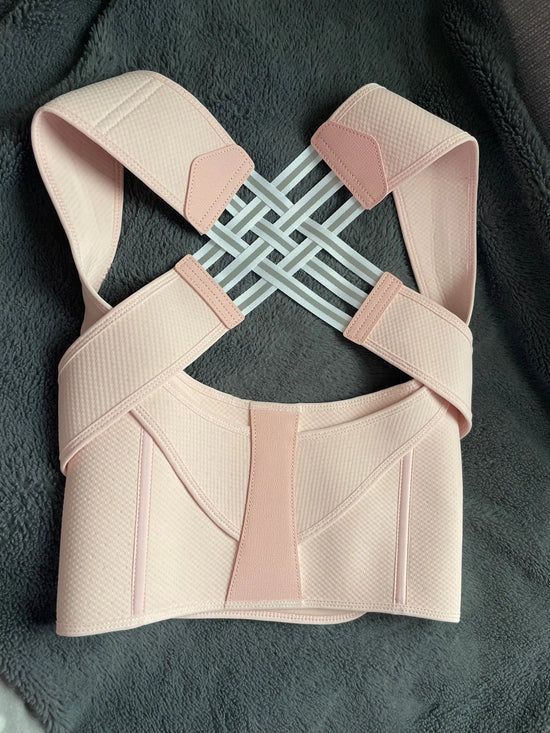
“Painkilling” belts or belts to support the back
ometimes they give momentary relief, but if you use them too often, the deep muscles will work less and less (yes, exactly the ones that already work little and that must protect and stabilize your spine).
The result: the pain gets worse in the long term.
How Lymphatic Drainage Pilates helps with chronic back pain
Lymphatic Drainage Pilates works exactly on the 3 biomechanical factors that generate chronic back pain:
- recruitment of the deep muscles
- mobility of the spine and hips
- chronic inflammation.
I am not telling you it is miraculous. It takes time and consistency.
But it can make a difference and progressively reduce the discomfort.
-
Reactivates the deep abs
Every Lymphatic Drainage Pilates session works consciously on the deep muscles:
- transverse abdominis
- gluteus medius
- pelvic floor
- hip flexors
- multifidus
They are the 5 muscles that together stabilize the spine.
Think of them as the foundations of your body.
-
Improves the mobility of the spine
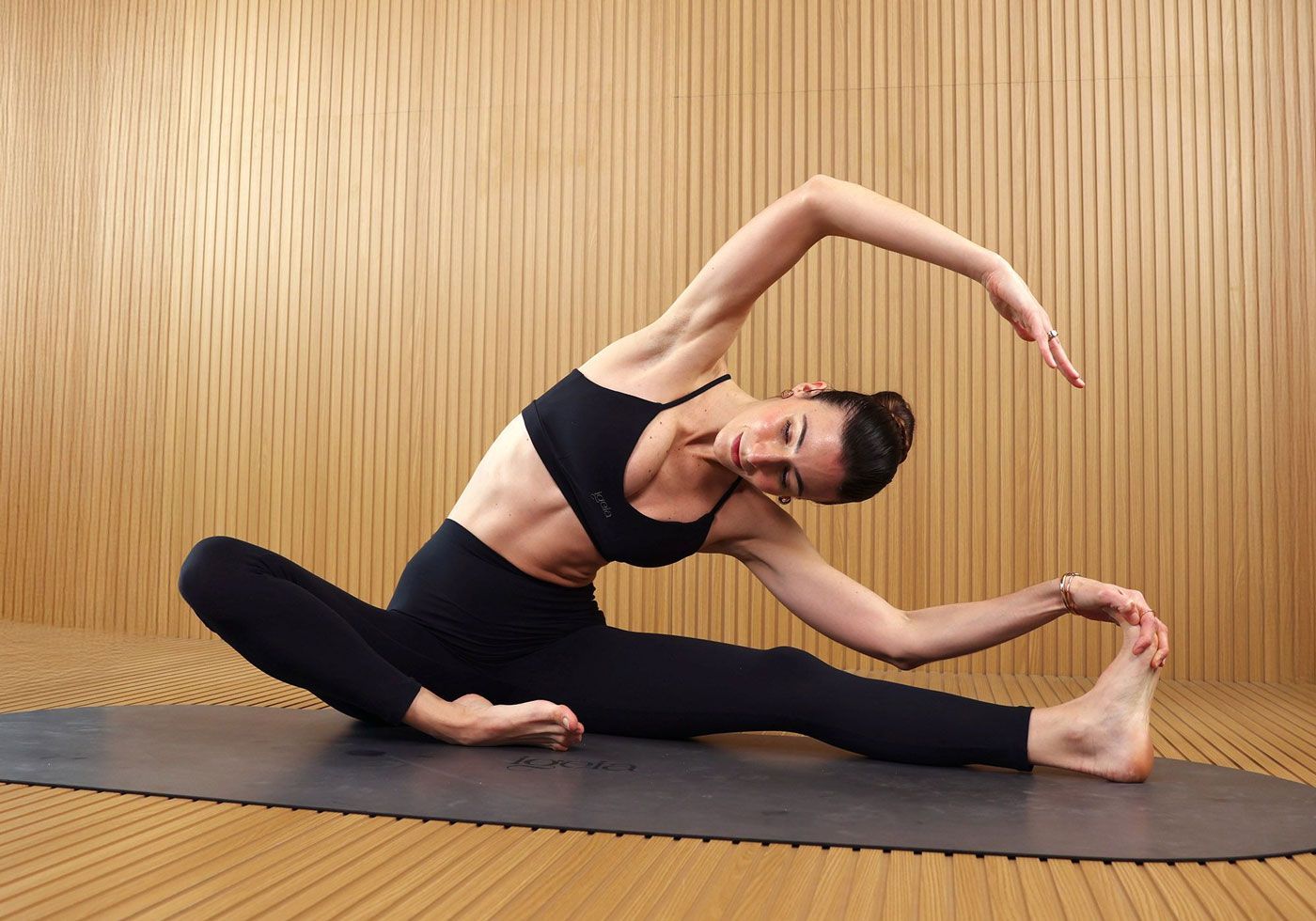
The Lymphatic Drainage Pilates exercises work on the segmental mobility of the spine.
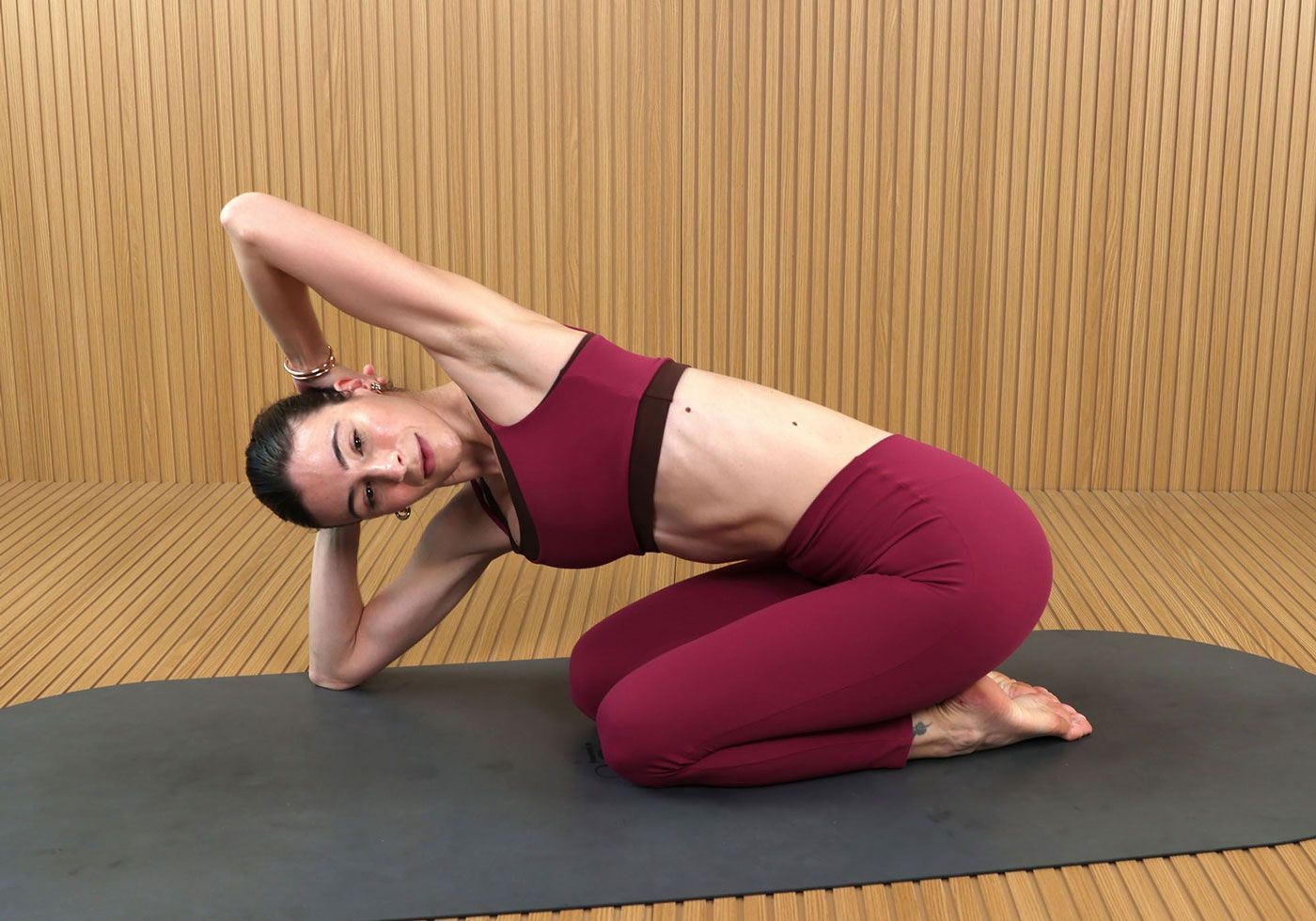
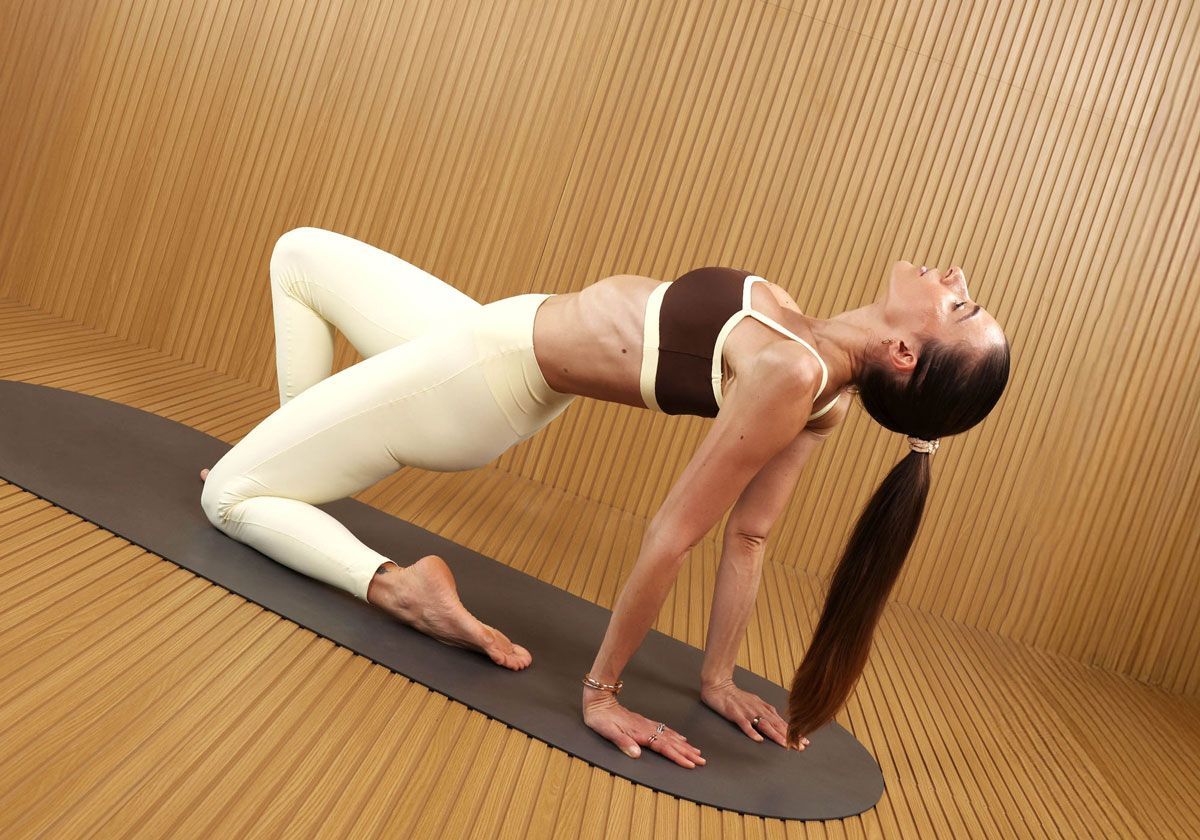
I know, put like that it sounds a bit scary. Actually the concept is simple: we learn to move parts of the spine while stabilizing the others. Let me give you an example: when you perform this movement in which you rotate an arm behind you while keeping the pelvis still, you are improving the mobility of the upper back, while stabilizing the lower back.
In this way every vertebra and every part of the back learns to move in relation to the rest.
The result? A more mobile spine and fewer compensations and overloads.
-
Reduces inflammation
Lymphatic drainage reduces the underlying inflammation.
Less inflammation = less sensitivity to pain. For many women it is the factor that makes the fastest difference.
If you want to understand how lymphatic drainage works, read DIY lymphatic drainage: the 6 points to activate every morning in 2 minutes
-
Improves posture
Better posture means loads distributed correctly along the whole spine (and less stubborn fat, I talked about it here).
After a couple of months, without even noticing, you realize you are standing up straighter naturally.
That your pelvis is more aligned.
That you breathe better and more deeply.
When back pain requires a doctor
Lymphatic Drainage Pilates is a tool for chronic functional back pain, but it does NOT replace a medical evaluation in the following cases:
- Sudden acute pain after a trauma (fall, blow)
- Pain that radiates into a leg, accompanied by tingling, numbness, or muscle weakness (often connected to sciatica or a herniated disc)
- Night pain that wakes you or worsens during the night
- Pain with fever or nausea
- Pain that does not improve after several weeks
In all these cases, before starting any physical activity, have an consult with an orthopaedist or a physiotherapist.
How to start with Lymphatic Drainage Pilates for back pain
All the Journeys help you with back pain, but let me explain the best ones for each situation:
- Lymphatic Drainage Pilates Beginners: to start from the basics, gradually (recommended if you have back pain)
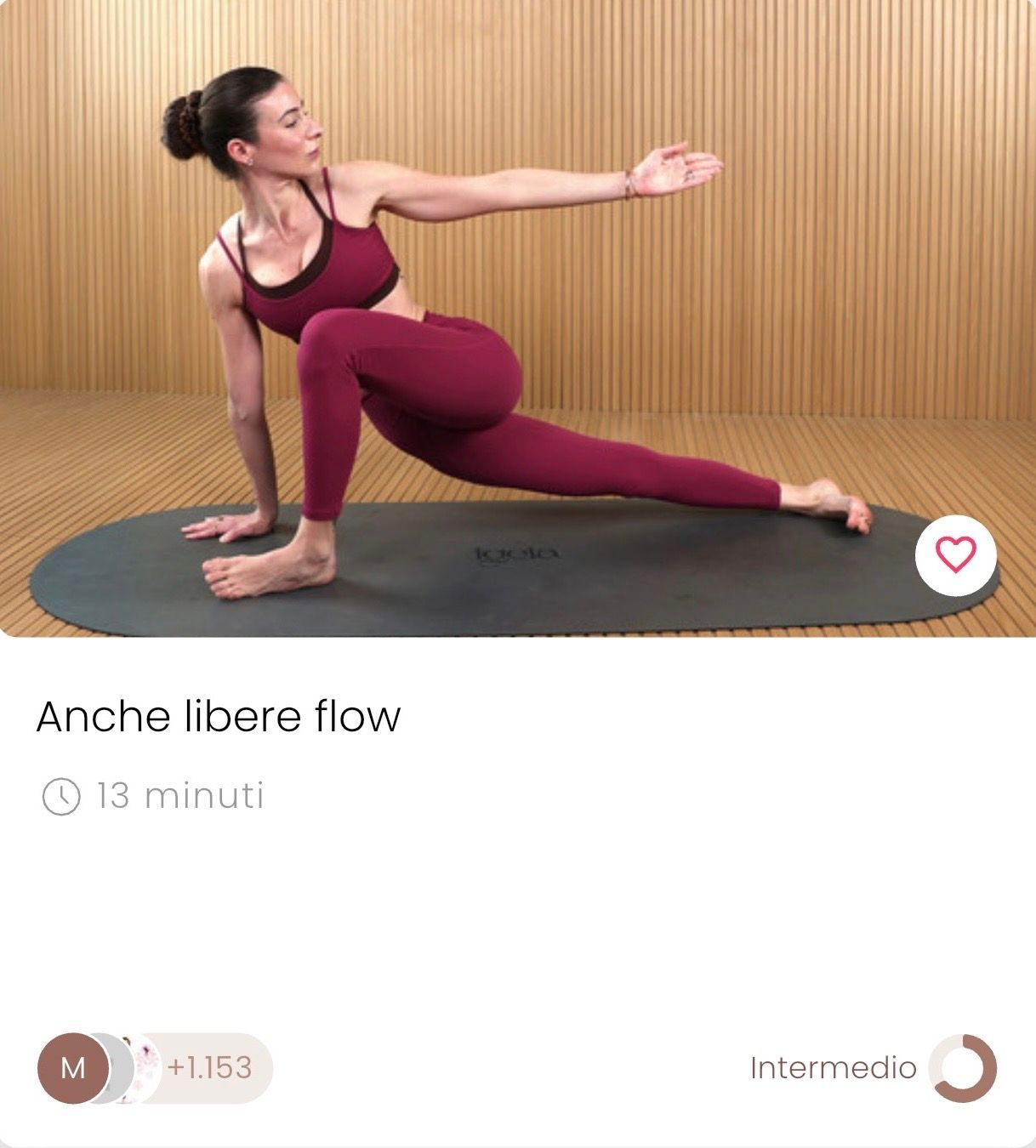
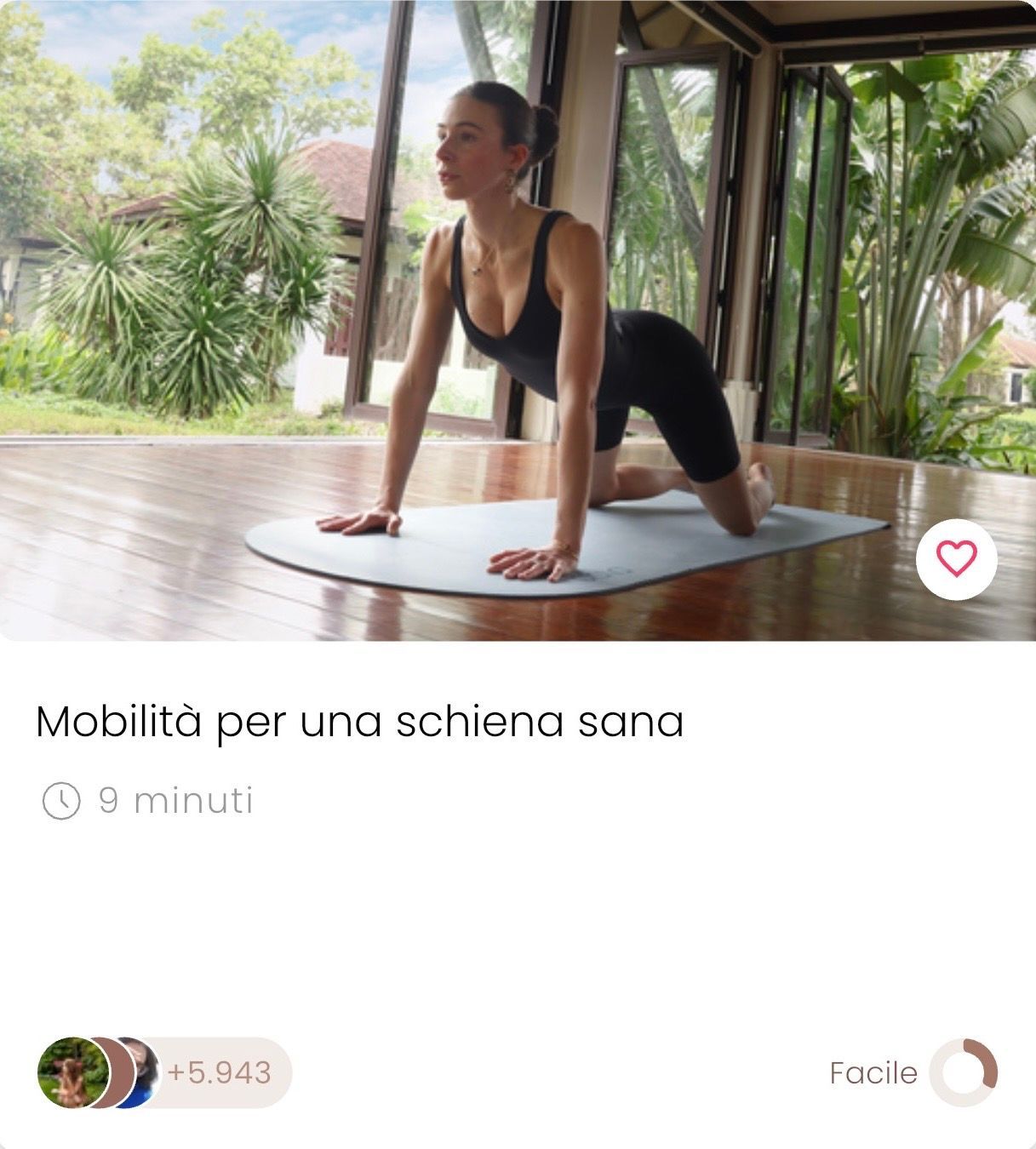
- Postural and mobility classes: a selection of Lymphatic Drainage Pilates sessions of different lengths (from 10 to 30 minutes) to improve mobility and posture, without forgetting lymphatic drainage. Particularly suitable are Free hips flow, Pilates for mobility: unblock the hips, Mobility for a healthy back, and Postural Pilates back and hips.
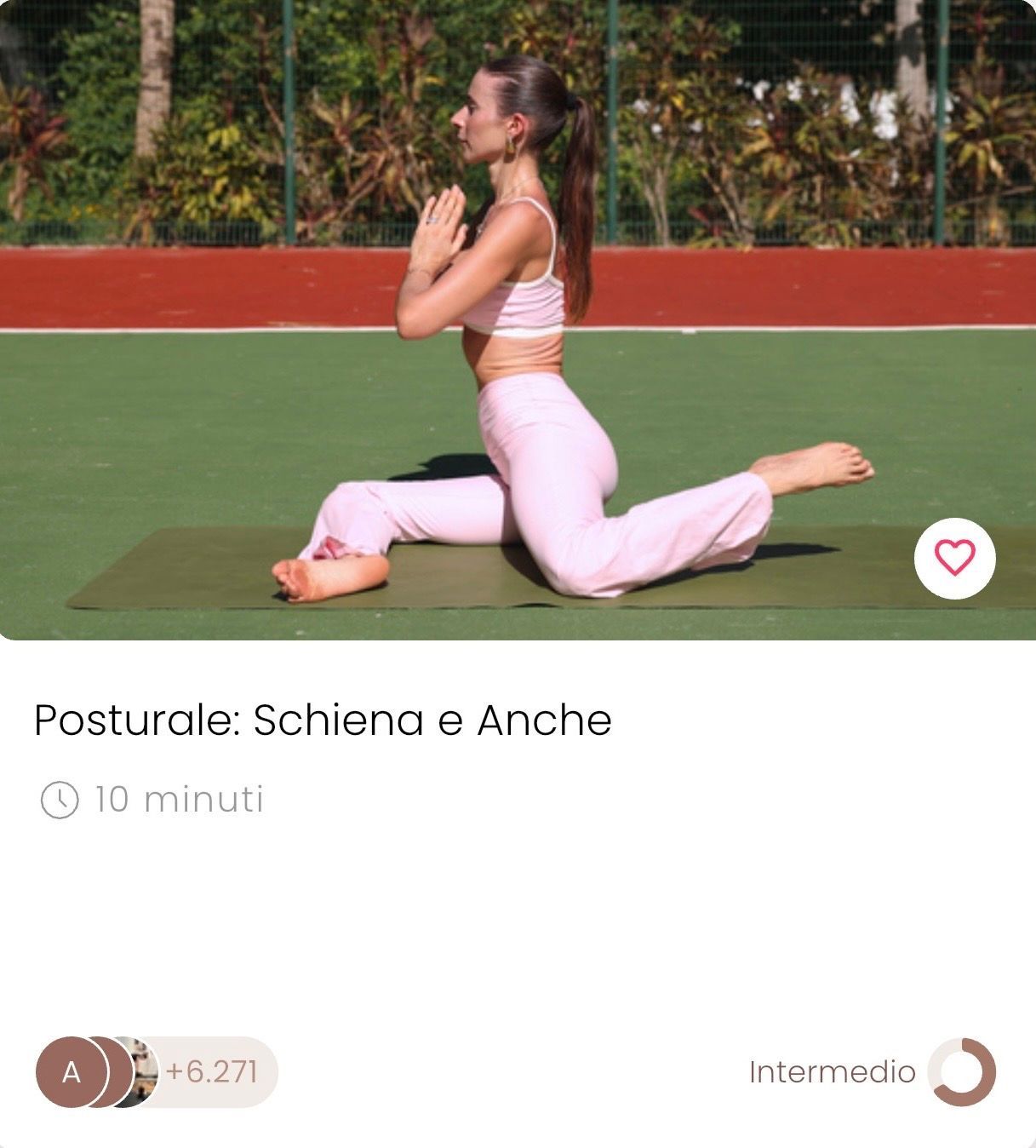
Find the Lymphatic Drainage Pilates Journey that's right for you
Frequently asked questions
Can I do Lymphatic Drainage Pilates if I have a diagnosed herniated disc?
Generally, people with a herniated disc in a non-acute phase (that is, when the pain is not debilitating) benefit from Pilates, but a professional recommendation (from your orthopaedist or physiotherapist) is always needed before starting.
In this case I recommend starting from the basics with Lymphatic Drainage Pilates Beginners.
How long does it take to feel an improvement?
Relief from muscle tension is often felt after just 1-2 sessions. More structural changes (fewer episodes of pain, more sustainable posture) in 6-8 weeks.
Can I do Lymphatic Drainage Pilates even if I have pain right now?
It depends on the intensity. If the pain is mild (on a scale from 1 to 10, 5 or less out of 10) and does not radiate into the leg, yes. Gentle movement helps. In this case I recommend one of the Postural and Mobility classes.
If the pain is acute (6 out of 10 or more) or limits you in your daily movements, have a medical evaluation first.
During the session I have pain, is that normal?
No, movement should never increase the pain. If it is a slight discomfort it can be normal, especially if you suffer from chronic pain. In this case do not strain too much and assess how you feel the day after the session.
Do I have to avoid some specific exercises?
In the Lymphatic Drainage Pilates sessions there are no exercises that are risky for the back (for example no high loads are used), but always listen to your body: if a specific exercise bothers you, try performing it with a smaller range of motion or take a break and resume from the next movement.
Can Lymphatic Drainage Pilates replace physiotherapy?
No. If you have a specific diagnosis and physiotherapy sessions have been prescribed to you, you must first complete the physiotherapy and then you can begin the Journey. Lymphatic Drainage Pilates can be an excellent maintenance tool AFTER physiotherapy. Still, always talk about it with the physiotherapist who is following you: every case is different.
In short
Chronic functional back pain is not resolved with total rest, nor with forced stretching, nor with medication alone.
It is resolved by working on the causes:
- strengthening the deep muscles
- improving mobility and posture
- reducing chronic inflammation
Lymphatic Drainage Pilates acts precisely on these 3 factors and, if followed consistently, makes a difference that many women did not believe possible.
And when your back pain disappears because your body is stronger and more mobile, you understand that staying still was never the solution.
Find the Lymphatic Drainage Pilates Journey that's right for you
Carlotta's insights, straight to your inbox
Just your name and email, unsubscribe anytime.