How to avoid microplastics in your kitchen from pots and pans to plates and storage
How to cut microplastics in your kitchen. The safest pots, pans, plates and storage, what to avoid from non-stick to aluminium, and why it matters.
When we think of an anti-inflammatory diet, we always think about what we eat.
We almost never think about how the food is cooked and with what tools.
Microplastics: the invisible problem
I am going to ask you to do one thing.
Go into your kitchen and take a look at your utensils: cutting boards, spoons, the cutlery you use for cooking, containers.
How many of these are plastic or silicone?
Probably many.
Especially if you use plastic cutting boards, stop for a moment to think.
When you cut a vegetable on a plastic cutting board, with the knife you “lift up” microparticles of plastic that you then end up ingesting.
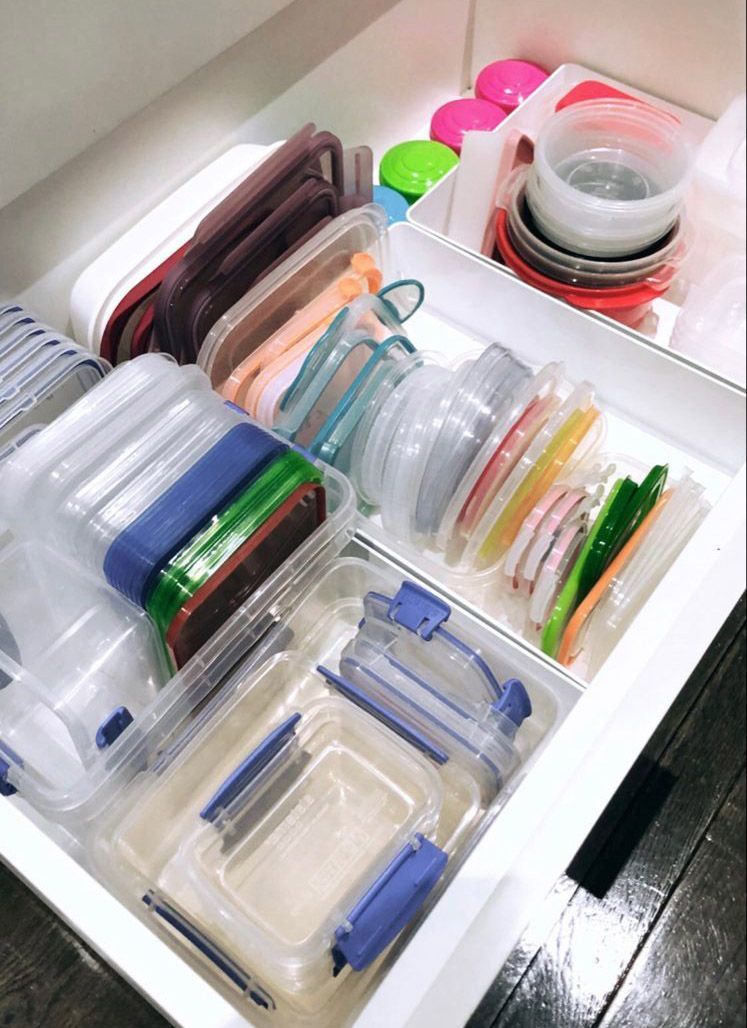
Now think of the containers you use to store food or to bring it to work, for example Tupperware. Every time food comes into contact with plastic (especially if hot, acidic, or oily) it can absorb small amounts of it.
And where does this end up? In your body.
The problem of microplastics in the body is (unfortunately) real.
A study published in Nature Medicine in 2025 analyzed samples of human brain and found concentrations of microplastics of up to around 5,000 micrograms per gram of brain tissue.
In terms of weight, we are talking about the equivalent of a teaspoon of plastic in the brain.
And this is not even the most worrying figure.
Compared to the samples analyzed in 2016, the brains from 2024 contained 50% more microplastics. In less than ten years.
The researchers also noticed that in the brains of people diagnosed with dementia the concentrations were 3 to 5 times higher. Careful: this does not automatically mean that microplastics cause dementia. But you cannot ignore data like this either.
The study opened a scientific debate about the methodology as well, but the signal it sends remains significant.
In 2023, when I started to seriously take care of my health, one of the first things I changed was precisely this. Out with plastic from the kitchen and, in general, from the house.
I am not perfect and still now (three years later) I realize from time to time that I find objects I use daily that are made of plastic, but I always try to replace them with other materials.
If you have not yet started to make these changes but would like to begin, I recommend starting with the kitchen, since the utensils directly touch the food you eat every day.
Utensils and containers
If you do not want to overhaul your kitchen overnight (and I understand that), I recommend starting with the containers and utensils that stay in contact with hot or acidic food for a long time.
This is because heat “melts” the plastic, releasing it into the food.
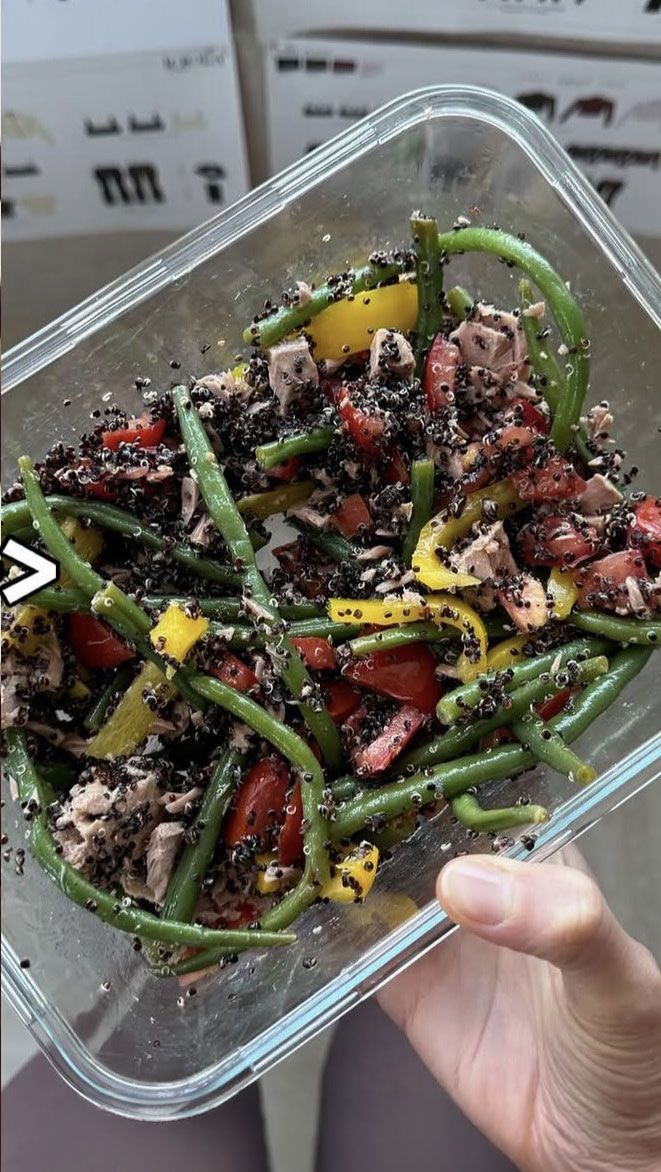
The worst are the containers you put in the microwave. In that case I recommend always using glass containers and not plastic or silicone.
Same thing for lunchboxes that stay in contact with food (often seasoned) for several hours: here too glass or stainless steel are the best choices.
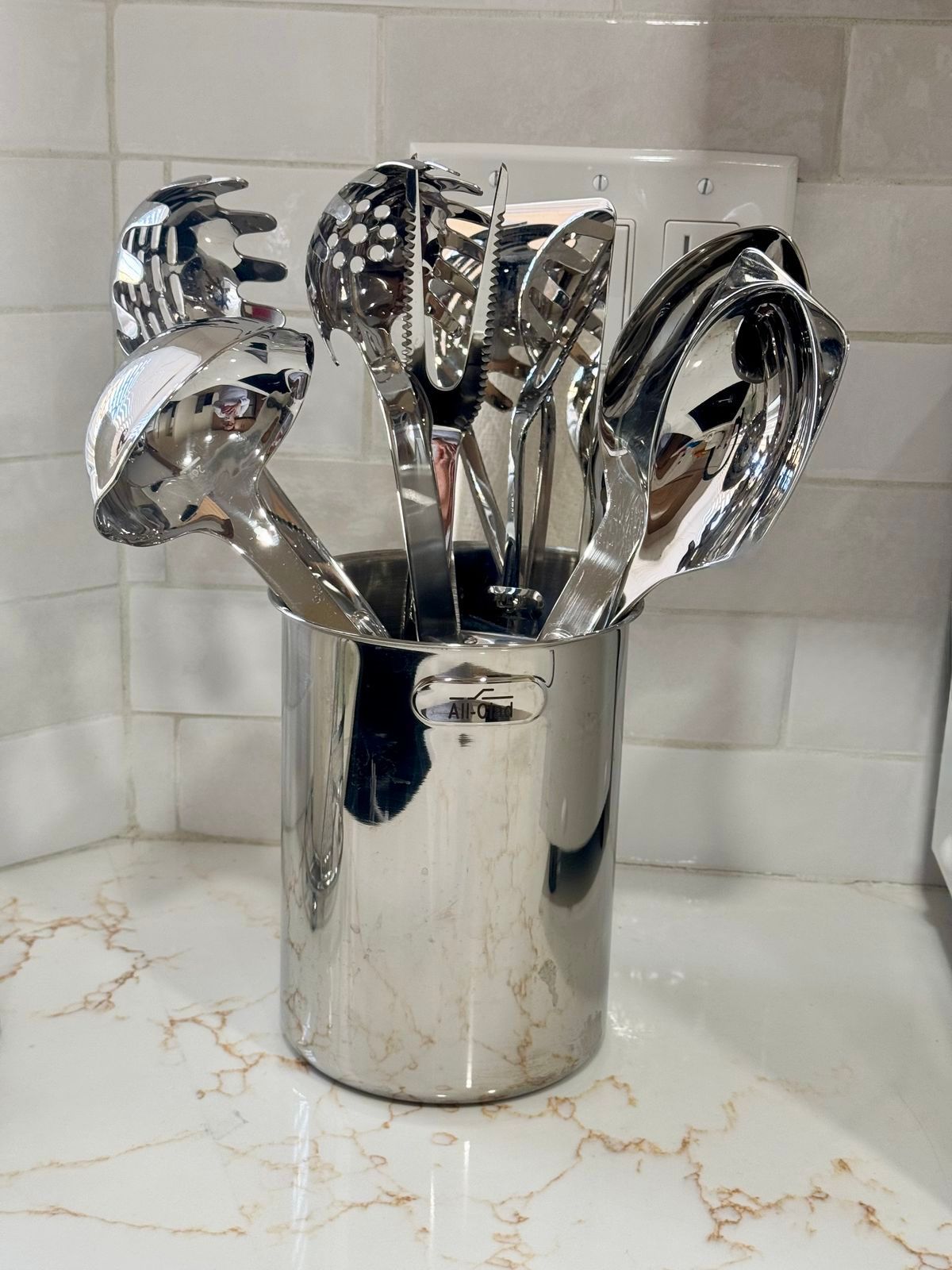
For utensils such as cutting boards, spoons, or ladles, you can choose between wood and steel. Personally I prefer steel because it is quick to wash (and goes in the dishwasher), does not form mould as can instead happen with wood, and lasts forever.
Plates
Plates deserve a note of their own.
Most plates are ceramic, so the plastic problem is avoided. But be careful: some plates with coloured designs, very old ones (like the beautiful ones of our grandmothers) or cheap ones (like those bought on Chinese sites, which I am sure you know) can release substances such as cadmium and lead into food, especially if they come into contact with acidic or hot foods.
A historic study published in Science of the Total Environment analyzed 149 American plates produced before 1970: more than half (78 out of 149) released lead in quantities above the legal limits when it came into contact with acidic substances for 24 hours. Among the plates also tested for cadmium, about a quarter (26 out of 98) exceeded the FDA limits.
These are significant numbers, but there is a nuance: the effect (as often in these cases) is much more serious with acidic foods (tomato passata, vinegar, lemon, wine) and with long contact times.
An old plate used occasionally to serve bread or plain pasta is much less problematic than a vintage baking dish used regularly to cook tomato sauces.
As for recent plates, on the other hand, the most “suspect” and problematic colours are red, orange, and bright yellow: the pigments that produce them are often cadmium-based.
Be careful: this also applies to children’s plates with designs such as cartoon characters.
A category of plates I would pay a lot of attention to are those bought at “rock-bottom” prices on Chinese sites, because they often come from countries with less strict regulations on heavy metals.
Modern European plates (post-1980s) from known brands are generally safe, since the European Union has very strict limits on lead in ceramics.
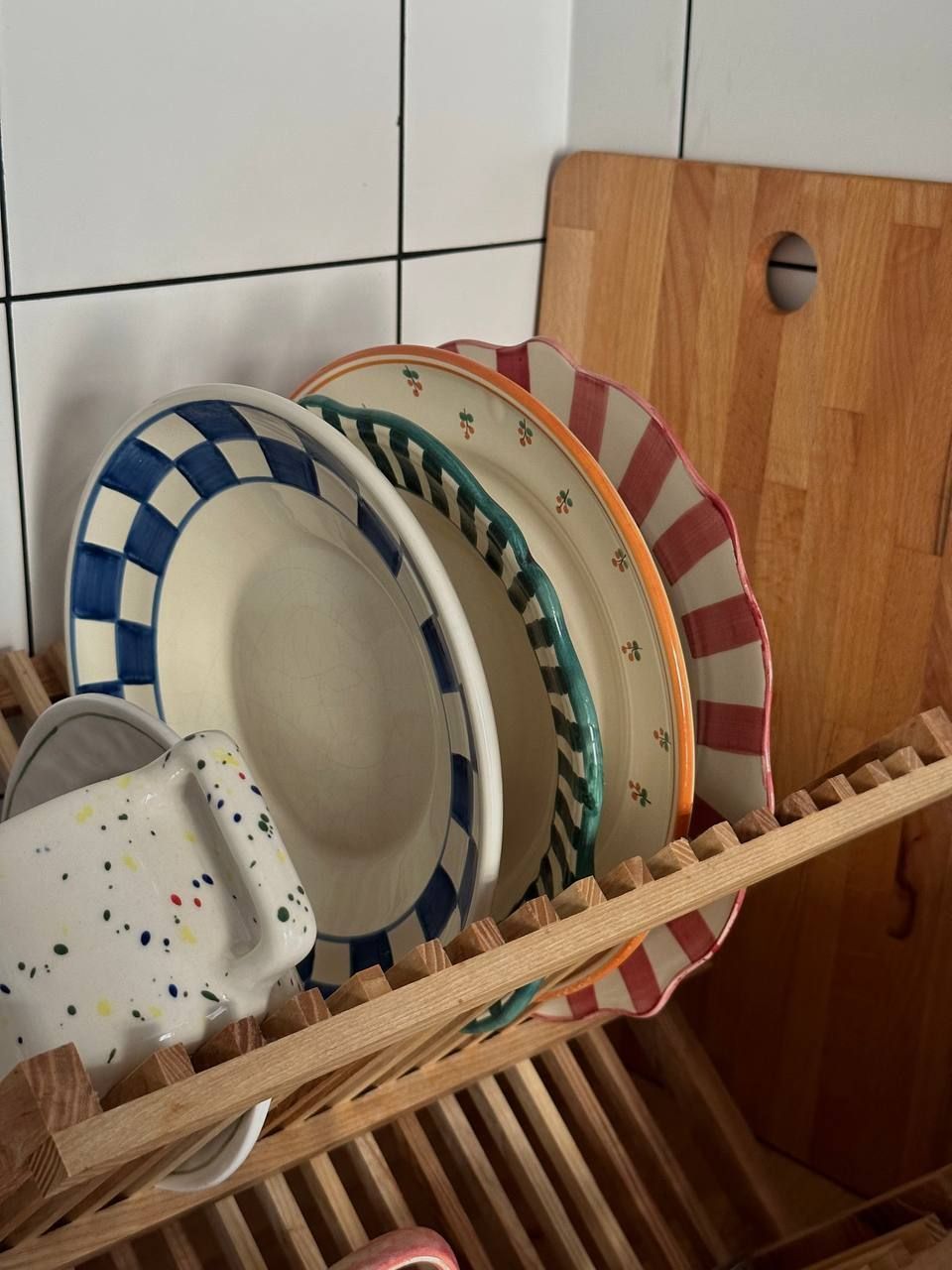
Grandmother’s antique plates: beautiful to admire and display, to be avoided for daily use.
The only ones to watch out for are plates decorated with bright designs, especially if imported.
Personally, to avoid problems, I bought resistant glass plates without designs. I use “the nice plates,” Villeroy & Boch, which I was given for my wedding, only when I have guests (and I chose them without designs).
Pans and pots
Let’s move on to the most salient part (in every sense 😅), which is pots and pans.
Some materials, especially if damaged or used the wrong way, can leach small amounts of potentially toxic substances into food. Here are the ones to pay the most attention to.
Non-stick
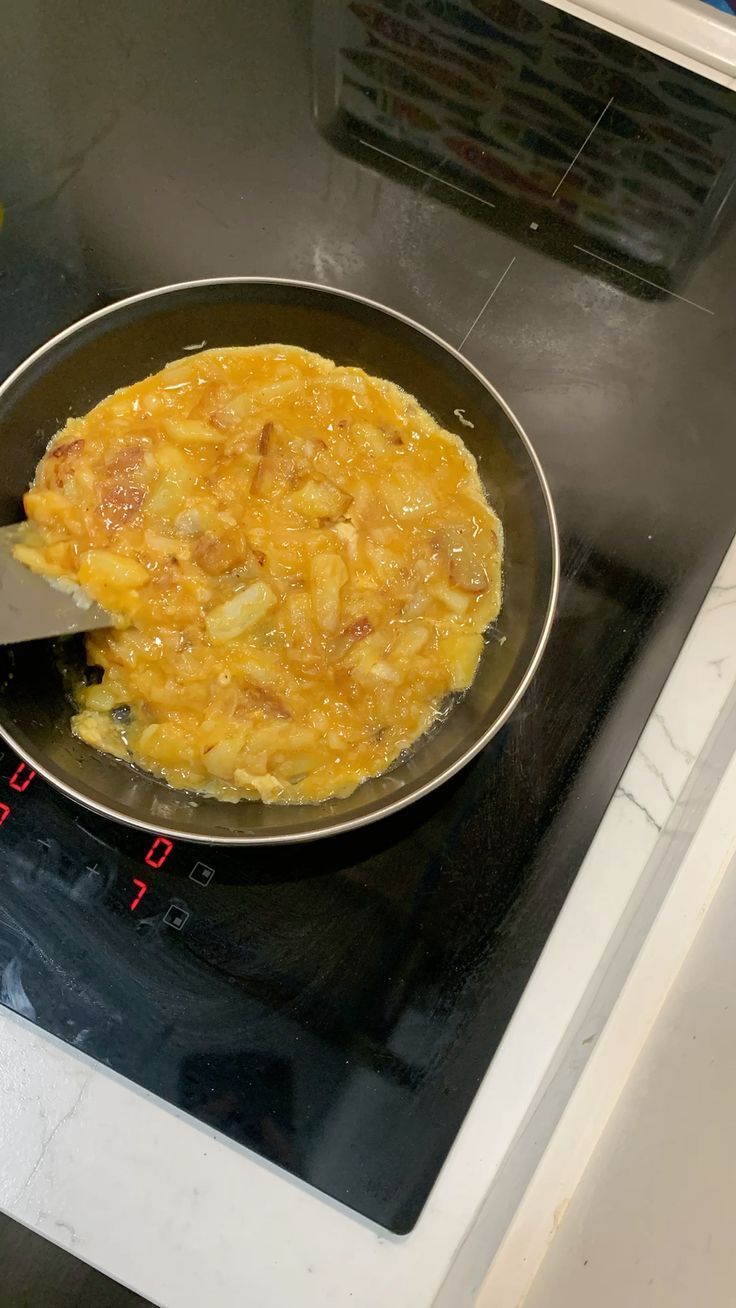
I know, I know. I loved them too and used them for years with great satisfaction. Those perfect omelettes that come away right away… a dream!
But there is a but. In fact, there are several. And it is worth explaining them well because there is a lot of confusion about PFAS, PFOA, and Teflon.
Teflon is the commercial name of a plastic material called PTFE
(polytetrafluoroethylene). It is what gives the pan its smooth, non-stick surface.
PFAS are a large family of chemical substances, also nicknamed “forever pollutants” because they do not degrade in the environment and accumulate in our body.
Teflon is part of the PFAS family.
PFOA is a specific PFAS that was used until 2013 in the production of Teflon and has been linked to problems with the thyroid, liver, kidneys, fertility, and even some forms of cancer. Today PFOA has been banned and is no longer used.
This is why on pans (but not only) you often find “PFOA-free” written. But “PFOA-free” does not mean “PFAS-free.” It is simply a misleading label.
Most non-stick pans continue to be coated in PTFE, which is a PFAS all the same

What happens when you cook with a non-stick pan
There are two distinct problems.
- The first: at high temperatures, the PTFE coating begins to degrade and release toxic fumes. It is what is called “Teflon fever” or polymer fume fever: symptoms similar to a flu (fever, chills, headache) that affect hundreds of people every year, especially when pans are heated empty or left on the heat too long.
- The second problem, perhaps even more relevant for daily use: the coating gets scratched. And when it gets scratched, it releases microplastics directly into the food.
A 2022 study from the University of Newcastle in Australia (Luo et al., published in Science of the Total Environment) quantified the phenomenon: a single scratch on a non-stick pan can release around 9,100 microplastic particles. And if the coating is damaged in several points, it goes up to 2.3 million particles.
It means that little scratch you have on your pan, and that you never gave much weight to, actually releases microplastics into your food every time you use it.
I do not want to “scare you,” I simply want to tell you the truth of the facts so that you can draw your own conclusions.
What to do
If you have just bought a new non-stick pan, intact, and you use it at moderate temperatures, the immediate risk is low. Use it carefully: do not let it come into contact with metal utensils or abrasive sponges, and always avoid heating it empty (something often done, for example, when cooking eggs and meat without oils).
But if the one you have is scratched or you were already intending to replace it, this is the sign to switch to another, safer material.
Aluminium
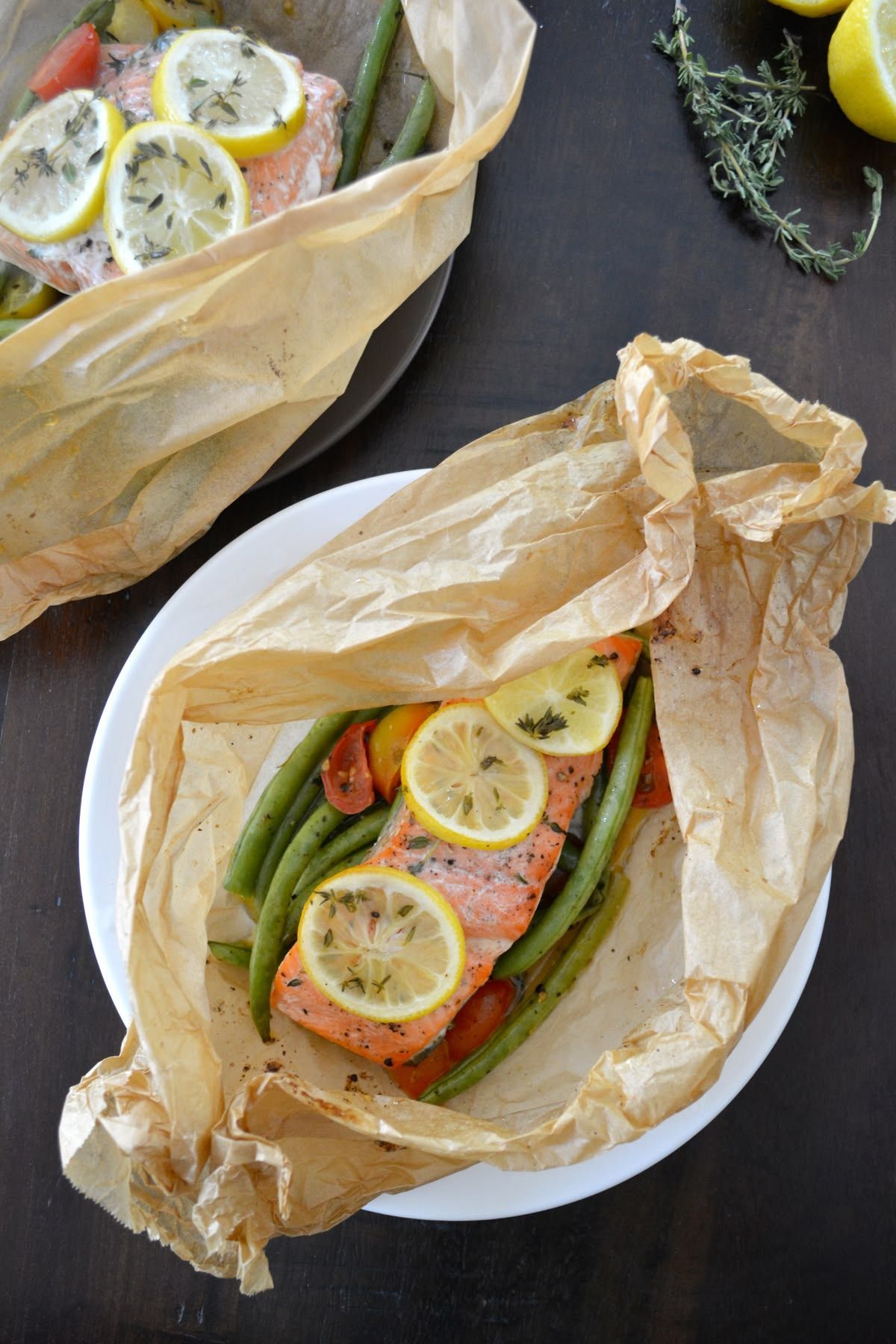
It is light and cheap, but it can release particles into food, especially if in contact with acidic foods such as tomato, citrus, or vinegar. Our body has no need whatsoever for aluminium, so it is better to limit it: this applies to pots, but also to aluminium foil in contact with acidic foods or put in the oven. Better to choose normal baking paper and never heat aluminium foil.
Some studies have hypothesized a possible role of aluminium in neurodegenerative processes and the link with diseases such as Alzheimer’s is the subject of scientific debate. As a precaution, in the kitchen it is worth limiting it anyway.
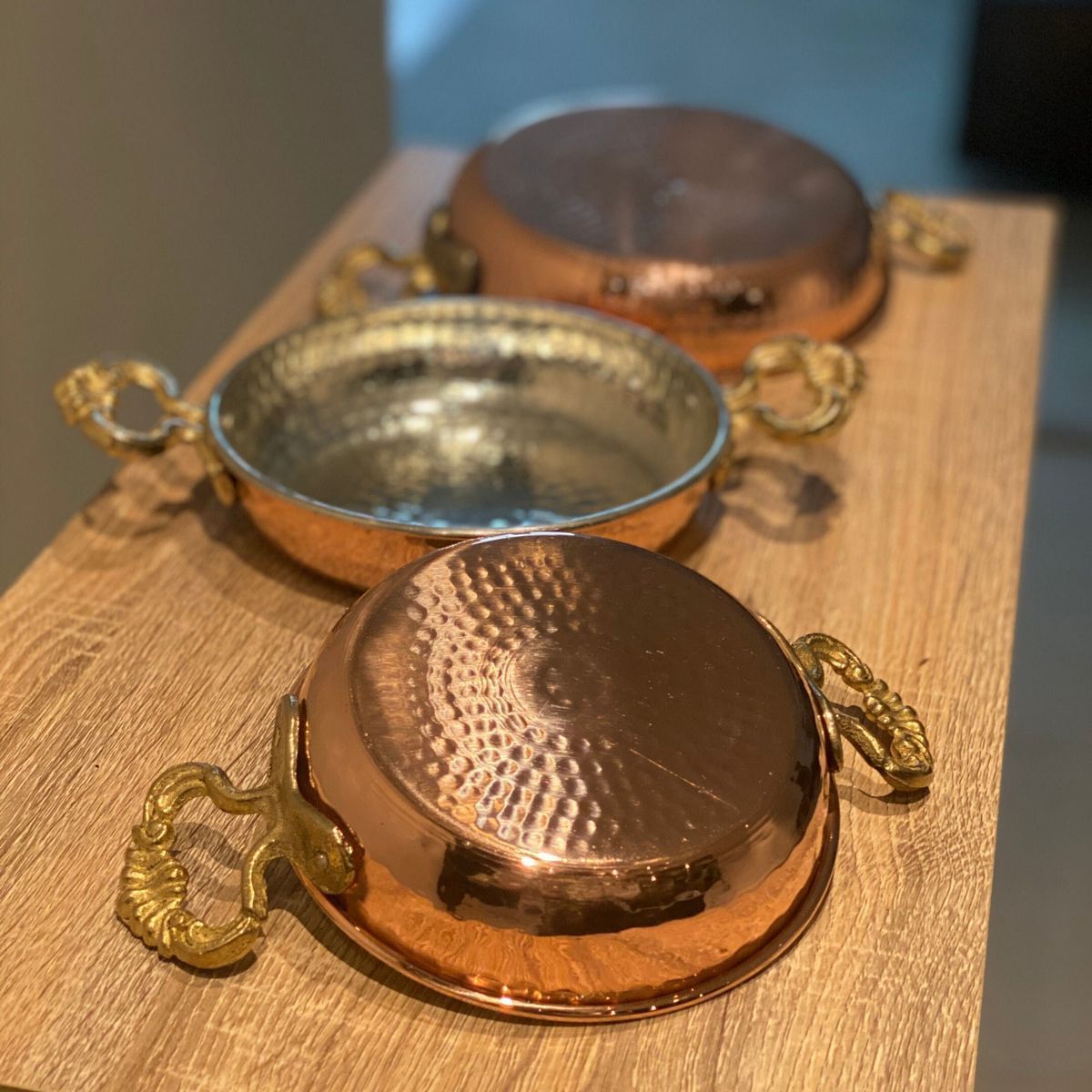
Uncoated copper
This too, like aluminium, can leach excessive amounts of copper into foods, in particular with acidic foods. For daily use, better to orient yourself toward other pots.
The safest materials (and how to use them)
Now that we have seen what would be best to avoid, let’s look at which pots to choose.
Stainless steel
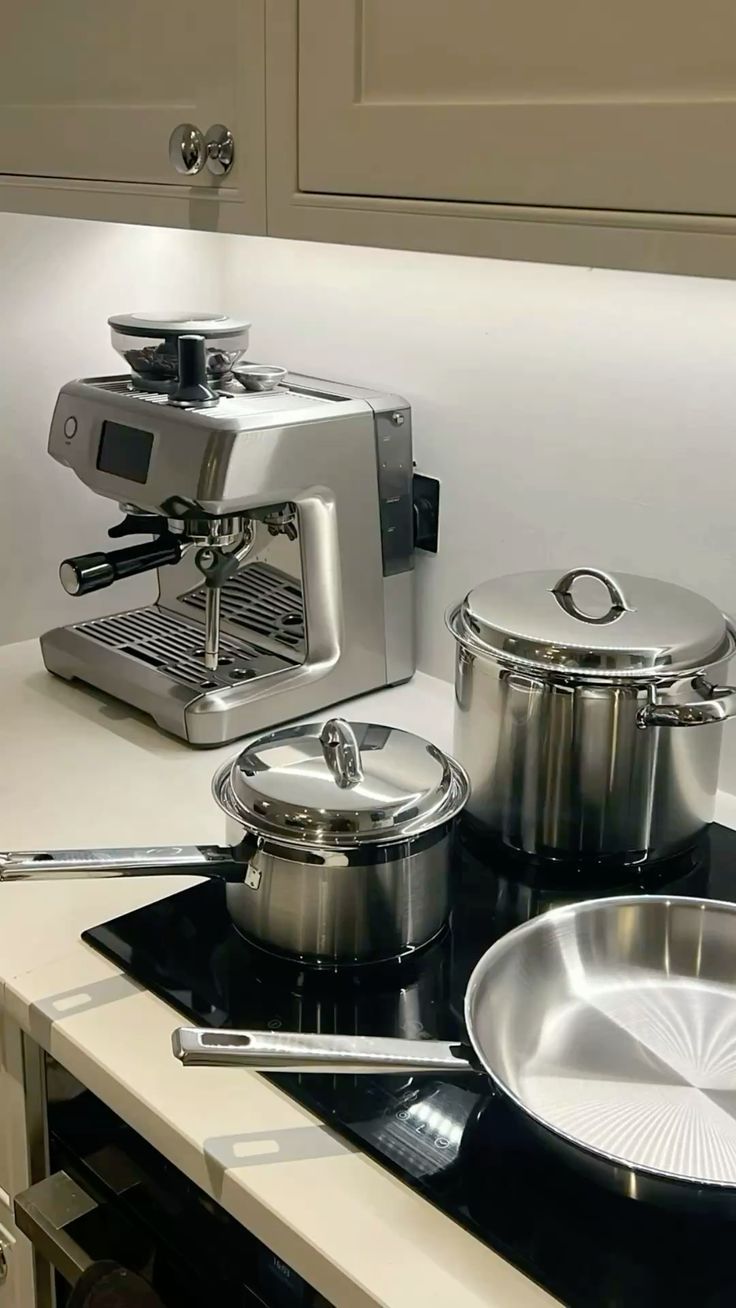
Personally I consider it the best for quality, price, durability, and safety. All the pots and pans I use daily are stainless steel.
When you choose them, though, make sure they are sufficiently heavy. Stainless steel pots are never made of pure steel. Often they are alloys of steel with other metals. When pots are very light, they often have a large amount of aluminium, which as we have seen is not the best.
Always choose good-quality stainless steel (make sure they have the marking 18/10 or the numbers 304, 316, and 430) and that they are sufficiently heavy.
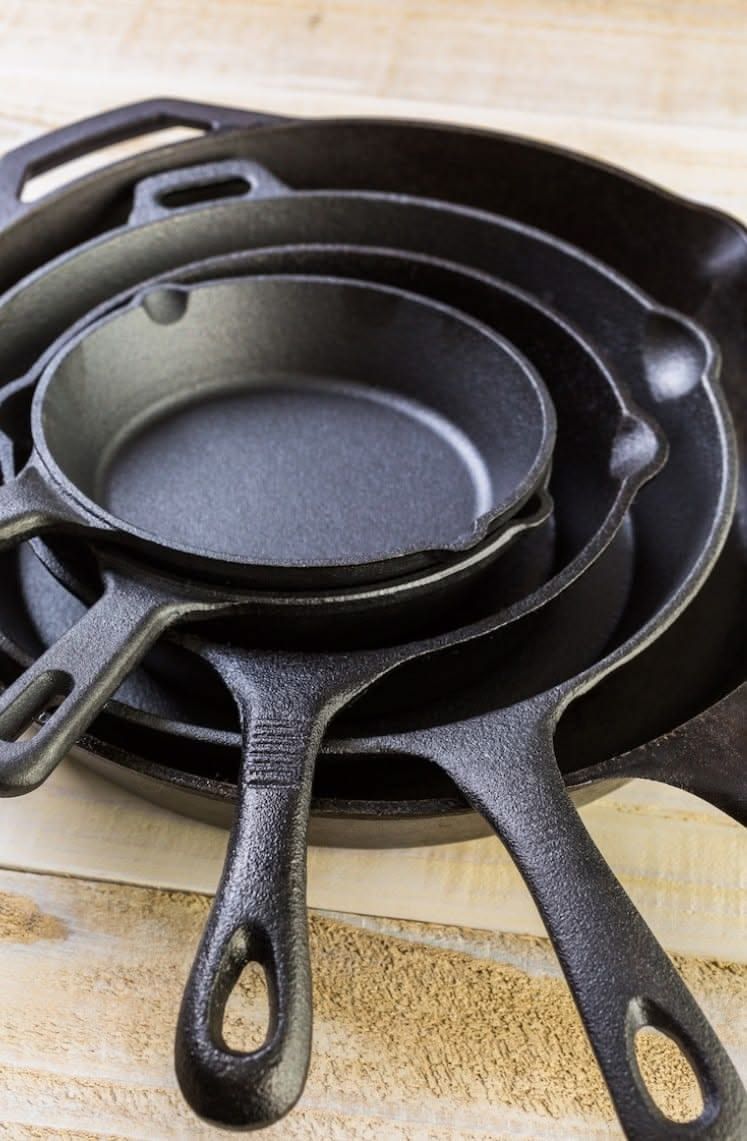
Uncoated cast iron
“Traditional” cast iron, the black, matte, heavy one.
It retains heat very well, lasts a lifetime, and is perfect for some types of cooking such as searing meat and slow cooking.
It does need to be seasoned, though: that is, treated periodically with a thin layer of cooked oil, which creates a natural non-stick patina. It must never be washed with harsh detergents or put in the dishwasher, and it must always be dried well.
It can release a little iron into food, but generally this is not a problem (it only becomes one if your iron is very high, but it is easy to keep it under control with a simple blood test).
One clarification: it is less suitable for very acidic foods (such as tomato passata left to cook for a long time) because the acidity eats into the seasoning patina and causes more iron to be released.
Enamelled cast iron
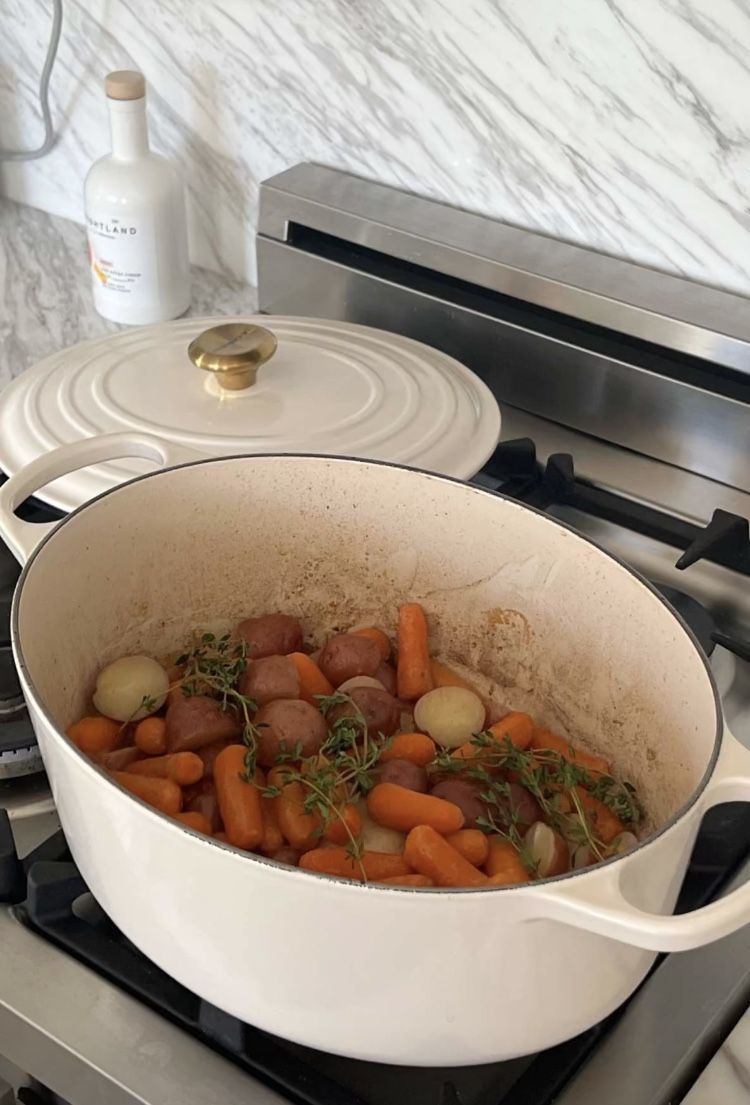
It is still cast iron, but with a coating of vitrified enamel (a sort of glass fused at high temperature over the metal). The enamel creates a barrier between the cast iron and the food that prevents iron from being released and allows it to be used successfully even in contact with acidic foods.
In practice it combines the advantages of cast iron (uniform heat, durability) with the advantages of glass (safe even in contact with acidic foods, no seasoning needed, and easy to clean).
The most famous brands are Le Creuset (very famous on social media) and Staub: they are both excellent-quality enamelled cast iron and really last a lifetime.
- Le Creuset has a white/cream interior enamel that makes it easier to check the level of browning of the food while you cook, but over time it can stain.
- Staub, on the other hand, has a matte black interior enamel, with the advantage that it does not stain easily, but it is harder to check the cooking level of foods.
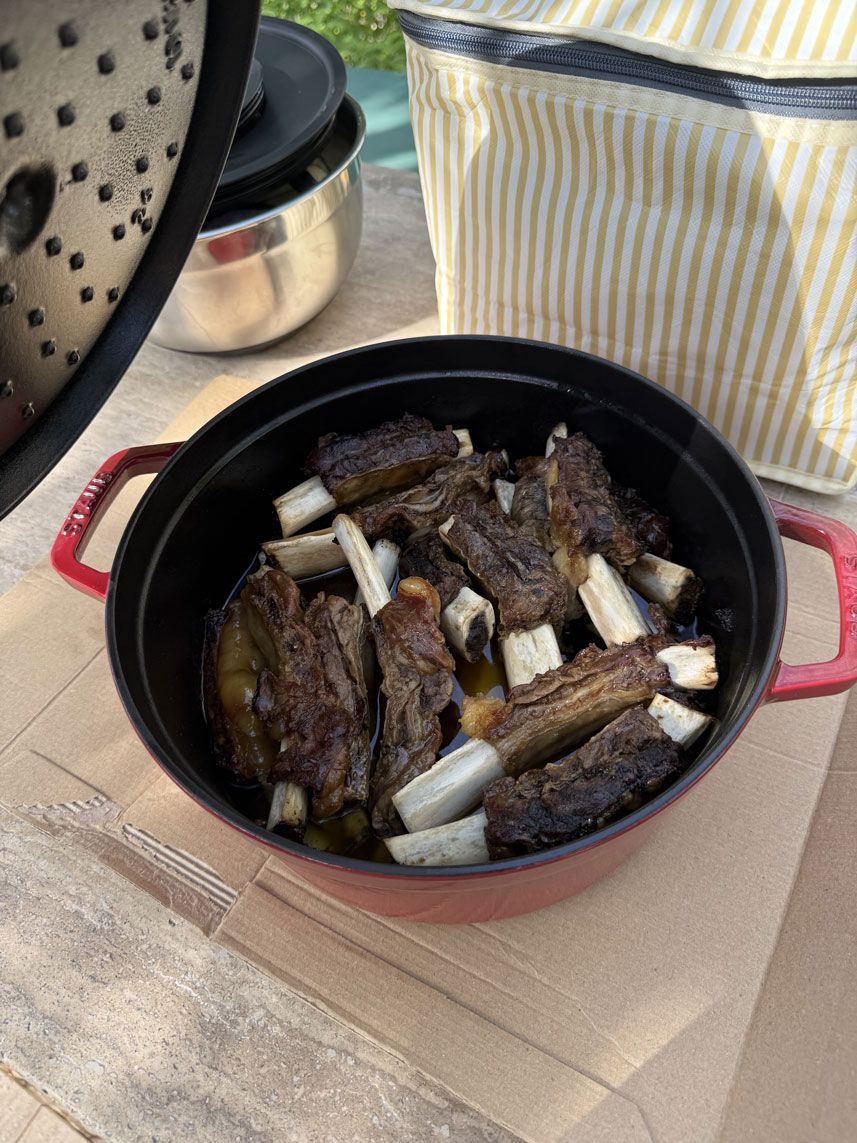
Personally I bought a Staub that I use mainly in the oven for long, low-temperature cooking: roasting chicken, preparing beef ribs for the BBQ, or oxtail.
It is extremely handy: for example the ribs, I put them still frozen in the Staub with the lid on, then in a conventional oven at 150 degrees for 4 hours, and they come out perfect. Soft enough to melt in your mouth, and juicy. They can be eaten like that or go on the BBQ to form the crust.
The disadvantage of these pots is that they are extremely heavy and personally I would not use them every day for cooking. They are also quite expensive, but they are an investment you make once in a lifetime.
There are, however, less expensive alternatives such as Combekk or Cuisinart. Be careful, on the other hand, with very cheap enamelled cast iron from unknown brands, because some studies have found that they can release heavy metals.
Glass
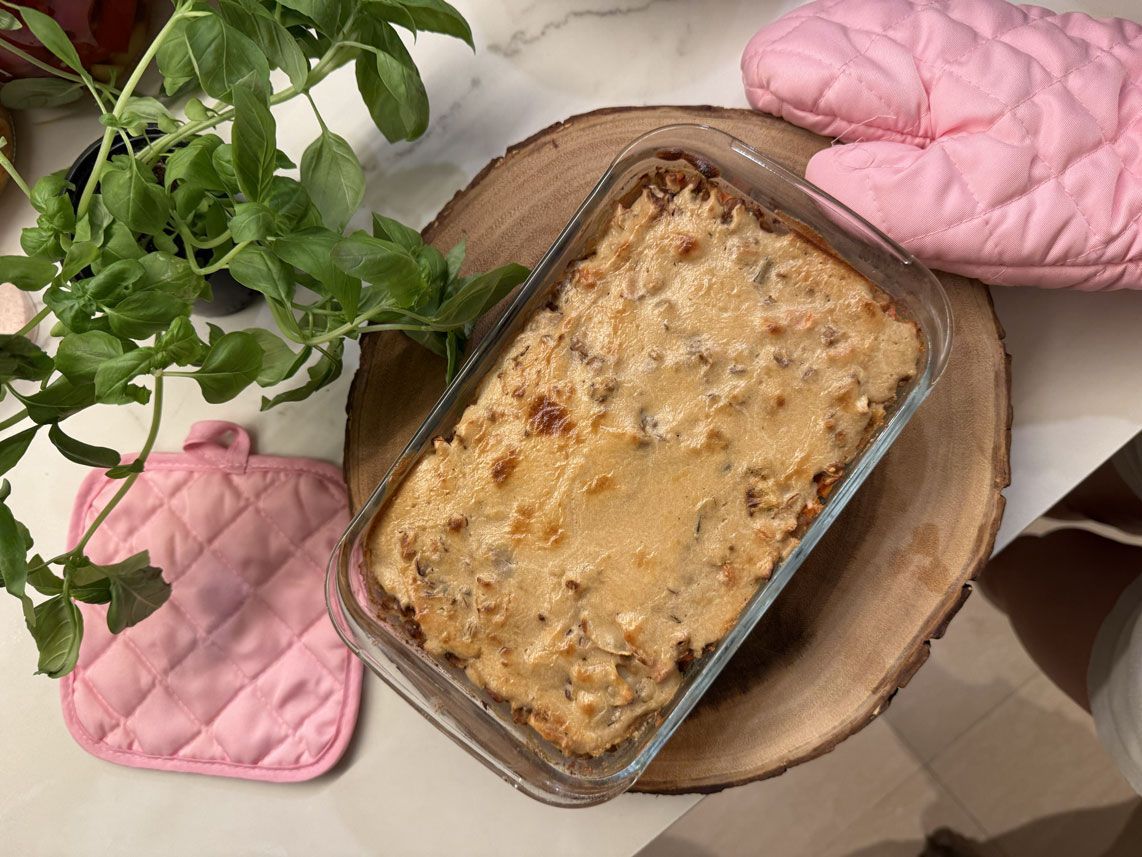
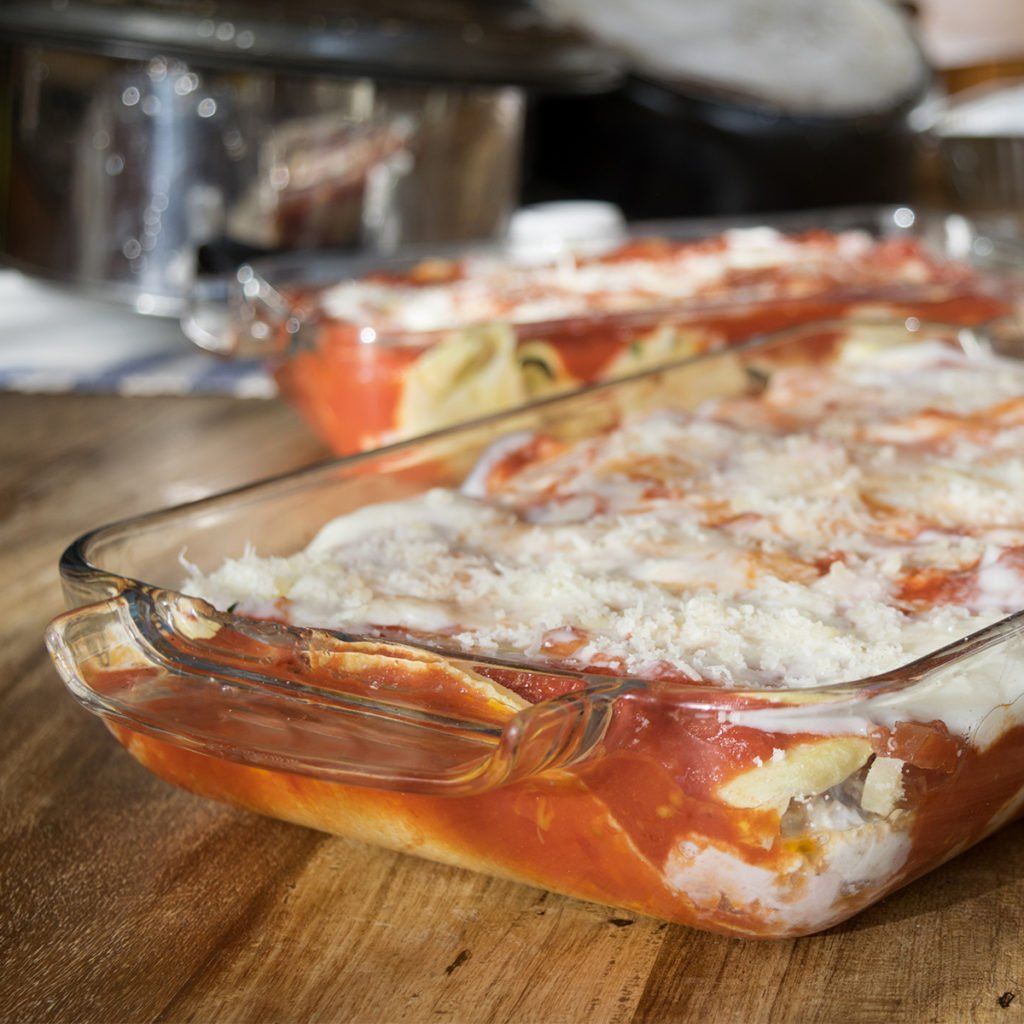
As for baking dishes, personally I favour glass because it is durable, easy to clean, and non-toxic.
Obviously it must be a specific glass suited to oven cooking (Pyrex, for example) and I always take care not to transfer a dish from the freezer to the oven, otherwise there is the risk it will break from the thermal shock.
Which material for which type of cooking
Considering the properties of each material, these are the types of cooking that best suit each material.
- For high temperatures (such as searing meat, stir-frying): stainless steel or cast iron
- For braised dishes and stews (also in the oven) and sauces, especially with tomato or other acidic foods: enamelled cast iron
- For steaming and delicate cooking: a stainless steel pot with a stainless steel basket and a glass lid
- For oven cooking: Pyrex glass or enamelled cast iron
- For serving acidic or hot foods: choose glass or ceramic of European origin and, if possible, from known brands; avoid decorated vintage plates and cheap imported ones
- To be avoided as much as possible: aluminium and pots with a scratched coating
Frequently asked questions
Do I have to throw away my non-stick pans right away?
If the coating is perfectly intact or they are new, you can continue to use them, avoiding heating them empty or at very high temperatures. Replace them when they get scratched or damaged, and for your next purchases orient yourself toward safer materials.
Is stainless steel safe if I am allergic to nickel?
Good-quality stainless steel releases minimal amounts of nickel, but in case of allergy it can still cause discomfort, especially if used in contact with acidic foods. In this case, for acidic preparations you can use enamelled cast iron or glass. If you have doubts, turn to your doctor.
What is the absolute best pot?
There are no “perfect” pots, but as we have seen, every material has strengths and weaknesses. Personally I bought stainless steel pots and pans and then I have a large Staub pot in enamelled cast iron.
In short
The anti-inflammatory diet also depends on the tools you use to cook and to store food.
When possible, always try to avoid plastic and to choose safe materials.
You do not have to overhaul your kitchen tomorrow, but as you gradually need to replace utensils or pots, it makes sense to orient yourself toward safe materials.
Carlotta's insights, straight to your inbox
Just your name and email, unsubscribe anytime.