How to reduce abdominal bloating when food is not the real cause
You eat well, you train, you drink water, and you are still bloated. The problem is not your food. 4 hidden causes and the daily habits that fix them.
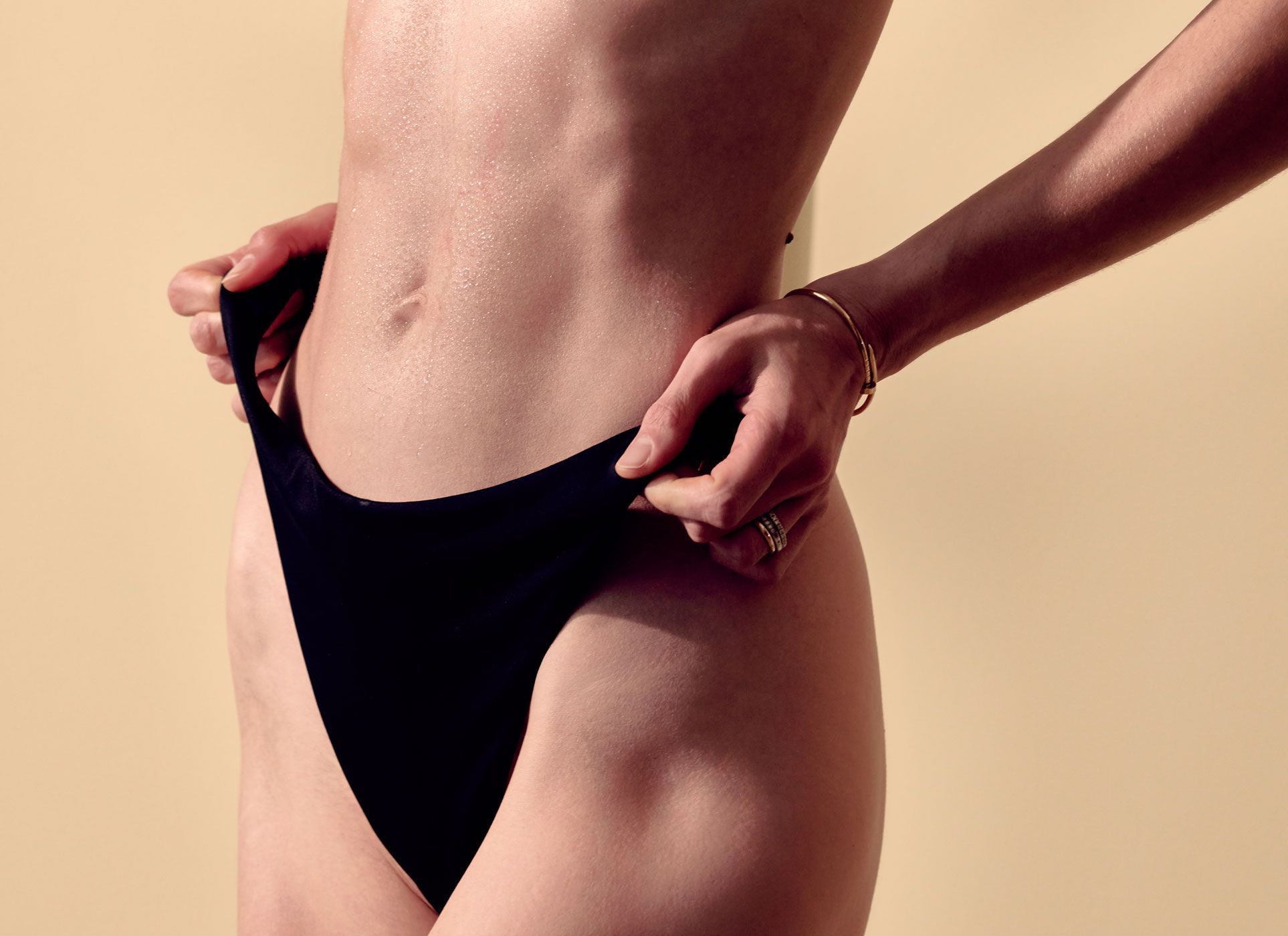
For years, as soon as I ate something, my belly would swell up like a balloon.
This is me, before and after a plate of pasta.
I am sure it has happened to you too, at least once.

The belly tight, hard, heavy. The discomfort of the trousers you put on in the morning without a problem and that in the evening pull and bother you. That feeling of being “full” even when you have not eaten much.
Abdominal bloating is one of the most common complaints among women. And one of the most frustrating, I would dare to say.
Also because the causes are almost infinite, and if you go for a gastroenterological check-up, after ruling out the more serious causes, they dismiss you with “it’s SIBO.”
And you know exactly as much as before.
Spoiler: it happened to me too.
That is why I started investigating the causes and trying lots of small habits that over time helped me.
Now the situation is decidedly better.
In this article I explain how to do it, so that you do not have to “lose” 5 years like me to figure out what to do.
Let’s start with the causes.
And let me reveal a secret to you: abdominal bloating is not only (and not always) a question of food.
Of course, sometimes the solution is on your plate. But very often it is not.
When food really is the issue
Let’s start with nutrition: some eating habits cause bloating. There is little you can do about it.
But be careful… the problem is rarely a single “bad” food. More often it is the way you eat.
Eating in a hurry, standing up, while you answer emails, leads you to swallow air and to chew too little. The result: the stomach works twice as hard and the belly swells.
But not only that: meals that are too abundant and concentrated overload digestion. An excess of salt retains fluids. Fizzy, sugary drinks add air and fermentation.
They are all small habits that make a difference.
And then there is the microbiota: the billions of bacteria that live in your gut. When it is in balance, it digests well, food does not ferment in the gut, and your body produces little gas.
When it is in disorder (“unbalanced”), food ferments in the gut and you bloat no matter what you eat.
If you have had bloating problems for a long time, investigating what is happening in your gut is essential.
Personally, once a year I do a GI Map Test: a test that tells you how your gut is populated, how many good and bad bacteria there are, whether there are parasites or bacteria.
It is a simple test that gives you a clear starting point. Think of it as a photograph of your gut.
Unfortunately it is not very common and doctors do not prescribe it easily. I buy my test on a site called NordicLabs. You receive the kit, you do the test (I will let you imagine how 😅), and you send it back. After 4 weeks you receive the results by email. On their site there is an interpretive guide to learn how to read them.
PS: this is not a collaboration; I suggest them because it is one of the questions I receive most often, I know many women are interested, and I have always been happy with them (I have been buying from them since 2023).
Test aside, let’s talk about individual foods.
There are some foods (I am sure you know them inside out) that naturally ferment more. These are legumes, cauliflower, broccoli, cabbage, raw onions, rye bread, artichokes.
But the solution is never to banish them forever.
Better to reintroduce them gradually, in small quantities, well cooked. It is your gut that needs to get used to them again; food is not your enemy.

The 4 causes of bloating that have nothing to do with food
But we said that nutrition is not everything: sometimes abdominal bloating has different causes.
There are at least four factors nobody talks about that can explain a bloated belly.
You breathe badly
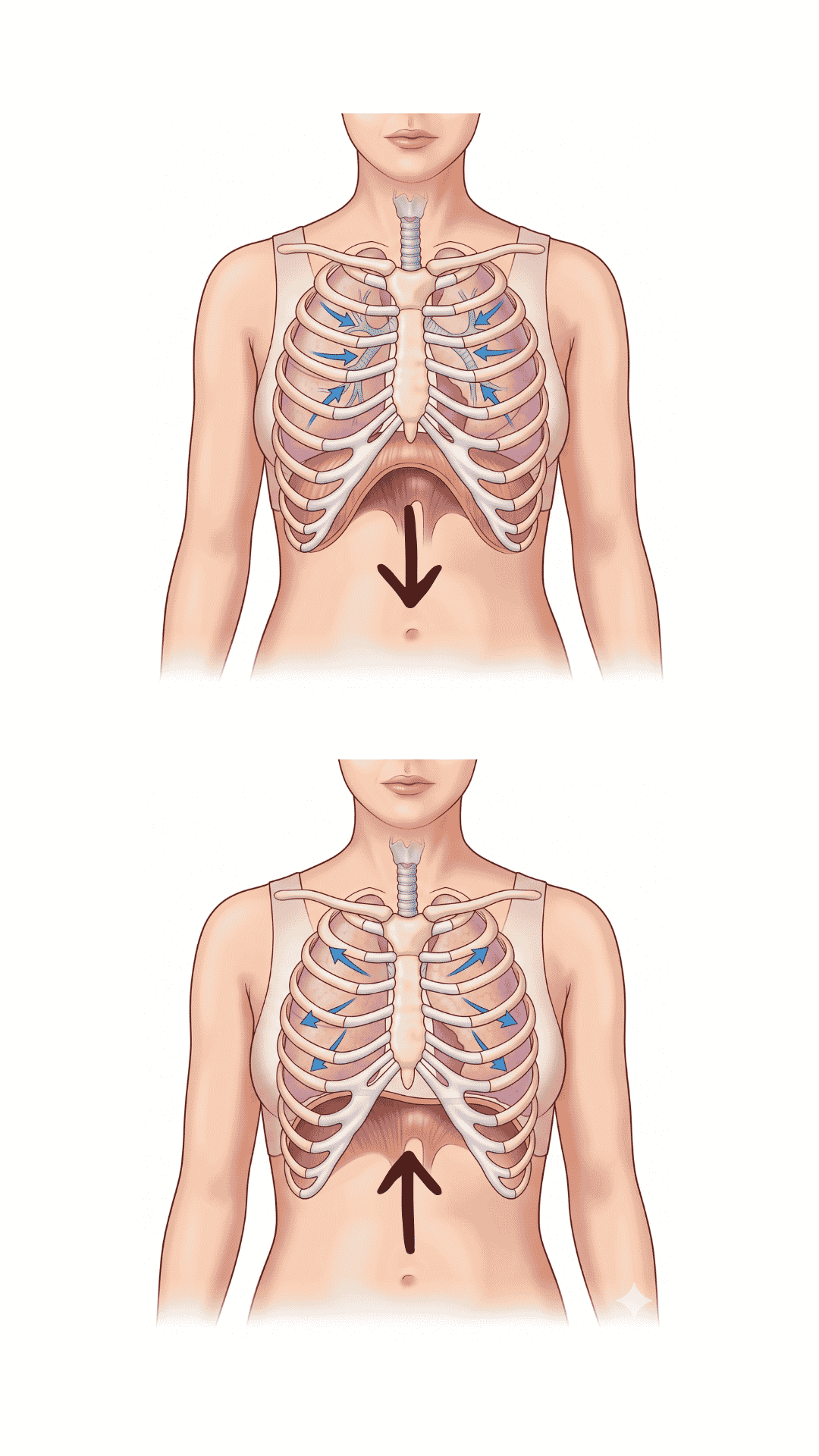
When you breathe deeply, the diaphragm (the breathing muscle located beneath the rib cage) lowers (when you inhale) and rises (when you exhale). During this movement, it massages the abdominal organs from the inside. This helps the gut to move, facilitates the release of gas, and helps drainage.
The problem is that most of us breathe without moving the diaphragm. We breathe with the chest, fast, almost holding our breath. And the abdomen stays still. Gas and fluids accumulate.
It is no coincidence that every Lymphatic Drainage Pilates session begins with deep breaths. I've discussed this in depth here .
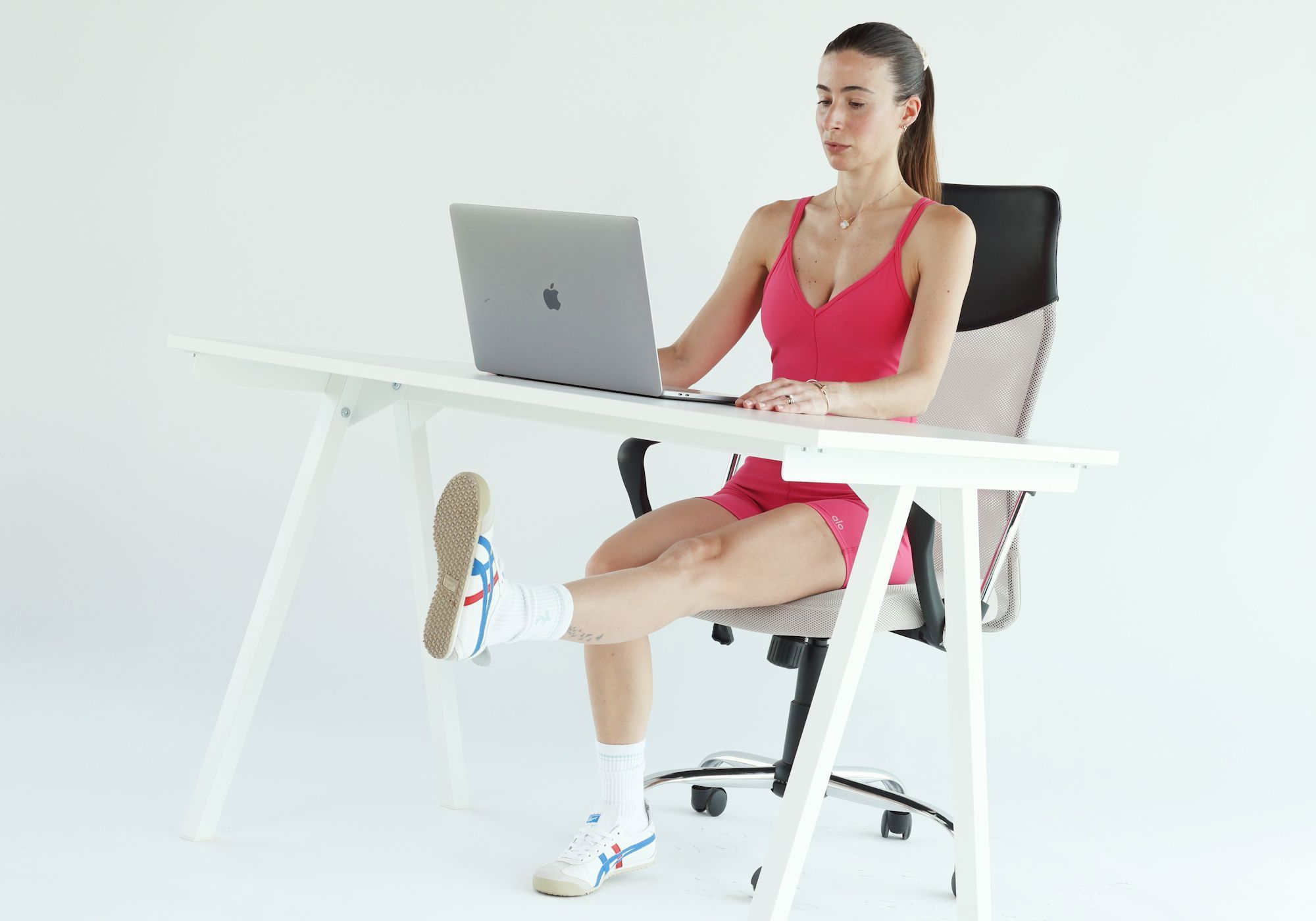
You sit for hours
When you sit for a long time (especially with your legs crossed), you compress the lymph nodes in the groin, which are the main drainage station for the entire lower part of the body.
The result: the lymph slows down, fluids stagnate, and the belly swells.
The good news is that it takes very little.
Getting up, taking a few steps, or a Pilates session in the evening helps to change the situation.
You sleep little and poorly
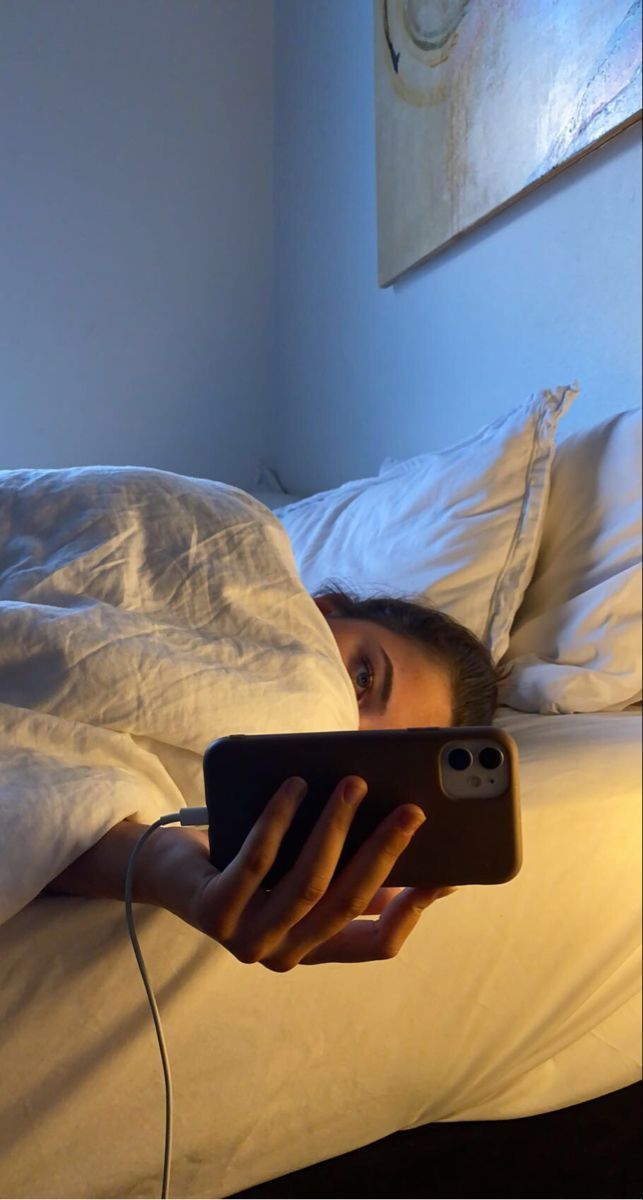
This is the most underrated of all.
The less you sleep, the more cortisol (the stress hormone) your body produces.
Cortisol should follow a cycle: high in the morning, then gradually falling until the evening, so that you can relax and fall asleep.
The problem is that if you are perpetually under pressure and sleep little, cortisol stays high all day. It is chronically high.
And high cortisol slows down intestinal motility and increases water retention.
Translated: you wake up bloated and go to bed even more bloated.
You have poor posture
Your posture hugely influences your abdomen. And in particular how much your abdomen protrudes. I talked about it here:
If you do not have good posture and the rib cage is not aligned with the pelvis, very likely your belly “sticks out” forward, giving you the impression of having a permanently bloated belly.
This could be the case if you wake up in the morning and are already very bloated.
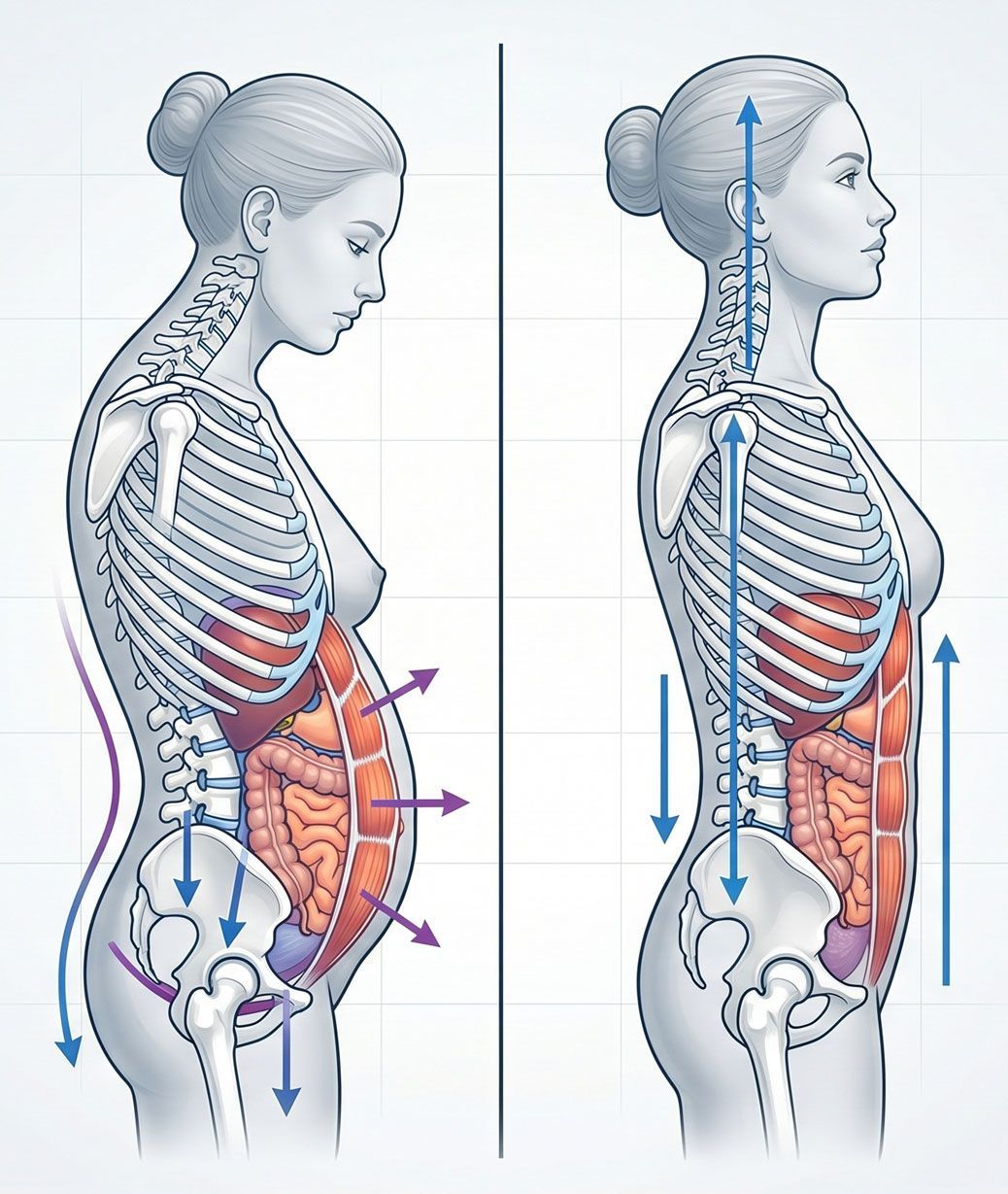
Improving posture and mobility, in this case, helps enormously.
The next time you are standing, check: is the rib cage exactly above the pelvis, or is the pelvis more forward (sway back posture) or more backward (and you are in lumbar hyperlordosis)?
But the matter does not end here.
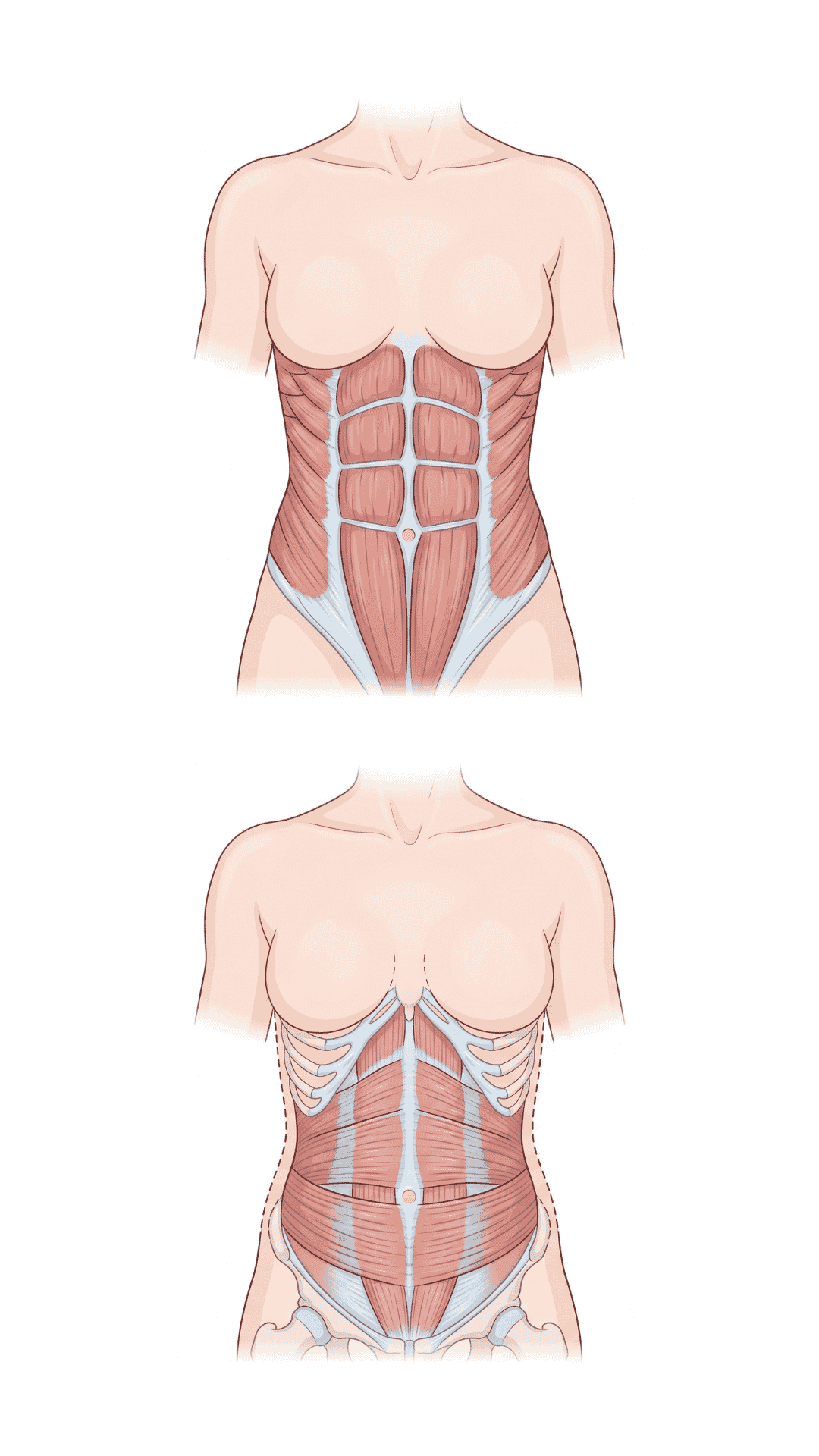
Everyone knows that training your abs does not eliminate belly. But few know that some abdominal muscles (the so-called “deep abs”) work like a true natural corset. And if they are strong, they help you “hold your belly in.”
It is not that the belly has decreased, it is the abs that hold it in.
99% of people, though, only train the “six-pack” (the superficial little squares) and completely ignore the deep ones. The result is a belly that, even without excess fat, tends to push outward.
The deep abs, in particular the transverse abdominis, are activated with breathing and work in sync with the pelvic floor.
When you inhale the diaphragm lowers and the pelvic floor relaxes; when you exhale the diaphragm rises, the pelvic floor returns to its starting position, and the deep abs activate (or rather, they should activate).
It is exactly what we do in Lymphatic Drainage Pilates.. And that is also why I care so much about how you breathe, and for each exercise I indicate what the correct breathing is.
Don’t know how to activate the deep abs? I talked about it here:
The next time you feel bloated, before cutting yet another food from your diet, stop and ask yourself: how am I breathing? How long have I been sitting? How much did I sleep last night? How am I standing?
Sometimes the answer is right there. Not always in what you eat.
At the table: small habits that change everything
Now that we have seen the causes, you will be wondering what you can actually do to reduce abdominal bloating.
Let’s start at the table.

How you eat
- Eat calmly, sitting down, away from sources of stress and, if possible, away from your phone. When you eat in a rush or in front of the computer, you swallow air and digest badly (not to say very badly). Give yourself the time of a real meal: chew calmly, savour each bite (you will also feel fuller), do not scroll while you eat.
- Have complete meals that fill you up, instead of nibbling something every hour. Continuous “grazing” keeps digestion always switched on and the gut never rests. Have meals complete with all the macronutrients (proteins, fats, carbohydrates) that keep you full for a long time.
- Try to eat at more or less the same times every day. I know it is not easy, but the gut loves routine. The more regular your timings, the more regular your digestion will be too.
- Have a lighter dinner and a more abundant breakfast. In the evening digestion slows down because the body prepares for sleep: a heavy dinner ferments all night, you sleep badly, and you wake up bloated.
- After meals do not lie down on the sofa right away: take a 15-20 minute walk. It helps the stomach to empty and stabilizes blood sugar.
What you choose
- If you bloat often, favour cooked vegetables over raw ones: they are easier to digest and ferment less. Raw ones remain valuable, but for a sensitive gut they can be too much. Do not overdo the quantities of vegetables: do not eat 1kg of salad per meal, otherwise you risk bloating.
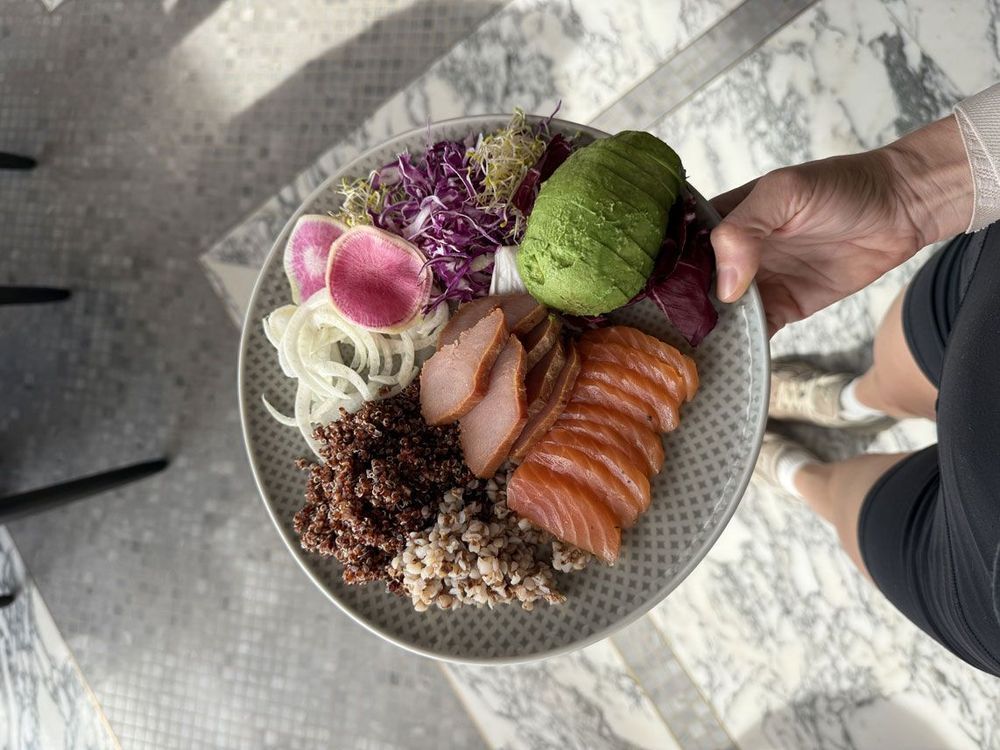
- For snacks, choose simple, natural options: nuts, seeds, 100% dark chocolate, a piece of fruit. Avoid bars, packaged “protein” snacks, and protein powders, which are often full of sweeteners and additives that cause bloating.
- Speaking of sweeteners: choose natural ones over artificial sweeteners. Between a “light” product and a “normal” one, choose the normal one. It will keep you full longer, it often has a lower glycemic index, and it causes less belly bloating.
- And if you want to add fermented foods to your diet (excellent for the microbiota, I talked about it here → article), do it gradually, one at a time and in small quantities. Introducing lots of them together, all at once, can have the opposite effect.
What you drink
- Drink mainly away from meals, in small sips, so that your body has the time to absorb the water and truly hydrate. If you drink a lot all at once, it is very likely that your body will stay dehydrated. I talked about it here → article. But above all, during meals drink little. Too much liquid while you eat dilutes the digestive juices and slows down digestion.
- Prefer drinks at room temperature over iced ones: excessive cold can slow down digestion.
- And if you continuously feel like chewing gum or eating sweets, try to replace this habit with herbal teas. Try fennel tea, excellent for reducing abdominal bloating. Chewing gum all day makes you swallow a surprising amount of air… which goes straight to the belly.
What to do, then
As you have seen, abdominal bloating does not have a single cause and does not depend only on what you eat.
Don’t know where to start?
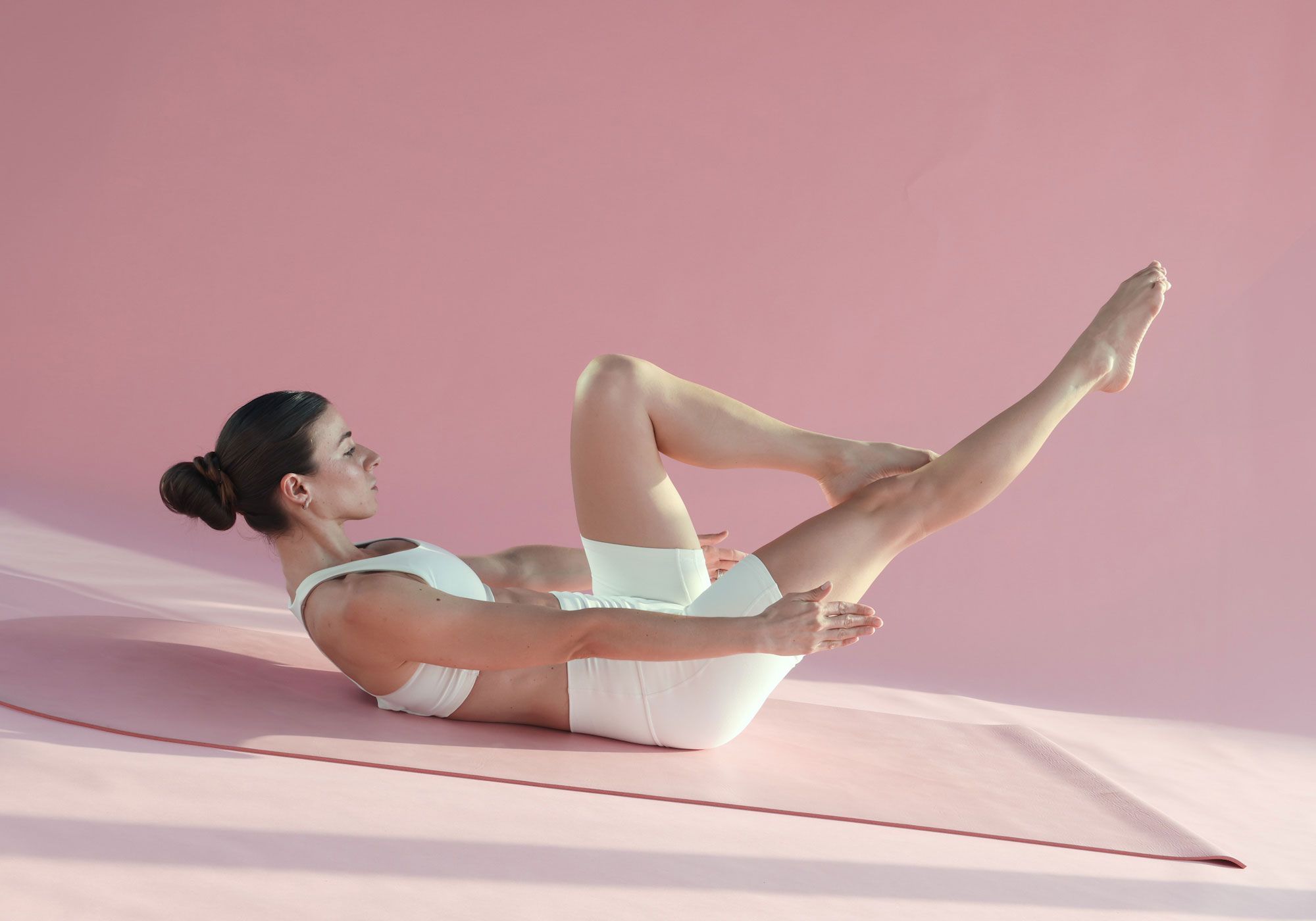
Try my Lymphatic Drainage Pilates. It is designed to bring together many of these habits and to help you on several fronts: it teaches you to breathe with the diaphragm, to coordinate breath with the exercises, it reactivates drainage, trains the deep abs, and improves posture. It is the simplest way to act on several causes at the same time.
If you want to begin, I recommend starting with one of our Journeys:
- Lymphatic Drainage Pilates Beginners (2 months): ideal if you have never done Pilates.
- Lymphatic Drainage Pilates (6 months): the complete journey to tone, drain, and debloat.
- Lymphatic Drainage Pilates Express (just 15 minutes a day): perfect if you have little time.
Try Traininpink free for 7 days and start to feel your belly lighter from the very first sessions.

If instead you need something more specific, I recommend the Debloat Your Belly classes: the Lymphatic Drainage Pilates exercises are paired with a draining, anti-constipation belly massage.
A real game-changer for anyone who suffers from a bloated, aching belly.
Frequently asked questions
Why do I wake up already bloated in the morning?
In these cases it could be a question of cortisol or posture.
Working on your sleep, on relaxing before bed (try not to scroll your phone for at least 30 minutes before sleeping, try a meditation instead), and improving your posture with Pilates helps more than eliminating another food.
Do I have to eliminate legumes, cabbages, and the vegetables that ferment?
No. They are valuable foods and should not be banished.
If you notice they cause bloating, the problem is usually the quantity or the fact that your gut is not used to them.
Reintroduce them gradually, in small portions and well cooked: over time the gut gets used to them again.
How long until I see results?
The fluid and drainage component responds quickly: many women feel their belly lighter after just a few days of movement and hydration.
Other changes, such as strengthening the deep abs and reducing bloating, require a few months of consistency.
When should bloating worry me?
Occasional bloating is normal.
But if it is persistent, very painful, or accompanied by other symptoms (blood in the stool, significant and unexplained weight changes, etc.) I recommend having some tests and talking to a doctor.
This article helps you understand and reduce common bloating; it does not replace a medical evaluation.
In short
Abdominal bloating is a real problem, very common, but no less annoying for that. Fighting it by eliminating one food after another rarely works (and often the bloating comes back worse than before when you reintroduce the foods).
Three things to remember:
- Food matters, but how and when you eat matters too: eating in a hurry, having enormous meals or heavy dinners, and drinking a lot during the meal can cause more bloating than a single food.
- Sometimes bloating has nothing to do with what you eat, but can be traced back to breathing, sedentariness, sleep, or posture.
- If you have recurring problems and “have tried everything,” doing a microbiota test can help you find the real cause.
Carlotta's insights, straight to your inbox
Just your name and email, unsubscribe anytime.