How wrong breathing affects your bloating, drainage, stress and pelvic floor
Bad breathing bloats you, blocks drainage, raises cortisol, and weakens your pelvic floor. 4 truths about diaphragmatic breathing and a test to try now.

I know, I know. Breathing is a boring topic. Nobody wants to hear about it.
And honestly, I wouldn’t talk about it either, if it weren’t the foundation of practically everything that happens in your body. I’m not joking. How you feel in the evening, how bloated your belly gets, how well your lymphatic system drains, how quickly you get worked up when something goes wrong.
Breathing sits underneath all of it.
And if you think about it, that’s not so strange.
We breathe every second, from the moment we’re born.
But there’s one small (huge) problem: practically none of us breathes correctly.
It sounds so trivial… and yet, to breathe “well,” you have to train your breathing.
In this article I’ll share 4 truths about breathing that nobody tells you, we’ll do a little test to see how you breathe, and you’ll discover why, once you know them, everything changes.
How breathing works
Let’s start with the sore spot: you probably breathe badly. And you’ve never noticed.
I’m not pointing fingers.
I breathe badly too. And a few years ago I breathed even worse.
I’ve never hidden the fact that I suffered from a hypertonic pelvic floor. And one of the causes was certainly compromised breathing. I’ve worked on it, and I keep working on it (when I have the time, alas). My breathing has improved, but it’s still not where I’d like it to be.
So how should we breathe?
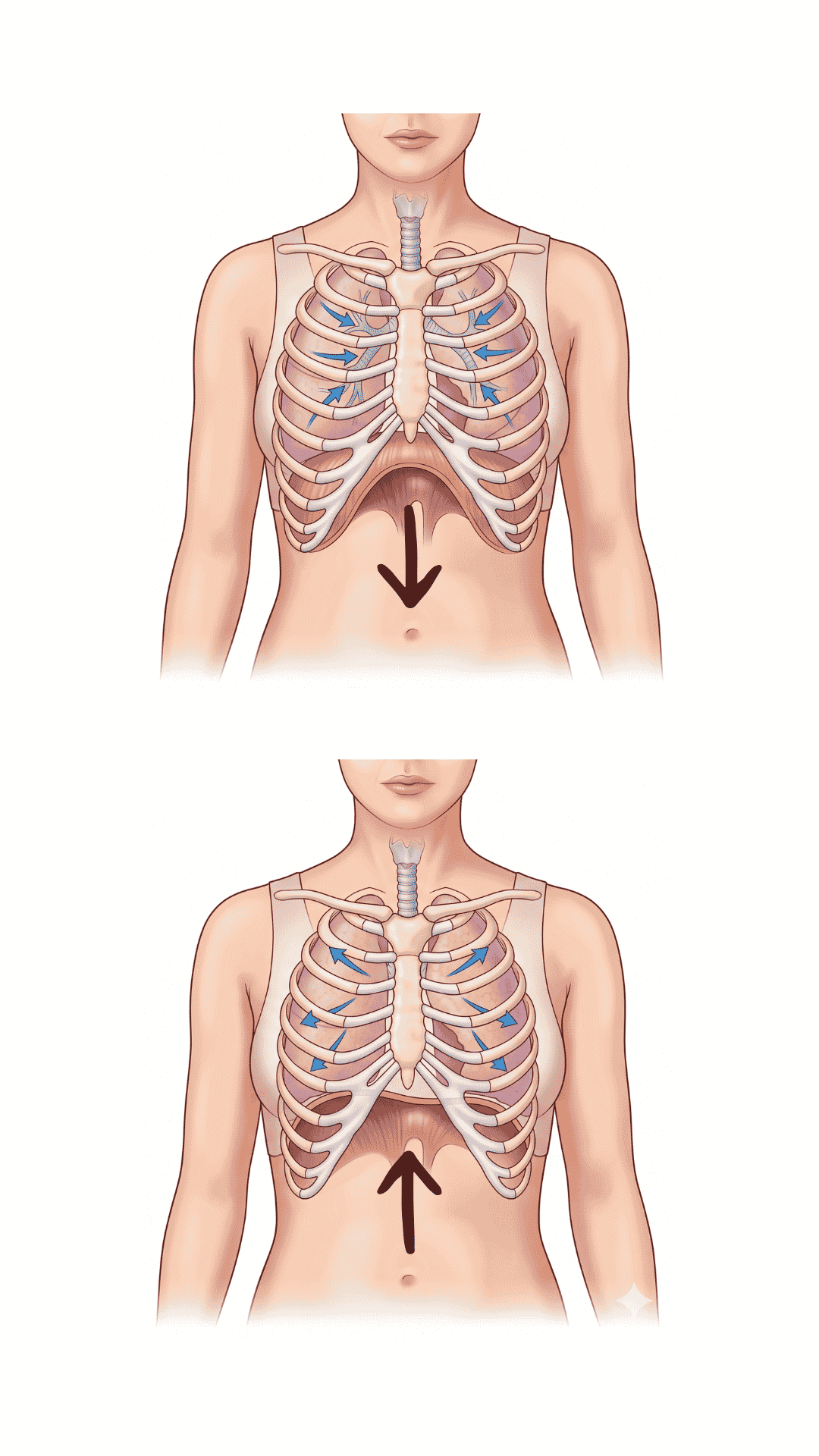
In an ideal world, when you inhale, air enters the lungs, expanding the rib cage 360 degrees (front, sides, and back), and the diaphragm (the breathing muscle, located below the rib cage) moves down.
Conversely, when you exhale, the lungs empty fully and the diaphragm returns to its starting position.
This is called diaphragmatic breathing.
It’s how all of us should breathe.
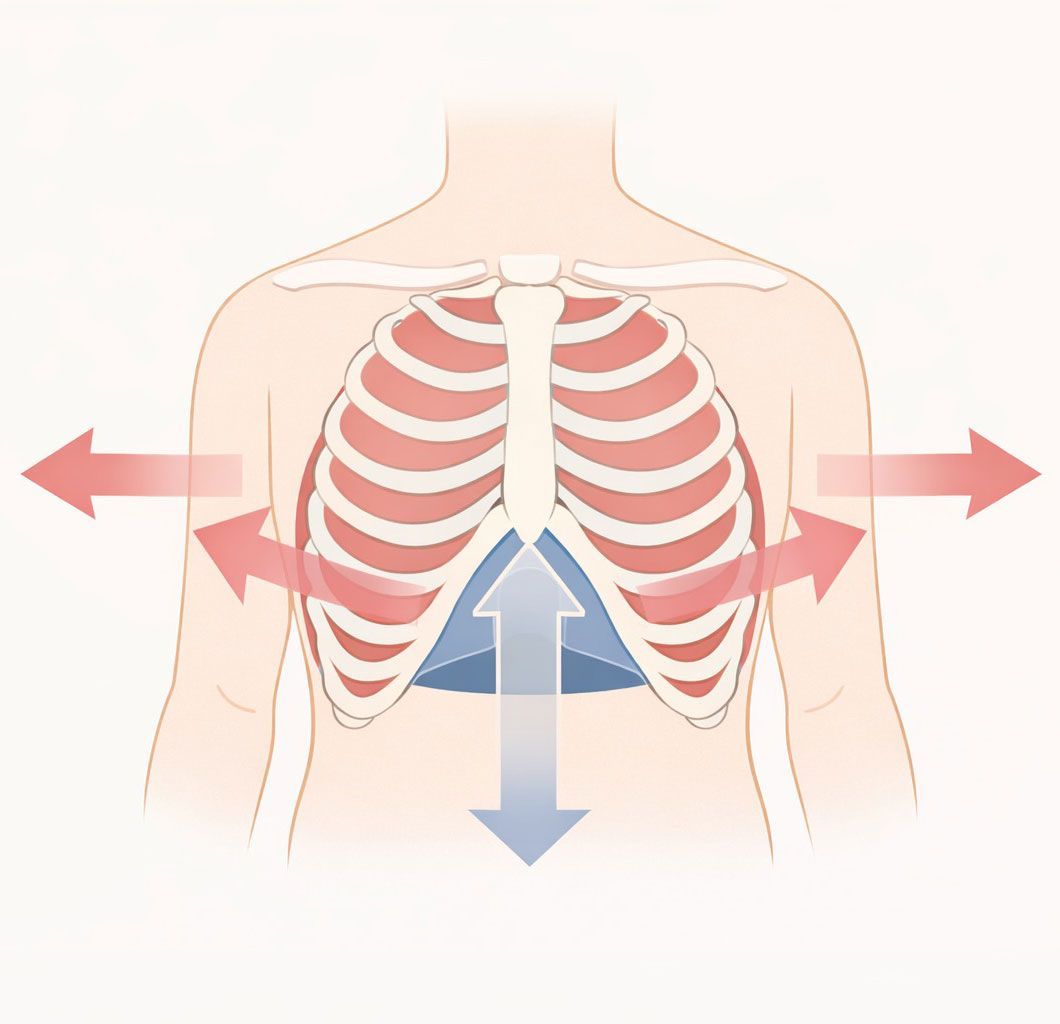
In the real world, though, something entirely different happens. Most of us:
- have a blocked diaphragm: it doesn’t rise and fall the way it should
- never exhale completely (the air never fully leaves the lungs, emptying them entirely), and as a result never inhale deeply
- have a rib cage that, due to poor mobility, doesn’t expand 360 degrees
So what happens?
The air goes mostly to the front, into the chest (the upper part of the torso) and the belly.
This is called chest breathing, and it gets amplified when we’re stressed, under pressure, or in a rush. In other words, 90% of the time. We breathe the way we live: breathless, rushed, holding our breath.
Truth #1: You breathe in alert mode all day long (even right now)
And here comes the first truth nobody tells you.
Chest breathing activates the sympathetic nervous system (the one for alertness, the “fight or flight” response). Diaphragmatic breathing activates the parasympathetic system (the one for rest, recovery, and digestion).
This means that if you breathe with your chest all day, your body stays in “alert” mode all day, even when there’s nothing to be alert about.
- Cortisol (the stress hormone) stays chronically elevated.
- The neck muscles stay tense.
- Sleep gets worse (high cortisol in the evening prevents you from relaxing and falling asleep).
All of this, simply because of how you’re breathing right now.

Truth #2: Breathing badly makes you bloated
Chest breathing bloats you.
I’m not joking.
Let me explain.
When you breathe deeply, the diaphragm moves down and up. And as it does, it massages the abdominal organs from the inside. The stomach, the intestine, the liver, the spleen. It’s a rhythmic, constant movement that helps the intestine move, shifts gas and fluids along, and maintains intestinal motility.
It’s no coincidence that women who suffer from chronic abdominal bloating are often the same ones who breathe badly. The next time you feel bloated, before investigating for the umpteenth time what you ate and trying to cut yet another food from your diet, try asking yourself: how am I breathing? How many deep breaths have I taken today?
Truth #3: Breathing badly worsens drainage
The lymphatic system doesn’t have a pump the way the circulatory system has the heart. It moves only when your muscles move (I talked about it here) and when you breathe deeply, and through joint mobility.
The diaphragm is the only muscle that (in theory) moves on its own (through breathing) and that can be considered a pump for the lymphatic system, a bit like the heart is for blood.
But if the diaphragm stays still, none of this happens.
So how does it work?
Let’s take a step back.
The largest lymphatic vessel in the body, the one that collects all the lymph coming from the lower belly and the legs, is called the thoracic duct.
The thoracic duct starts at the cisterna chyli (located roughly halfway between the point where the rib cage meets and the navel), passes through the diaphragm, rises through the chest, and ends at the base of the neck, where it returns the lymph to the blood.
Every time you breathe deeply, the diaphragm moves rhythmically and “pumps” the thoracic duct like a vacuum: it draws lymph up from the lower body and pushes it upward.
But if you don’t breathe deeply, this doesn’t happen. The lymph moves much more slowly.
The result? Fluid stagnates, your legs and belly swell, and you feel weighed down.
Truth #4: 99% of pelvic floor problems and diastasis cases that never resolve start with breathing
The diaphragm works in sync with the pelvic floor.
In theory, when you inhale, the diaphragm moves down and the pelvic floor relaxes. When you exhale, the diaphragm rises and the pelvic floor returns to its starting position.
If the diaphragm is blocked, the pelvic floor never fully relaxes. I talked about it here.
Abdominal pressure doesn’t distribute properly (and this makes diastasis and bloating worse).
Your body compensates.
If you have pelvic floor problems or a diastasis that won’t close, start with your breathing. And that’s exactly what we do in the Pilates Diastasis and Postpartum Journey.
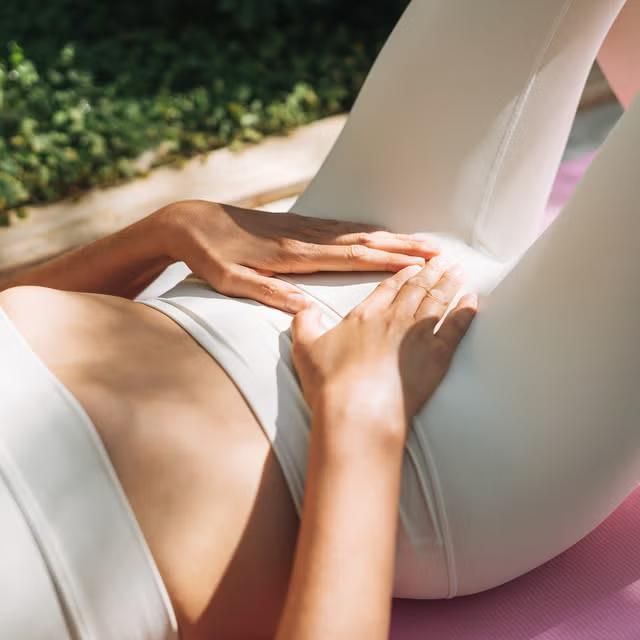
Learning to breathe well isn’t enough
At this point you’re probably wondering: “Okay, I get it, I need to breathe with my diaphragm. But how?”
The problem with most breathing exercises is that they exist in isolation.
They have no practical counterpart in real life.
Let me explain.
When you try to breathe deeply, you normally sit down, close your eyes, and take deep breaths for a few minutes. Then, as soon as you’re done, you get up and carry on with your life. Thirty seconds later, you’re back in the arena.
That’s because breathing is an unconscious habit.
It runs on autopilot, regulated by the brainstem. Trying to “remember” to breathe well all day long is impossible, and it isn’t efficient.
What you need to learn to do is pair your breath with movement.
If you’ve ever followed one of my Lymphatic Drainage Pilates sessions, you’ve noticed: in every single exercise, I tell you how to breathe. Inhale as you do x, exhale as you do y.
I know, after a while I get pedantic.
But I do it for your own good.
When you learn to coordinate your breathing with your body’s movements, your body learns to breathe that way even under effort. Even in everyday life. Even unconsciously, while you’re reading that email from the colleague you really can’t stand.
That’s how you learn to breathe well: not through willpower, but by building a habit through movement.
How to tell if you breathe well (or badly)
After all that theory, let’s move on to a little test (and if you’re anything like me, you love tests too).
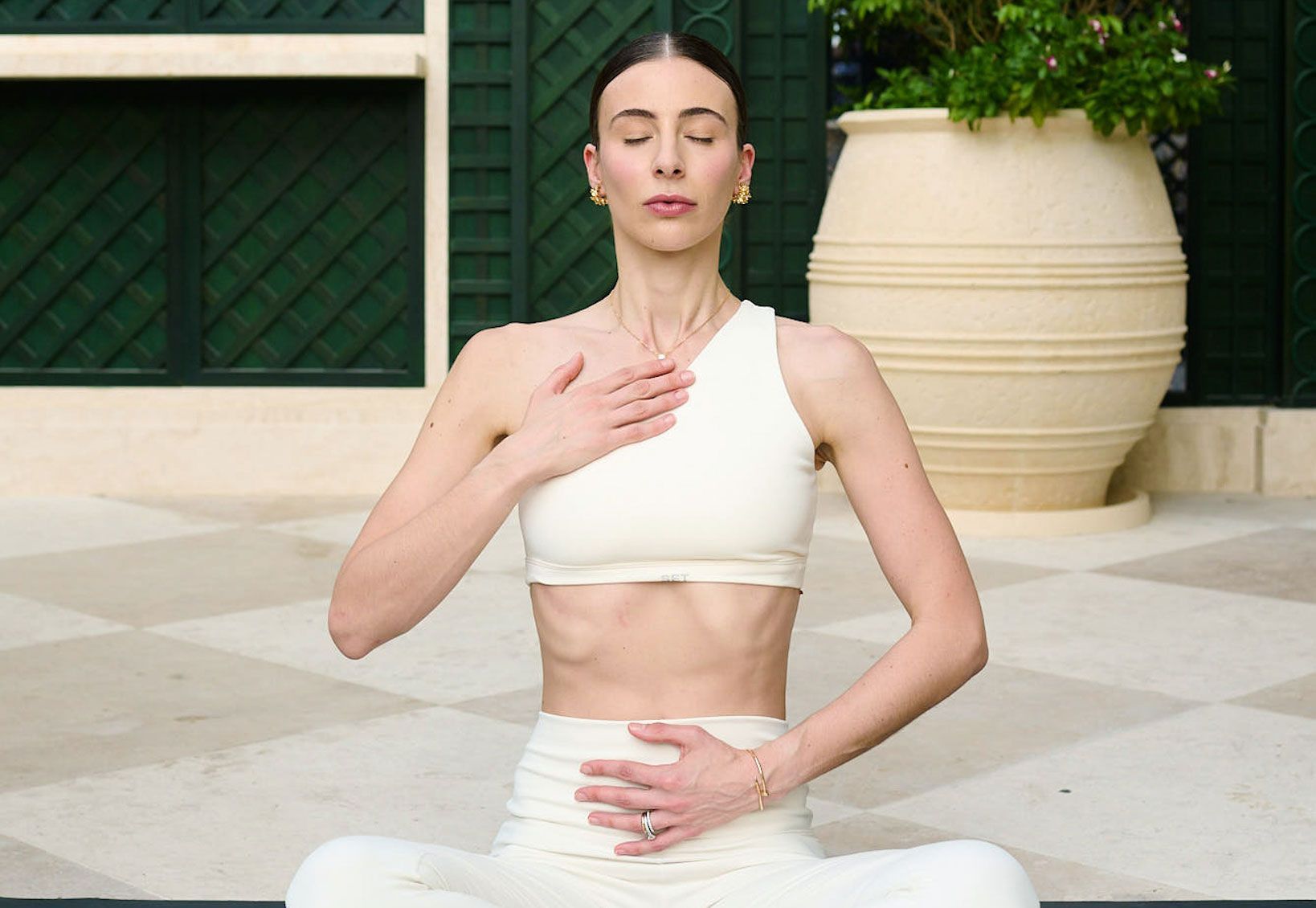
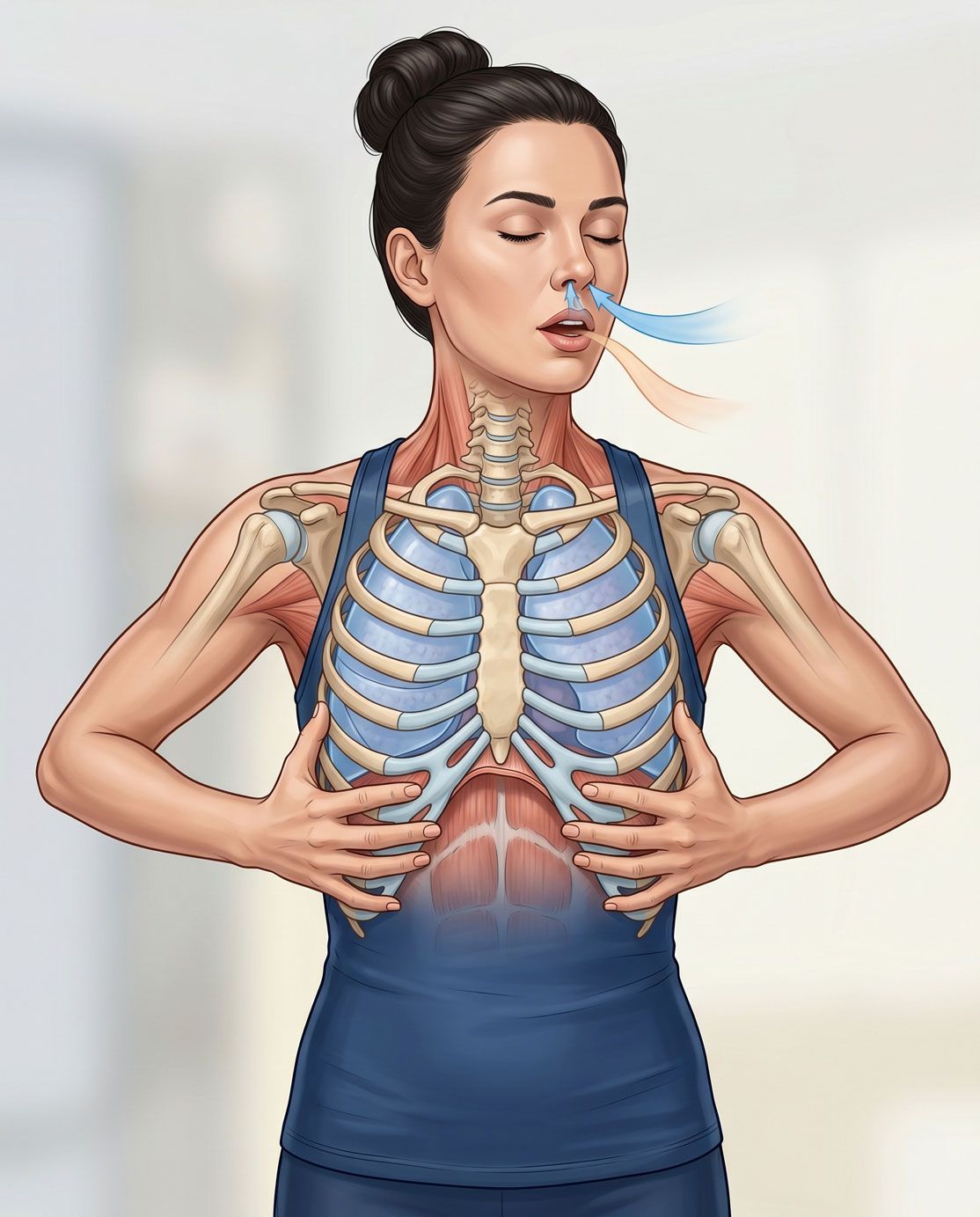
Place both hands on the sides of your rib cage, fingers wrapping around your ribs and thumbs pointing behind you. Now take a deep breath, inhaling through your nose and exhaling through your mouth.
What moved?
If you only felt your belly push forward, or only your chest rise, or you felt nothing at all… you’re breathing badly. Or rather: you’re breathing incompletely.
In a correct breath, air enters the lungs, expanding the rib cage 360 degrees: front, sides, and back. Like an umbrella opening in every direction.
It’s not just the belly inflating.
It’s not just the chest rising.
It’s the entire rib cage that, as you inhale, widens in every direction. And then empties completely as you exhale.
What to do now?
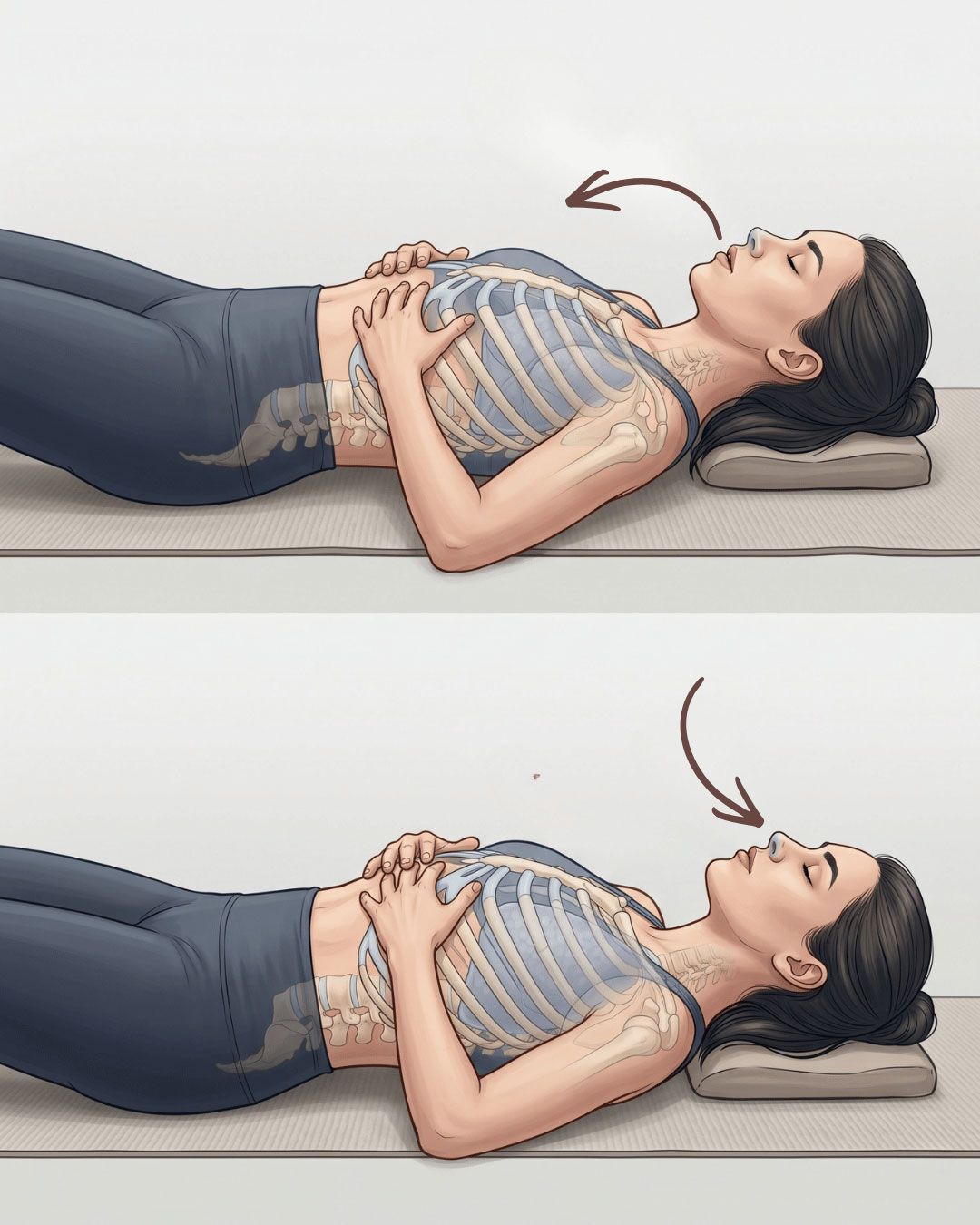
Try this: lie on the floor face up, hands on the sides of your ribs (as before), thumbs pointing behind you.
Exhale through your mouth for as long as you possibly can, emptying your lungs completely.
Now pause briefly for a few seconds.
Then inhale through your nose.
If you exhaled well before, this time you should feel something moving under your fingers.
Maybe the expansion isn’t perfect (and it probably isn’t, if you’ve never worked on it), but it’s better than in the first test we did today.
If you don’t feel any expansion in your back, don’t worry. It’s the hardest part, and the one almost nobody manages at first. But it’s also the one that makes the biggest difference.
At first it will feel strange. After a few months of practice, it will become natural.
If instead you feel completely blocked, try the “Unblock your diaphragm and drain” class (only if you’re not pregnant).
If you truly want to improve your breathing in everyday life as well, I’d suggest starting with one of our Journeys:
- Lymphatic Drainage Pilates Beginners (length: 2 months): ideal if you’ve never done Pilates. I teach you, step by step, to coordinate breath and movement.
- Lymphatic Drainage Pilates (length: 6 months): our original Journey. You tone, drain, breathe, debloat.
- 15-30 minutes of Lymphatic Drainage Pilates a day: perfect if you’re short on time. All the principles of my Method in short daily sessions.
Try Traininpink free for 7 days and start breathing better from your very first session.
Frequently asked questions
Are diaphragmatic breathing and conscious breathing the same thing?
Almost. Diaphragmatic breathing is the mechanically correct way to breathe (with the diaphragm, not the upper chest). Conscious breathing is the moment you bring attention to your breath. The good news is that when you bring attention to your breath (conscious), you automatically tend to breathe better.
How many minutes a day do I need?
You don’t need hours and hours dedicated to breathing; you need consistency. 30 seconds of deep breaths several times a day, like the exercise we did together (right after waking up, before bed, after a stressful phone call), are far more effective than 20 minutes in the morning followed by holding your breath for the rest of the day. If you add 15-30 minutes of Lymphatic Drainage Pilates a day, diaphragmatic breathing becomes an automatic habit within 6-8 weeks.
Should I breathe through my nose or my mouth?
General rule: always inhale through your nose, exhale through your mouth. Inhaling through the nose and exhaling through the nose is also fine, though you might find it harder. That way of breathing is excellent at night, though, because it helps relax the body. If possible, avoid breathing only through your mouth.
How long until I see results?
Normally the first benefits (less neck tension, less abdominal bloating, better sleep) start showing after 2-3 weeks of working on your breathing. If your starting point is really rough, it can take years. It’s a slow but profound process, because you’re reprogramming an unconscious habit that’s been with you since you were born (or almost).
In short
Breathing is the first act of life and the last. We do it 20,000 times a day without thinking. And yet practically none of us is doing it the right way.
Four truths to remember, in order of importance:
- You probably breathe with your chest, not your diaphragm… and that keeps your body in alert mode all day long.
- Breathing badly bloats your belly, worsens your posture, leads to pelvic floor problems, prevents you from managing intra-abdominal pressure properly, and worsens your sleep. It’s not “just breathing.”
- The diaphragm is the main pump of your lymphatic system: the deeper you breathe, the better the conditions your body has to drain.
- To learn to breathe well, you need to coordinate breathing with movement and unblock your diaphragm. “Focusing on your breath” once a week isn’t enough.
Carlotta's insights, straight to your inbox
Just your name and email, unsubscribe anytime.