Why 15 minutes of Lymphatic Drainage Pilates a day work better than an hour a week
“You have to work out an hour to see results.”
“At least 45 minutes, or it’s not worth doing.”
“You start burning fat only after 30 minutes.”
How many times have you heard it?
Personally, one too many.
And now I’m going to tell you something shocking: for the lymphatic system, the exact opposite is true.
To drain, debloat, and reduce inflammation, frequency beats duration. Every time.
15 minutes every day move more lymph than 60 minutes twice a week.
In this article I’ll explain:
The 60-minute workout myth
“If you don’t sweat for an hour, it’s pointless.”
“If you don’t finish exhausted, you haven’t done enough.”
“15 minutes is just the warm-up.”
These are phrases we’ve heard so many times, for so many years, that we take them for granted.
And we know how it goes: when something gets repeated enough times, it becomes “the truth.” But are we really sure that’s how it is?
Let’s take a step back, and let me tell you where this belief comes from.
To understand where the idea that a workout has to last a fixed amount of time comes from, we need to go back in time.
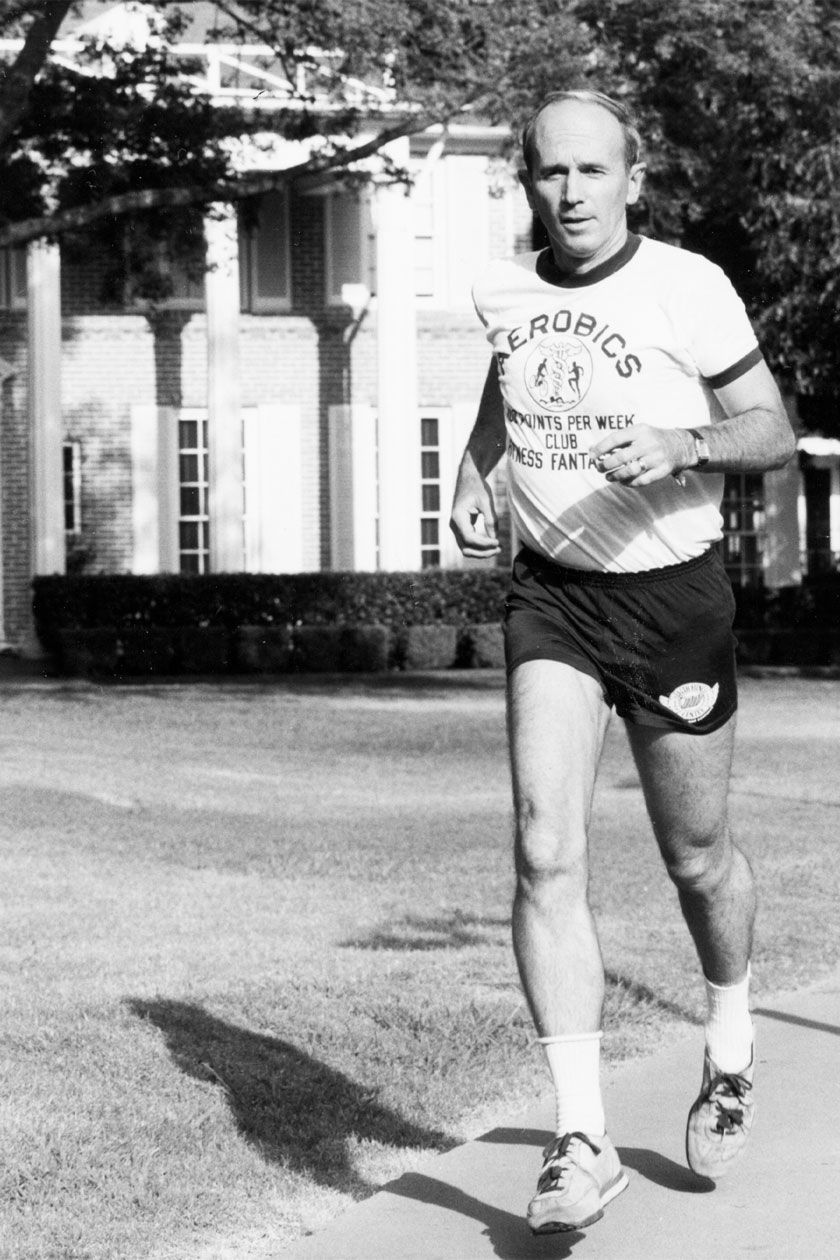
The first data on how long a workout should be came from Kenneth Cooper, a cardiologist for the US Air Force. Remember the Cooper Test you used to do back in PE class at school? Yep, he’s the one who invented it (I hope I’m not the only one who had to suffer through it 🤣 - my PE teacher was literally obsessed with it).
At the end of the 1960s, Cooper coined the term “aerobics” to describe a cardiovascular-disease prevention program built on activities like running, brisk walking, cycling, and swimming.
Cooper talked about 20-30 minute sessions, repeated several times a week, to stimulate adaptations in the cardiovascular system.
In the decades that followed, aerobics became a mass phenomenon thanks to Jackie Sorensen, and then the legendary Jane Fonda in the ’80s.
In particular, Jane Fonda’s workout tapes followed a structured 60-minute format, broken down into a warm-up, a higher-intensity “main” block, and a closing stretch.
Given Jane Fonda’s success, that class structure (60 minutes split into 3 separate segments) became the unconscious template of what “working out” meant for generations of women.

In 1995, the American College of Sports Medicine (ACSM) and the CDC published a historic recommendation: every adult should do at least 30 minutes of moderate-intensity physical activity, preferably every day of the week.
A curious detail that no one talks about: the original recommendation specified that those 30 minutes could be broken up into shorter sessions of 8-10 minutes each, to make room for people with little time.

In 2007, and then again in 2011, the ACSM updated the guidelines: 150 minutes a week of moderate activity. But here, too, there was no requirement that a single session had to last 60 minutes.
Only the total weekly duration was mentioned.
But let’s get to the point: so why is it always 60-minute sessions? The real reason is (of course) economic.
Think about a gym’s business model. A gym has to manage space (big, but limited, especially when you consider how many members show up at peak hours), equipment, and instructors.
The “60-minute class” format is perfect for several reasons:
The gym can group several members (15-20) together in one space, without tying up the machines (which can be used by other people), and with just one instructor. Cost-to-result is very favorable.
They can plan their schedule days and weeks in advance, rotating different activities to keep clients engaged.
It justifies the price of the membership.
It gives the client the feeling of having done “enough.” The client walks out satisfied. She might not feel that way if she’d spent 20 minutes getting to the gym, 20 minutes getting home, and the workout had barely lasted 15 minutes.
Nobody would pay for a monthly gym membership to show up for 15 minutes at a time. Gyms would be empty.
The same goes for one-on-one sessions with a personal trainer. An hour has a price that justifies the cost for the client (they feel they’ve done something), and it doesn’t require the trainer to have too many clients (30-minute sessions would require twice as many clients for the same revenue).
There’s one last point to consider: for decades, “effective workout” has been equated with “ lots of calories burned.” And if you look at cardio machines, burning 400-500 kcal takes at least 60 minutes. It’s very hard to burn those calories in less time. That only reinforced the idea that 60 minutes was the bare minimum to get results.
It’s worth saying that lately, things have been changing.
From 2014 onward, that fixed duration started getting questioned by research.
A 2025 systematic review of 26 studies (titled Exercise Snacks as a Strategy to Interrupt Sedentary Behavior: A Systematic Review of Health Outcomes and Feasibility, available on PubMed Central) highlighted how short bursts of movement (called “exercise snacking,” as if you were having a snack, a little snack of exercise) repeated throughout the day can produce meaningful health improvements (especially in blood-sugar regulation, blood pressure, and cardiovascular capacity), and improvements in mood, too.
The authors’ conclusion is hugely important:

You don’t need a structured one-hour session to get real health results. Short workouts can deliver just as many benefits, and be far more doable for most people.
How the lymphatic system works
After this little detour (or “history lesson,” if we want to put it bluntly 🤣) through the history of working out, let’s look in plain terms at how the lymphatic system works, and why 15 minutes a day are better than two 60-minute sessions a week.
Our lymphatic system
- carries away (drains) the body's excess fluid
- transports waste to the organs that filter and eliminate it
- supports the immune system
But, unlike blood, lymph doesn’t have a pump of its own like the heart.
It moves only thanks to three things:
- The contraction of your deep muscles
- Your breathing, through the diaphragm
- Joint mobility, because most lymphatic stations sit close to joints
So, to put it simply:
lymph flows when you move. And it stops when you stop.
And that changes everything.

A few hours after you stop moving, your lymph slows back down. It doesn’t matter whether you worked out for an hour beforehand, or for 15 minutes.
If for the rest of your day you sit still (at your desk, in the car, on the couch), that one hour isn’t enough. To work properly, the lymphatic system needs frequent, repeated stimuli — not heroic concentrated efforts.
If you’d like to understand in more detail how the lymphatic system works, I wrote
"DIY lymphatic drainage: the 6 points to activate every morning in 2 minutes"
The shocking math
I still haven’t convinced you.
You keep thinking that 2 sessions of 60 minutes are the only way to get results.
Let’s do the math.
2 sessions of 60 minutes a week = 120 minutes of training.
15 minutes a day for 7 days = 105 minutes.
Even just in raw time (without even factoring in lymphatic-system efficiency), training 15 minutes a day for 7 days is practically the same as training two hours a week.
Not to mention that:
- you’re far more likely to stay consistent and find the time to work out
- you stimulate the lymphatic system and microcirculation more
- you avoid creating inflammation
- if you skip a session... there are still 6 more in the same week!
Because beyond physiology, there’s a second huge factor: sustainability.
A 60-minute session requires:
- Free time: rare, especially if you work or study and/or have kids
- Mental energy (you have to “get yourself ready” for the workout): 60 minutes feels mentally heavy, so you have to push yourself harder just to start
- A good day: if you’re tired, you’ll most likely skip it
If you want to work out early in the morning before going to work, you have to get up MUCH earlier than usual
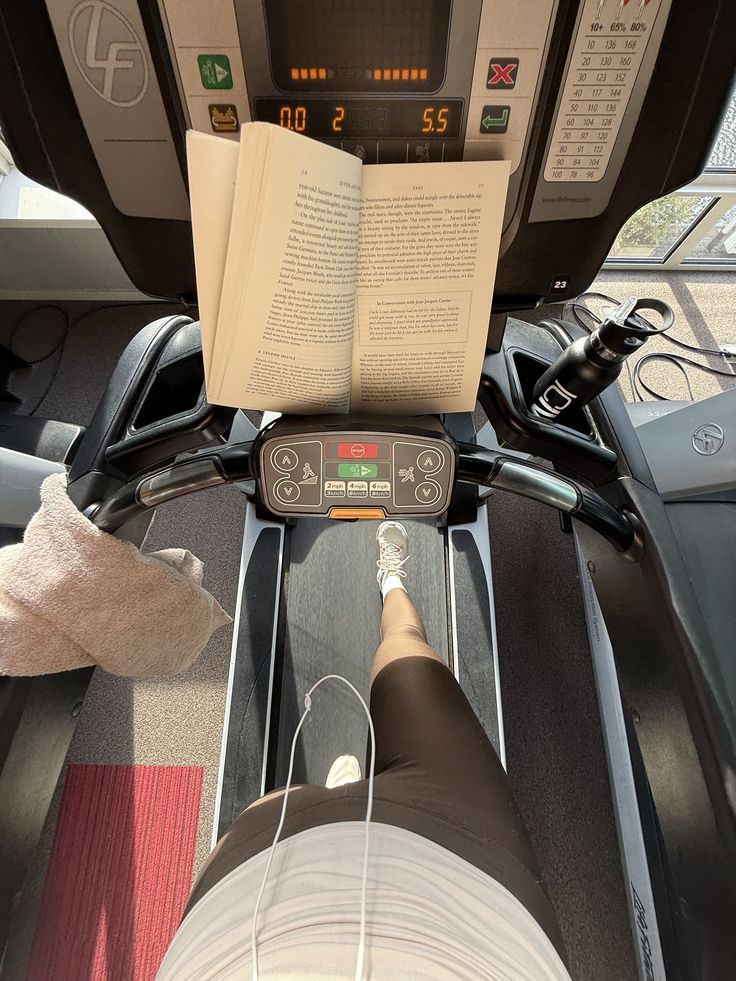
A 15-minute session requires:
- 15 minutes: you can tell me whatever you want, but if you do an honest audit, you always have them
- Very little mental energy: you don’t have to overthink it
If you want to work out early in the morning before going to work, you just move your alarm by 20 minutes and voilà, your session is right there
Result: the 15-minute session, you do almost every time. The 60-minute session, you put off most of the time.
And the session you actually do is worth infinitely more than the one you put off.
It’s not me saying it — it’s the statistics: according to studies on exercise adherence, short routines (under 20 minutes) have far lower drop-out rates than long ones.
How to structure 15 minutes so they make a difference
Not all “15 minutes” are created equal. If you’ve ever tried one of my 15-minute Lymphatic Drainage Pilates sessions, you’ve definitely noticed one thing: it’s intense.
You don’t jump. You don’t run. But you feel it, all right.
It’s condensed.
You don’t waste time, you go straight to the point.
You start, as always, by opening the lymphatic stations (the “Big Six,” as I call them) to prepare the body to drain. 1 minute and a half total.
In the other 13 minutes, you move from one exercise to the next in a steady, rhythmic flow, without taking any breaks.
Slow, conscious movements, coordinated with your breath.
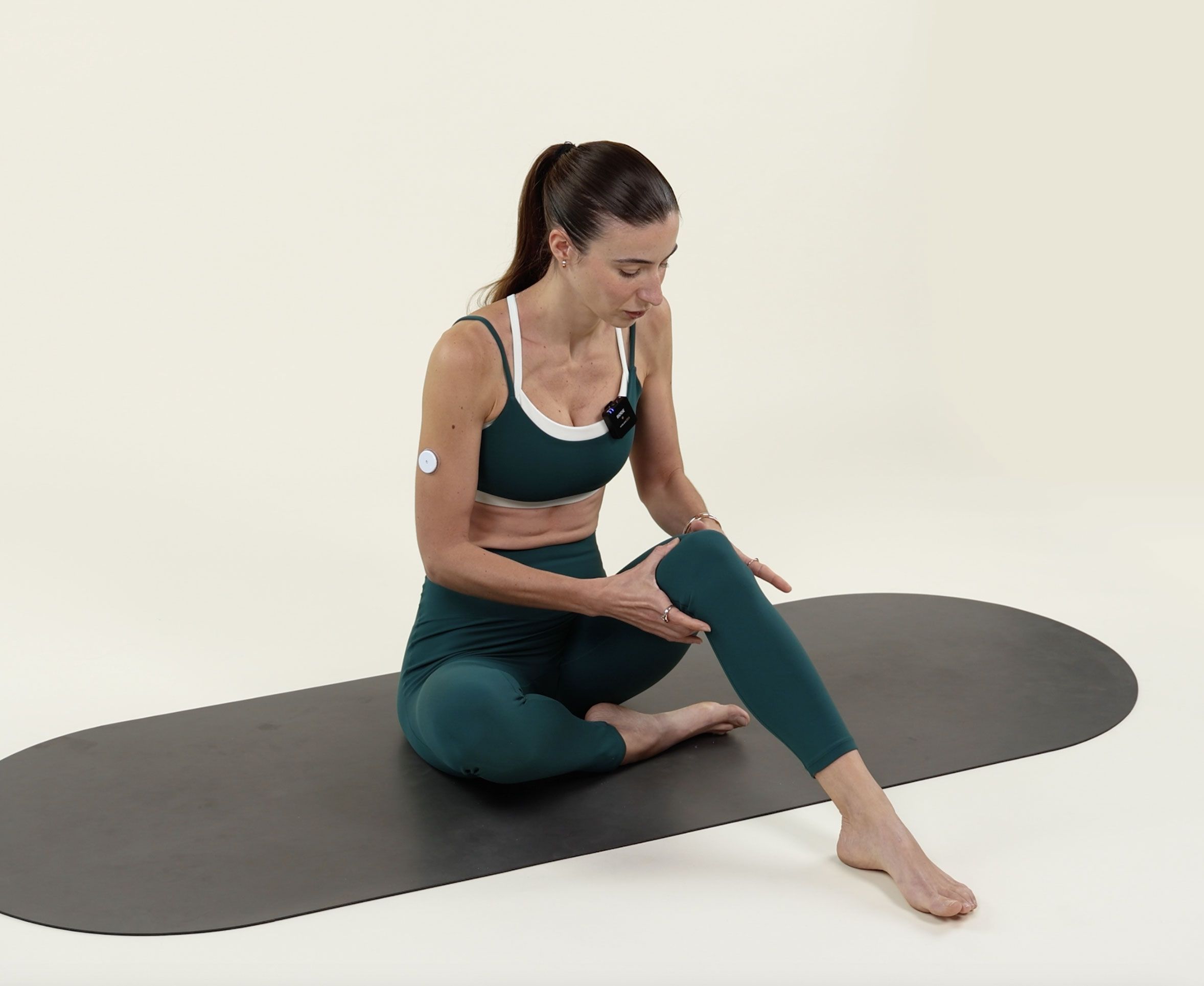
For those 15 minutes, your attention is fully there. It’s just you and your body, nothing else.
The last minute and a half is stretching and deep breathing, to close out the workout and finish the drainage process (the diaphragm, your breathing muscle, is one of the main drivers that move lymph).
Let me tell you a secret.
The 15-minute sessions are the ones I follow myself.
If I had to do the 30-minute ones, I’d basically never work out (only on weekends and on vacation). My 15-minute session every morning? No one takes that away from me. And it makes me feel reborn every single time.
That’s exactly why I created the Lymphatic Drainage Pilates Express Journey. As always, to answer a need of MY own, not yours. Did you know that Lymphatic Drainage Pilates itself was born to answer a need of mine? I talked about it in “Lymphatic Drainage Pilates: what it is, how it works, and the results it really delivers”
Lymphatic Drainage Pilates Express is for women like us, with little time and a busy, demanding life.
What to expect from the Journey
I’m not going to spin you a story or leave you hanging.
This is exactly what you can expect from the Journey when you start it.

Weeks 1-2
- Less bloating in the belly and face in the morning
- Steadier energy throughout the day
- Deeper sleep
- A sense of breathing better
- Less neck tension and tightness across the upper back
Months 2-3
- More tone and less bloating
- Visibly better posture with open shoulders and aligned pelvis
- More even skin with less hormonal acne and fewer breakouts
- Shinier hair with less shedding
- An overall sense of "lightness"
- More confidence in yourself
Around month 6
- Stubborn fat (lower belly, arms, back, saddlebags) starting to budge
- Firmer, smoother skin
It’s not magic, it’s physiology.
You're toning your muscles and giving your lymphatic system exactly what it needs: frequency, regularity, conscious breathing, and joint mobility.
If you’d like to dig deeper into why posture, bloating, and cellulite are the same problem, I wrote “Why your posture isn’t improving (and what that has to do with bloating and cellulite)”
How to get started
In the app you’ll find the Lymphatic Drainage Pilates Express Journey: 15 minutes a day, with a different focus in each session to maximize results (total-body sessions in 15 minutes wouldn’t be equally effective).
More than 7,000 women follow it every day.
Frequently asked questions
If I have 30 minutes, is it better to do one long session or two 15-minute sessions?
If you have 30 minutes several times a week, I’d recommend the Lymphatic Drainage Pilates Journey. If you usually have 15 minutes and occasionally 30, I’d recommend Lymphatic Drainage Pilates Express. When you have more time, you can add a class of your choice.
Can I do the 15 minutes in the morning and call it a day?
Of course, the Journey is designed exactly that way. And I work out in the morning, too.
Does it work even if I’m not consistent?
I won’t lie to you: consistency matters for results. But if you’re not working out at all right now, start with 3-4 sessions of 15 minutes a week. You’ll already see a difference. What matters is that it’s sustainable for you over time.
Do I need to warm up before a 15-minute session?
Lymphatic Drainage Pilates Express sessions include opening the lymphatic stations at the start, plus warm-up exercises. Nothing else needed.
Can I walk during the day or after the session?
Of course, walking is always recommended for the lymphatic system. I try to walk whenever I can during the day, too.
In short
For the lymphatic system (and therefore for bloating, water retention, and chronic inflammation), frequency beats duration.
Always. 15 minutes a day change your body more than an hour twice a week. It’s not a marketing promise — it’s simply how physiology works.
And the best part is that you can always find 15 minutes a day. Even on days that seem impossible.
Start today. One single 15-minute session. And see how you feel.
Let me know!
