The 6 lymphatic drainage points to open every morning in 2 minutes
You know that feeling of heavy legs in the evening, a bloated belly even when you haven’t eaten much, a tiredness that won’t lift even after 7 hours of sleep?
More than likely, your lymphatic system could use a little support.
Nothing scary, don’t worry.
The good news is that you don’t need fancy equipment. You don’t need a vibration plate. You don’t need to see a massage therapist.
It’s much simpler than you might think.
All it takes is 2 minutes. You can do it every morning after you brush your teeth.
It’s called DIY lymphatic drainage. In my method, The Original Lymphatic Drainage Pilates (Pilates Linfodrenante®), it’s the very first thing we do at the beginning of every session.
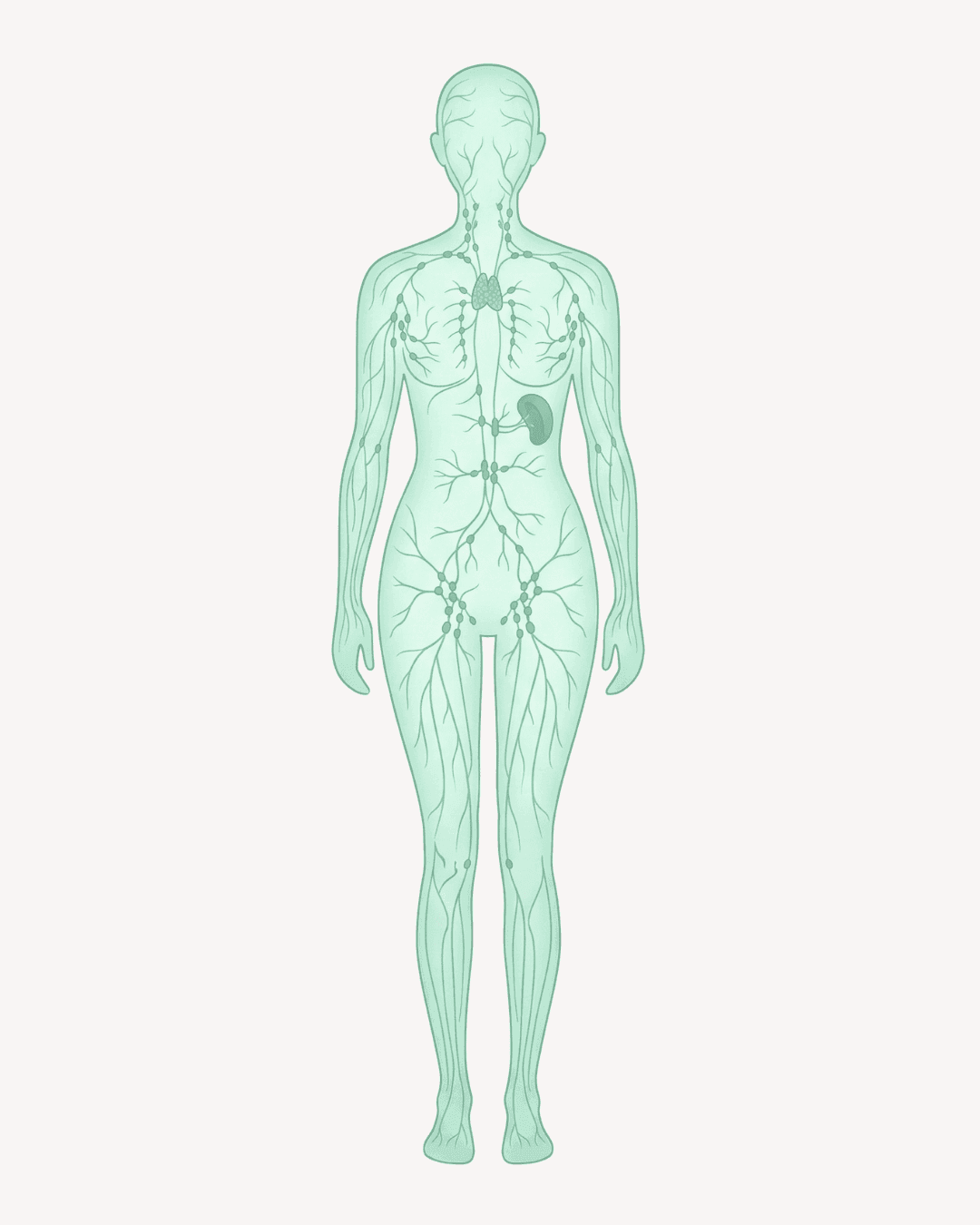
We stimulate what I call the “Big Six”: the 6 main lymphatic stations in the body. Stimulating them (or, as I like to say, “opening” them) puts the body into drainage mode.
In this article I’ll explain what they are, how to stimulate them, and why we open them in this specific order.
What the Big Six are (and why 2 minutes is enough)
They’re the 6 main lymphatic stations in the body:
- at the center of the abdomen
- above the collarbones
- below the ears
- under the armpits
- at the sides of the groin
- behind the knees.
But what does “lymphatic station” actually mean? And what do they do?
They’re the points where lymph collects and gets filtered before it heads toward its final exit point, the left subclavian vein, near the collarbone.
In Lymphatic Drainage Pilates we open them at the start of every session.
It’s not a generic warm-up. It’s a precise preparation that puts the body into drainage mode before the exercises even begin.
That way, when we move through the exercises, the body is ready to receive the lymph.
Think of the lymphatic stations like traffic jams: if you don’t clear the jam, the little car (the lymph, in this case) can’t continue on its route toward its final destination (the left subclavian vein). Clear the jam, and the little car can travel freely toward its destination.
The good thing is that you can open the Big Six on your own and literally whenever you want.
Let’s say you’re in a hurry and you don’t have time for a full Lymphatic Drainage Pilates session… Just open your lymphatic stations! It won’t be as effective as a full session (of course!), but it’s still something to support your lymphatic system.
Or simply when you feel a little bloated and you feel you need some “extra love”, you can stimulate them and enjoy the benefits.
And it’s a really relaxing practice, too!
You can do it dry (without cream) or with some oil or moisturizer. Your choice!
How we open them in Lymphatic Drainage Pilates
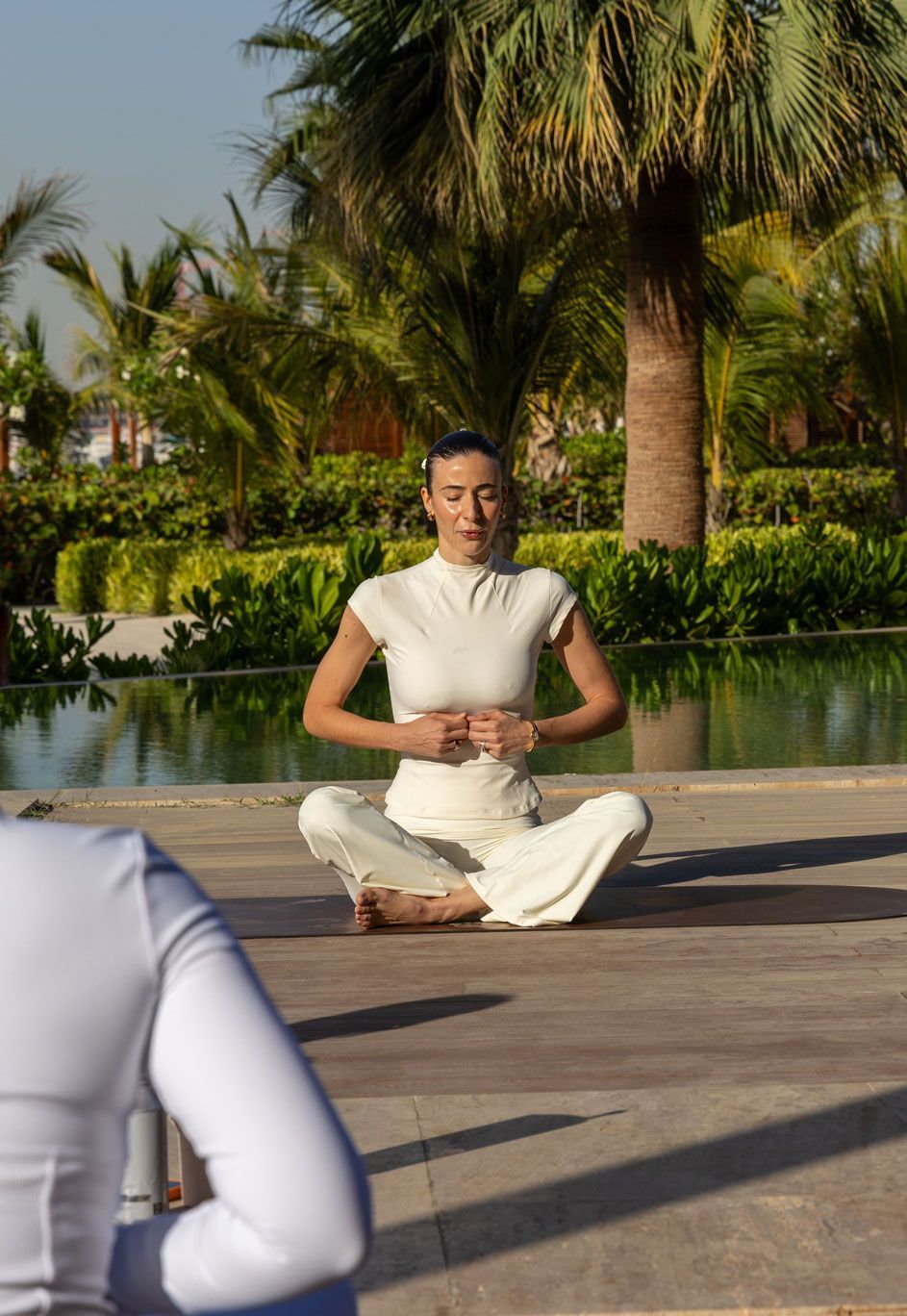
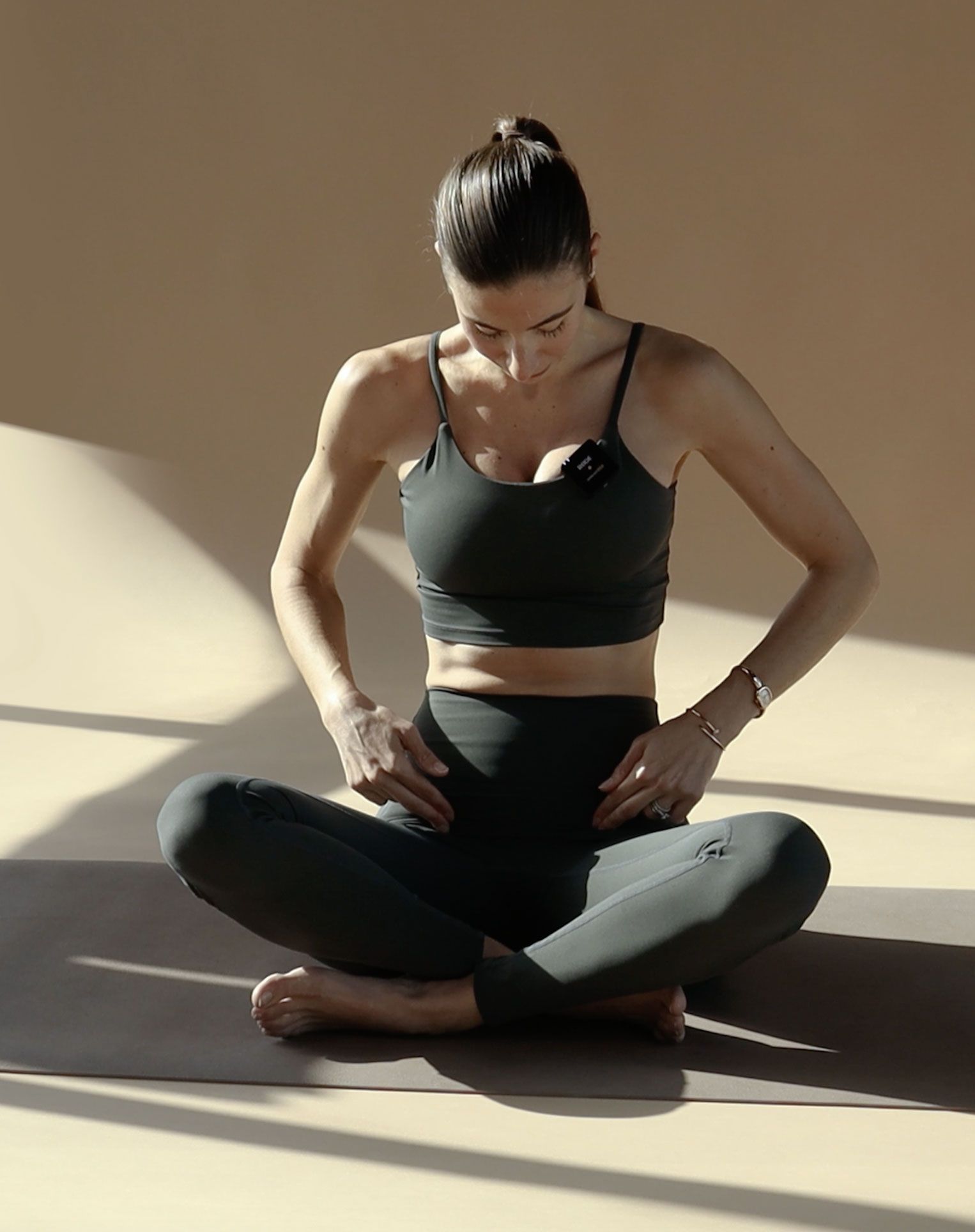
We always begin by bringing our hands to the belly, just below the rib cage.
We press gently and close our eyes, inhaling through the nose and exhaling through the mouth.
In this opening phase, breathing is essential: try to breathe as deeply as you possibly can.
Aim to inhale for 5 seconds and exhale for 10.
The diaphragm (the breathing muscle, located just below the rib cage) is the main “pump” of the lymphatic system, and breathing deeply is exactly what helps stimulate it.
That’s precisely why I love to start from the diaphragm: it’s the center of the body and the “best” pump the lymphatic system has. This is how we prepare the body for the lymph.
Then we move on to the other lymphatic stations. This is the order I love to follow:
Ears → collarbones → armpits → groin → knees
That way, when the lymph from the legs starts to travel up, it finds a central pump already active (the diaphragm), the final exit point already open (the collarbones), and all the stations in between already mobilized.
No traffic jam. No blockage. The lymph can flow freely.
The 6 lymphatic stations, one by one
For each station I’ll tell you: where it is, why it matters, and how to open it.

Cisterna chyli + diaphragmatic breathing
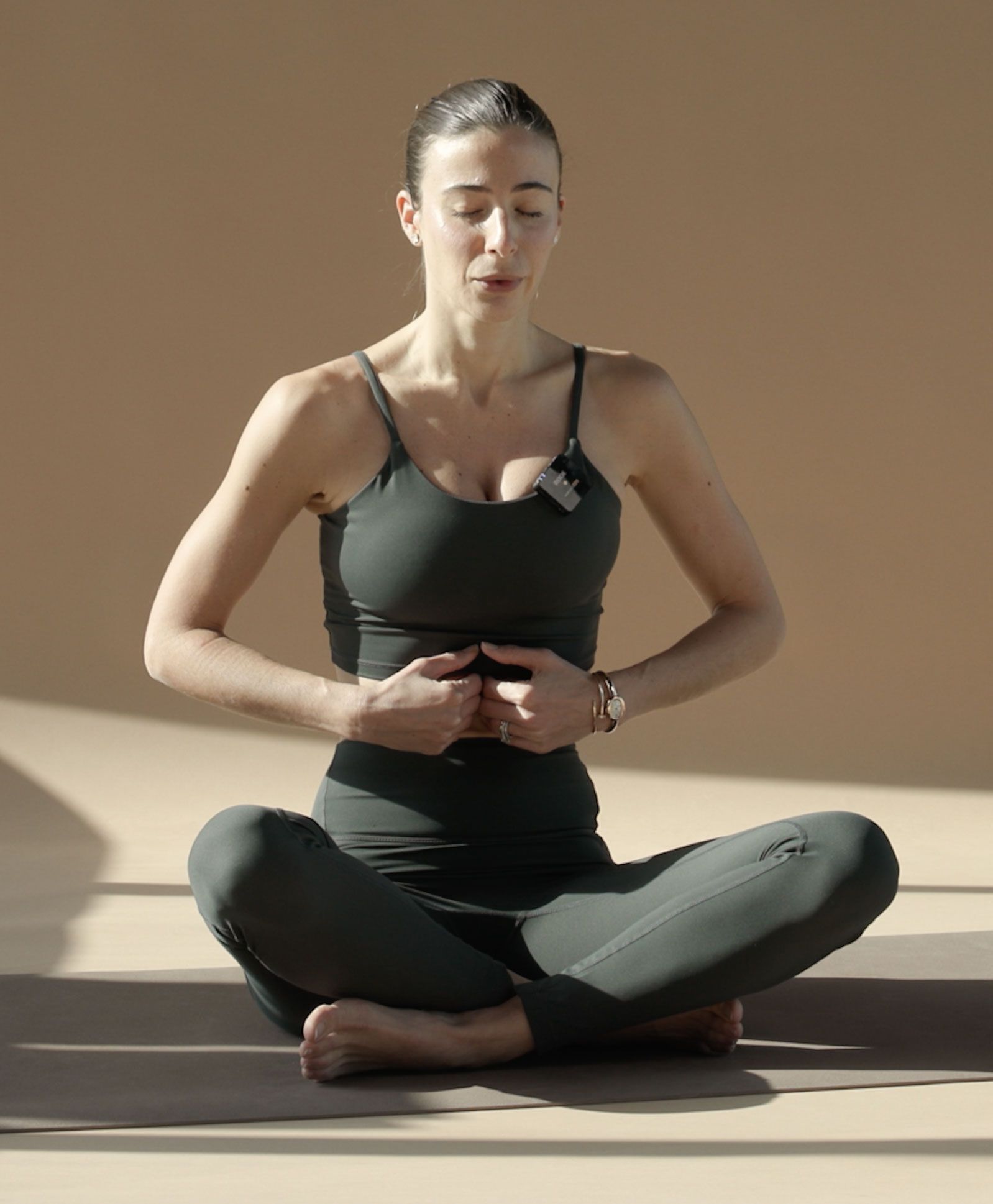
As we said earlier, we begin with our hands on the abdomen, pressing on a point called the “cisterna chyli.”
- Where it is: at the level of the first lumbar vertebrae, right behind the diaphragm. To find the exact spot, imagine a line between your sternum (the point where your ribs meet) and your navel. It’s right in the middle.
- Why it’s first: the cisterna chyli is the collection point for the lymph arriving from the legs and the lower belly. Practically all the lymph from the lower half of your body converges here. Now you can understand why it’s so important!
- What to do: place your hands on your belly and gently press. Close your eyes. Breathe slowly: inhale through your nose, and exhale through your mouth. If you can, start by inhaling for 5 seconds and exhaling for 10.

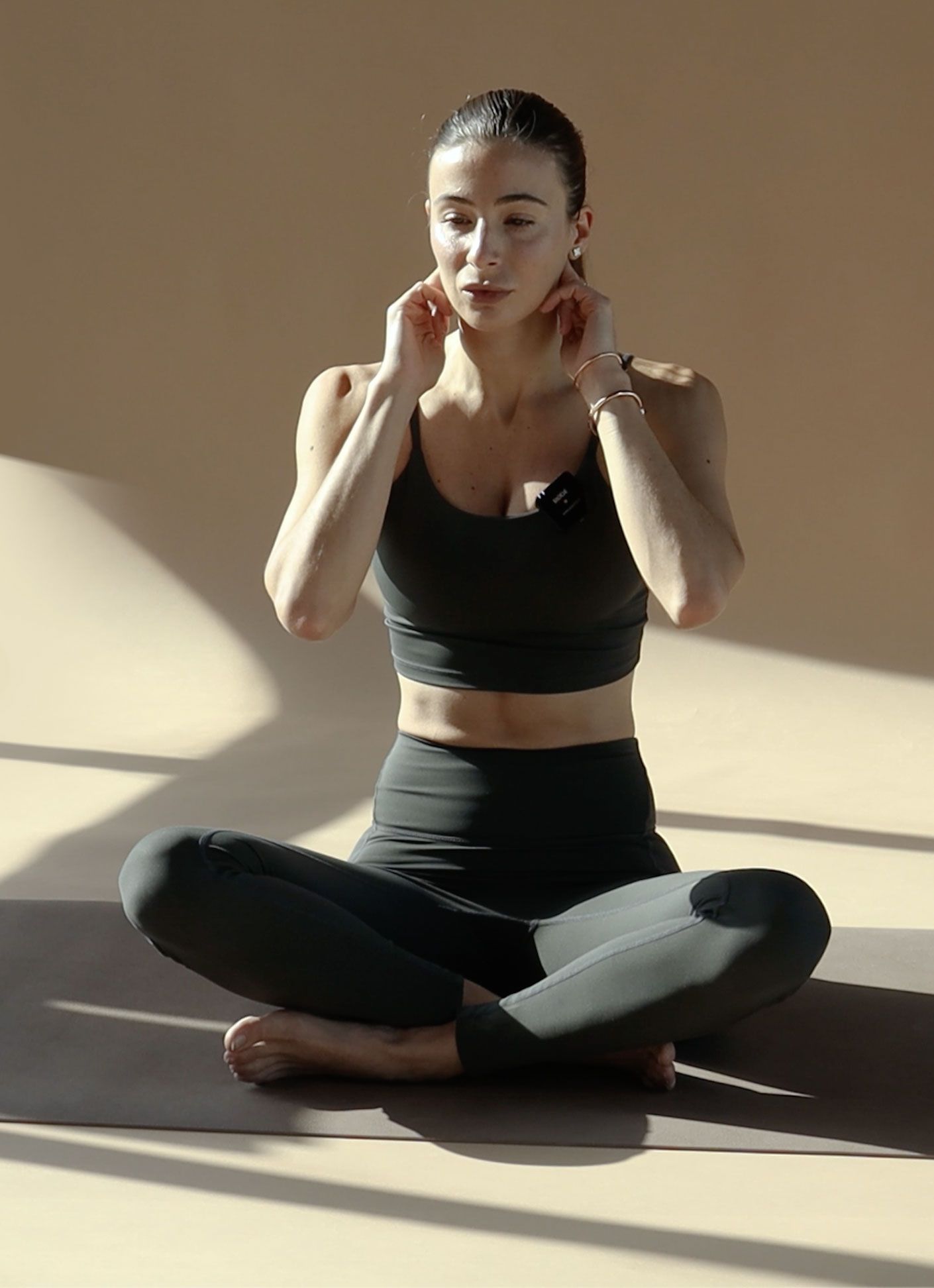
Lymph nodes below the ears
- Where they are: just behind the ears.
- Why they matter: they drain the head, the face, and the upper neck. Opening them clears the way for lymph to travel from the head downward.
- What to do: with your fingertips, gently tap the skin or draw small circles behind the earlobe. Don’t press too hard: lymph flows just 1-2 millimeters below the skin. If you press too hard, the pressure blocks the lymph (and you get the opposite of what you’re after).
Lymph nodes above the collarbones: the most important station
- Where they are: in the hollows just above the collarbones
- Why it’s the most important station: this is the final exit point of the entire lymphatic system. From here the lymph enters the bloodstream to finalize its course, and be fully removed from the body.
- Here’s how it works: all the lymph your body collects rises through a channel called the thoracic duct (the largest lymphatic channel in the body). This channel empties into the left subclavian vein, right below the left collarbone. Here the lymph mixes with the blood and re-enters circulation.
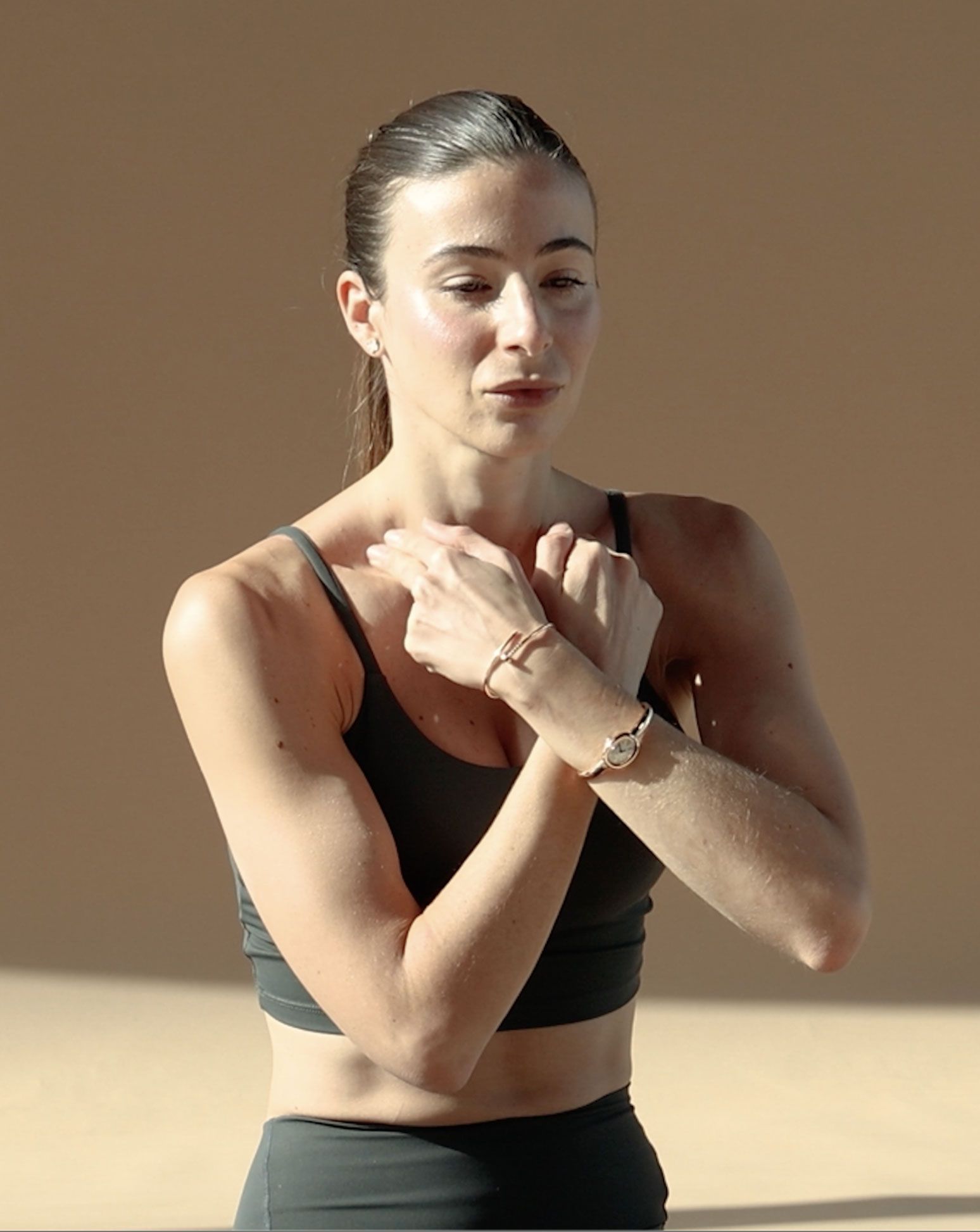
In traditional drainage, the stimulation of the Big Six generally begins here. In Lymphatic Drainage Pilates, we reach it after having already activated the central pump (the diaphragm) through breathing. Thus, when the lymph reaches this point, the channel is already mobile and ready to receive it.
- What to do: gently massage or tap the hollows above the collarbone.
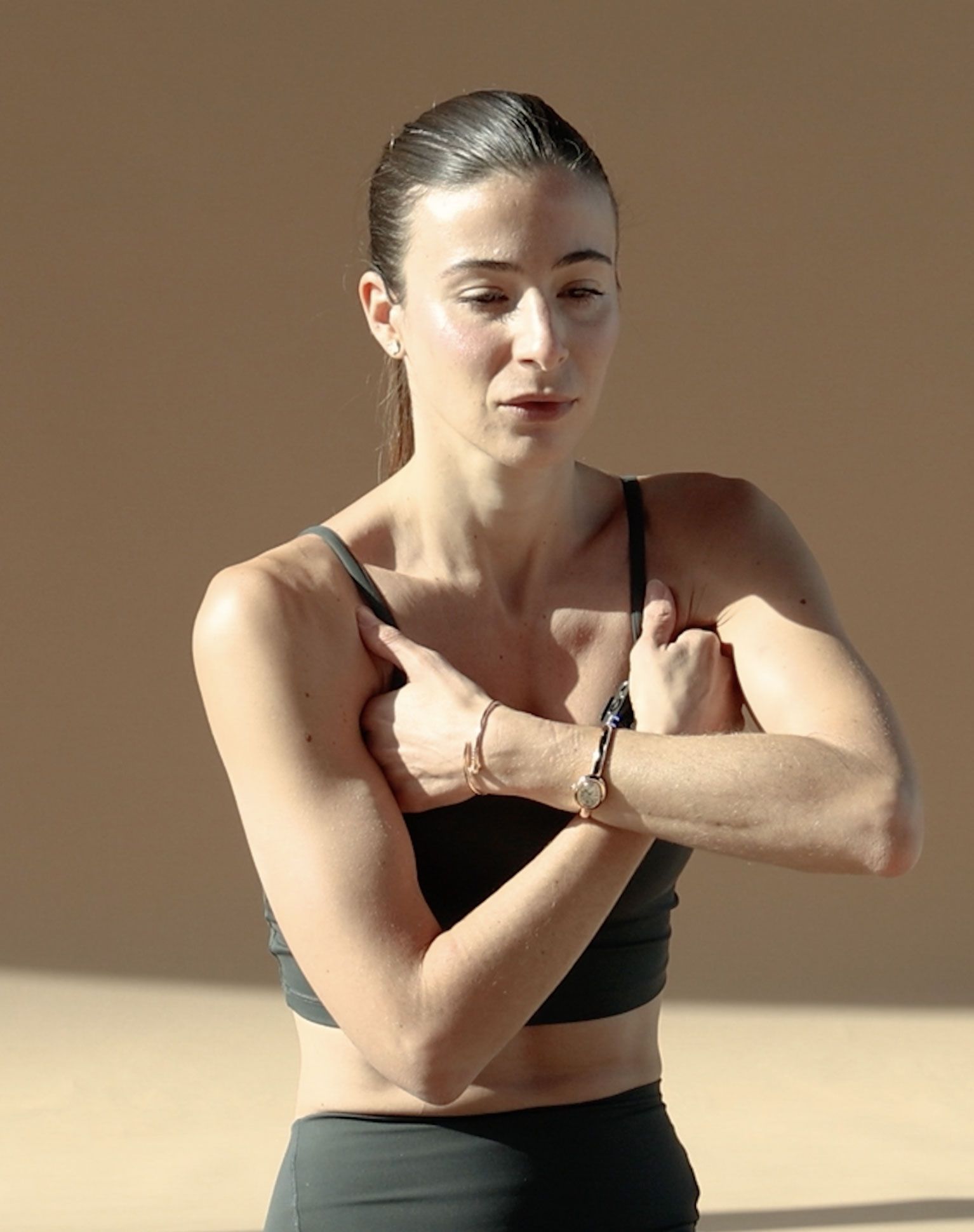
Lymph nodes under the armpits
- Where they are: in the armpit hollows.
- Why they matter: they drain the upper body: the arms, the chest, the breasts, the upper back, the upper belly. Basically everything above the navel.
- What to do: bring your hand under the opposite armpit and gently tap or draw small circles.

Inguinal lymph nodes
- Where they are: at the sides of the groin, in the crease between the thigh and the pelvis.
- Why they matter: these lymph nodes drain the lymph coming from the legs, the glutes, and the lower belly before it travels up toward the thoracic duct.
- What to do: gently massage or tap along both sides of the groin, moving both inward (toward the pubic area) and outward (toward the inner thigh). It’s a fairly wide area, so move upward and downward as well.

Popliteal lymph nodes
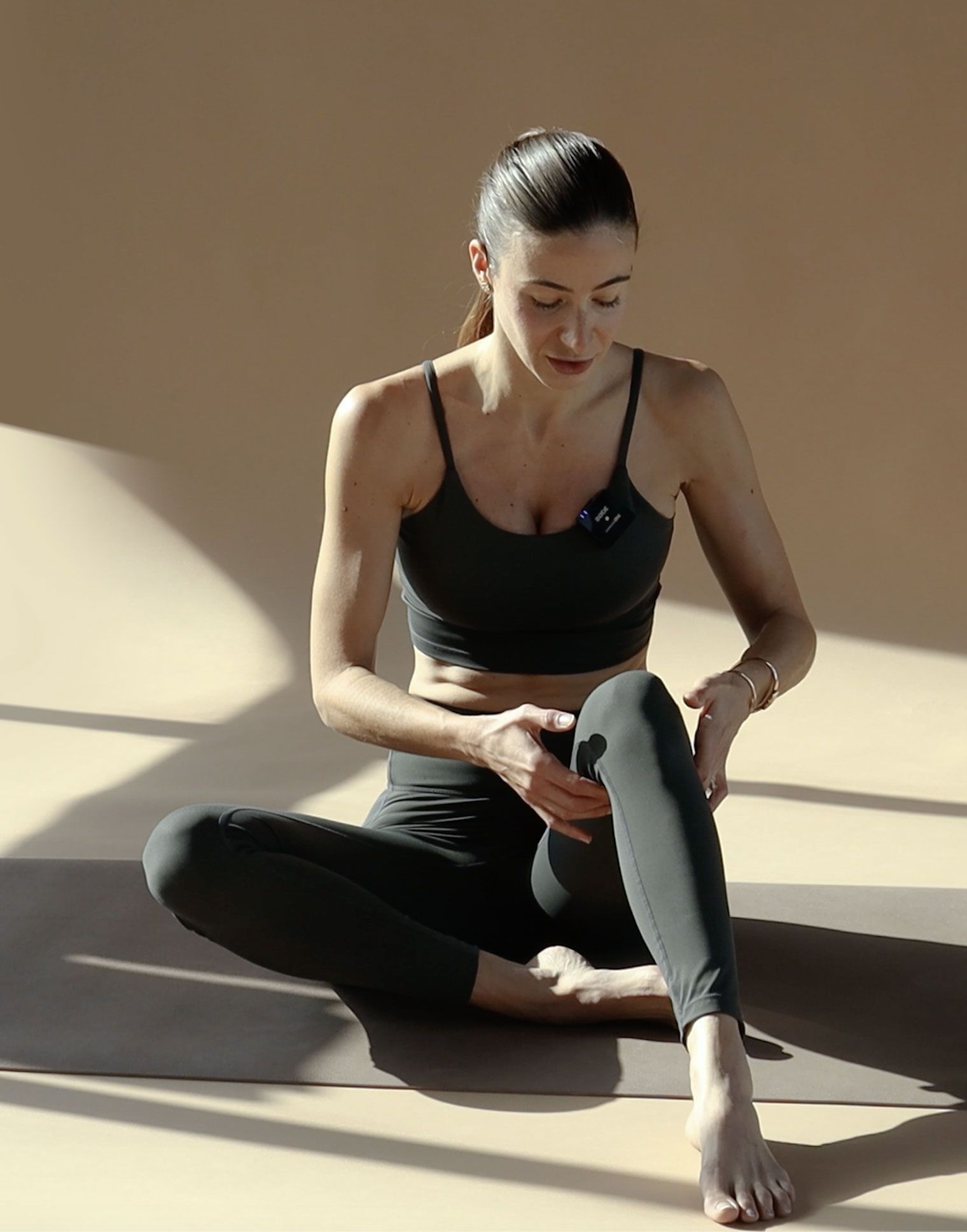
- Where they are: behind the knees (the popliteal lymph nodes)
- Why they matter: they’re the last lymphatic station. The lymph rising from the feet and legs won’t meet any resistance, because the whole system above is already open and ready to receive it.
- What to do: draw small circles behind the knees
How to fit the Big Six into your routine
There’s no strict rule.
Some days you might spend 2 minutes, other days 10. The exact length doesn’t matter.
As always with the lymphatic system, doing it often matters more than doing it for a long time. Better 2 minutes every day than 10 minutes once a week.

When to open them
Ideally in the morning, as soon as you wake up, before or after your shower. During the night, the lymphatic system slows down, because your body isn’t moving. Opening the Big Six in the morning lets the body wake the lymphatic system up.
Alternatively: in the evening, before bed, to clear out what the body has accumulated over the day. Or on stressful days, or when you have very little time to work out.
How often
Ideally every day. Even just a few minutes a day make a difference within 3-4 weeks. This isn’t a “challenge” to do for 30 days and then drop. It’s a daily practice, a routine to fold into your life for good.
Think of it like brushing your teeth, but for your lymphatic system.
Where
Literally wherever you want. From bed, from the couch, before or after your shower. No mat needed, no need to change clothes
Frequently asked questions
Can I open the Big Six every day?
Perfect! Lymph moves every day, and every day it slows down (especially if you sit a lot). A daily routine of a couple of minutes beats one long session once a week.
What happens if I don’t follow the order?
It’s not a big deal, but the effectiveness drops. The order isn’t arbitrary: it starts from the center and expands toward the extremities, to make sure that once the lymph is mobilized, it always finds a clear road.
I’ve been told I should start from the bottom and work upward; is that true?
In theory it’s true that the lymph in the legs needs to rise upward. But to let it do that, we first have to open the upper stations, otherwise it hits the traffic jam and can’t move on. Remember that lymph is like a car: if the road is blocked, it can’t get through. The best approach is to start with diaphragmatic breathing, to set the diaphragm in motion (one of the main natural pumps of the lymphatic system), and to open the final station above the collarbones. The legs come last!
Should the massage be firm or light?
Very light. Lymph flows just 1-2 millimeters below the skin. Firm pressure blocks it. Use the lightest possible touch.
How long does it take to see results?
A feeling of being less bloated and lighter often shows up the same day, especially in the morning. More structural changes (less visible cellulite, less swollen legs at the end of the day, a flatter belly when you wake up) appear within 3-4 weeks of a daily routine.
Can I do the Big Six during my period or in pregnancy?
During your period: absolutely yes! It might help reduce pre-menstrual water retention. In pregnancy: talk to your gynecologist first. Generally there shouldn’t be any contraindications, but every pregnancy is different, and it’s always best to check in with your own doctor (not just for the Big Six, but for any question at all!).
I’ve been opening the Big Six for months, but I’m not seeing results when it comes to bloating
Opening the lymphatic stations is great support for your lymphatic system and for your body in general, but it’s not a miracle. Are you working out? Are you taking care of your nutrition? Have you cut back on processed foods and alcohol? Are you walking enough?
Training, mobility, natural eating, hydration... they’re all ways to support our lymphatic system and to feel good and free of bloating. Opening the Big Six without taking care of the rest is like putting a Band-Aid on a bullet wound.
Start today (even if it’s just for 2 minutes)
There’s no need to wait for a special occasion or the perfect moment.
Tomorrow morning, before you get up, take 2 minutes for yourself.
Hands on your belly, eyes closed, breathe deeply. From there, follow the order.
And if you’d like to do them with me guiding you step by step, remember that in the app we open the Big Six before every Lymphatic Drainage Pilates session.
