Why your legs feel heavy in the evening (and how to release them in 10 minutes)
You know that feeling at the end of the day?
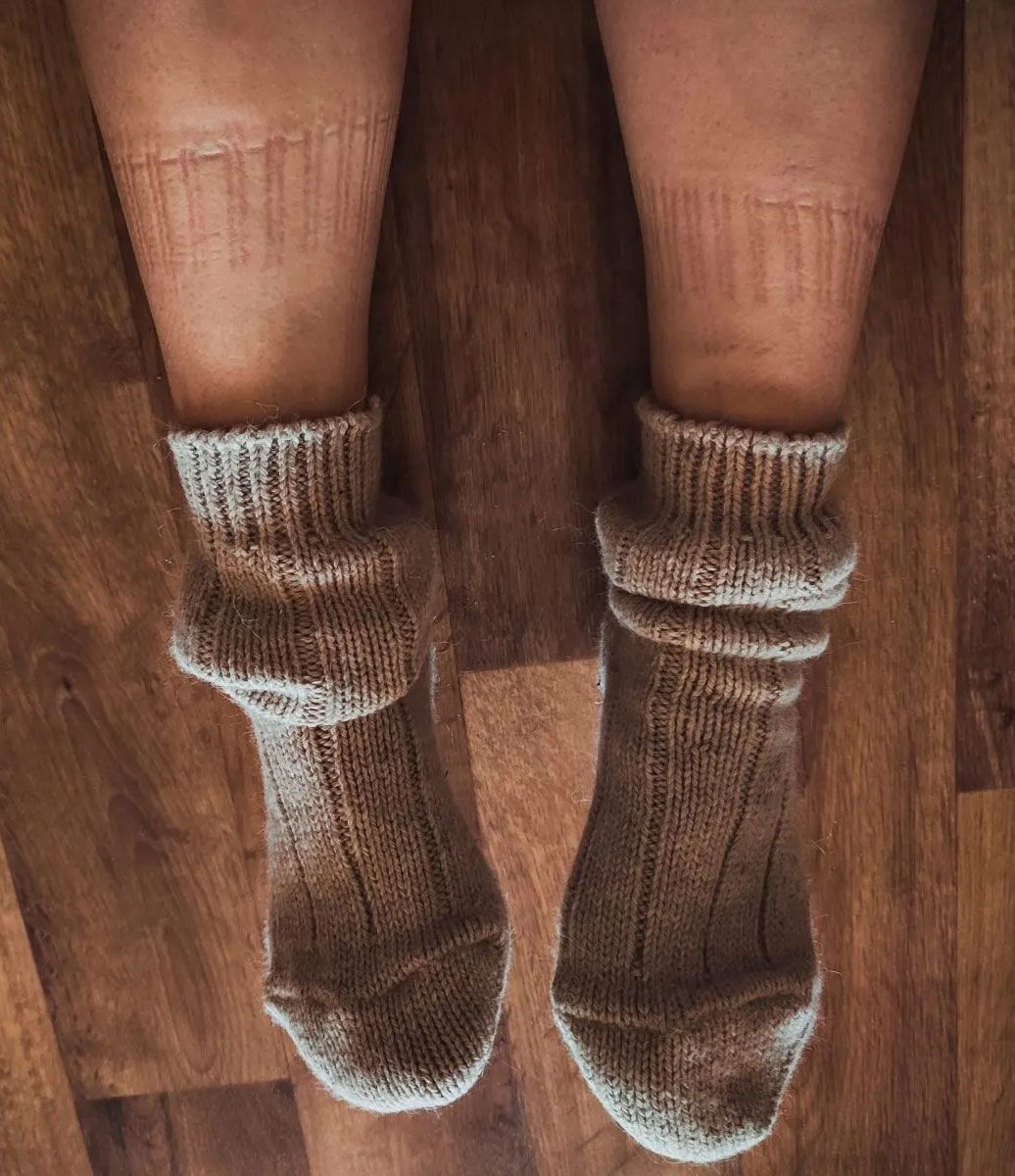
Heavy legs. Swollen feet. The mark your socks leave on your ankles when you take them off.
And that sense of stagnation that gets worse with the heat, with tiredness, with the change of seasons.
It’s not in your head. It’s physiology.
In this article I’ll explain why it happens, what your body is doing (or not doing), and what you can do tonight before bed to feel lighter right away.
All you need is 10 minutes.
Why legs get heavy in the evening
During the day, sitting or standing for hours works against your body.
Gravity makes fluid pool downward, and venous return (the journey of blood rising from the legs back up to the heart) slows down. Along with it, the lymphatic system slows down too; that’s the system in charge of draining excess fluid from the tissues.
When these two systems slow down together, the heaviness you feel in the evening is the result.
Let’s look at exactly what happens.

Venous return slows down
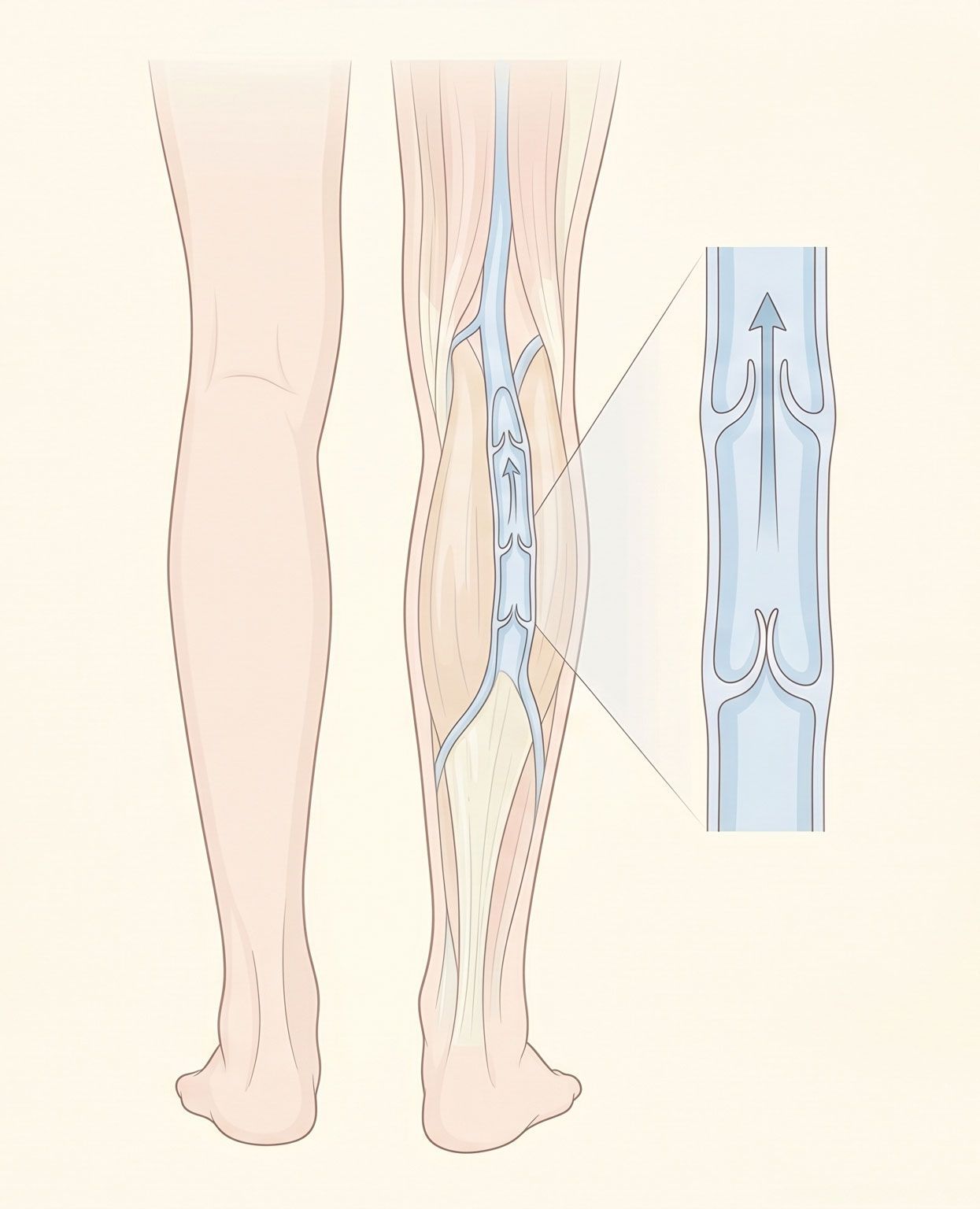
The veins in your legs have a system of valves. Picture them as small one-way “doors” that open and close to push blood toward the heart against gravity.
When we stay still for a long time (sitting at a desk, standing at a counter, in the car), the valves struggle, the muscles don’t contract, and blood tends to pool in the lower limbs.
The result: fluid builds up, your legs swell, and you feel heaviness.

The lymphatic system struggles to do its job
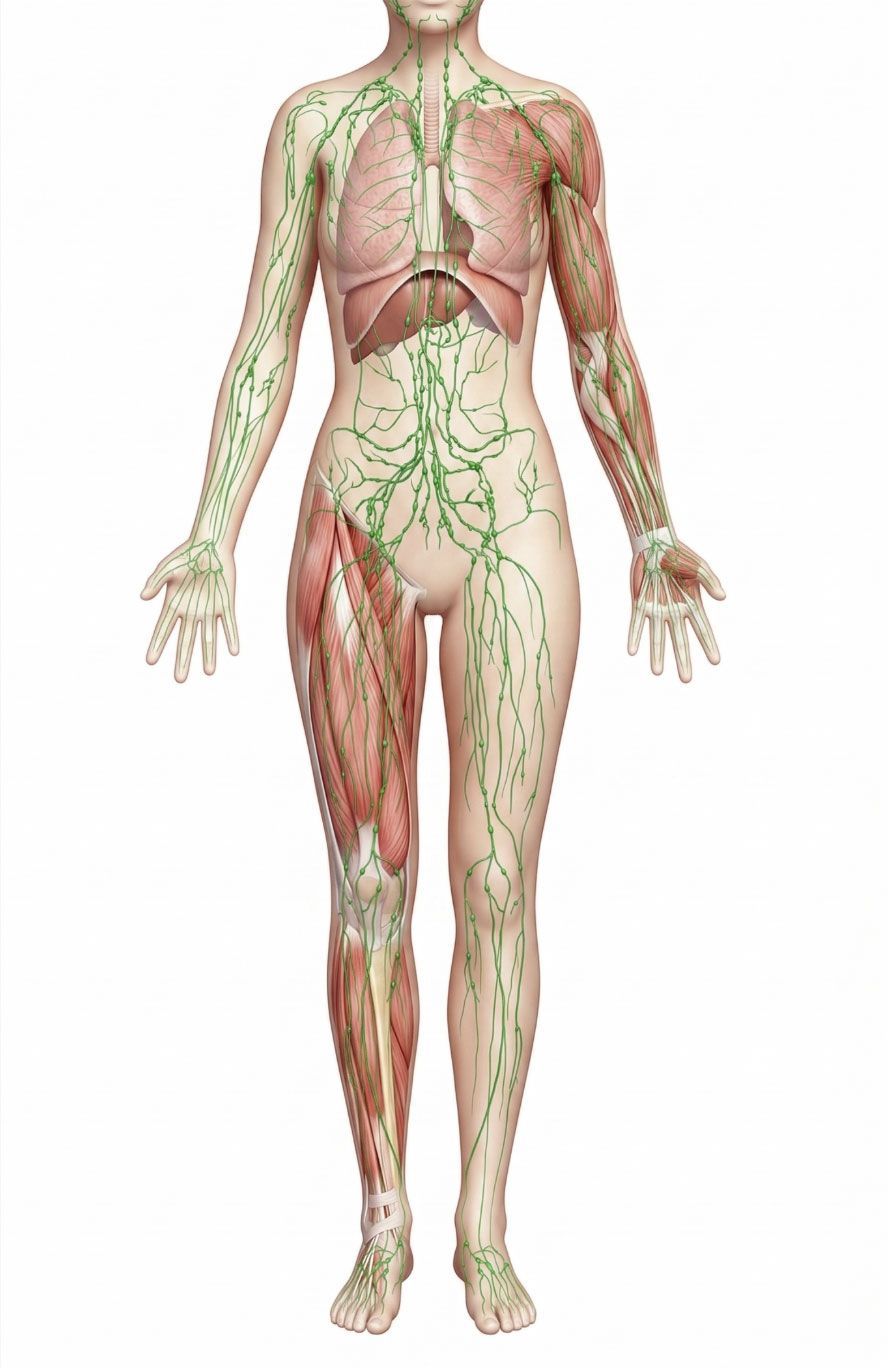
The lymphatic system doesn’t have a pump of its own like the heart. It depends solely and exclusively on two things: the movement of your muscles and your breathing.
So picture it: after a day spent sitting or standing, with no movement and with short, shallow breathing (as so often happens when we’re stressed or focused), how is the lymphatic system supposed to do its job?
It struggles. And the fluid it should be draining stays right where it is.

Why it happens to women more often
If you feel like you’re always bloated while your boyfriend doesn’t seem to have any of these problems (and he’s certainly no Olympic athlete), you’re not imagining it.
Women are more prone to fluid stagnation in the lower limbs. Lucky us, right?
But let me explain why.
I’ve always found that KNOWING why something happens helps me accept it more easily. At least I know I’m not wrong, and that yes, there’s a reason (or several!).
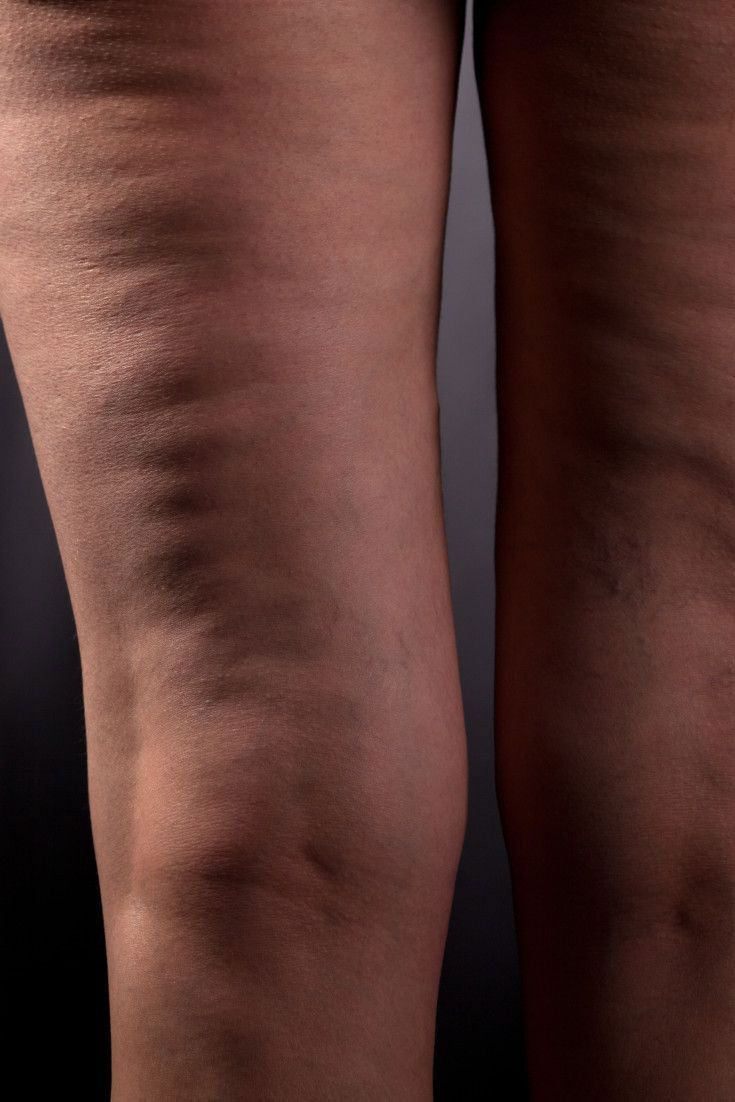

Hormones and the menstrual cycle
Your hormones, estrogen and progesterone, are never constant. They vary throughout the month, following the phases of your cycle.
In the phase before your period (the luteal phase, roughly the 10-14 days before menstruation), progesterone rises and affects both the permeability of your blood vessels and fluid retention.
That’s why in those days your legs and belly feel more bloated than usual. It’s female hormonal physiology; it’s not your fault.
Tissue structure
Female connective tissue, the body’s “support network” that holds together skin, muscles, and organs, is “looser” and structured differently from men’s. The fibers run parallel instead of criss-crossed.
This means it holds fluid and fat less effectively. It’s also one of the reasons cellulite affects mainly women (the lucky ones, as usual 🤣)
Everyday life
Sedentary jobs or jobs spent constantly on your feet, crossed legs, heels, and tight clothing all further slow venous and lymphatic return, each in its own way.
- Sedentary jobs or standing jobs: they’re opposites, but the situation for your legs is the same. The muscles of the feet and calves don’t work properly, and gravity pushes lymph and blood downward.
- Heels: they alter the posture of the foot and block the natural movement of the ankle, which is one of the main pumps for return flow from the legs.
- Tight clothing (skinny jeans, for example): it compresses the lymphatic vessels, which run superficially, just 1-2 millimeters below the skin. Even minimal pressure is enough to block them.
- Crossed legs: sitting with your legs crossed for long periods “squashes” the lymphatic stations behind the knee, preventing lymph and blood from rising upward.
Nothing “wrong” here. It’s simply how the female body is built.
But once you know it, you can learn to help it.
It’s not a cosmetic issue
I want to pause on this for a moment, because I think it matters.
Heavy legs are not a aesthetic issue.
I know it’s not pleasant to have them, and I know the aesthetic side is what we tend to focus on most.
But heavy legs are your body’s way of telling you it has lost its balance and it’s fatigued.
The 3 allies of light legs
So how do you help venous and lymphatic return?
With movement. By setting your muscles in motion, you push blood and lymph upward.
But not all movement is equal; in fact, certain movements actually make things worse.
The three main things to work on to improve circulation are: inversion, deep breathing, and specific movement.
Let me walk you through them one by one.
the inversion: legs up the wall
When you put your legs on a chair or up against a wall, or simply raise your feet higher than your pelvis, you reverse the work of gravity.
The fluid that pooled in your legs throughout the day rises naturally back toward the heart. You don’t have to make any effort: let gravity do the work in reverse.
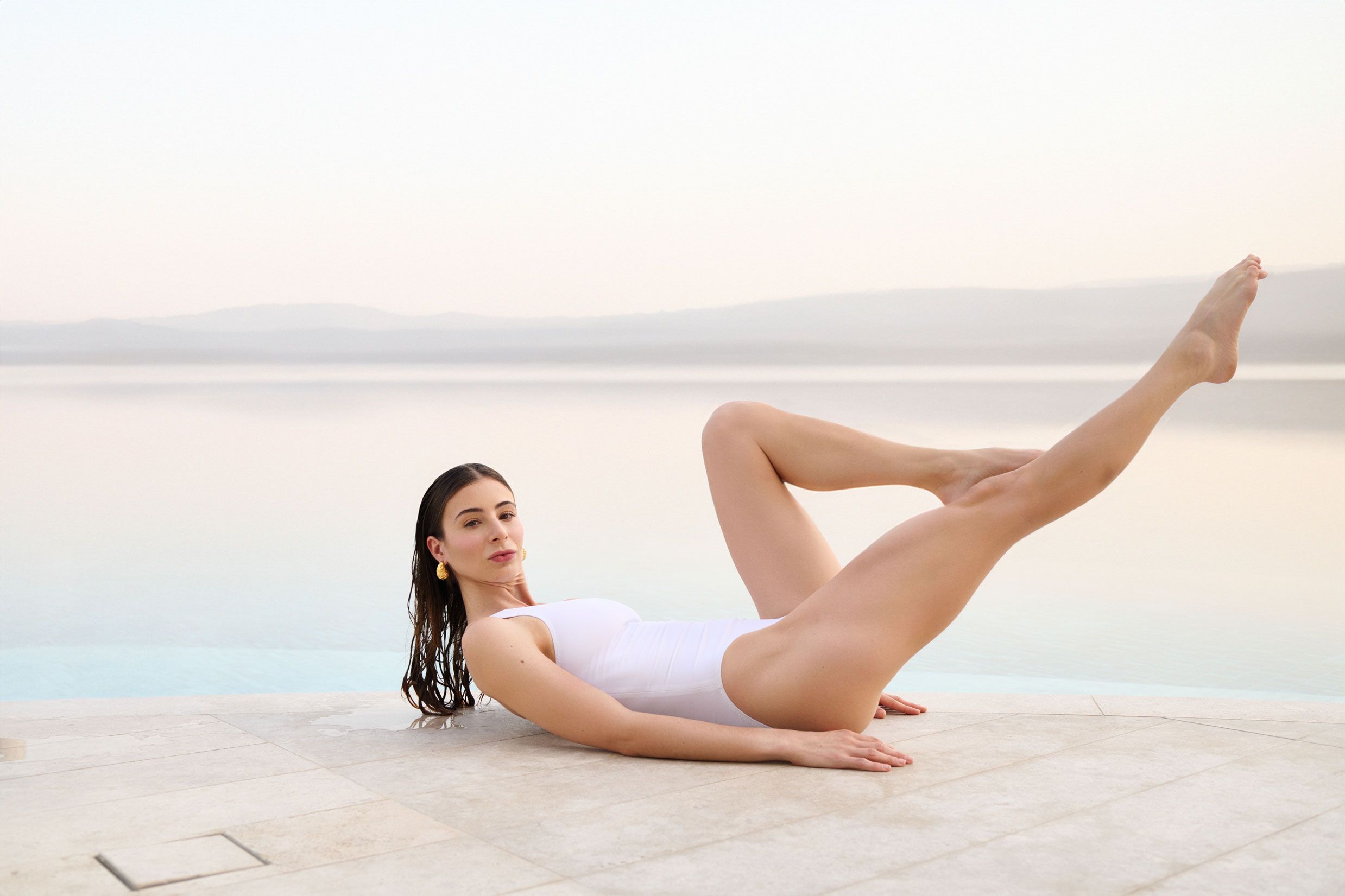
How to do it: lie on your back near a wall, legs extended up the wall, glutes as close to the wall as possible, arms relaxed by your sides. Stay there for 5-10 minutes. If you don’t have a free wall, resting your legs on a chair or the sofa works just fine.
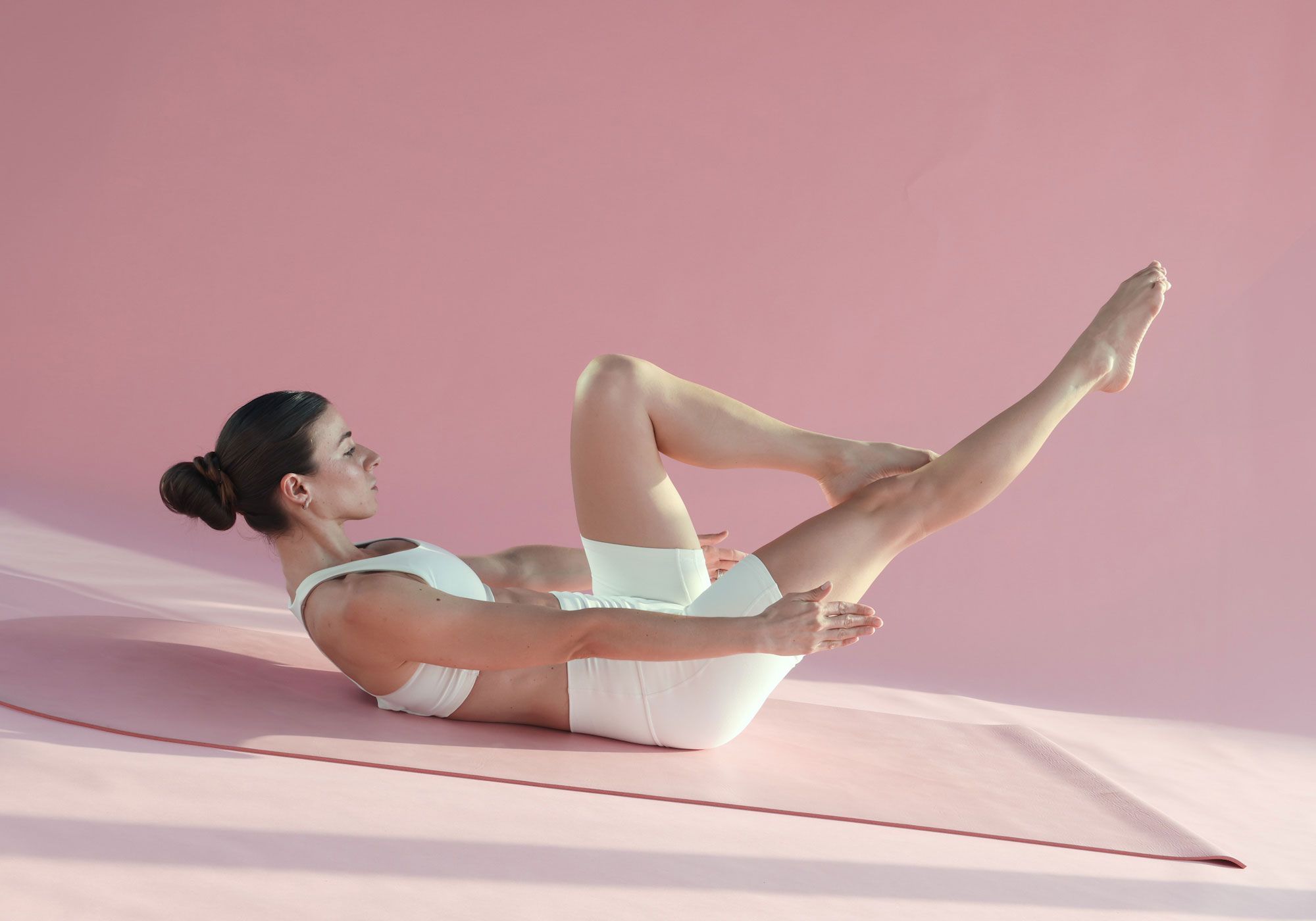
We use this position, with the feet higher than the pelvis, in Pilates Linfodrenante® exercises too, pairing the inversion with specific movements to unblock the lymphatic stations at the knees, groin, and ankles. Have you ever noticed the pose on the Pilates Linfodrenante® cover? There you go. That’s an inversion (and it’s no coincidence!).
Deep breathing
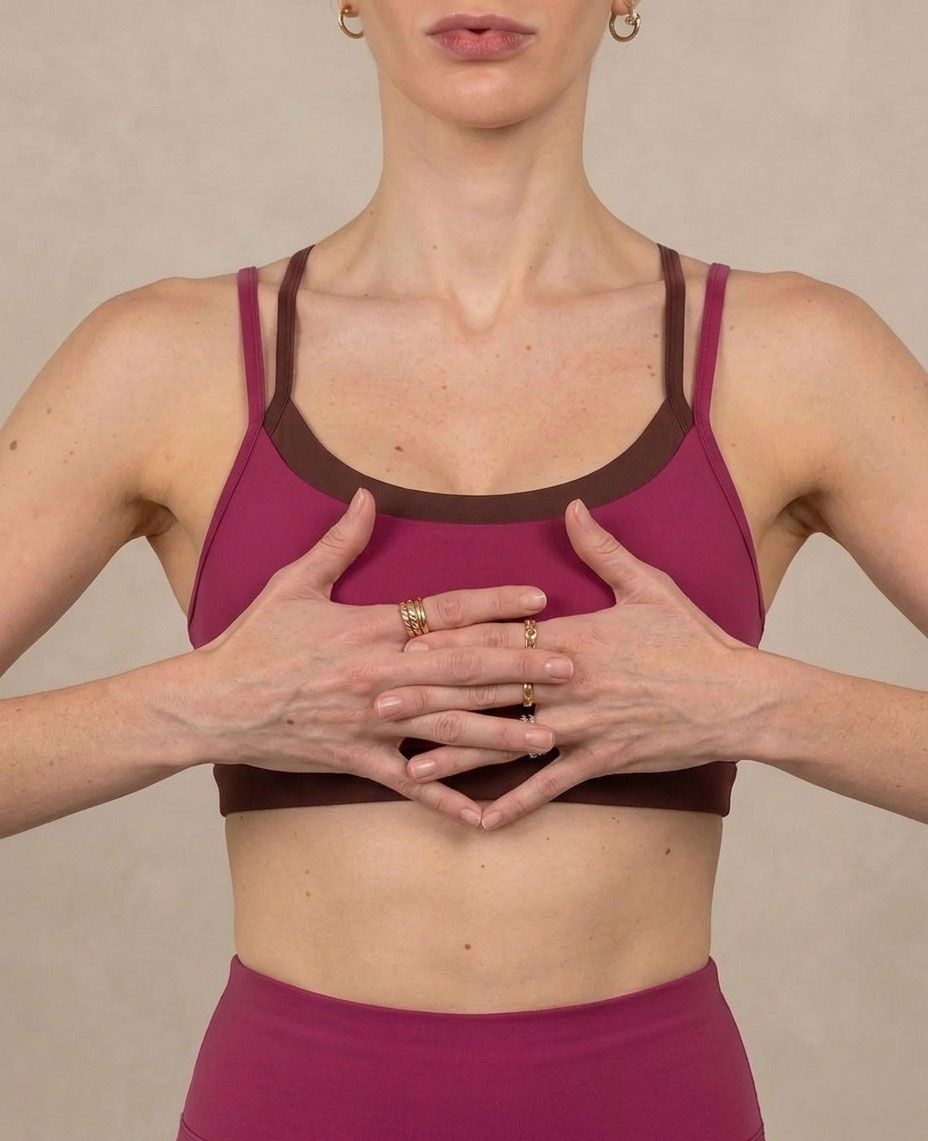
When you breathe deeply and slowly, with a long inhale and an even longer exhale, you create an internal pump that activates lymphatic flow.
The diaphragm (the muscle that contracts when you breathe deeply) is the main pump of the lymphatic system. The deeper you breathe, the more you activate it. Imagine the diaphragm giving your lymphatic vessels a massage, rhythmically moving the lymph along.
How to do it: while you’re in the inversion position, inhale through your nose for 5 seconds, exhale through your mouth for 10 seconds (or even longer, if you can). Keep going for a few minutes. The long exhale is the key: that’s when the diaphragm releases and makes the lymph “pump.”
Specific movement of the ankles and feet
When you add small movements, like bending your knees and bringing them to your chest, pointing and flexing your feet, or rotating your ankles, you stimulate the muscles that act as your venous and lymphatic pumps.
These muscles are your “second hearts”: every time they contract, they push blood and lymph upward.
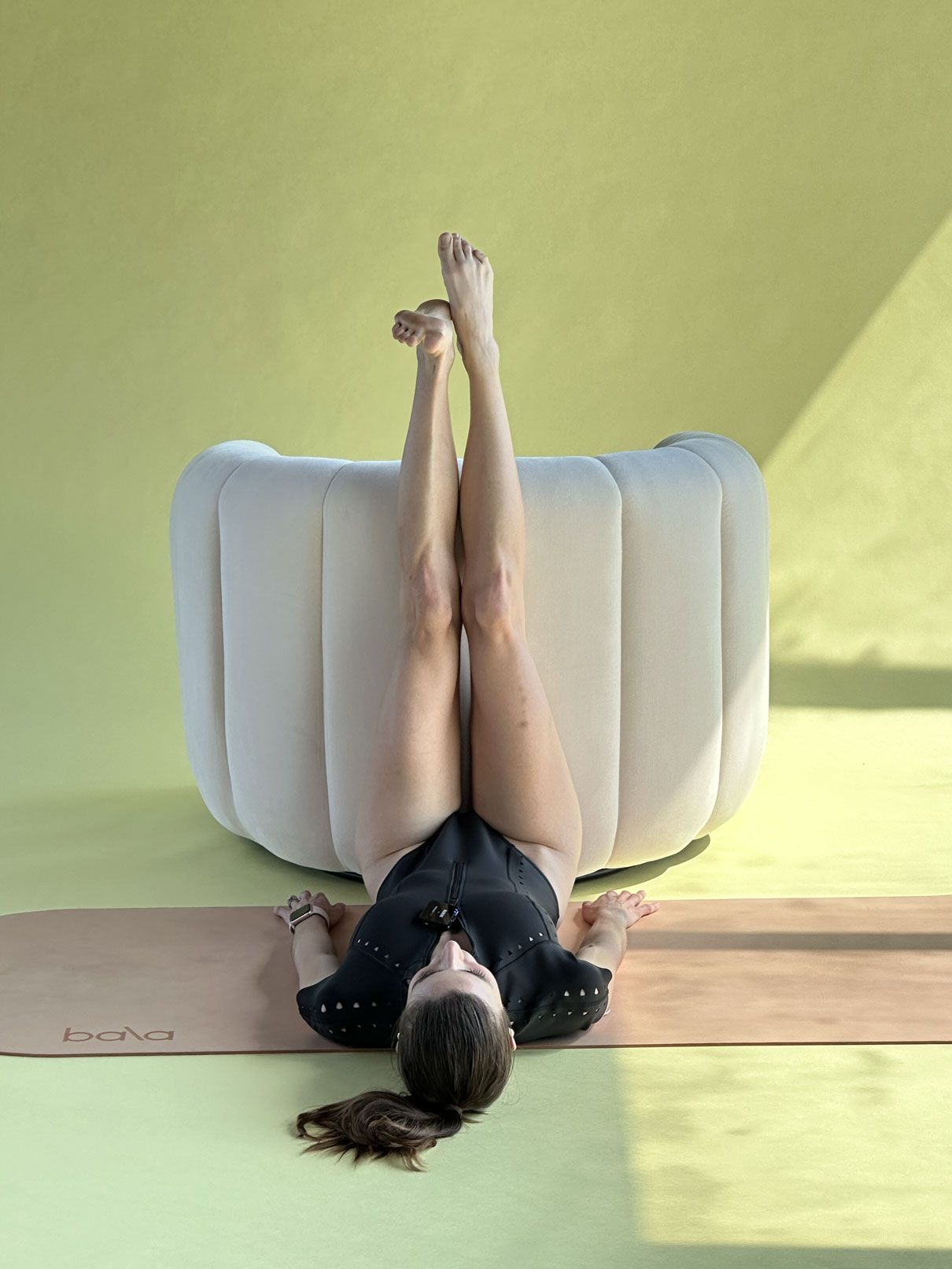
How to do it, still with your legs up the wall: point your feet (as if you wanted to touch the ceiling with your toes), then flex them, pulling the foot back toward you. Repeat 10-15 times. Then draw circles with your ankles, first in one direction, then the other.
The evening routine: 10 minutes before bed
Let’s put it all together. Here’s a sequence you can do every evening, before going to sleep:
- Minutes 0-2, get into position: lying on your back, legs up the wall, arms relaxed.
- Minutes 2-5, breathe: inhale for 5 seconds, exhale for 10 (or even longer). Focus only on your breath.
- Minutes 5-7, move your feet: point and flex, then ankle circles.
- Minutes 7-10, return to your breath: close your eyes, let your body relax, keep breathing slowly.
When you get back up, do it slowly to avoid feeling lightheaded. Your legs will feel different: lighter and refreshed.
In the app, in the “Leg Relief” section, you’ll find a guided session called exactly that: “Light legs: breath and drainage.” It’s a very calm, almost meditative session: diaphragmatic breathing, legs up the wall (or on a chair), long exhales of up to 14 seconds.
When heavy legs are a warning sign
In most cases, nothing to worry about.
Heavy legs in the evening = lymphatic and venous system to be supported
inversion + breathing + specific movement are the answer
But there are cases in which it is important not to stop at "do-it-yourself drainage" and to have a medical evaluation.
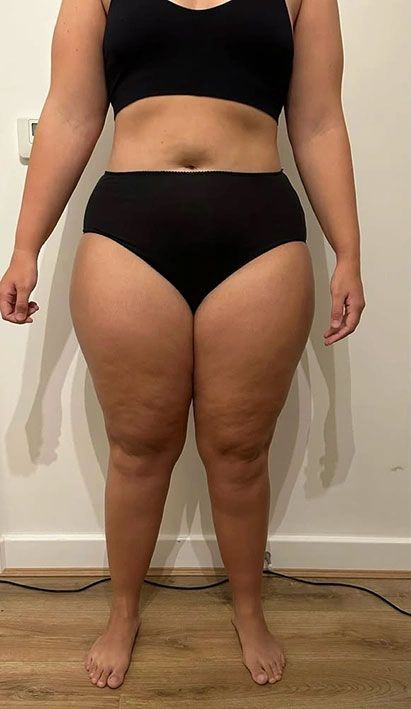
Lipedema
You may have lipedema if:
- your legs are out of proportion to your upper body
- the area is sensitive to touch (when you touch your legs you feel intense pain)
- you bruise easily for no apparent reason
- diet and physical activity do not seem to change the situation
It is a chronic condition of adipose tissue that is very underdiagnosed in Italy, often mistaken for "overweight that won't go away" or lack of willpower (unfortunately ☹).
It is not solved by losing weight and requires a specific approach:
lymphatic drainage
anti-inflammatory diet
suitable movement
I have a blog section dedicated to lipedema, where I go into more detail about its recognition, management, and specific treatments.
Other signals not to ignore
- Asymmetrical swelling (one leg yes, the other no): always have this evaluated by a doctor. It could be lymphedema, a condition in which the lymphatic system is damaged or unable to drain properly in one specific area of the body. It’s different from lipedema: lymphedema can affect a single limb, while lipedema is almost always symmetrical. Lymphedema is often the consequence of surgery (for example, the removal of lymph nodes during cancer treatment), serious infections, or congenital causes. It requires a specialist diagnosis and targeted treatment.
- Sharp pain, redness, or heat in the area: this can be a sign of more serious circulatory problems (including thrombosis).
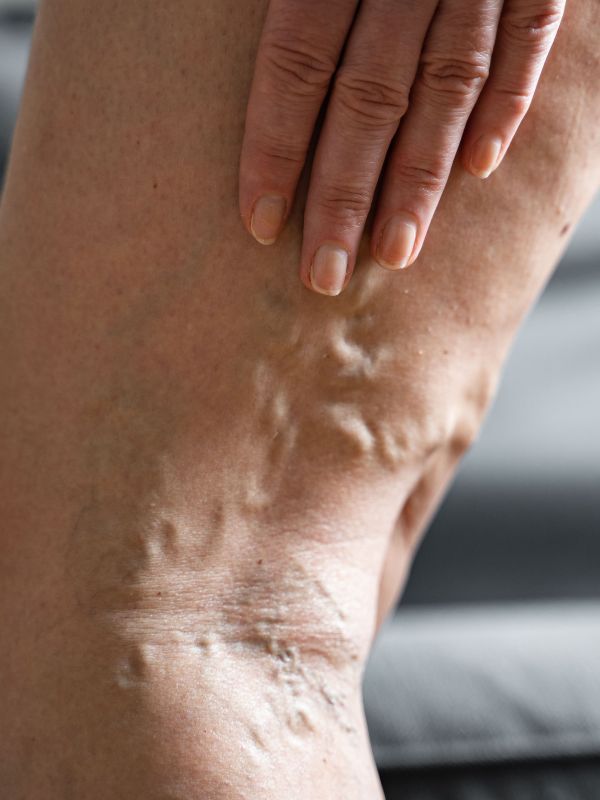
- Pronounced varicose veins or a burning sensation along the path of a vein.
- Heavy legs that never improve, not even with rest, inversion, and the right kind of movement.
In these cases, before “doing it yourself,” talk to your family doctor or an angiologist / phlebologist.
Frequently asked questions
Can I do the inversion every evening?
Yes, it’s a safe practice for almost everyone.
If you have uncontrolled high blood pressure or glaucoma, talk to your doctor first.
How long does it take to feel results?
The immediate relief comes almost right away, from the very first evening. More structural changes (less swollen ankles at the end of the day, legs that feel lighter already in the morning) come within 2-3 weeks of a daily routine.
Does it have to be in the evening?
Ideally yes, because that’s when your body has accumulated the most over the day. But if the evening doesn’t work for you, an afternoon break is perfectly fine; better once a day at any time than not at all.
Can I do it during pregnancy?
It’s best to avoid inversions from the second trimester onward.
The weight of the uterus can compress the vena cava (the large vein that carries blood back to the heart), and this can cause problems for the baby.
A safer alternative: lie on your left side with a pillow under your legs.
In any case, during pregnancy it’s always best to check in with your midwife or gynecologist.
Do compression stockings help?
They’re a good ally during the day (especially if you spend many hours standing or sitting without moving), but they don’t replace movement and inversion.
Can I do it during my period?
Absolutely yes. In fact, in the pre-menstrual days, when retention is at its strongest, it’s especially helpful.
I have varicose veins; can I still do the routine?
With mild varicose veins, yes: inversion and breathing help.
But if they’re pronounced or painful, get an evaluation from a phlebologist first, to understand whether you need any specific precautions.
Start tonight
Tonight, before bed, take 10 minutes for yourself.
Legs up the wall. Breathe deeply. Move your ankles.
If you’re truly exhausted, skip the exercises and simply keep your legs up the wall. You can watch a movie or read a book. Or simply focus on your breathing (and the benefits will be even better).
One evening is all it takes to feel the difference.
And if you’d like to do it with me guiding you step by step, remember that the app has the “Light legs: breath and drainage” session. Long exhales of up to 14 seconds, the inversion position, and small exercises to maximize drainage.
Always with me explaining exactly what to do, step by step.
