Pilates and Cellulite: What Really Changes the Appearance of Your Skin
Can Pilates help reduce the appearance of cellulite? Discover how muscle toning and lymphatic drainage can help improve skin appearance.

Let's start with something that almost no one tells you, and it completely changes the way you approach the problem.
Cellulite is not fat.
It's why there are skinny women who have it, and it's why you can lose weight, exercise a lot, eat a flawless diet, and find yourself in the mirror with the same uneven surface as before.
It's not that you're not trying hard enough. It's just that you're working on the wrong thing.
Because cellulite depends on two precise factors, and neither is fat. When you understand what they are, you also understand why everything you've tried so far hasn't worked, and what actually works.
What is cellulite (in two minutes)
The technical name is edematous-fibrosclerotic panniculopathy, which is unpronounceable and fortunately useless. What you need to know is how the skin is made beneath the surface.
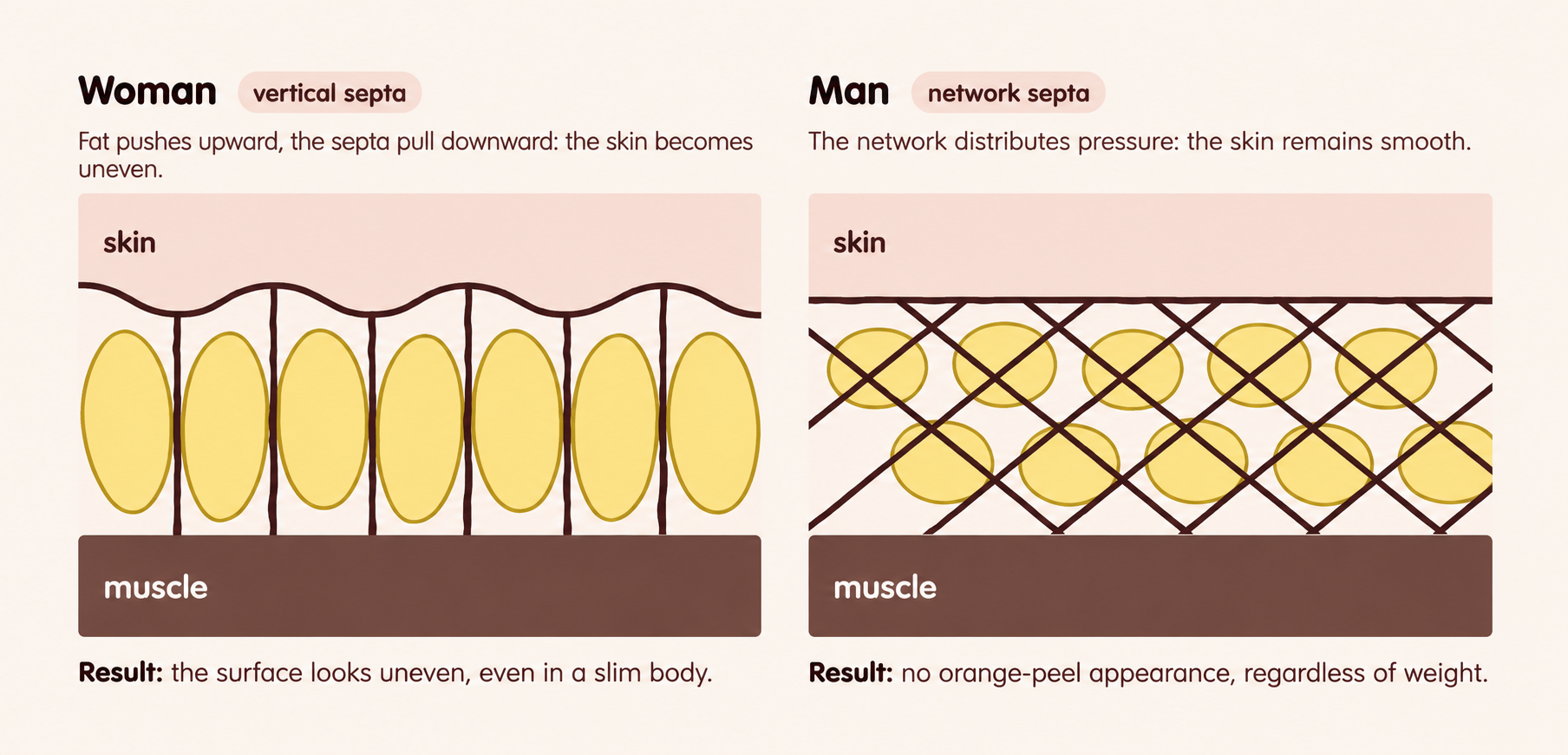
There is a layer of adipose tissue between the skin and the muscle. That fat is not a uniform mass: it is organized into lobules, separated and anchored by bands of connective tissue called fibrous septa, which connect the skin to the layers below.
And here's the thing that explains everything.
-
In the female body the septa are vertical
Perpendicular to the skin. The lobules of fat stand between one septum and another, like pillows inside a quilt.
When they increase in volume, or when the tissue holds liquids, they push up against the skin, while the septa pull down where they are anchored. The result is the irregular surface you know.
-
In the male body they are oblique and crossed
They form a network structure, which distributes pressure instead of concentrating it. It is the main reason why cellulite in men is rare.
It's not a question of willpower, a sedentary lifestyle, or nutrition. It's architecture, and it affects the vast majority of women after puberty.
Cellulite or water retention: why they are not the same thing
This distinction is the most useful of the entire article, because it is the one that makes you understand what you can really intervene on.

Cellulite is structural
It is the arrangement of the septa and lobules of fat. It is an architecture, and architecture is not dismantled with a cream.
Water retention is liquid
They are fluids that stagnate in the spaces between cells because the lymphatic system cannot drain them. It is variable: it changes from one day to the next, and sometimes from morning to evening.
Now, the point that connects the two things.
As the tissue retains liquid, the internal pressure increases. And since the fat lobules are already compressed between vertical septa, that extra pressure pushes even more against the skin and makes the surface more noticeable.
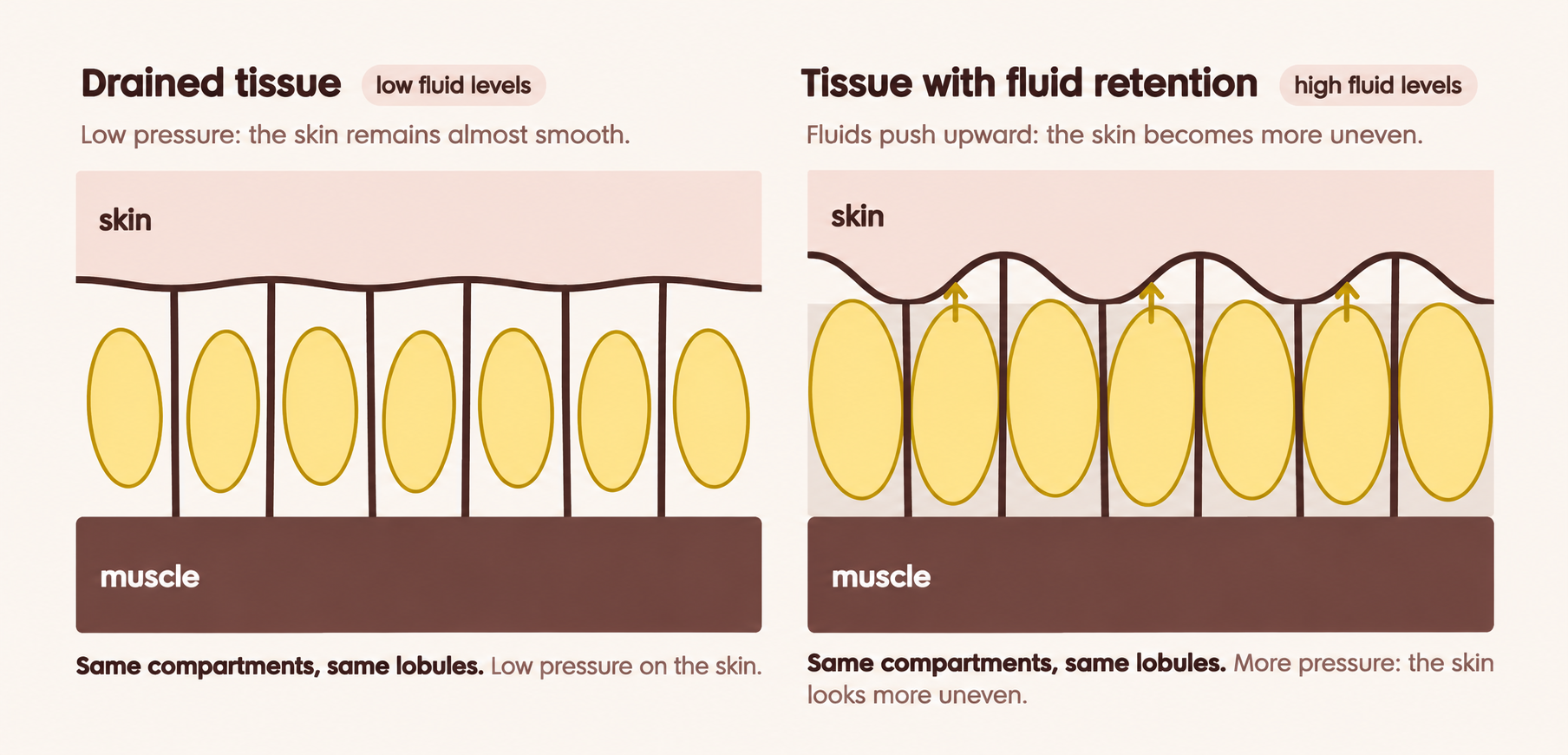
The structure remains the same, but the appearance worsens or improves depending on how much fluid there is in the fabric.
And there is proof you can verify about yourself.
If your cellulite was just structure, it would be identical every day. Instead it is not.
Worse in summer
When the heat dilates the vessels and increases filtration.
It gets worse in the evening
After a day of standing or sitting.
It gets worse before the period
In the week when the body physiologically retains more fluids.
It gets worse after salty food
After a weekend of salty food, for example.
That variability is not the structure that changes. It is the liquid component.
And that's exactly the part you can work on, in a reasonable amount of time. In the article on water retention, I explain where those liquids come from and what moves them
Because it appears, and because even in a thin body
There are five factors that come into play, and none of them are "you eat badly" or "you don't try hard enough."
Genetics
It determines the arrangement of the septa, the thickness of the dermis and the distribution of adipose tissue. It is the heaviest factor and is not modifiable.
The hormones
Estrogens influence where fat is distributed, connective tissue quality, and microcirculatory behavior.
This is why cellulite typically appears at puberty and can change during pregnancy and menopause.
The microcirculation
A slowdown in capillary circulation increases fluid leakage to tissues and worsens their disposal.
The lymphatic system
If drainage is inefficient, liquids stagnate. And it's the lever that can be worked on the most.
The quality of connective tissue
Which tends to stiffen over time and with chronic inflammation.
This is where the answer to the question I receive most often comes from.
You can be super thin and have cellulite, because cellulite doesn't depend on how much fat you have, but on how that fat is organized with respect to the septa.
Even a body with very little adipose tissue still has lobules between vertical septa.
If the dermis is thin, if there is retention, if the muscle tone underneath is poor, the surface is still uneven.
And it's also why losing weight doesn't automatically solve the problem. In some cases it improves, if there was excess fat that increased the pressure.
In other cases it gets worse, because by losing volume and muscle mass the skin remains with less support underneath.
What makes the difference is not how much you lose, but what stays under your skin when you're done.
What's not working (and why they keep selling it to you)
This section will cost me some dislike, but that's the reason this article exists.
The cellulite market in Italy is worth a lot, and almost everything you find when searching for information is written by those who sell something: creams, sludge, leggings, treatment cycles, machinery.
Let's see them one by one.
-
Anti-cellulite creams
Caffeine, which is the most common ingredient, has a local vasoconstrictor effect and slightly dehydrates the surface tissue: the result is skin that is temporarily more compact to the touch.
It lasts for hours. Retinol, applied for months, may slightly improve the thickness of the dermis.
But the problem lies in the septa and lobules, which are located much deeper than where a cream reaches. No cream can change the architecture of the fabric.
-
The sludges and the bandages
They produce a temporary loss of fluid by osmotic and compression. The circumference really goes down, for a few hours, and then comes back.
It's the same principle as the sauna: you lost water, you didn't change anything.
-
The slimming leggings and neoprene trousers
They compress and make you sweat. Compression makes real sense when it's graduated and medical, like in elastic stockings, but a fitness leggings isn't that.
And making an area sweat doesn't make that area lose weight: localized weight loss doesn't exist.
-
Herbal teas and draining supplements
They make them drink more, which is helpful, but the credit is almost always to the water rather than the grass.
-
The very energetic massages and aggressive rollers
Here it is not only ineffective, it is potentially counterproductive. The superficial lymphatic vessels are just under the skin and excessive pressure is crushing them instead of helping them. A well-drain massage is light, not painful.
-
Instrumental treatments of aesthetic medicine
They deserve a more balanced speech. Some, particularly those that act mechanically on fibrous septa, have better evidence than others, but they are medical procedures, have a significant cost, and are not free from side effects.
If you're interested, the right place to talk about it is a doctor's office, not an article like this. What's worth knowing is that even after effective treatment, daily habits remain crucial, because the fluid component returns if you don't manage it.
The common denominator: they act on the surface of a deep problem, and they are passive. You do nothing, something is done to you. And the day you stop, everything goes back to the way it was.
What really changes the look
If the structure cannot be changed, what is left? There are three levers left, and they are more effective than the fact that no one gains on them suggests.
-
The muscle mass under the skin
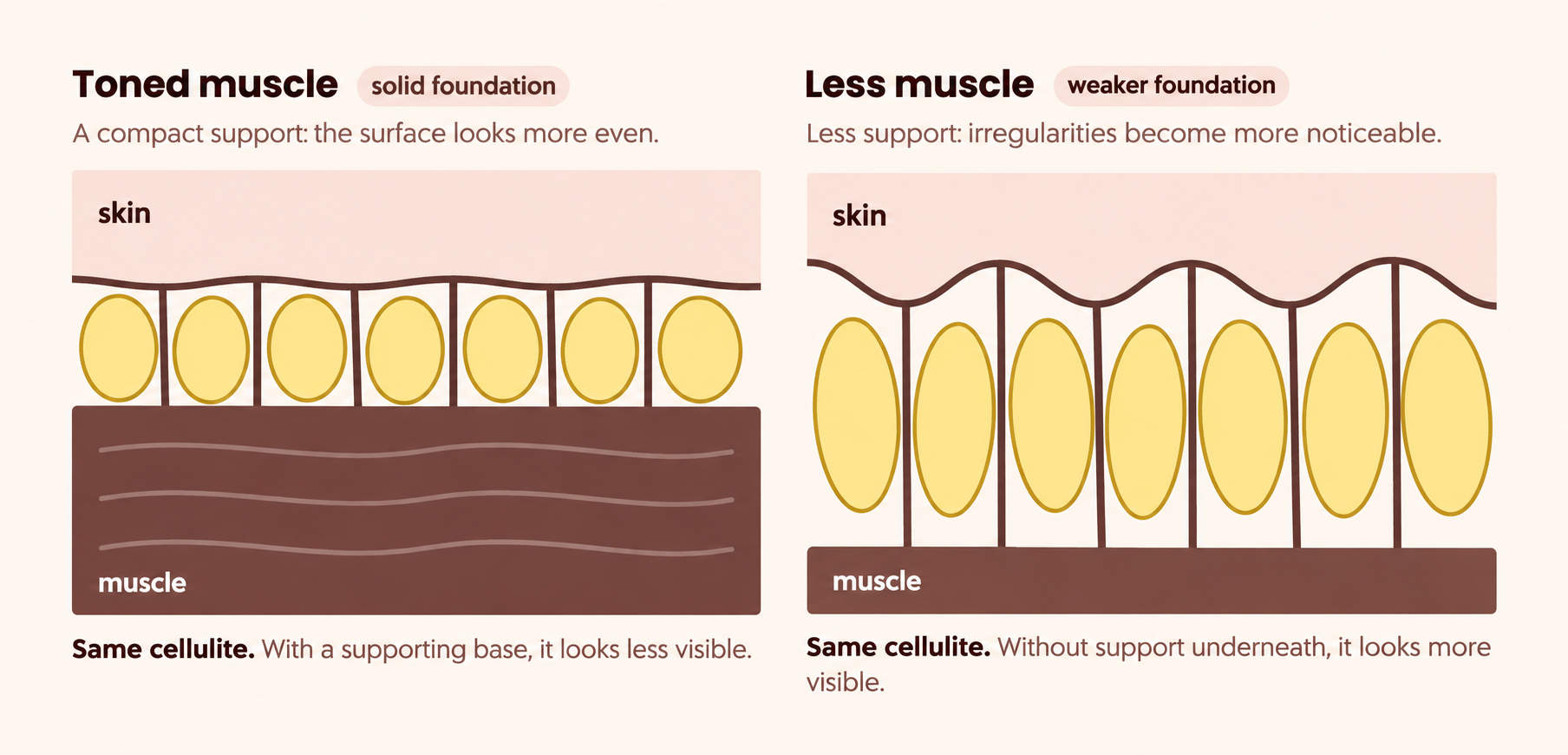
It's the most underrated lever of all. The skin rests on what's underneath. If there is tonic muscle underneath, the surface has support and the profile changes.
If there is little underneath, the adipose tissue rests on a yielding base and the irregularities become accentuated.
You're not eliminating cellulite: you're changing the surface it rests on. And it's also why, as we were saying before, a weight loss that also takes away muscle mass can make you look worse instead of better.
-
The reduction of fluids in the tissue
This is the lever that acts the fastest, and we've seen why: less fluid means less pressure against the skin, and less pressure means a more even surface.
However, the lymphatic system does not have its own pump like the blood has the heart. The lymph moves only thanks to two things: the contraction of the muscles around the lymphatic vessels and the movement of the diaphragm when you breathe deeply.
Which means it moves when you move it, and it stops when you stop.
-
The reduction of inflammation
Inflamed tissue retains more fluid, and the connective tissue tends to stiffen. Reducing the inflammatory load, with a less processed anti-inflammatory diet, less sodium, good hydration and sufficient sleep, works on the same lever as drainage but on the other side: instead of helping to move fluids, it reduces how many there are to move.
Cellulite can be eliminated
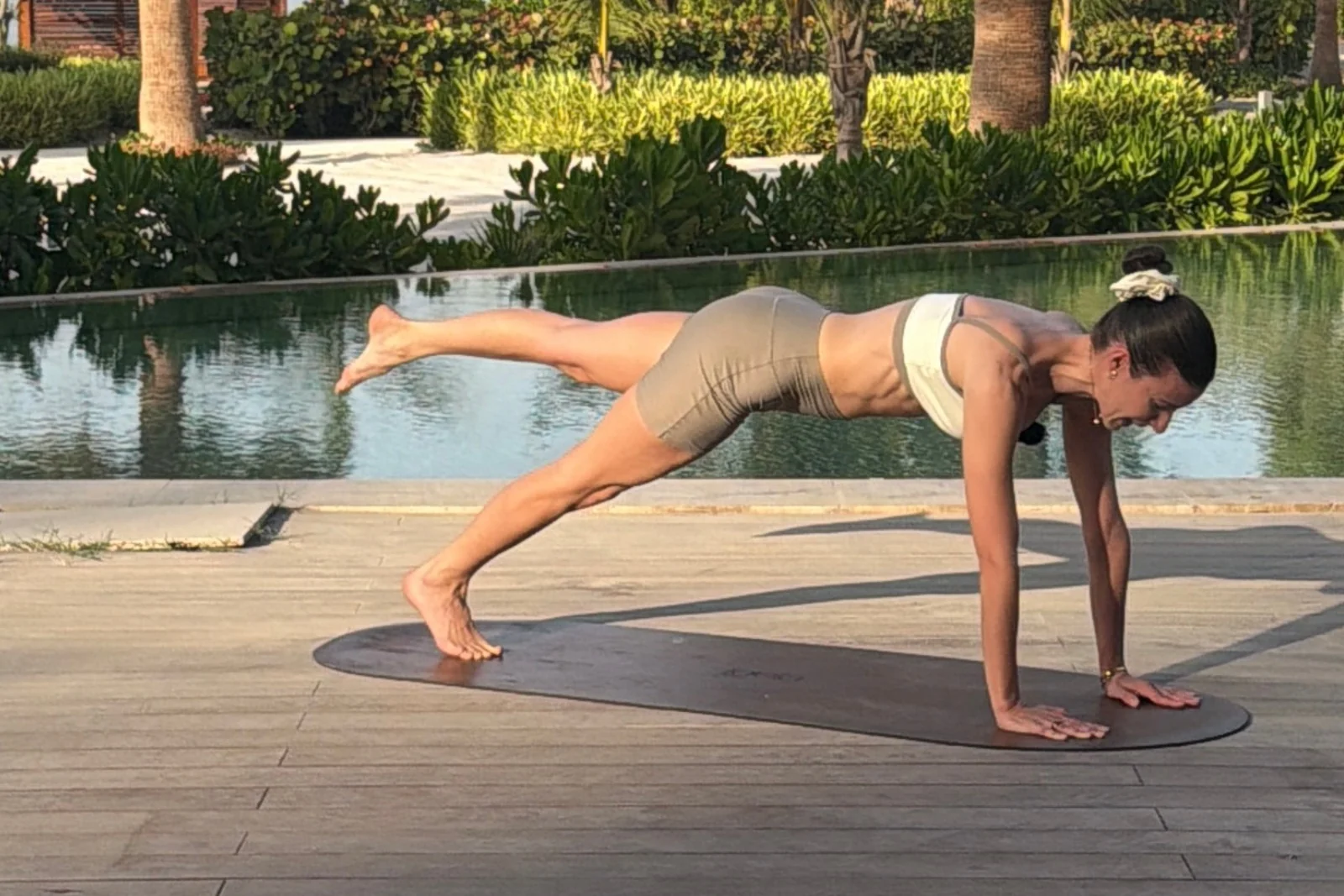
Yes, and I see proof of this all the time in the photos the women in the community send me.
But I want to tell you how, because the how determines everything.
It is not eliminated with a cream, a sludge cycle or a passive treatment, and the previous section explains why. It is eliminated by working on the two levers that we have seen, consistently, for the necessary time.
What happens, and in what order.
First 2-3 weeks
The liquid component moves. It's the part that responds most quickly: the legs are lighter, the surface is already more uniform, and that evening deterioration that you might have taken for granted disappears.
Between the second and third month
Muscle tone begins to be felt. The skin has different support underneath, and the profile changes. This is where the first photo you actually notice usually comes in.
From six months onwards
The two work together and the result is consolidated. In my experience, it is at this stage that many women simply stop thinking about it, because there is nothing left to think about.
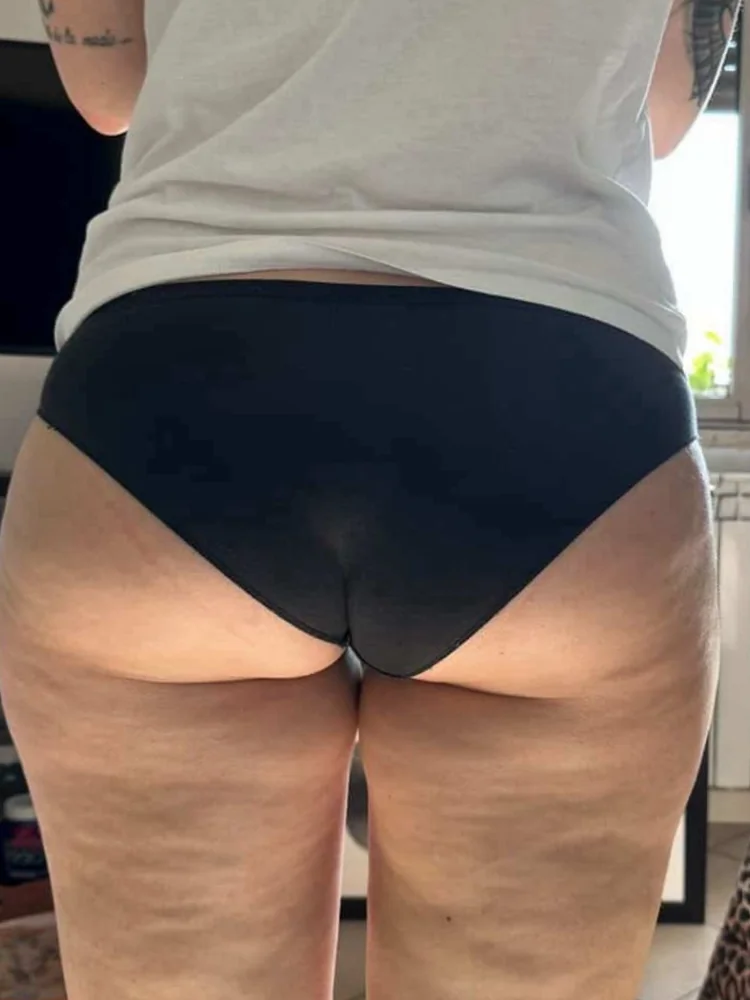
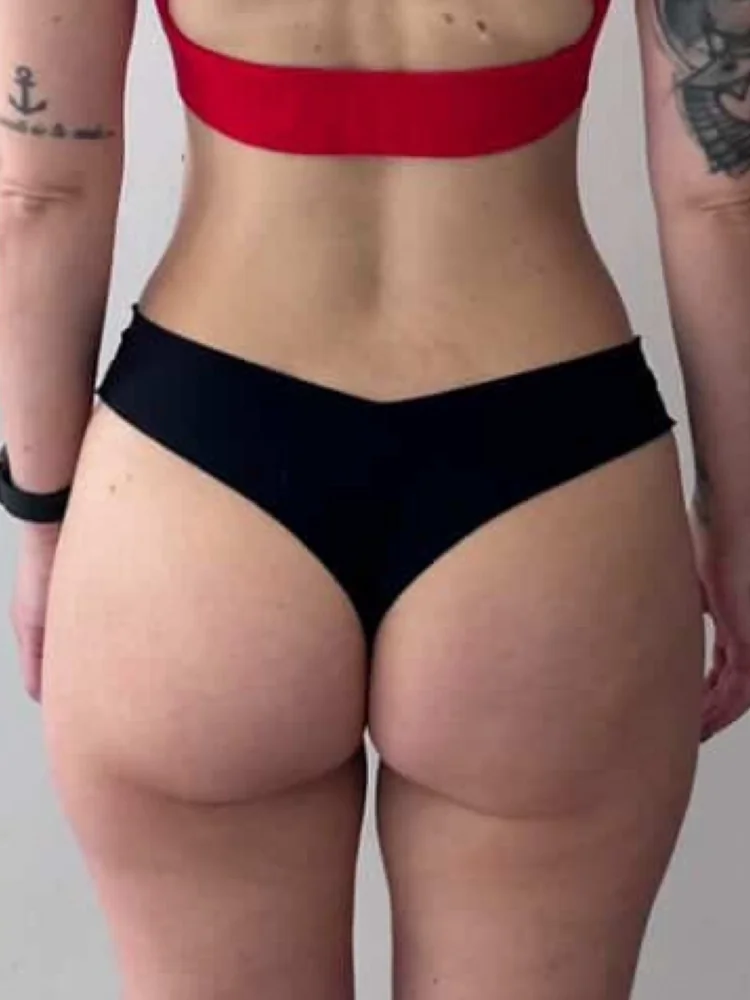
One thing to know, though. The result is maintained, not accumulated. The fluid component returns if you stop draining, just like the tone if you stop working out.
It's not bad news: it's the same rule that applies to anything related to the body, and it just means you need a practice you can carry on, not a shock cure before the summer.
And it's also why, of all the possible paths, the one that matters is the one you manage to travel every day.
Lymphatic Sculpt Pilates™ and Cellulite
At this point you can already guess why I built the method like this, but it's worth putting it down on paper.
Lymphatic Sculpt Pilates™ acts simultaneously on the two levers we have seen, and it does so in a form that can be repeated every day.

-
Builds muscle mass, without heavy loads
Slow, controlled contractions, isometric resistance, deep muscle work. The tone grows where needed, under the skin, without generating the acute inflammation and temperature rise typical of high-intensity workouts, which work against already inflamed tissue.
-
Activate drainage specifically
Each session opens the six lymphatic stations before it even begins. Each movement is coupled with prescribed breathing, because the diaphragm is the second pump of the lymphatic system. And the sequences alternate standing work and inversion exercises, with the feet higher than the pelvis, to promote return.
-
It can be done every day
And it is the decisive point, because the component we act on is maintained instead of accumulating. Fifteen minutes a day activates the pump seven days a week; an hour and a half twice a week activates it two days a week, and in the other five, liquids stagnate.
It's not a cure. It 's the daily management of the manageable part of the problem, which is also what determines how you look in the mirror most days.
How to get started
If you've never done Pilates
Start from Lymphatic Sculpt Pilates™ Beginners: Two months to build the foundations.
If you already have your own practice
The full 9-month course has been working on tone and drainage together.
If time is your obstacle
Lymphatic Sculpt Pilates™ Express: fifteen minutes a day.
And in the evening
Legs light in 7 minutes, with legs leaning against the wall before sleeping.
Frequently Asked Questions
Does Pilates help with cellulite?
Yes, on two of the three levers that can be acted upon. It builds muscle mass under the skin, which is the support on which the tissue rests, and in the lymphatic drainage version it activates drainage, reducing the fluids retained in the tissue that increase the pressure against the skin and make the surface more visible.
It does not change the structure of the fibrous septa, which no amount of training can change, but it acts on the two components that determine how much that structure is seen.
What is the difference between cellulite and water retention?
Cellulite is structural: it depends on how the fat lobules are arranged between vertical connective tissue septa, which is a characteristic of the female body.
Water retention is liquid that stagnates in the spaces between cells and is variable from day to day. The two interact: the more fluid there is in the tissue, the more pressure increases against the skin and the more cellulite you see.
It's the reason it gets worse in the summer, in the evening, and before the cycle, and that variability is precisely the component that can be addressed.
Can cellulite be eliminated?
Yes, working on the two levers that determine it: the fluids retained in the tissue and the muscle mass under the skin.
What doesn't work is the passive road, that is, creams, sludges and bandages, which act on the surface of a problem that lies deep and whose effects last a few hours.
Fluids respond in two or three weeks, muscle tone in two or three months, and from the sixth month onwards the two work together. The result is maintained with practice, just like any other body change.
Do anti-cellulite creams work?
Very little, and for a structural reason. Caffeine produces local vasoconstriction and mild superficial dehydration, so the skin temporarily appears firmer for a few hours.
Retinol, applied for months, may slightly improve the thickness of the dermis. But the problem lies in the fibrous septa and lobules of fat, much deeper than where a cream can reach.
Why do I have cellulite even though I'm thin?
Because cellulite doesn't depend on how much fat you have, but on how it's organized with respect to connective tissue septa.
Even a lean body has fat lobules arranged between vertical septa, and if the dermis is thin, if there is water retention, or if muscle tone underneath is poor, the surface is still uneven.
It's also why losing weight doesn't automatically solve it and sometimes makes it worse, if you lose muscle mass along with fat.
How long does it take to reduce cellulite?
The two components respond with different times. Liquids move quickly: two to three weeks of steady movement and good hydration are often enough to notice less swollen legs and an already more even surface.
Muscle tone takes two to three months to show and continues to improve as long as you continue. From the sixth month onwards the two levers work together and the result is consolidated.
Maintenance is part of the journey: the fluid component returns if you stop draining, as does the tone if you stop exercising.
What cellulite treatments really work?
Mud, bandages, and leggings produce a temporary fluid leak that falls within hours. Very energetic massages can be counterproductive, because the superficial lymphatic vessels are just under the skin and excessive pressure crushes them.
Some aesthetic medicine treatments that act mechanically on the septa have better evidence, but they are medical procedures, expensive and worth evaluating with a specialist.
In all cases, even after effective treatment, daily habits remain decisive, because the fluid component returns.
Can cellulite be prevented?
Not entirely, because the genetic and hormonal component is decisive. However, it is possible to intervene early on the factors that accelerate its worsening: sedentary lifestyle, chronic water retention, inflammation, rapid weight loss that also takes away muscle mass.
Building tone and maintaining good drainage are the two things that, over time, make the biggest difference.
Carlotta's insights, straight to your inbox
Just your name and email, unsubscribe anytime.