Lymphatic drainage Pilates vs Lymphatic Drainage Massage
Lymphatic drainage Pilates or massage? Compare their benefits, effectiveness, frequency and costs, and discover when combining both is the best approach.
The verdict in twenty seconds: these are not two things that do the same job differently.
Lymphatic drainage massage is more powerful per single session. Lymphodrenant Pilates® is less powerful per session, but you can do it every day, and since drainage is maintained, frequency matters more than intensity. If you can do both, do both. If you can only do one, choose the one you can repeat.
First of all, one thing you should know: I teach one of the two.
So I'm not going to tell you that lymphatic drainage massage doesn't work, because it does. I'll tell you what he's strongest, what we're strongest, and I'll leave it up to you to decide what's best for you.
What Lymphatic Drainage Massage Does
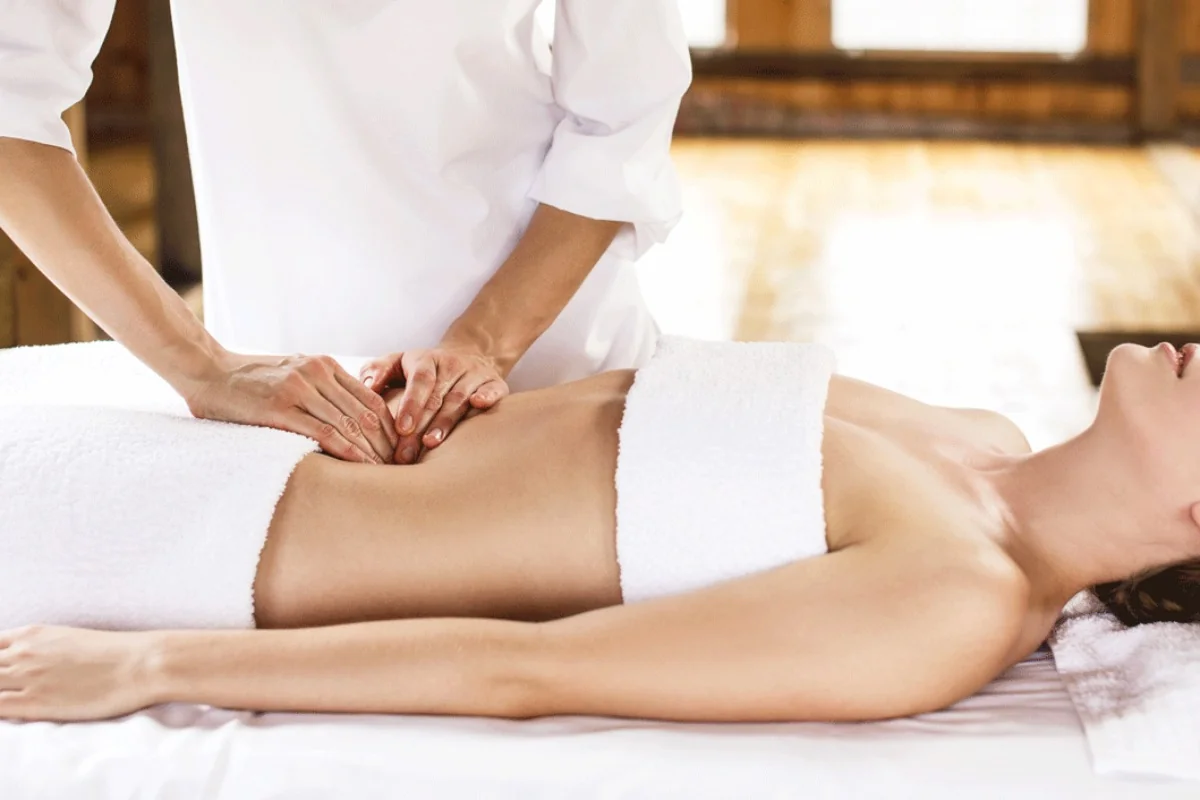
Lymphatic drainage massage is a manual treatment performed by a trained operator, with slow, rhythmic, and repeated maneuvers that follow the anatomical direction of lymphatic flow.
We always start from the lymph node stations to clear the upstream transit, and only then work on the area to be drained.
The one where it's stronger than anything you can do alone:

The precision
The person performing it feels the tissues under the hands and modulates the maneuvers accordingly.
Access to areas you don't reach
The neck, the upper back, certain areas that don't work well on their own.
The power of the single seat
Forty or sixty minutes of focused work produces an effect that a fifteen or thirty-minute session does not: it is simply more work on that area at that moment.
The clinical use
In lymphedema and some post-operative procedures, manual drainage is part of a therapeutic protocol, under medical supervision. In those cases it's not a preference, it's the right choice.
And one thing almost no one says: if you feel sore or bruised after a session, it wasn't a lymphatic drainage massage.
The superficial lymphatic vessels are just a few millimeters below the skin and strong pressure crushes them instead of helping them. A well-drain is extremely delicate, to the point that many women fall asleep.
If you want the detail of a session, here I explain how lymphatic drainage massage works.
What Lymphatic Sculpt Pilates™ Does
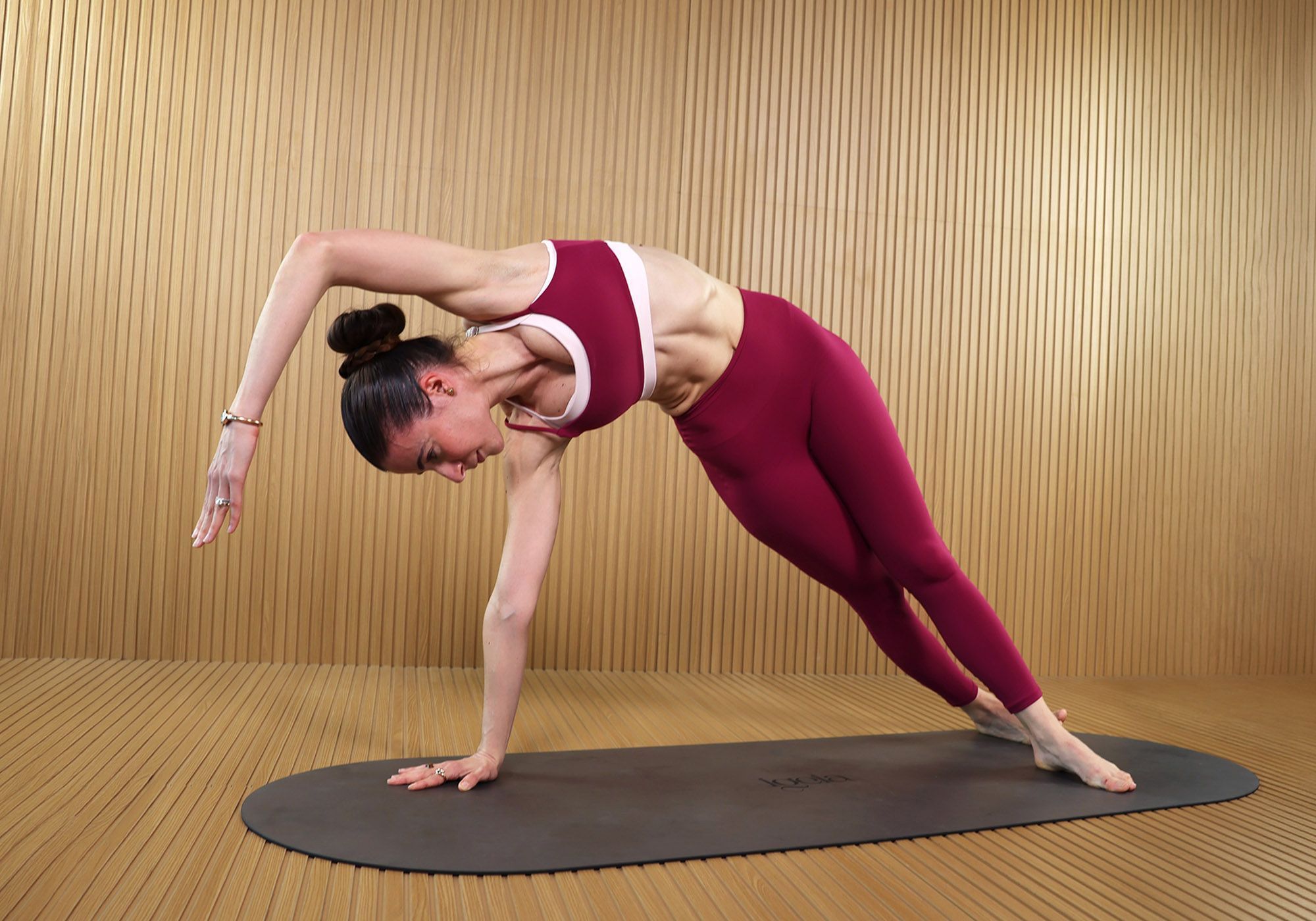
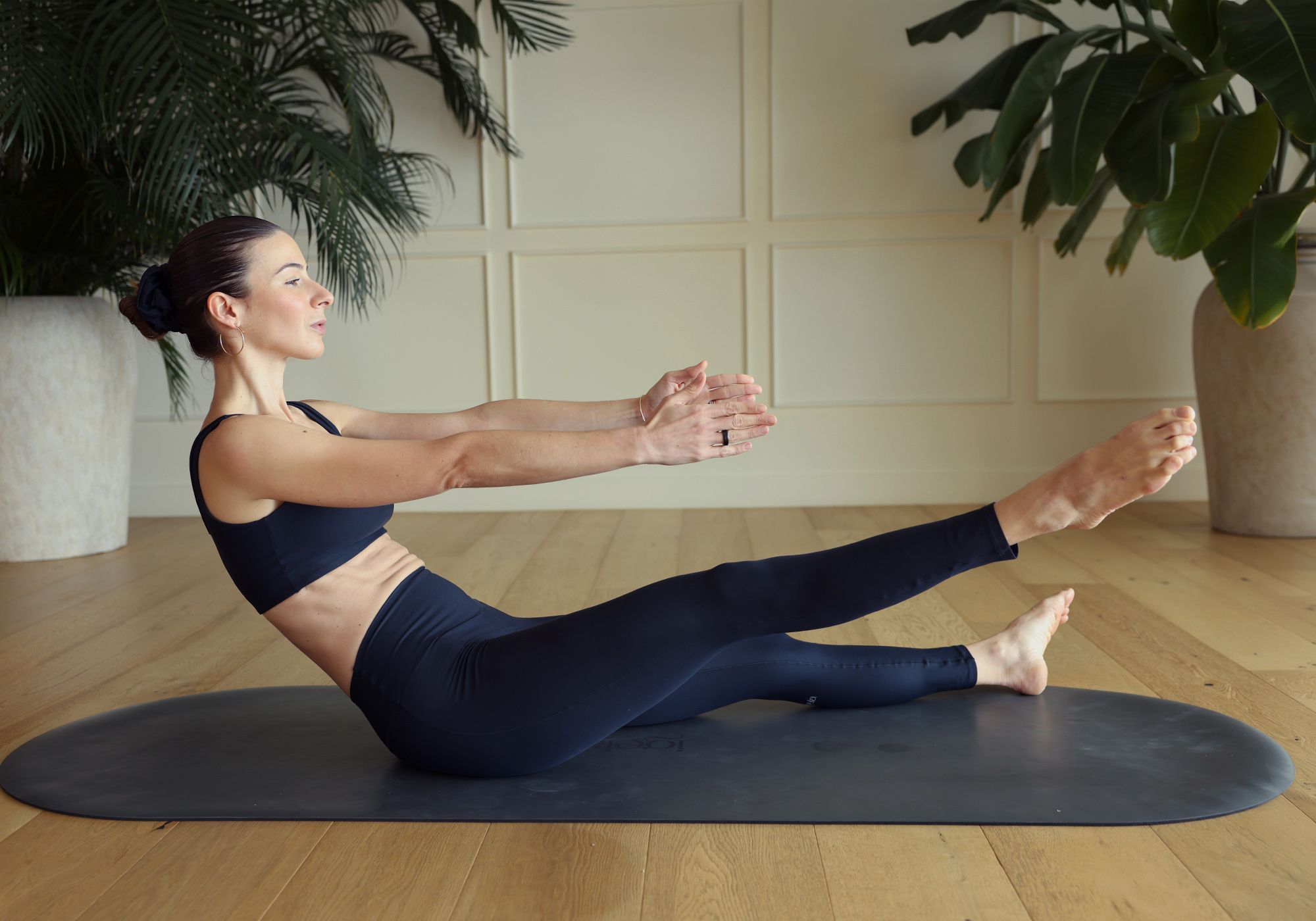
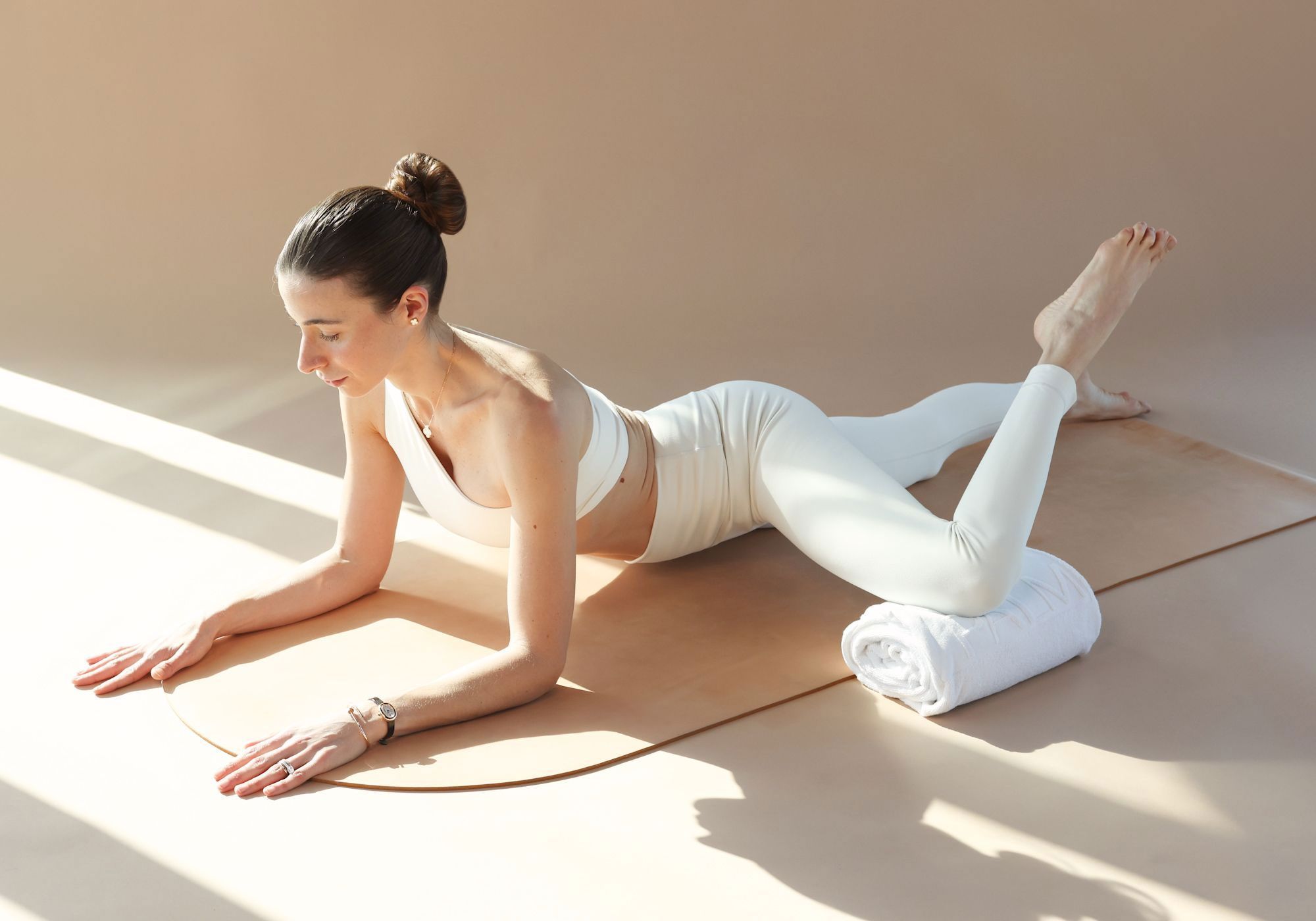
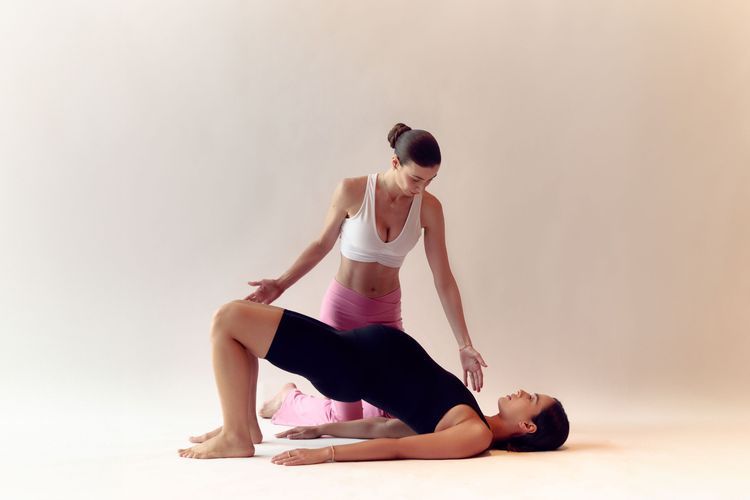
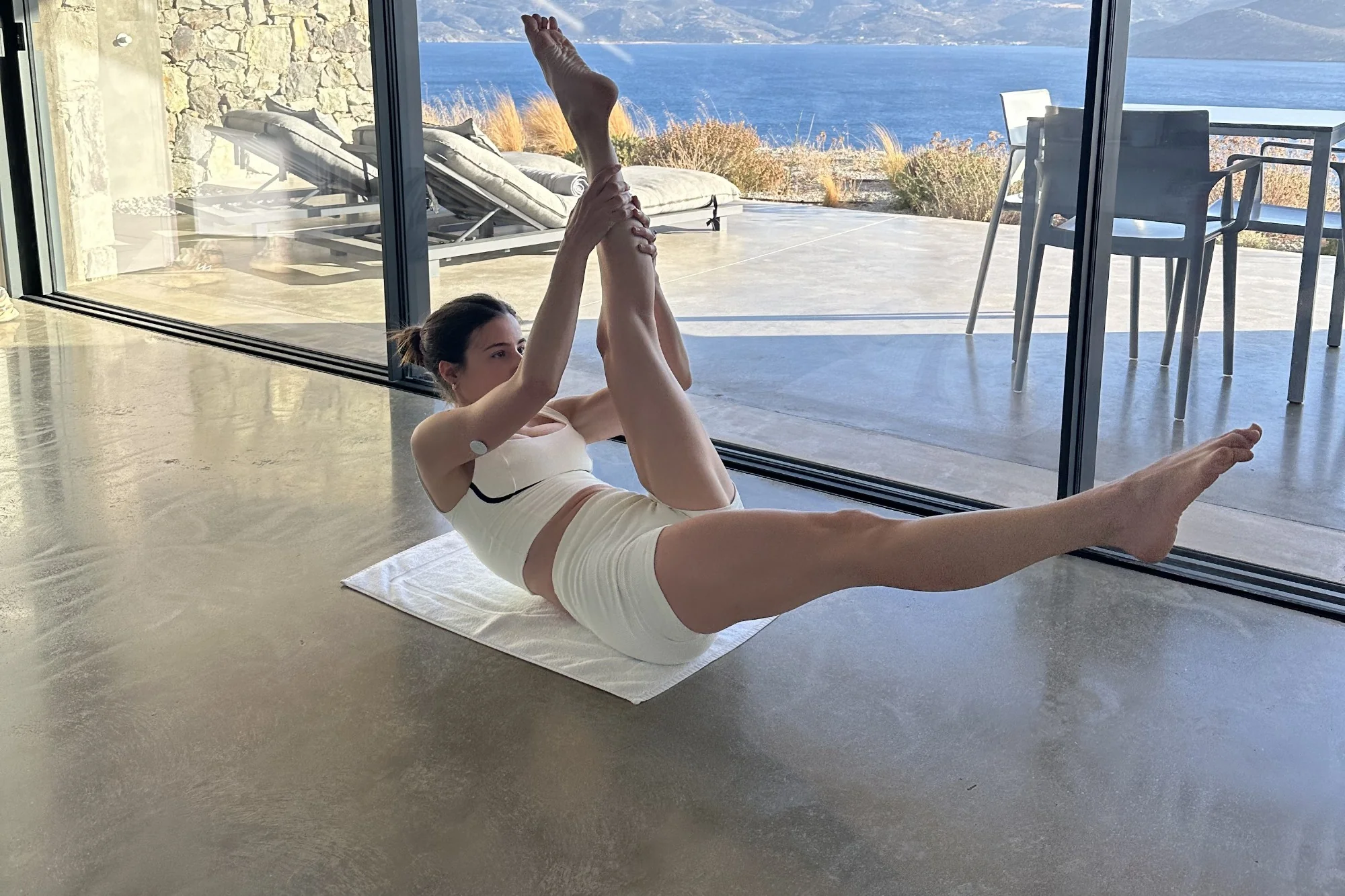
The method takes the same principle and puts it into a workout instead of a treatment.
Each session opens by activating the lymphatic stations
The same six points from which a well-done massage starts: abdomen, under the ears, above the collarbones, armpits, groin, and behind the knees.

Each movement is coupled with a prescribed breathing
The thoracic duct, the largest lymphatic vessel in the body, passes through the diaphragm: every deep breath pumps it.
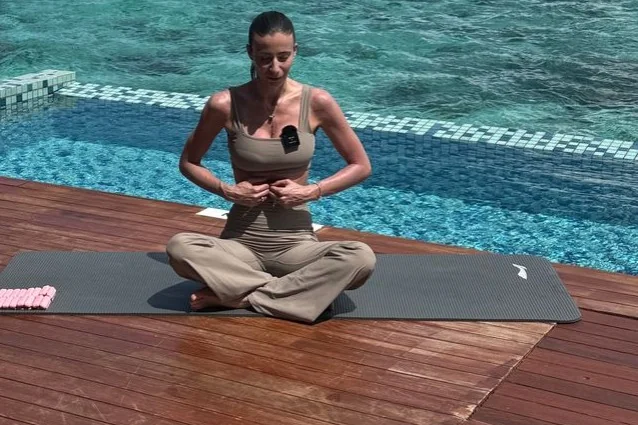
The sequences alternate standing work and inversion exercises
With your feet higher than your pelvis.
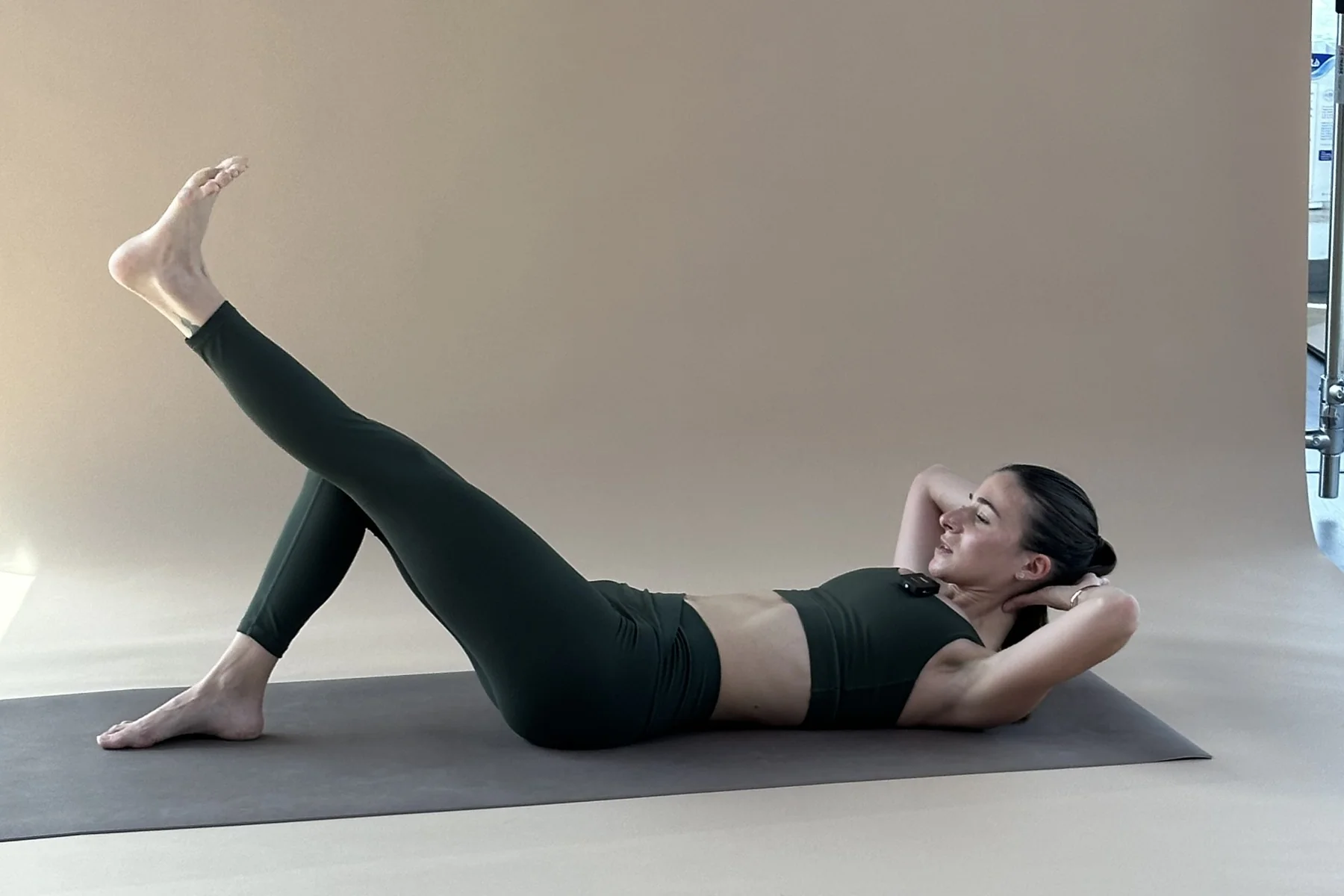
It can be repeated every day without accumulating inflammation
And indeed, it promotes the opposite process.
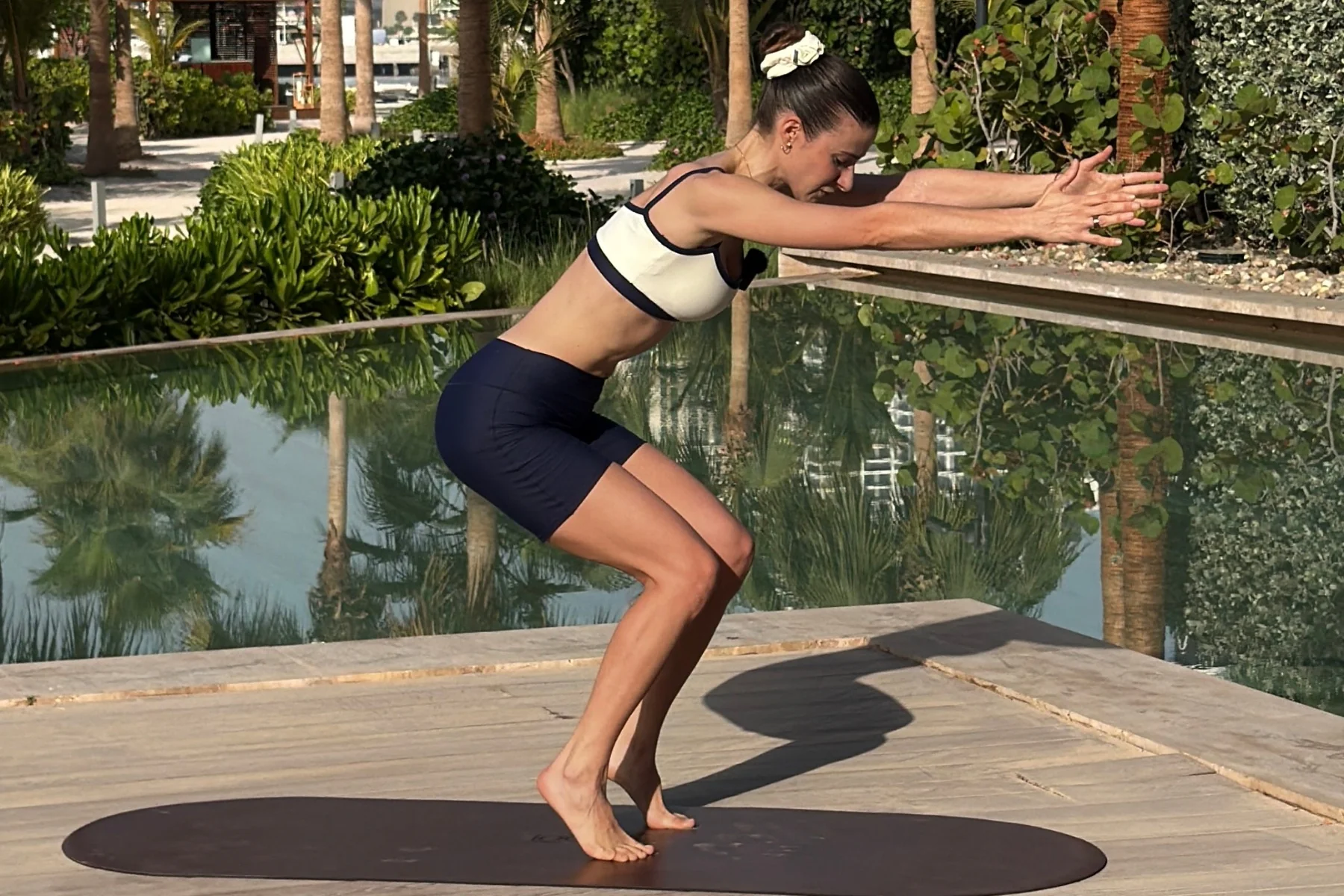
The difference that really matters: drainage is maintained
And here we come to the point where this article exists.
You probably already know: muscle mass builds up. If you work out for six months and then stop for two weeks, the muscle is still there.
The sap, however, does not. It moves thanks to muscle contraction, diaphragm movement, and joint mobility, and stops when you stop. The benefit of a session lasts as long as you keep producing it.
Which means the right question is not which of the two is more powerful. It's: how many times does the pump turn on in your week?
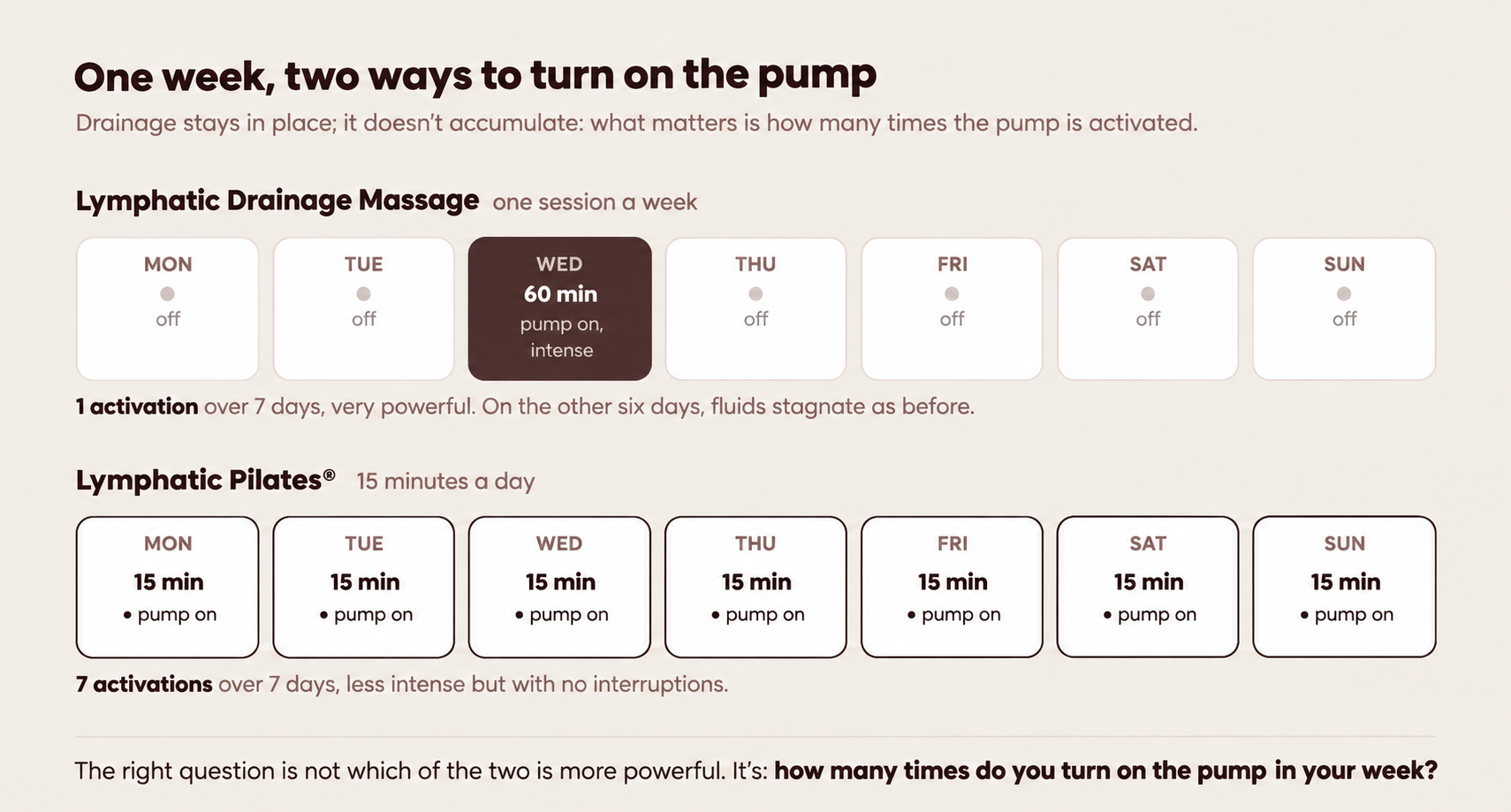
One massage a week
The pump is activated intensively one day in seven. In the other six liquids stagnate as before.
Fifteen minutes a day
It is activated seven days a week, with less intensity but without interruptions
The second scenario costs less total time and less money, and on swelling it produces a better result. Not because Pilates is superior as a technique, but because the mechanism rewards frequency.
Here you find why drainage is maintained and not accumulated.
The two things massage can't do
In addition to frequency, there are two structural differences, and they are worth mentioning because they do not depend on how good the operator is.
He doesn't build the pump
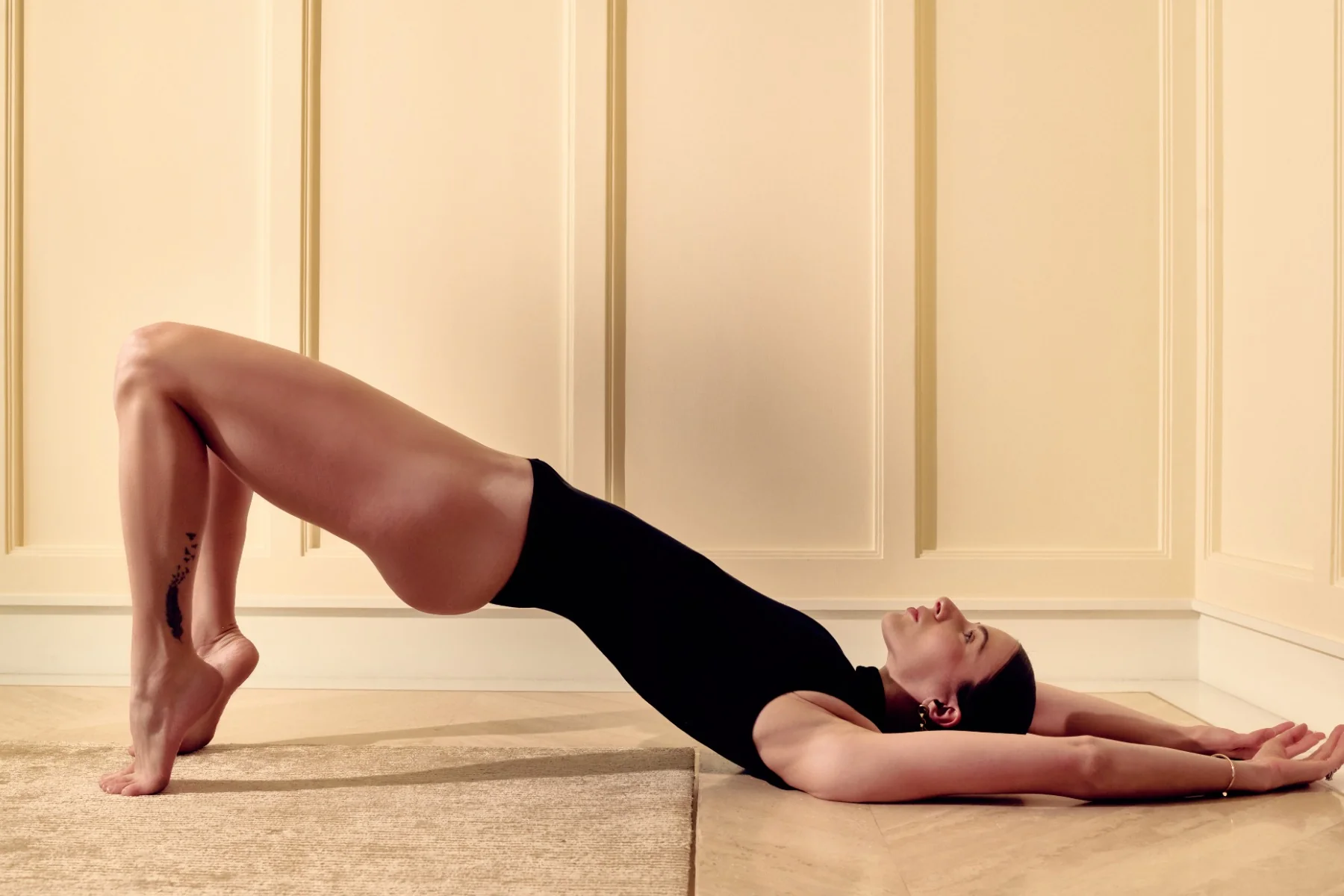
Massage moves the sap from the outside. Movement moves her from within, using your muscles, and in doing so strengthens them.
A stronger calf is a more efficient pump twenty-four hours a day, even while you're sitting at your desk doing nothing. And it's the same tone that changes the look of cellulite.
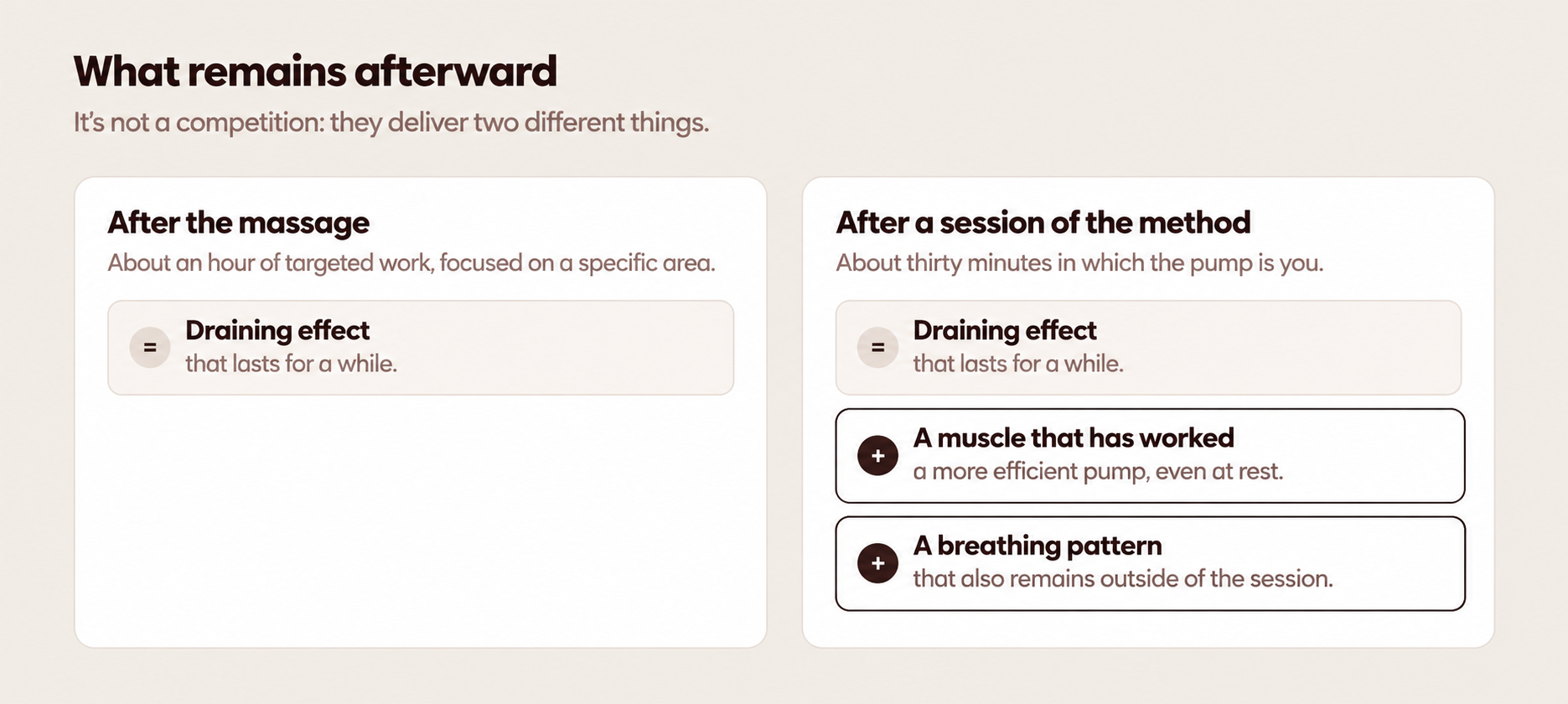
Massage only works when you receive it, while training leaves behind something that continues to work.
It doesn't train your breath
The diaphragm is the second pump of the lymphatic system, and you don't use it on the bed: you stand still and breathe as you normally do.
In a method session, however, I tell you when to inhale and when to exhale, movement by movement, for fifteen or thirty minutes.
Over time, that breathing pattern also shifts out of the session, and it's a change that massage doesn't produce.
The cost, calculated in the right way
I don't put prices because they vary a lot by city, operator training, and type of facility, and they change over time.
But the useful comparison is not between the cost of a session and the cost of a subscription. It is the cost per pump activation.
One session per week
Four activations per month, each at full treatment price.
A daily practice
About thirty activations per month, at zero marginal cost once the subscription is paid.
And there's a practical consequence I often see: those who rely solely on massage tend to interrupt when their budget tightens, when they're traveling, or when their schedule fills up. The result falls, precisely in the periods when it would be most useful.
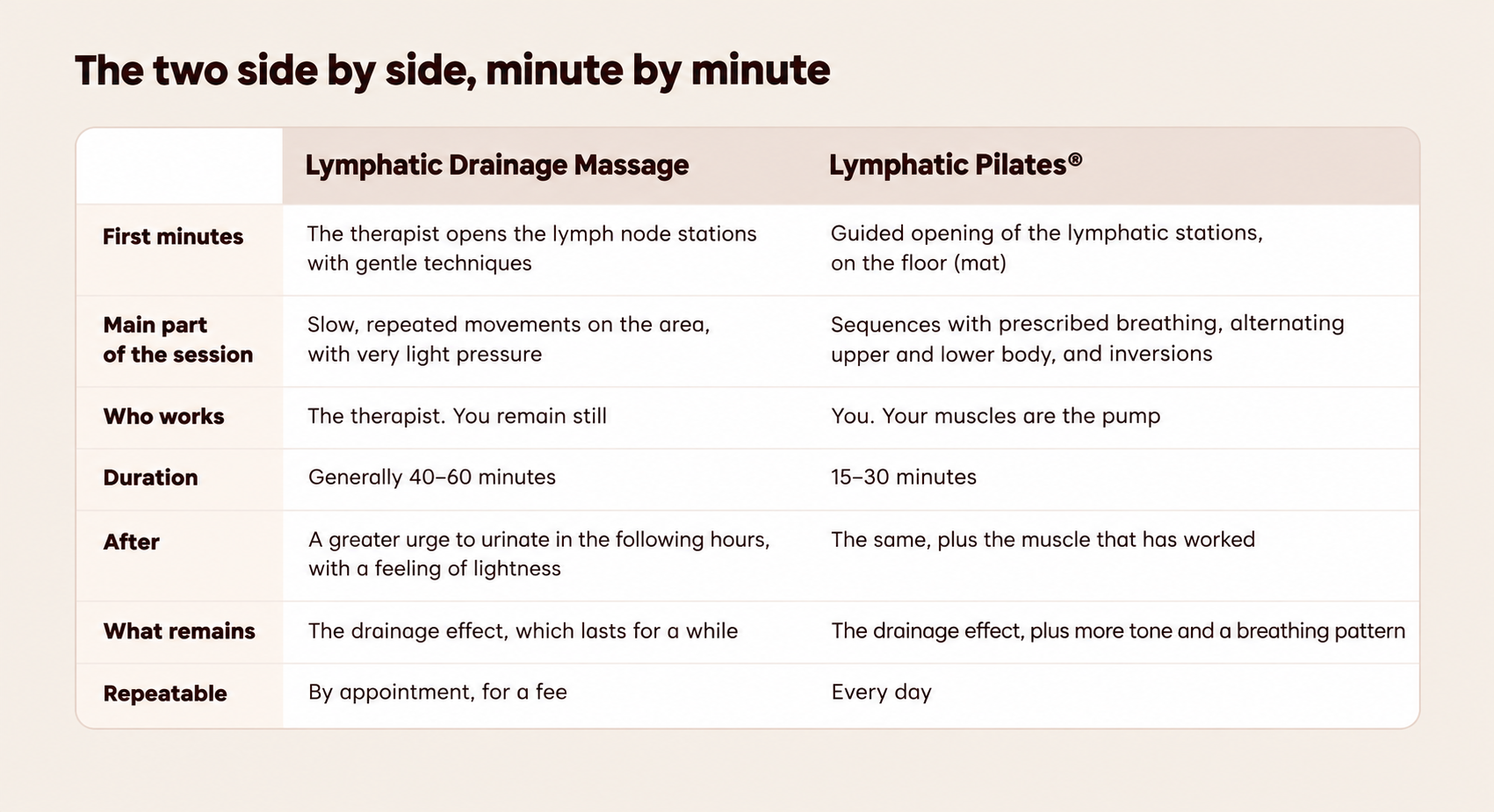
Inside the two, minute by minute
It can be helpful to see how they are actually made.
When massage is the right choice and Pilates is not
For this guide to be of any use, I must tell you even when it is not us.
-
If you have a diagnosis of lymphedema or are coming from surgery
Manual drainage is part of a clinical process, prescribed and followed by a healthcare professional. The movement accompanies it, does not replace it, and must be agreed upon with those who follow you.
-
If you need a quick effect for a precise occasion
A targeted treatment two days before an event does something a fifteen-minute session doesn't. It's a temporary result, but it's real.
-
If you're going through a period where you can't train
Accidents, complicated pregnancies, life stages. In those cases passive treatment is (a lot!) better than nothing.
-
If it just makes you feel good
An hour of someone taking care of you is not an irrelevant detail, on the contrary!
The honest answer: do both, if you can
Someone expects me to say let go of massages. I'm not saying.
The absolute best combination is daily practice plus periodic sessions. They reinforce each other: the movement maintains the result between sessions, and the session gives a push that the movement alone would take longer to produce.
If you have to choose because time or budget don't allow for both, then yes, the answer is movement, and there is only one reason: that's what you can do again tomorrow.
Before you start or book, talk to your doctor if
Both should be avoided or done only upon medical indication in some situations:
- ongoing acute infection with fever
- inflammation or skin infection in the area
- suspected deep vein thrombosis
- uncompensated heart failure
- renal failure
- active phase tumors
In pregnancy, many things can be done with appropriate adjustments, but the gynecologist's approval is required.
And regardless of which of the two you choose, a swelling that appears suddenly, that affects only one leg with pain or heat, or that does not improve at all after a night's rest, must be shown.
How to move from massage to daily practice
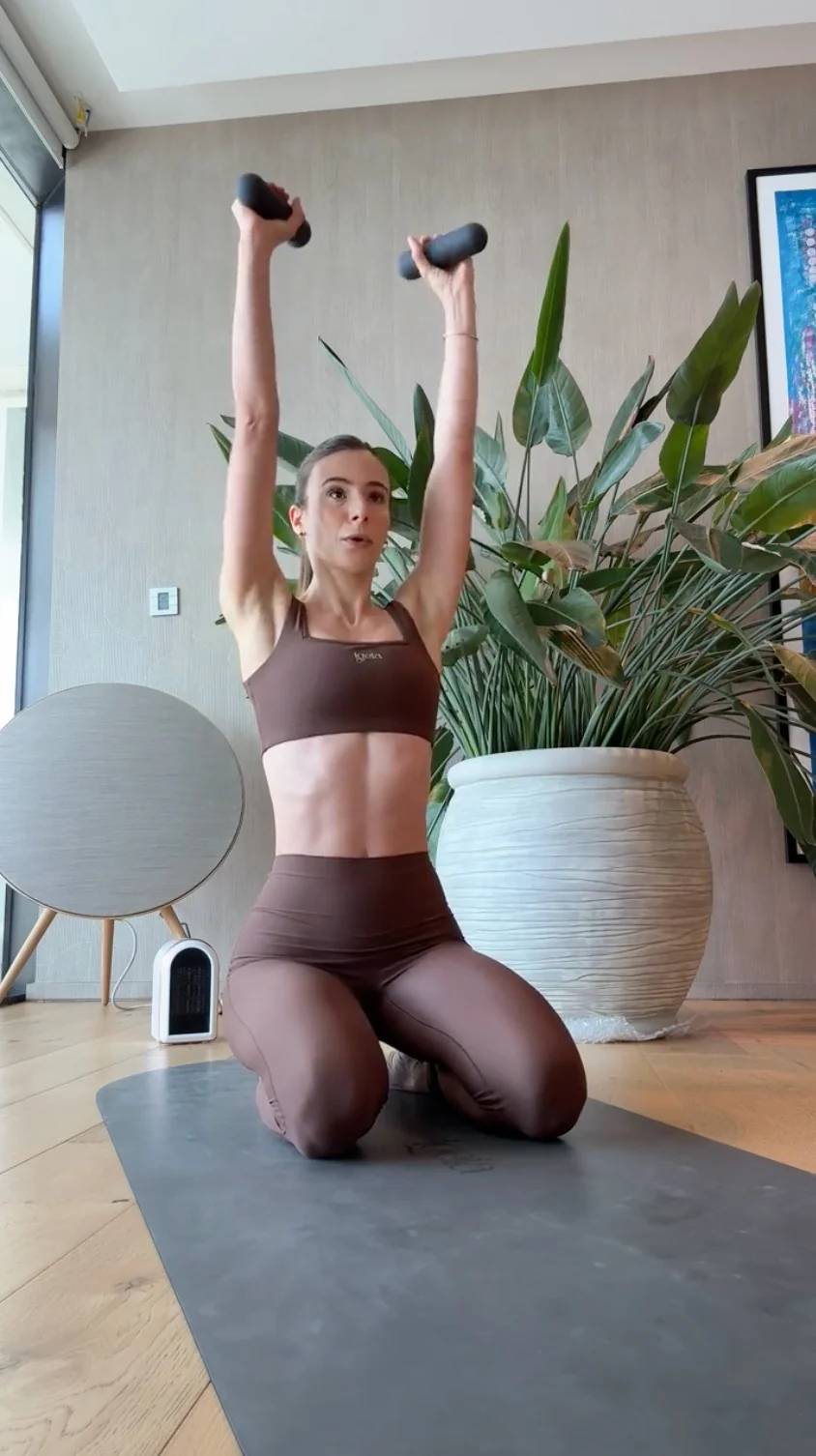
If you've only done massages so far and want to add movement, this is the approach that works best.
-
Don't cancel anything
Keep the sessions you've already booked and add the movement next to it, instead of replacing one thing with another.
-
Start fifteen minutes
The thing you need to find out in the first two weeks is not if it works, but if you can repeat it.
-
Look what happens between sessions
That's where you see the difference: if the swelling used to come back midweek and not now, you have your answer.
-
Then you decide the frequency of the sessions
Many women find they need it less often, and transform it from a necessity to a pleasant thing.
If you've never done Pilates, start with Lymphatic Sculpt Pilates™ Beginners: Two months to build the foundation.
If you already have your own practice, the full path, which works on drainage and tone together.
If you're short on time, Lymphatic Sculpt Pilates™ Express: fifteen minutes a day.
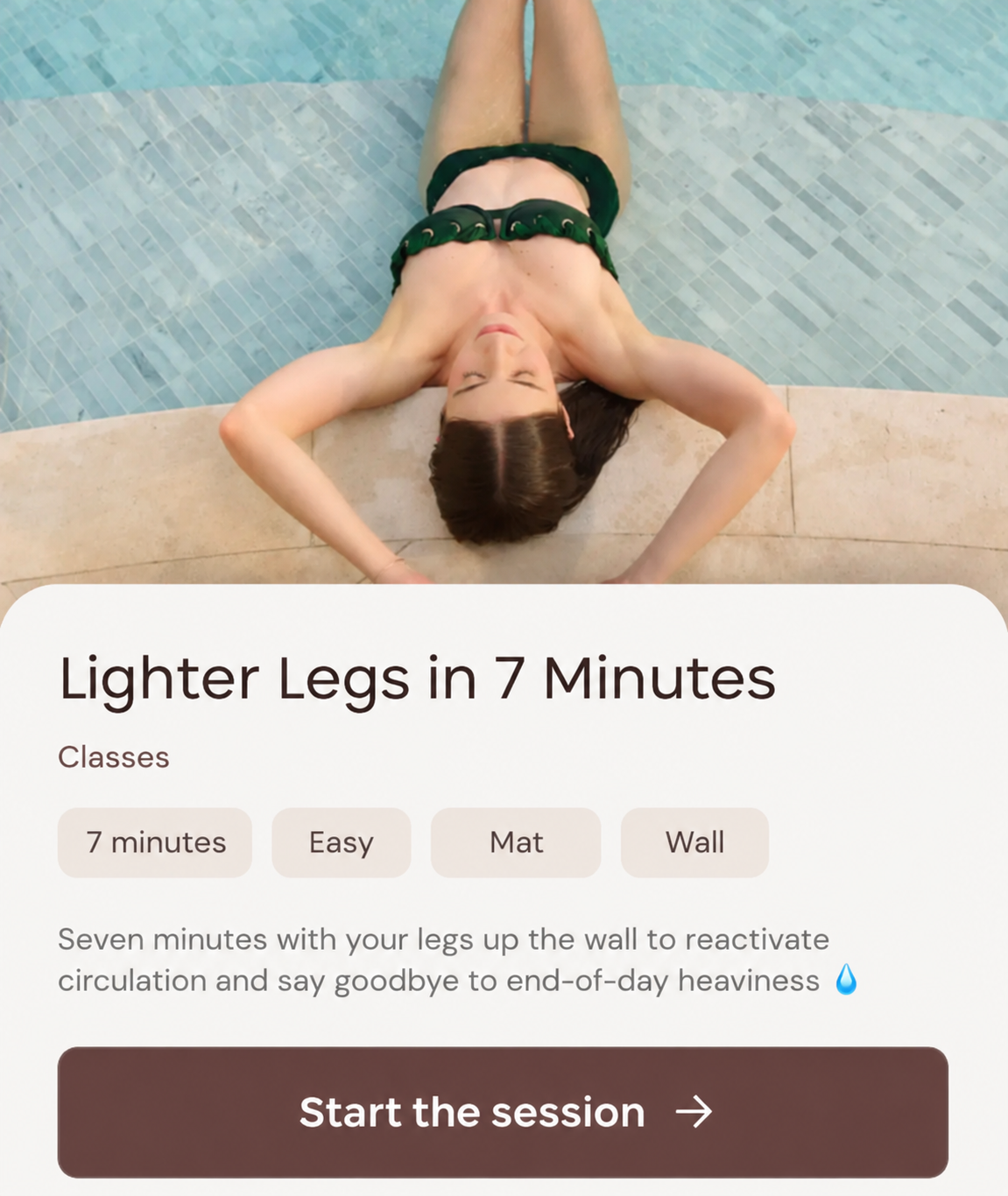
And for the evening, the class Light legs in 7 minutes, with the legs leaning against the wall before sleeping.
Frequently Asked Questions
Is Lymphatic Sculpt Pilates™ or Lymphatic Drainage Massage better?
The massage is more powerful per single session, because it is performed by a trained person who feels the tissues and also works on areas that you do not reach alone.
Lymphatic Sculpt Pilates™ is less intense per session but can be done every day, and since drainage is maintained instead of accumulating, frequency affects the result more than intensity.
The best combination is daily practice plus periodic sessions; if you have to choose, the answer is the one you can repeat.
Can Lymphatic Sculpt Pilates™ replace massages?
For common swelling and water retention, yes, and with the advantage of being repeatable every day and building muscle tone, which massage does not do.
However, it does not replace them in the clinical setting, for example in some post-operative procedures where manual drainage is part of a therapeutic protocol prescribed and followed by a healthcare professional, and movement accompanies it without replacing it.
Should I stop giving massages if I start Pilates?
No, and that's not what I recommend. The best way to add movement is to hold the sessions already planned and complement the daily practice, observing what happens between sessions: that's where you see the difference.
Many women then find that they need massages less often, and transform them from necessity to pleasure.
How much does lymphatic drainage massage cost compared to Pilates?
Prices vary too much by city and type of property for a numerical comparison to be useful, and change over time. The calculation that matters is another: the cost per activation of the lymphatic pump.
One session per week means four activations per month at full price; a daily practice gives about thirty at zero marginal cost once the subscription has been paid.
Pilates or lymphatic drainage massage for water retention?
For common retention, the factor that determines the result is frequency, because drainage lasts as long as you continue to produce it.
A weekly treatment activates the pump one day out of seven, while a daily practice activates it seven days out of seven.
Movement also has a second advantage: it builds muscle mass that makes the pump more efficient even when you're not training.
Does lymphatic drainage massage before an event work better than Pilates?
For a quick effect in view of a specific occasion, a targeted treatment two days in advance does something that a fifteen-minute session does not, simply because it is much more concentrated work at that moment.
It's a temporary result and it fits in, but it's real. The opposite is true for the result that remains over time, and it is daily practice that makes the difference.
Is lymphatic drainage massage supposed to hurt?
No, and it's the most widespread misunderstanding. The superficial lymphatic vessels are located a few millimeters below the skin, and excessive pressure crushes them instead of helping them.
Proper drainage is gentle, to the point that many people fall asleep during the session. If you are sore or bruised at the end, you have received another type of massage.
In summary
Lymphatic drainage massage is more powerful per session, it works on areas that you don't reach on your own, and in a clinical setting it is the correct choice.
Lymphodrenant Pilates® is less intense per session, but you can do it every day, it builds the muscle pump that continues to work afterward, and it trains your breathing.
And since drainage maintains itself instead of accumulating, the variable that decides the result is not how powerful a session is, but how many times the pump turns on in your week.
Carlotta's insights, straight to your inbox
Just your name and email, unsubscribe anytime.