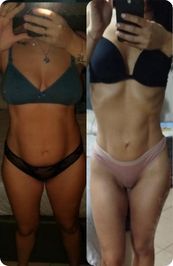
Does Pilates Linfodrenante® actually work? Miriam’s story, training only at home
In short: Miriam changed her body in a year, after two pregnancies, training exclusively at home. She completed the nine-month programme and now follows Hot Pilates Linfodrenante®. The question she gets asked most often is which gym she goes to. The answer is none: Pilates Linfodrenante® is not a gym workout adapted for the living room, it is a method that could not be done in a gym, because it relies on daily drainage, guided breathing and the deliberate absence of heavy loads.
There is a question Miriam gets asked constantly, and it is the reason I wanted to tell her story.
“Having had two pregnancies, everyone compliments me on recovering so quickly and asks me which gym I go to.”
Which gym do you go to.
It is a question that assumes one thing: that a certain kind of result can only come from a place full of equipment, with someone watching you, paying a membership to a building.
Miriam’s answer is that she doesn’t go to any gym. She trains at home, and has done for a year.
And the reason isn’t that she’s settling for less. It’s that the method she follows couldn’t be done in a gym.
First, what Pilates Linfodrenante® actually is
If you have arrived here without knowing the method, this section is for you, because the name does not translate and the concept is not yet familiar in the UK.
Pilates Linfodrenante® is a Pilates method I developed that adds a lymphatic drainage component to classical Pilates work.
That word, drainage, is where most of the confusion sits. In the UK, lymphatic drainage is generally understood as a manual massage treatment: someone else works on your body, you lie there, you pay per session.
Here it means something different. The drainage is driven by your own movement and your own breathing.
The reason that is possible is a piece of physiology most people never hear. Your circulatory system has a pump, the heart, which works whether you think about it or not. Your lymphatic system has no pump at all. Lymph moves only through two things: the contraction of the muscles around the lymphatic vessels, and the movement of the diaphragm when you breathe deeply.
Which means your lymphatic system moves when you move it. And it means a method built around exactly those two mechanisms can do, actively and daily, a version of what a massage therapist does passively once a fortnight.
That is the whole idea. Everything else in this article follows from it.
The gym has nothing wrong with it
Let’s get this out of the way.
A gym is a very good place. It has equipment you do not have at home, people who correct you, and loads you can increase progressively and precisely. For a great many goals it is the right choice, and if you go and you feel good, there is no reason at all to stop.
The point is not that gyms don’t work.
The point is that a gym is built around one thing, progressive loading, which Pilates Linfodrenante® deliberately does not use.
Not because weights are wrong. Because for this method’s goal, which is to drain and debloat as well as tone, heavy loading works in the opposite direction. Let me explain, because it is the core of this article.
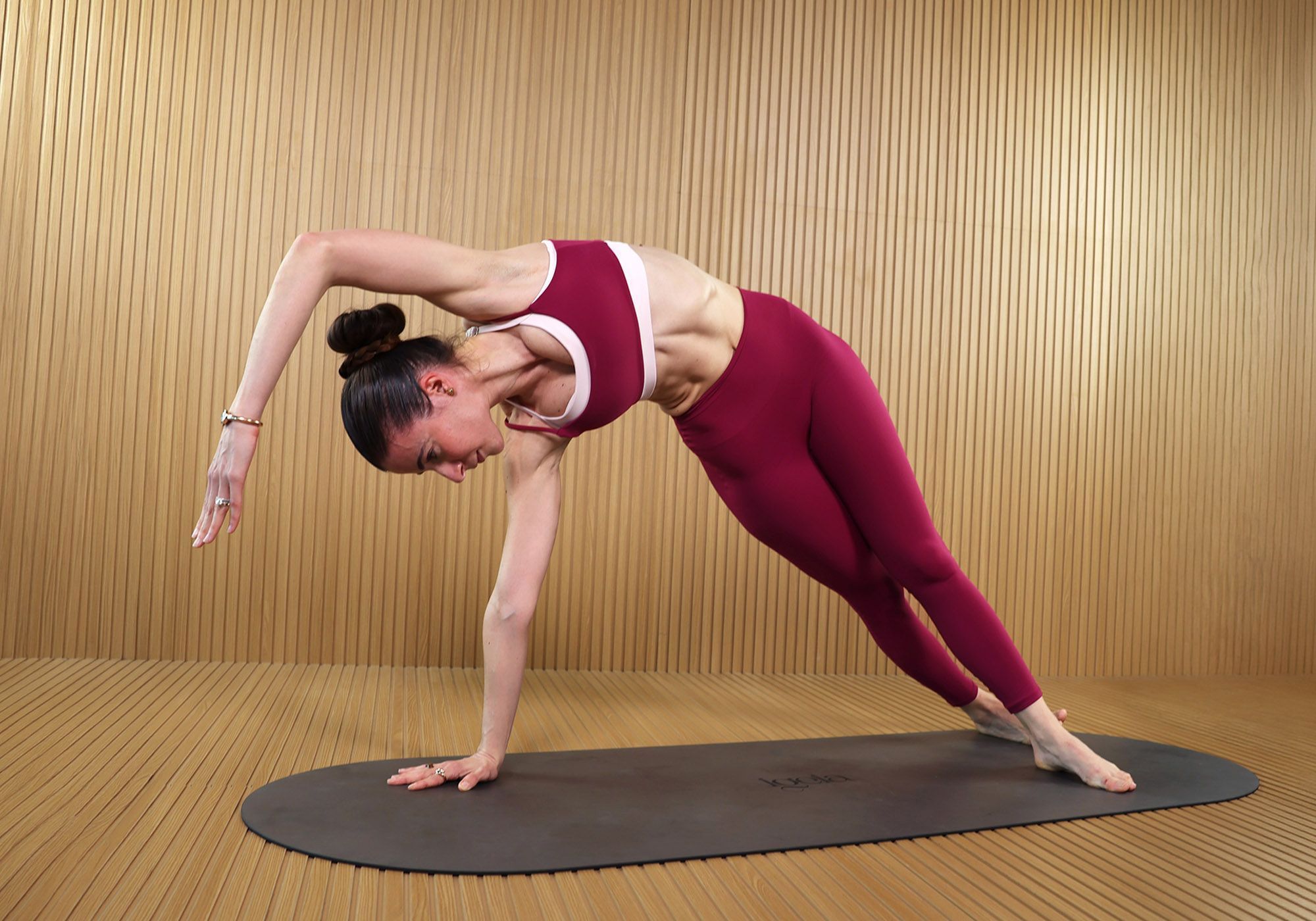
Why this method was designed to be done at home
It is not a gym workout shrunk to fit a living room. It is built on four things that do not exist in a weights room or a group class.

Every session begins by opening the lymphatic stations
Before the workout itself starts, every session opens the six lymphatic stations.
It puts the body in a state where it can drain while you train.
It takes two minutes and no gym class does it, because in a group class time is the one resource in short supply and preparation is the first thing to go.
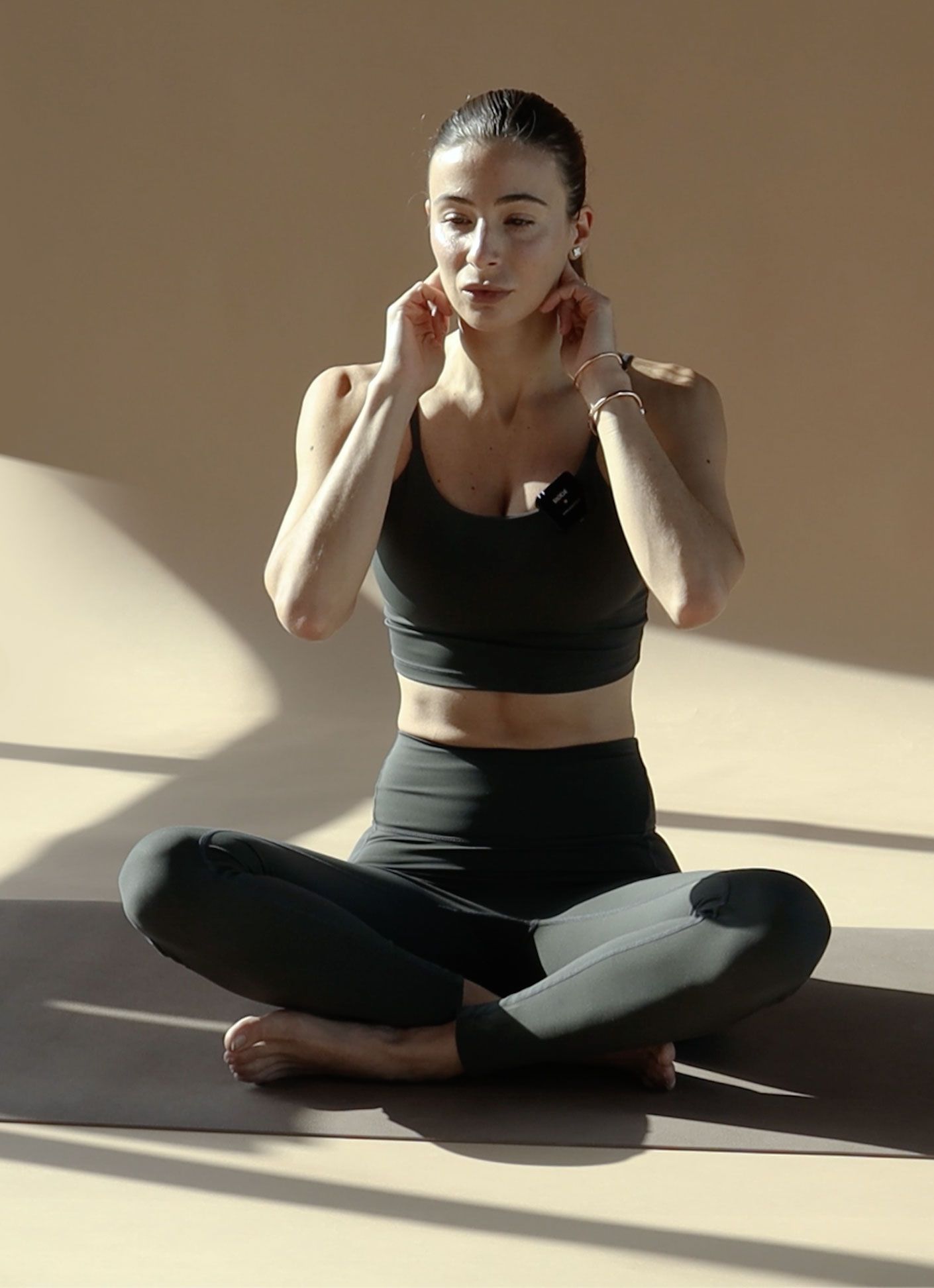

The breath is prescribed movement by movement
In Pilates Linfodrenante® I tell you exactly when to inhale and when to exhale, exercise by exercise. That is not a stylistic detail.
The thoracic duct, the largest lymphatic vessel in the body, passes through the diaphragm. Every deep breath pumps it, drawing lymph up from the lower body. If the breathing is not coordinated with the movement, that pump never engages and what you have is an ordinary workout.
Doing that needs a voice guiding you in your ear, not a room with loud music and fifteen other people.
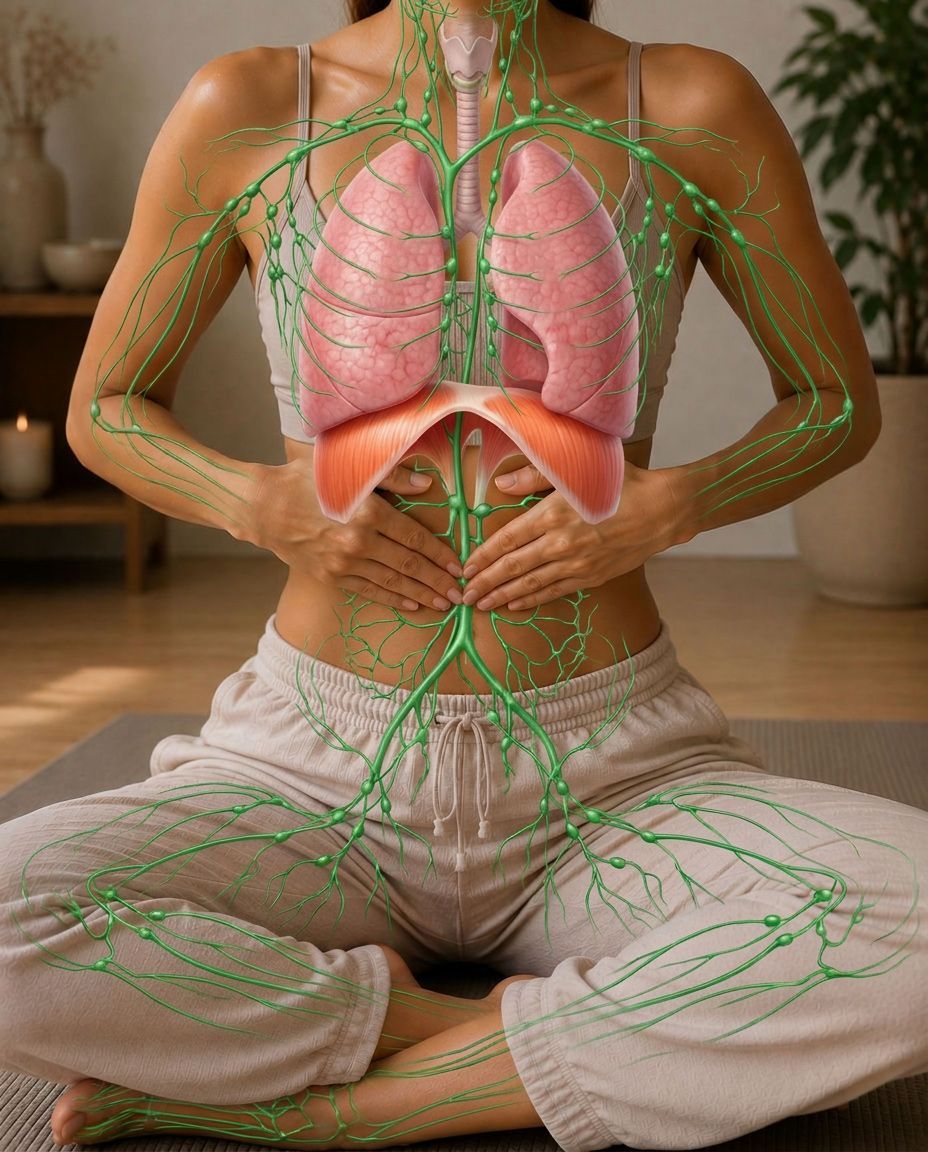

Drainage responds to frequency, not intensity
This is the point that turns the whole gym comparison around.
Because lymph moves only through muscle contraction and breathing, fifteen minutes every day does more than an hour and a half twice a week.
Now think about that. Nobody sustains a daily rhythm at a gym. Not through laziness, through arithmetic. Between the journey, the bag, the changing room and class timetables, training at a gym every day is unsustainable for almost every woman with a job or children.
At home that rhythm is the one easy part.
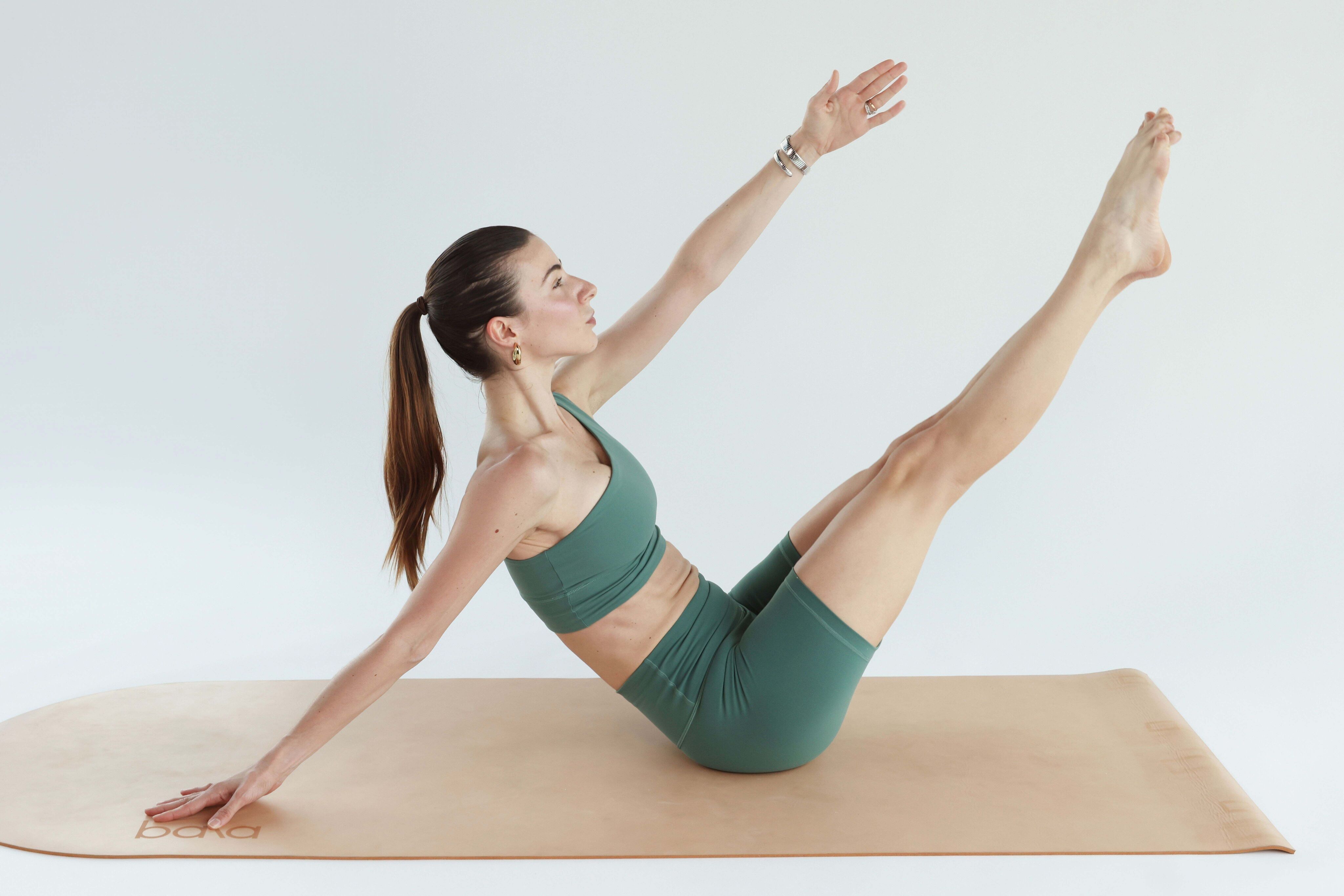

Much of the work is done lying down, and some of it in bed
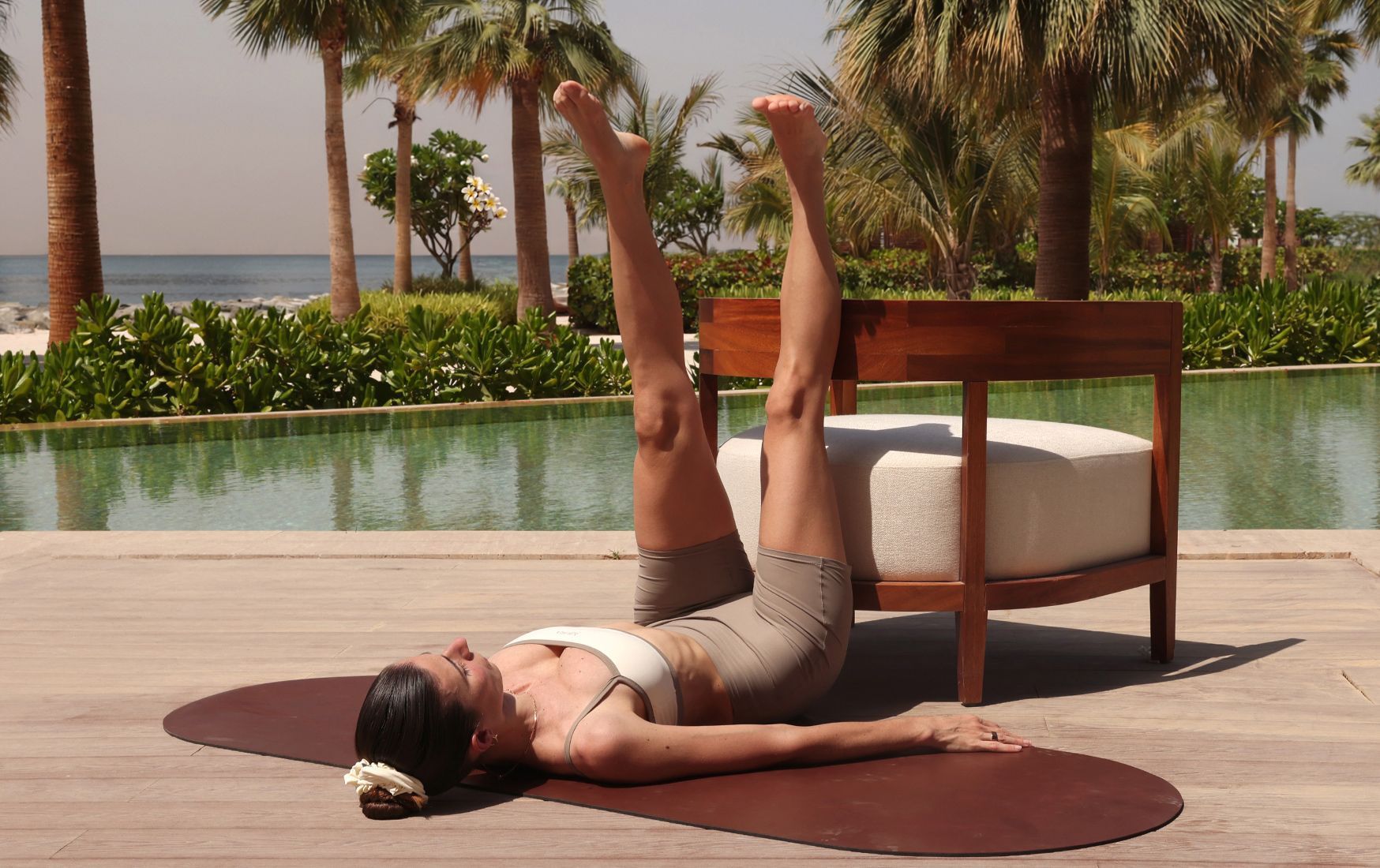
The method alternates standing work with inversion work, feet higher than the pelvis, to help venous and lymphatic return.
The single most-used class in the app is Light Legs in 7 minutes, done with your legs up against the wall, in the evening, before sleep.
There is no gym version of that. Not because the equipment is missing: because nobody drives across town at ten at night to spend seven minutes with their legs up a wall.
And then there is the loading
Heavy loads raise body temperature significantly and generate acute inflammation. For a body in good shape that is not a problem. But if what you are dealing with is fluid retention, bloating or underlying inflammation, you are adding load to a system already struggling. It is why so many women train hard and still look bloated.
So the thing a gym gives you best is precisely the thing this method does not need.
What Miriam did over a year
Hers was a long and winding path, and I will tell it as it actually went.
Over the year she moved between different programmes, alternating Pilates Linfodrenante® and Sculpt, and completed the nine months of the programme.
She now follows Hot Pilates Linfodrenante®, and has ordered the roller to start the Reformer. Her words: “I can’t wait.”
On nutrition, she has practised intermittent fasting for almost a year
Notice something: she did not follow one single programme for twelve straight months. She changed, she tried things, she went back, she moved on. That is how a long journey actually works, and anyone telling you otherwise is selling you a straight line that does not exist.
What stayed constant is that she trained. At home. For a year.
Recovering after two pregnancies
What people notice, and what makes them ask about the gym, is how quickly she recovered after two pregnancies.
That is not a coincidence.
After a pregnancy the body does not need heavy loading. It needs three things, in this order: breathing to work again, the pelvic floor to re-coordinate with the diaphragm, and the deep muscles to be recruited again.
None of those three requires a gym. They require precision and daily repetition, which is exactly what a guided programme at home can deliver every day and a class twice a week cannot.
With a newborn in the house, the workout you actually do is the one three metres from the sofa.
Does Pilates Linfodrenante® actually work?
This is the question I am asked most, and it deserves a serious answer rather than a list of promises. Particularly if you have arrived here not knowing me, which in the UK is most people.

What it works on, and how quickly.
On fluid retention and bloating it acts fast, because fluid responds to movement and drainage: lighter legs and less bloating are often felt within one to two weeks. On muscle tone and body shape the timeline is longer, six to eight weeks for a change visible in a photograph, and several months for changes that hold. On posture the work is slow but structural.
What it does not do, or does not do alone.
It does not create a calorie deficit: if the goal is significant weight loss, nutrition remains the main lever, and almost every woman in our stories worked on that too. It does not treat medical conditions: in lipoedema, for instance, it is a very well-suited tool for daily management, but diagnosis and clinical care remain a doctor’s territory. And it does not remove cellulite entirely, although drainage is the lever that most improves its appearance.
How to check without taking my word for it.
The stories we publish carry full names and public Instagram profiles, and the timings are the ones the women themselves stated. You can write to them. You can read the app store reviews, which we do not control. And above all you can test it: the free trial runs for seven days and needs nothing beyond a mat.
Which is why the question that opens this article is my favourite. Miriam did not convince anyone by explaining the method. Other people noticed.
The 4 things to take from Miriam’s story
- This method is not a scaled-down gym. It is built on drainage, guided breathing and daily frequency, three things a gym cannot provide.
- Consistency beats equipment. What determines the result is how often you do it, and logistical friction is the first enemy of frequency.
- A real year is not a straight line. Miriam changed programmes more than once. Changing is not inconsistency, it is how you find what works.
- After pregnancy you need daily precision, not loading. And it is the phase in which training at home has the biggest advantage.
Where to start
If you have never done Pilates, start with Pilates Linfodrenante® Beginners: two months to build the foundations.
If you already have a practice, the full 9-month programme is the one Miriam followed.
If you are short on time, Pilates Linfodrenante® Express: fifteen minutes a day.
If you have given birth recently, Pilates Diastasis & Postpartum.
And if you have very little space at home, or you are travelling, the no-mat section has classes you can do anywhere.
Frequently asked questions
What is Pilates Linfodrenante®?
It is a Pilates method created by Carlotta Gagna that combines classical Pilates work with lymphatic drainage.
Unlike manual lymphatic drainage, which is a massage performed by a therapist, here the drainage is driven by your own movement and breathing: the lymphatic system has no pump of its own and moves only through muscle contraction and the movement of the diaphragm.
Each session opens the lymphatic stations first, then coordinates every exercise with prescribed breathing. The name is a registered trademark and is not translated.
Does Pilates Linfodrenante® actually work?
It works on specific goals, with different timelines depending on the goal. On fluid retention and bloating it acts quickly, often within one to two weeks, because fluid responds to movement and drainage.
On tone and body shape, expect six to eight weeks for a visible change and several months for a change that holds. It does not on its own create the calorie deficit needed for significant weight loss, so nutrition remains a parallel lever, and it does not replace clinical care for a medical condition.
How is it different from normal Pilates?
Classical Pilates works on control, deep muscle strength and posture. Pilates Linfodrenante® adds the drainage component: every session begins by activating the lymphatic stations, the breathing is prescribed exercise by exercise so the diaphragm works as a lymphatic pump, and the sequences alternate standing work with inversion work. The aim is not only to tone, but to drain and debloat.
Is lymphatic drainage Pilates the same as lymphatic drainage massage?
No. Manual lymphatic drainage is passive: a therapist works on your body, usually in a clinic, usually paid per session.
Pilates Linfodrenante® is active: you drive the drainage yourself through muscle contraction and breathing, which means you can do it daily rather than fortnightly.
The two are complementary rather than alternatives, and if you can do both, that is ideal.
Who is Carlotta Gagna?
A certified Pilates instructor and the creator of the Pilates Linfodrenante® method, which she developed and teaches through the Traininpink app.
The method is followed by tens of thousands of women, primarily in Italy, and is now available in English.
Can you do Pilates Linfodrenante® at a gym?
Not in the form it is built in. It needs a voice guiding your breathing movement by movement, a near-daily frequency, and sequences performed on the floor or in inversion, including classes designed to be done in the evening before sleep. A weights room or a group class does not offer those conditions.
Is it better to train at home or at a gym?
It depends on the goal. If you are aiming to increase significant loads or build meaningful hypertrophy, you need a gym.
If the goal is to tone, drain, reduce bloating and fluid retention, improve posture or recover after pregnancy, home is often the better choice, because it allows the daily frequency those goals require and which almost nobody sustains at a gym.
What equipment do you need at home?
A mat. Some classes use a ball or a resistance band, and in the no-mat section you do not even need that. The Reformer needs its own apparatus, which is a later step rather than a starting point.
Can you get back in shape after two pregnancies training only at home?
Yes, and it is in fact the phase where training at home has the biggest advantage. Postnatal recovery does not need heavy loading: it needs breathing restored, the pelvic floor re-coordinated and the deep muscles reactivated, and those need precision and daily repetition more than equipment. Always after your obstetrician’s clearance.
f you are waiting until you can organise yourself around a gym, that moment may never come. And for this method you would not need it anyway.
The free trial of Pilates Linfodrenante® lasts 7 days and all you need is a mat.
